PTFE electrode jackets are primarily limited by their mechanical susceptibility to "creep" and a strict thermal threshold of 260°C. Beyond this temperature, the material undergoes thermal decomposition, releasing toxic fumes that can cause polymer fume fever. While offering world-class chemical inertness and electrical insulation, these jackets require specific engineering compensations for high-pressure or extreme-temperature environments to prevent seal failure and sensor lag.
PTFE (Polytetrafluoroethylene) is the industry standard for electrode housing due to its near-total chemical immunity, but it is not a "set-and-forget" material. Success requires balancing its superior dielectric properties against its inherent structural softness and thermal emission risks.
Thermal Boundaries and Safety Risks
The 260°C Decomposition Threshold
While PTFE is stable across a massive range—from -200°C to +250°C—it reaches a critical safety limit at 260°C (500°F). At this point, the polymer begins to degrade, releasing irritant and toxic gaseous byproducts.
Understanding Polymer Fume Fever
Exposure to these decomposition fumes can lead to "polymer fume fever," a flu-like condition characterized by chills, headaches, and fever. This makes precise temperature monitoring mandatory in any system utilizing PTFE-jacketed electrodes.
Fire and Reactive Hazards
PTFE is generally non-flammable, but it reacts aggressively with alkali metals and certain highly reactive fluorinating agents. In these specific chemical environments, the jacket may degrade rapidly, exposing the sensitive internal electrode elements.
Mechanical and Physical Limitations
The Challenge of Viscoelastic Creep
The most significant mechanical drawback of PTFE is "creep," or cold flow, where the material deforms permanently under sustained pressure. This can lead to the loosening of compression fittings and the eventual failure of airtight or watertight seals in electrochemical cells.
Low Tensile Strength
Compared to structural plastics like nylon or PEEK, PTFE has relatively low mechanical and tensile strength. It is easily scratched or dented, which can create pockets for contamination or alter the fluid dynamics around the electrode tip.
Response Lag in Low-Conductivity Media
PTFE’s exceptionally high volume resistivity (exceeding 10¹⁸ Ω·cm) is usually a benefit for preventing parasitic currents. However, in ultra-low-conductivity media, this high insulation can occasionally result in a slightly slower sensor response time due to the way charges stabilize at the interface.
Understanding the Trade-offs
Cost vs. Performance
PTFE is more expensive to source and CNC-machine than many standard polymers. While it offers unmatched chemical protection, using it for simple, non-corrosive aqueous applications may be an unnecessary expenditure where cheaper materials like polypropylene might suffice.
Rigidity vs. Sealing
Because PTFE is soft, it excels at creating a tight seal initially, but its lack of "memory" means it won't spring back once compressed. This necessitates frequent maintenance or the use of secondary hardware to maintain constant pressure on the jacket.
Chemical Inertness vs. Adhesion
The same hydrophobicity and low surface energy that make PTFE inert also make it nearly impossible to bond with adhesives. This limits how the jacket can be integrated into a system, often forcing designers to rely on mechanical threads or press-fits rather than chemical bonding.
How to Apply This to Your Project
Designing for Long-Term Reliability
To maximize the lifespan and safety of your PTFE-jacketed electrodes, you must integrate the material's physical properties into your broader system design.
- If your primary focus is high-pressure environments: Use rigid reinforcement materials like PEEK or implement Belleville (spring) washers to compensate for material creep and maintain seal integrity.
- If your primary focus is high-temperature safety: Install redundant thermal cut-offs set strictly below 250°C to prevent the release of toxic decomposition fumes.
- If your primary focus is measurement precision: Ensure the PTFE surface is inspected regularly for scratches or deformation that could trap air bubbles or contaminants, which might distort electrochemical readings.
- If your primary focus is chemical compatibility: Verify that your electrolyte does not contain alkali metals or fluorinating agents that could cause a violent reaction with the PTFE housing.
By respecting the narrow thermal and mechanical windows of PTFE, you can leverage its unparalleled chemical and electrical protection for highly accurate electrochemical analysis.
Summary Table:
| Aspect | Limitation / Risk | Mitigation Strategy |
|---|---|---|
| Thermal Limit | Decomposition & toxic fumes at >260°C | Set redundant thermal cut-offs below 250°C |
| Mechanical | Viscoelastic creep (cold flow) / Seal failure | Use spring washers or rigid PEEK reinforcement |
| Physical | Low tensile strength (easily scratched) | Regular surface inspection for contaminants |
| Chemical | Reacts with alkali metals/fluorinating agents | Verify electrolyte compatibility before use |
| Adhesion | Low surface energy (hard to bond) | Rely on mechanical threads or press-fit designs |
Optimize Your Electrochemical Setup with KINTEK’s Fluoropolymer Expertise
Navigating the technical boundaries of PTFE and PFA requires a partner who understands the balance between chemical inertness and structural integrity. At KINTEK, we specialize exclusively in high-performance fluoropolymers to ensure your laboratory equipment stands up to the most demanding environments.
Whether you need everyday basic labware (beakers, crucibles, reagent bottles), high-purity trace analysis instruments, or comprehensive fluid transfer components (tubing, valves, fittings), we have you covered. Our capabilities extend to advanced reaction apparatus, including custom electrochemical cells, battery testing fixtures, and microwave digestion vessels.
Why Choose KINTEK?
- Precision Engineering: End-to-end custom CNC fabrication for complex, non-standard machined parts.
- Versatile Solutions: From bespoke laboratory setups to high-volume consumable orders (O-rings, gaskets, stir bars).
- Expert Support: We help you overcome material limitations like creep and thermal thresholds through superior design.
Ready to elevate your research with durable, high-precision fluoropolymer tools? Contact us today to discuss your custom project!
Related Products
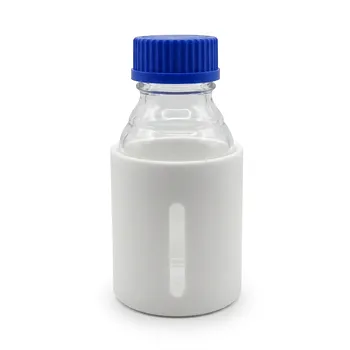
- Custom PTFE Thermal Insulation Sleeves Laboratory Vessel Condensation Jackets Virgin Fluoropolymer Machined Components
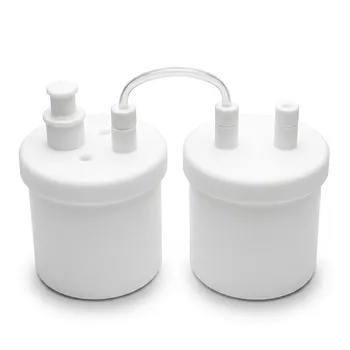
- Custom PTFE Absorption Bottle with Condensation Jacket Corrosion Resistant Low Background High Purity
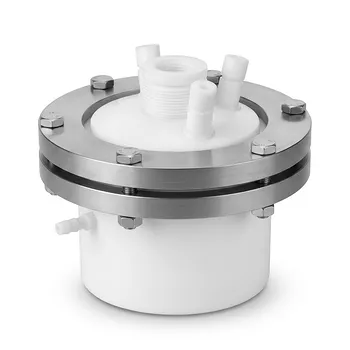
- Custom PTFE Reaction Apparatus Flange Sealed Corrosion Resistant Jacketed Vessel with Stirring Bar and Thermometer Ports
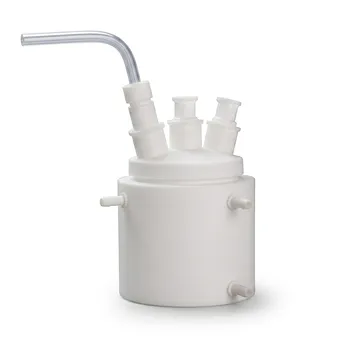
- PTFE Continuous Reaction System Jacketed Constant Pressure Dropping Funnel Corrosion Resistant HF Resistant Customizable
- PTFE Anti Scald Heat Insulation Sleeve Hot Plate Support Feet Laboratory Benchtop Protection Customizable Thermal Barrier
People Also Ask
- What is the temperature range for different types of PTFE polymer seal jackets? Find the Right Material for Extreme Temperatures
- Why is PTFE used in electrical applications? Unmatched Insulation for High-Performance Components
- How do PTFE electrode jackets benefit cyclic voltammetry and trace-metal analysis? Achieve High-Purity Precision
- What mechanical and fabrication advantages do PTFE electrode jackets provide? Strength & Precision for Lab Applications
- What are the primary functions and material properties of PTFE electrode jackets? Precision Shielding for Lab Electrodes