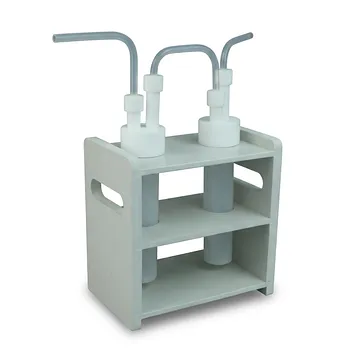
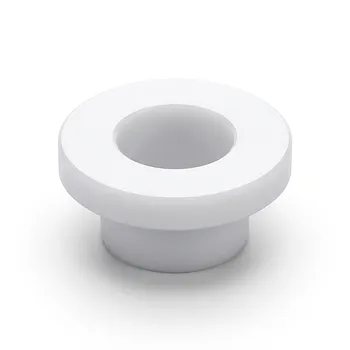
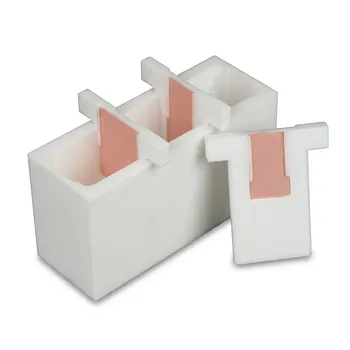
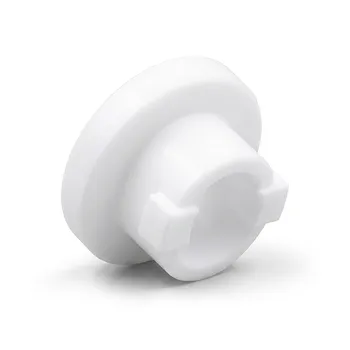
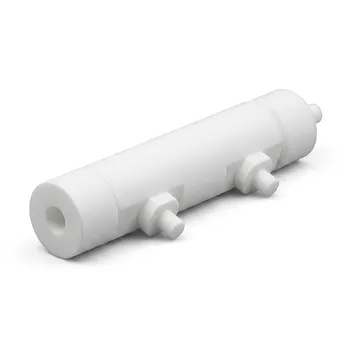
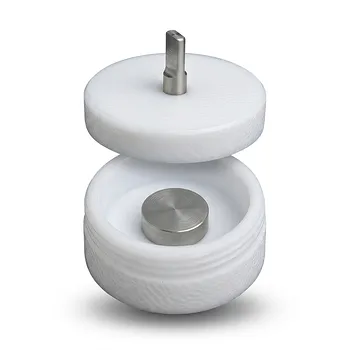
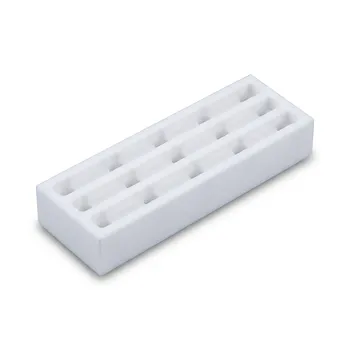
PTFE electrode jackets offer exceptional stability across extreme conditions, functioning reliably from –200 °C to +250 °C. Electrically, they provide a dielectric strength exceeding 60 MV/m and a low dielectric constant of approximately 2.1, ensuring superior insulation and the prevention of parasitic currents.
Core Takeaway: PTFE electrode jackets serve as a high-performance barrier that combines extreme thermal resilience with near-total electrical isolation. This makes them indispensable for protecting sensitive electrode components in aggressive chemical or high-voltage environments.
Thermal Performance and Stability
Broad Operational Temperature Range
PTFE (Polytetrafluoroethylene) maintains its structural and functional integrity from cryogenic levels (–200 °C) up to high-heat environments (+250 °C). This allows the same electrode jacket to be used in liquid nitrogen applications and high-temperature industrial reactors without degradation.
Low Thermal Conductivity
With a heat conductivity of approximately $5.9 \times 10^{-4}$ cal/cm·sec·°C, PTFE acts as an effective thermal insulator. This property prevents the heat generated by electrochemical processes from damaging internal electrode components or affecting temperature-sensitive measurements.
Thermal Expansion Considerations
The material has a coefficient of linear expansion of $9.9 \times 10^{-6}/°C$ (measured between 23-66°C). Designers must account for this expansion when precision-fitting jackets into rigid laboratory glassware or industrial process housings to avoid mechanical stress.
Electrical Insulation and Signal Integrity
Exceptional Dielectric Strength
The dielectric strength of PTFE, exceeding 60 MV/m, allows for thin-walled jacket designs that still provide robust protection against high-voltage breakthroughs. This ensures that the jacket effectively shields the internal conductive path of the electrode from the surrounding electrolyte.
High Volume and Surface Resistivity
PTFE possesses a volume resistivity greater than $10^{18}$ $\Omega \cdot$cm and a surface resistivity exceeding $10^{16}$ $\Omega$. These nearly infinite resistance values minimize leakage currents and stray capacitance, ensuring that the measured signal accurately reflects the reactions at the electrode tip.
Low Dielectric Constant
A dielectric constant near 2.1 minimizes the accumulation of electrical charge on the jacket surface. This reduction in parasitic capacitance is critical for maintaining high-speed response times in dynamic electrochemical measurements.
Understanding the Trade-offs
Mechanical Creep and Deformation
While thermally stable, PTFE is prone to creep or "cold flow" under sustained mechanical loads. If the jacket is subjected to high pressure or heavy clamping, it may slowly deform, potentially compromising the seal or alignment of the electrode core.
Thermal Decomposition Risks
Operating PTFE above its upper limit of 260 °C can lead to thermal decomposition. This process may release toxic irritant fumes, requiring strict temperature monitoring in high-heat applications to ensure operator safety and material longevity.
Sensor Response in Low-Conductivity Media
The high electrical resistivity of PTFE can occasionally lead to a slower sensor response when working in ultra-low-conductivity media. In these niche cases, the jacket's extreme insulation properties may interact with the boundary layer, necessitating specific engineering adjustments.
How to Apply These Specs to Your Project
When selecting a PTFE jacket for your electrode system, evaluate the specific demands of your operating environment against the material's physical limits.
- If your primary focus is Extreme Temperature Cycles: Rely on PTFE’s stable range of –200 °C to +250 °C, but ensure the jacket is not under heavy mechanical load to prevent deformation.
- If your primary focus is Signal Precision: Utilize the $10^{18}$ $\Omega \cdot$cm resistivity to eliminate stray currents, ensuring the jacket is clean and free of surface contaminants that could lower resistivity.
- If your primary focus is High-Pressure Reactors: Incorporate mechanical supports or "backup rings" to compensate for PTFE’s tendency to creep under pressure.
By balancing its unmatched insulation properties against its mechanical limitations, PTFE remains the gold standard for durable, high-precision electrode housing.
Summary Table:
| Property | Specification | Core Advantage |
|---|---|---|
| Operating Temperature | -200 °C to +250 °C | Stability from cryogenic to high-heat |
| Dielectric Strength | >60 MV/m | Robust high-voltage protection |
| Volume Resistivity | >10¹⁸ Ω·cm | Elimination of leakage currents |
| Dielectric Constant | ~2.1 | Low parasitic capacitance & fast signal |
| Thermal Conductivity | ~5.9 × 10⁻⁴ cal/cm·sec·°C | Superior thermal insulation |
Optimize Your Electrochemical Research with KINTEK's Fluoropolymer Expertise
From everyday basic labware like beakers, crucibles, and reagent bottles to specialized electrochemical cells, battery testing fixtures, and electrode accessories, KINTEK is your ultimate source for high-performance PTFE and PFA supplies.
Whether you require standard consumables—such as centrifuge tubes, stirring bars, and filters—or complex non-standard machined parts via our end-to-end custom CNC fabrication, we deliver absolute precision tailored to your high-purity trace analysis needs. Don't let material degradation compromise your data; leverage our absolute focus on high-performance fluoropolymers to protect your sensitive measurements.
Ready to upgrade your lab setup?
Contact KINTEK for Custom Solutions and Bulk Orders
Related Products
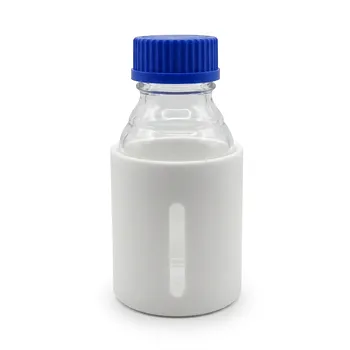
- Custom PTFE Thermal Insulation Sleeves Laboratory Vessel Condensation Jackets Virgin Fluoropolymer Machined Components
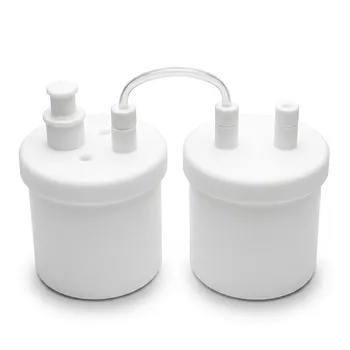
- Custom PTFE Absorption Bottle with Condensation Jacket Corrosion Resistant Low Background High Purity
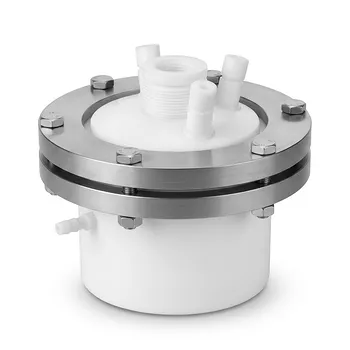
- Custom PTFE Reaction Apparatus Flange Sealed Corrosion Resistant Jacketed Vessel with Stirring Bar and Thermometer Ports
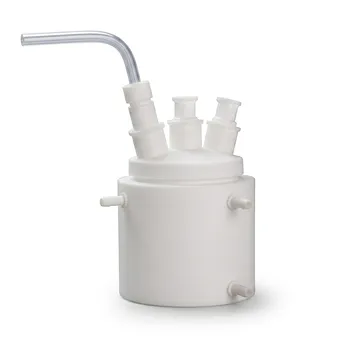
- PTFE Continuous Reaction System Jacketed Constant Pressure Dropping Funnel Corrosion Resistant HF Resistant Customizable
- PTFE Anti Scald Heat Insulation Sleeve Hot Plate Support Feet Laboratory Benchtop Protection Customizable Thermal Barrier
People Also Ask
- What is the temperature range for different types of PTFE polymer seal jackets? Find the Right Material for Extreme Temperatures
- Why is PTFE used in electrical applications? Unmatched Insulation for High-Performance Components
- How do PTFE electrode jackets benefit cyclic voltammetry and trace-metal analysis? Achieve High-Purity Precision
- What mechanical and fabrication advantages do PTFE electrode jackets provide? Strength & Precision for Lab Applications
- What are the technical limitations and safety considerations for PTFE electrode jackets? Master Thermal & Mechanical Limits