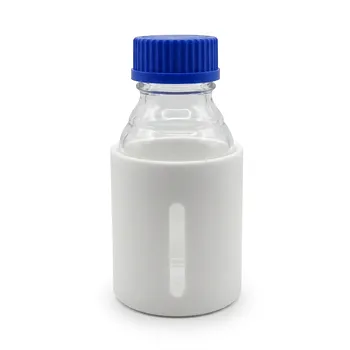
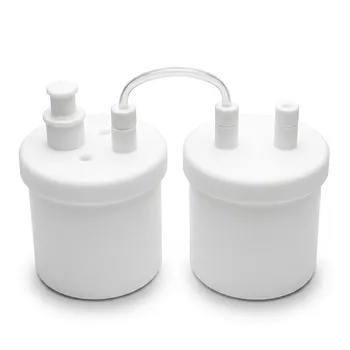
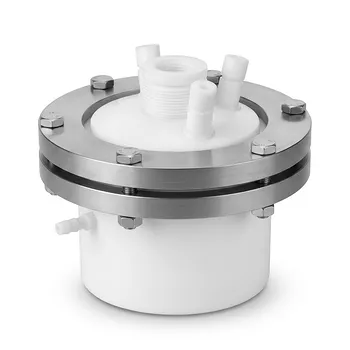
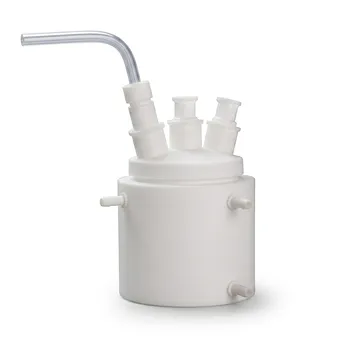
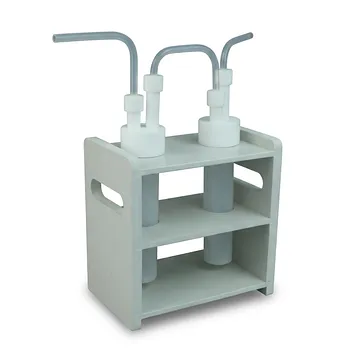
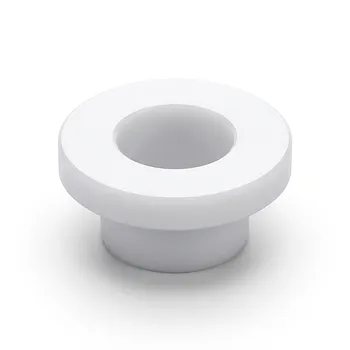
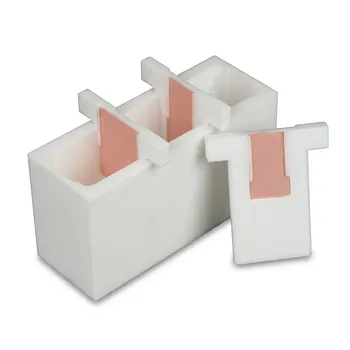
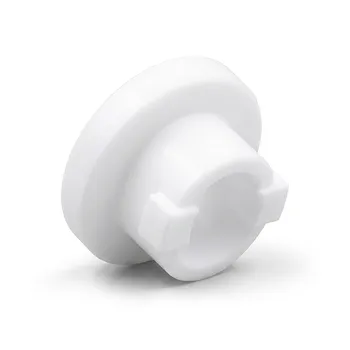
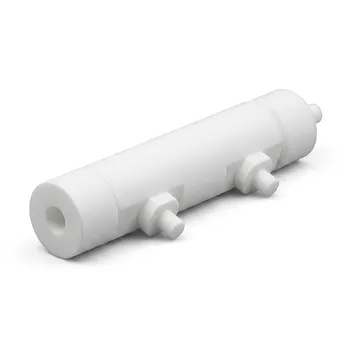
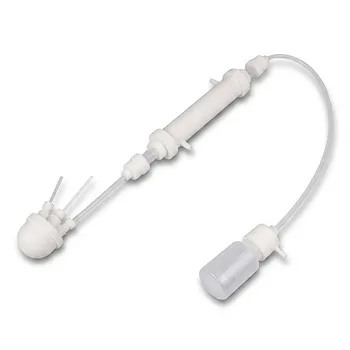
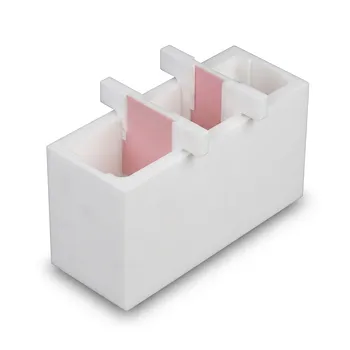
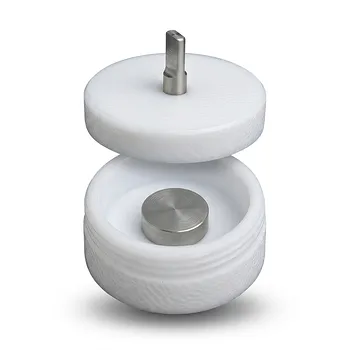
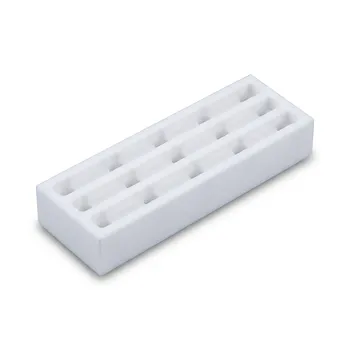
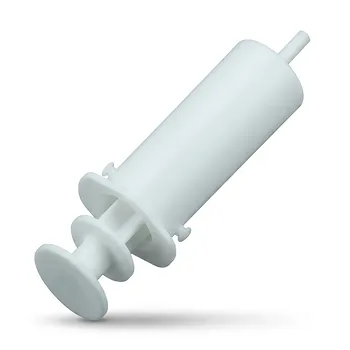
PTFE electrode jackets provide a unique combination of lightweight rigidity and exceptional fabrication versatility.
These jackets act as a protective housing that offers superior mechanical support for electrode cores while remaining easy to machine into complex geometries. They maintain structural integrity across extreme temperature ranges, from -200°C to +250°C, making them ideal for both specialized laboratory glassware and rugged industrial fittings.
PTFE is the material of choice for electrode jackets because it blends ease of custom fabrication with high mechanical stability in aggressive environments. It ensures precise electrical insulation and physical protection without the fragility of glass or the corrosion risks of metal.
Fabrication Versatility and Precision
Advanced Machinability and Forming
PTFE can be precision-machined or molded into intricate forms, such as thin-walled sleeves, multi-ring junctions, or porous plugs. This allows the material to be tailored to the exact specifications of specialized electrochemical reactors or standard laboratory equipment.
Cost-Effective Customization
Because PTFE is easily machinable and affordable, it allows for the rapid production of custom components. This flexibility is essential for creating unique industrial process fittings that require specific internal geometries to house electrode cores.
Integration with Complex Systems
The material’s versatility allows it to serve as a bridge between different components. It can be adapted into various forms that maintain electrical contact through electrolytes while providing a secure, leak-proof housing for the electrode's internal elements.
Mechanical Strength and Durability
Superior Strength-to-Weight Ratio
Despite being lightweight, PTFE provides the mechanical rigidity necessary to support and protect delicate electrode cores. This high strength-to-weight ratio makes the electrodes easier to handle and install without sacrificing structural protection.
Thermal Resilience
PTFE maintains its structural integrity across a vast temperature spectrum, ranging from –200 °C to +250 °C. This stability prevents the jacket from becoming brittle in cryogenic settings or softening and warping in high-heat industrial processes.
Surface and Environmental Protection
The material's non-stick and low-friction properties reduce mechanical wear and prevent the accumulation of debris. Furthermore, its inherent hydrophobicity and chemical resistance ensure the jacket does not degrade when exposed to moisture or aggressive corrosive agents.
Understanding the Trade-offs and Limitations
Viscoelastic Creep
PTFE is susceptible to viscoelastic creep, meaning it can deform over time when subjected to sustained mechanical loads. In high-pressure applications, engineers often need to reinforce PTFE with rigid materials like PEEK or use specialized washers to maintain seal integrity.
Thermal Decomposition Limits
While PTFE is stable at high temperatures, it begins to undergo thermal decomposition above 260 °C. This process can release irritant fumes, so it is critical to ensure operating environments stay within the material's safe thermal limits.
Electrical Resistivity Effects
The material's exceptionally high electrical resistivity is generally a benefit for insulation. However, in ultra-low-conductivity media, this high resistivity can occasionally result in a slightly slower sensor response, which must be accounted for in precision measurements.
How to Apply This to Your Project
- If your primary focus is aggressive chemical environments: Utilize PTFE jackets to leverage their chemical inertness and non-stick properties, which prevent corrosion and fouling of the electrode housing.
- If your primary focus is high-precision custom reactors: Take advantage of PTFE’s superior machinability to create thin-walled or multi-functional junctions that meet unique geometry requirements.
- If your primary focus is high-pressure sealing: Reinforce the PTFE jacket with more rigid polymers or mechanical compression fittings to counteract the material's natural tendency to creep under load.
By balancing PTFE's unmatched fabrication ease with an understanding of its mechanical limits, you can implement electrode systems that are both highly durable and technically precise.
Summary Table:
| Feature | Advantage | Benefit |
|---|---|---|
| Machinability | High-precision CNC forming | Allows for complex, custom geometries and thin-walled designs |
| Thermal Range | Stable from -200°C to +250°C | Reliable performance in both cryogenic and high-heat environments |
| Physical Ratio | High strength-to-weight ratio | Provides rigid structural support without adding unnecessary bulk |
| Surface Property | Non-stick & Low friction | Prevents debris accumulation and simplifies cleaning processes |
| Insulation | High electrical resistivity | Ensures precise signal integrity and superior electrical protection |
Elevate Your Laboratory Precision with KINTEK’s High-Performance PTFE Solutions
At KINTEK, we maintain an exclusive focus on high-performance fluoropolymer materials to ensure your research meets the highest standards of durability and precision. Leveraging our end-to-end custom CNC fabrication, we provide everything from everyday basic labware—including beakers, crucibles, and reagent bottles—to advanced, bespoke components like the PTFE electrode jackets described above.
Whether you require standard consumables (such as stirring bars, O-rings, and filters) or complex reaction apparatus (including electrochemical cells, battery testing fixtures, and microwave digestion vessels), KINTEK is equipped to deliver high-volume orders and non-standard machined parts tailored to your exact specifications.
Ready to optimize your setup with superior PFA and PTFE components?
Contact KINTEK today to discuss your project needs!
Related Products
- Custom PTFE Thermal Insulation Sleeves Laboratory Vessel Condensation Jackets Virgin Fluoropolymer Machined Components
- Custom PTFE Absorption Bottle with Condensation Jacket Corrosion Resistant Low Background High Purity
- Custom PTFE Reaction Apparatus Flange Sealed Corrosion Resistant Jacketed Vessel with Stirring Bar and Thermometer Ports
- PTFE Continuous Reaction System Jacketed Constant Pressure Dropping Funnel Corrosion Resistant HF Resistant Customizable
- PTFE Anti Scald Heat Insulation Sleeve Hot Plate Support Feet Laboratory Benchtop Protection Customizable Thermal Barrier
People Also Ask
- What is the temperature range for different types of PTFE polymer seal jackets? Find the Right Material for Extreme Temperatures
- Why is PTFE used in electrical applications? Unmatched Insulation for High-Performance Components
- How do PTFE electrode jackets benefit cyclic voltammetry and trace-metal analysis? Achieve High-Purity Precision
- What are the technical limitations and safety considerations for PTFE electrode jackets? Master Thermal & Mechanical Limits
- What are the primary functions and material properties of PTFE electrode jackets? Precision Shielding for Lab Electrodes