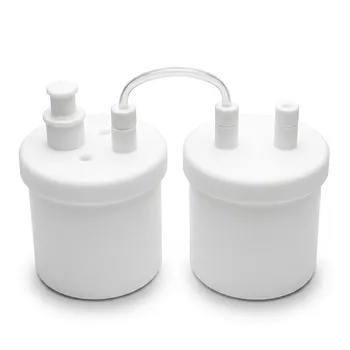
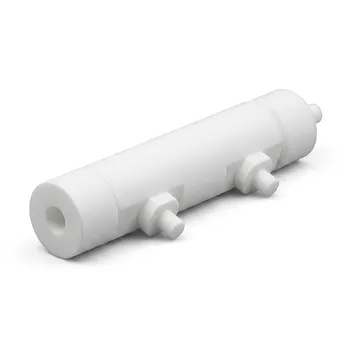
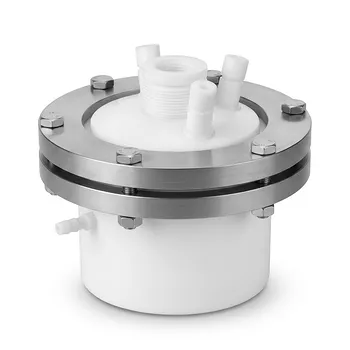
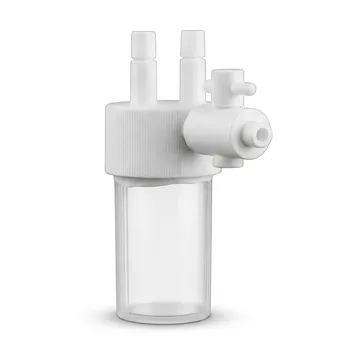
PTFE jackets are favored for their chemical inertness, but their primary mechanical limitation in high-pressure environments is viscoelastic creep. Under sustained mechanical load, the material tends to deform or "flow" over time, which can compromise the hermetic seal of the electrochemical cell. To counter this, engineers must use reinforcement materials like PEEK or dynamic compression hardware such as Belleville washers to maintain long-term seal integrity.
While PTFE offers superior insulation and chemical resistance, its mechanical instability under high pressure requires active design compensation. Success depends on reinforcing the jacket with rigid polymers and using spring-loaded components to counteract the material's natural tendency to deform.
Addressing the Phenomenon of Viscoelastic Creep
The Risk of Cold Flow under Pressure
The most significant mechanical hurdle for PTFE in high-pressure cells is viscoelastic creep, often referred to as "cold flow." Unlike more rigid plastics, PTFE slowly shifts its shape when subjected to constant mechanical stress, leading to a gradual loss of compression.
Impact on Seal Integrity
In a high-pressure electrochemical cell, this deformation can cause leaks at the electrode interface. As the PTFE jacket thins under load, the initial torque applied to fittings may dissipate, resulting in a failure of the hermetic seal.
Maintaining Dimensional Stability
While PTFE provides sufficient rigidity to support internal electrode cores in low-pressure settings, it lacks the structural memory required for high-pressure stability. Engineers must treat PTFE as a sealing element rather than a primary structural component.
Reinforcement and Engineering Strategies
Integration with Rigid Backing Materials
To mitigate creep, PTFE jackets are often reinforced with materials like PEEK (Polyether ether ketone). PEEK provides the mechanical "skeleton" necessary to withstand high pressures, while the PTFE layer remains the primary chemical barrier and insulator.
Utilizing Dynamic Compression Hardware
The use of Belleville washers (disc springs) is a standard solution for maintaining seal tension. These washers provide a "live load" that automatically compensates for the PTFE's deformation, ensuring that the compression on the seal remains constant even as the material creeps.
Precision Machining and Low-Friction Assembly
PTFE’s low-friction properties facilitate the assembly of complex cell components without seizing. This allows for precision machining into thin-walled sleeves or multi-ring junctions that can be tightly integrated into industrial process fittings.
Understanding the Trade-offs
Thermal and Electrical Limitations
PTFE is thermally stable up to approximately 260 °C, beyond which it undergoes thermal decomposition and releases irritant fumes. Furthermore, while its high electrical resistivity is ideal for insulation, it can lead to a slower sensor response when operating in ultra-low-conductivity media.
Chemical Inertness vs. Mechanical Strength
The very properties that make PTFE desirable—its lack of molecular cross-linking—are what cause its mechanical weakness. You must balance the need for extreme purity and leaching resistance against the requirement for a rigid, high-pressure housing.
Accuracy and Repeatability Concerns
Material leaching from non-inert containers can introduce impurity ions, skewing electrochemical data. While PTFE prevents this ion migration, any mechanical failure due to creep will introduce noise or complete data loss through cell leakage or short-circuiting.
How to Apply This to Your Project
To successfully integrate PTFE jackets into high-pressure electrochemical designs, tailor your engineering approach based on your specific operational constraints.
- If your primary focus is long-term seal reliability: Use Belleville washers in your compression fittings to provide a continuous, self-adjusting load that compensates for material creep.
- If your primary focus is extreme structural loads: Reinforce the PTFE jacket with a PEEK sleeve to combine the chemical inertness of fluoropolymers with the mechanical strength of high-performance thermoplastics.
- If your primary focus is trace analytical accuracy: Utilize high-purity PTFE to eliminate impurity leaching, but ensure the operating temperature remains strictly below 250 °C to avoid material degradation.
By treating PTFE as a dynamic material rather than a static one, you can harness its peerless chemical resistance without sacrificing the mechanical integrity of your high-pressure system.
Summary Table:
| Consideration | Impact on Cell Performance | Engineering Solution |
|---|---|---|
| Viscoelastic Creep | Causes "cold flow," leading to leaks and seal failure. | Use Belleville washers for dynamic, live-load compression. |
| Structural Rigidity | Lack of structural memory under high pressure. | Reinforce with PEEK sleeves for a mechanical "skeleton." |
| Thermal Stability | Decomposition and irritant fumes above 260 °C. | Strict temperature monitoring and cooling systems. |
| Chemical Purity | Prevents ion leaching for accurate trace analysis. | Utilize high-purity PTFE with precision CNC machining. |
Optimize Your High-Pressure Research with KINTEK
Don't let material creep compromise your critical electrochemical data. KINTEK specializes in high-performance fluoropolymer solutions designed to withstand the most demanding laboratory environments.
From everyday basic labware like beakers, crucibles, and reagent bottles to advanced apparatus including custom electrochemical cells, battery testing fixtures, and microwave digestion vessels, we provide the precision you need. Our expertise extends to comprehensive fluid transfer components (tubing, valves, fittings) and bespoke sample prep tools, all crafted from premium PTFE and PFA.
Why choose KINTEK?
- Expert Customization: End-to-end custom CNC fabrication for non-standard machined parts and unique setups.
- Material Focus: An absolute focus on high-performance fluoropolymers to ensure maximum chemical resistance and purity.
- Comprehensive Range: We supply everything from stirring bars and O-rings to complex microchannel reactors and reflux devices.
Ensure your high-pressure systems are leak-proof and analytically pure. Contact KINTEK today to discuss your custom project or volume requirements!
Related Products
- Custom TFM Reaction Vessel with Stainless Steel Jacket and PTFE Inner Cup for High Corrosion Resistance
- Corrosion Resistant PTFE Electrochemical Cell for New Energy Research Inert Insulating Customizable Lab Reaction Vessel
- Acid Resistant PTFE Button Cell Battery Test Fixture Customizable Machining High Purity Electrochemical Testing Clamp
- High Purity Custom PTFE Reaction Cell Electrolytic Tank for Semiconductor and Polysilicon Industrial Applications
- Custom PTFE Thermal Insulation Sleeves Laboratory Vessel Condensation Jackets Virgin Fluoropolymer Machined Components
People Also Ask
- Why are high-performance pressure-resistant reaction vessels required for oxygen-assisted hydrothermal conversion at 150 °C?
- How do magnetic stirring and reaction vessels impact MOF-derived carbon quality? Optimize Your Composite Performance
- Why are PTFE-lined reaction vessels necessary for forced degradation studies? Ensure high-purity results and accuracy.
- Why are PTFE-lined reaction vessels necessary for alkali stability tests? Ensure accurate ionomer degradation data.
- Why is a PTFE-lined reactor required for Mn2O3 synthesis? Achieve High Purity & Corrosion Resistance