PTFE electrode jackets are engineered for extreme thermal environments. They provide a reliable continuous service temperature range of –200 °C to +260 °C (–328 °F to 500 °F). This expansive range ensures the electrode assembly maintains its physical properties during both cryogenic experiments and high-heat sterilization processes.
Core Takeaway: PTFE is the industry standard for electrode jackets because it remains chemically inert and structurally stable from -200°C to +260°C. Operating within these bounds prevents material degradation and ensures the accuracy of temperature-controlled measurements.
The Resilience of PTFE in Extreme Environments
Performance at Cryogenic Temperatures
At the lower end of the spectrum, PTFE retains its functional properties down to -200 °C. Unlike many plastics that become brittle and shatter, PTFE maintains enough compressive plasticity to function in near-absolute zero conditions.
Stability During High-Heat Sterilization
The upper limit of +260 °C is critical for laboratory and medical environments. This threshold allows electrode jackets to endure repeated autoclaving and other thermal sterilization cycles without losing dimensional stability.
Low Thermal Conductivity
Beyond simple survival, PTFE acts as an effective insulator. Its low thermal conductivity helps isolate the internal electrode components from external temperature fluctuations, ensuring more stable data collection.
Material Integrity and Thermal Limits
The Threshold of Decomposition
While PTFE has a crystalline melting point of approximately 327 °C, it should never be used at that level. Gradual decomposition begins once the material exceeds the 260 °C mark, and hazardous pyrolysis accelerates if temperatures surpass 400 °C.
Dimensional Stability and Conductivity
PTFE is favored for electrode jackets because it does not expand or contract significantly within its service range. This high dimensional stability ensures that the fit between the jacket and the electrode remains tight, preventing leaks or mechanical failure.
Chemical Inertness Across Temperatures
A major advantage of PTFE is that its chemical resistance does not fluctuate with temperature. Whether at -100 °C or +200 °C, the jacket remains nearly universal in its resistance to solvents, acids, and bases.
Understanding the Trade-offs
The Impact of Fillers and Additives
The "pure" PTFE range of 260 °C can be compromised if the jacket is manufactured with specific fillers or colorants. Certain additives used to enhance mechanical strength may lower the maximum safe operating temperature of the assembly.
Short-Term Spikes vs. Continuous Use
While PTFE can occasionally withstand short-term spikes up to 300 °C, doing so risks "creeping" or permanent deformation. For electrode jackets where precision fit is mandatory, adhering strictly to the continuous service limit is vital for longevity.
Pressure-Temperature Interdependency
It is a common mistake to assume the temperature limit is independent of pressure. At the higher end of the temperature range, the material's load-bearing capacity decreases, meaning the jacket may fail at lower pressures than it would at room temperature.
How to Apply This to Your Project
When selecting or operating PTFE-jacketed electrodes, your thermal environment should dictate your maintenance and safety protocols.
- If your primary focus is cryogenic research: Ensure your assembly is rated for -200 °C to prevent vacuum seal failures caused by material contraction.
- If your primary focus is high-heat sterilization: Limit autoclave cycles to the 260 °C threshold to prevent the release of toxic decomposition byproducts.
- If your primary focus is long-term sensor accuracy: Maintain operating temperatures well below the 260 °C limit to preserve the jacket’s dimensional integrity and seal.
By respecting these thermal boundaries, you ensure that your PTFE electrode jackets provide a durable, chemically resistant barrier for even the most sensitive analytical applications.
Summary Table:
| Property | Specification | Operational Benefit |
|---|---|---|
| Continuous Service Range | -200°C to +260°C | Reliable performance in cryogenic and high-heat environments |
| Melting Point | ~327°C (Crystalline) | Maintains structural integrity near extreme limits |
| Chemical Resistance | Universal | Inert to acids, bases, and solvents at all service temperatures |
| Thermal Conductivity | Low | Isolates internal components from external fluctuations |
| Dimensional Stability | High | Prevents leaks and maintains tight fits during thermal cycling |
Elevate Your Research with KINTEK’s High-Performance Fluoropolymers
Maximize the precision and longevity of your experiments with KINTEK, your premier source for high-performance PTFE and PFA laboratory supplies. Whether you need everyday essentials like beakers, crucibles, and reagent bottles or specialized high-purity trace analysis instruments, our materials are engineered to withstand the most demanding thermal and chemical environments.
From comprehensive fluid transfer components (tubing, valves, fittings) and sample prep tools (filters, pipettes, tweezers) to advanced electrochemical cells, battery testing fixtures, and microwave digestion vessels, KINTEK provides virtually every lab tool imaginable. Backed by end-to-end custom CNC fabrication, we specialize in delivering everything from high-volume standard orders to complex, non-standard machined parts tailored to your unique specifications.
Ensure absolute material integrity for your next project—contact us today to discuss your custom lab requirements!
Related Products
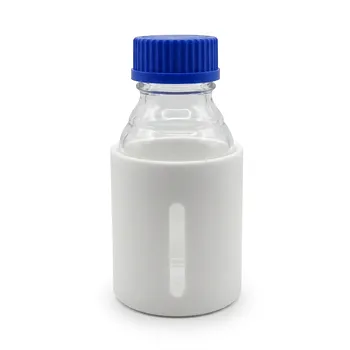
- Custom PTFE Thermal Insulation Sleeves Laboratory Vessel Condensation Jackets Virgin Fluoropolymer Machined Components
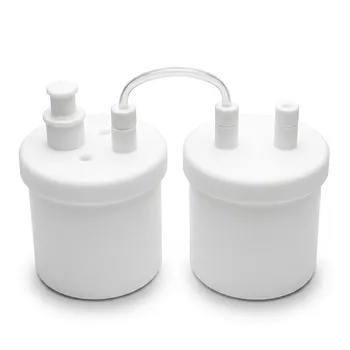
- Custom PTFE Absorption Bottle with Condensation Jacket Corrosion Resistant Low Background High Purity
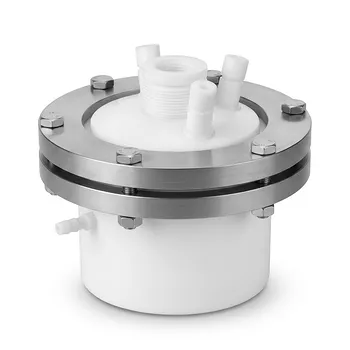
- Custom PTFE Reaction Apparatus Flange Sealed Corrosion Resistant Jacketed Vessel with Stirring Bar and Thermometer Ports
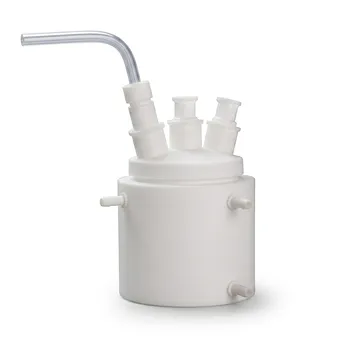
- PTFE Continuous Reaction System Jacketed Constant Pressure Dropping Funnel Corrosion Resistant HF Resistant Customizable
- PTFE Anti Scald Heat Insulation Sleeve Hot Plate Support Feet Laboratory Benchtop Protection Customizable Thermal Barrier
People Also Ask
- What is the temperature range for different types of PTFE polymer seal jackets? Find the Right Material for Extreme Temperatures
- Why is PTFE used in electrical applications? Unmatched Insulation for High-Performance Components
- How do PTFE electrode jackets benefit cyclic voltammetry and trace-metal analysis? Achieve High-Purity Precision
- What mechanical and fabrication advantages do PTFE electrode jackets provide? Strength & Precision for Lab Applications
- What are the technical limitations and safety considerations for PTFE electrode jackets? Master Thermal & Mechanical Limits