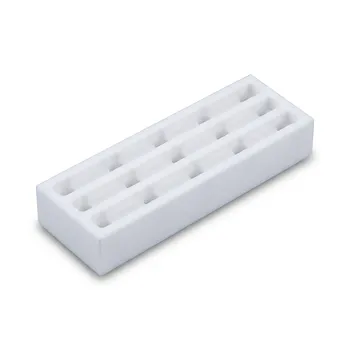
The primary function of a PTFE electrode jacket is to provide total electrical insulation and chemical protection for the electrode shaft. By encapsulating the non-working surfaces, the jacket ensures that electrochemical reactions occur exclusively at the intended active tip while shielding internal conductors from corrosion and parasitic side reactions.
Core Takeaway: A PTFE electrode jacket acts as a precision barrier that isolates the electrochemical interface, ensuring that all measured current corresponds strictly to the defined surface area of the electrode tip rather than the supporting hardware.
Ensuring Measurement Precision and Data Integrity
Defining the Active Surface Area
The jacket limits the exposed cross-sectional area of the electrode to the specific tip intended for study. This precision is critical for calculating accurate current density, as it prevents the sides of the electrode from contributing to the total measured signal.
Eliminating Parasitic Currents
By providing high electrical insulation, the PTFE sleeve prevents "leakage" or parasitic currents along the length of the electrode shaft. This isolation ensures that the data collected during sensitive tests, such as cyclic voltammetry, reflects only the chemistry occurring at the working interface.
Maintaining Hermetic Seals
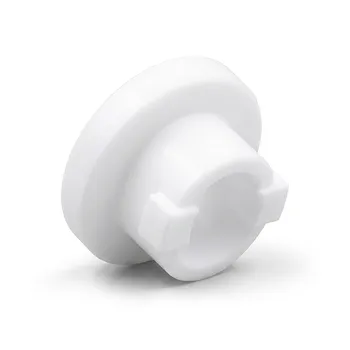
In electrochemical reactors and fuel cells, PTFE jackets often double as stoppers or seals. They provide a hermetic seal that prevents electrolyte leakage and protects external electrical contacts from aggressive internal environments.
Material Advantages in Aggressive Environments
Chemical Inertness and Resistance
PTFE is utilized because it is virtually chemically inert, allowing it to withstand acidic corrosive media and aggressive solvents that would degrade glass, ceramic, or metal. This resilience ensures that the housing itself does not contaminate the electrolyte or influence the reaction.
Hydrophobicity and Contamination Control
The hydrophobic nature of PTFE prevents the "wicking" of electrolytes up the shaft of the electrode. This characteristic ensures that the liquid contact remains strictly at the tip, maintaining the integrity of the three-electrode cell setup.
Thermal Stability
These jackets maintain their structural and chemical properties across a wide temperature range. This allows researchers to conduct experiments in varying thermal conditions without risking the melting or degradation of the electrode housing.
Understanding the Trade-offs and Limitations
Addressing Viscoelastic Creep
While PTFE is chemically robust, it is susceptible to viscoelastic creep, meaning it can slowly deform under sustained mechanical pressure. In high-pressure applications, this can lead to a loss of seal integrity over time if not properly managed.
Structural Reinforcement Requirements
To combat deformation, PTFE components are sometimes integrated with more rigid materials like PEEK (Polyether ether ketone) or metal cores. In specialized fittings, Belleville washers may be used to maintain constant compression and compensate for the material's tendency to flow.
Mechanical Rigidity Limits
While lightweight, PTFE is softer than many alternative materials. If an application requires extreme mechanical stiffness or resistance to high-velocity abrasive particles, a pure PTFE jacket may require a protective outer sleeve or a hybrid material design.
How to Optimize Your Electrode Configuration
Making the Right Choice for Your Goal
- If your primary focus is analytical precision: Use a precision-machined PTFE jacket to strictly define the exposed cross-sectional area for accurate current density calculations.
- If your primary focus is high-pressure testing: Opt for a PTFE jacket reinforced with a PEEK core or mechanical tensioners to prevent seal failure due to material creep.
- If your primary focus is aggressive chemical resistance: Prioritize high-purity PTFE housings to ensure zero contamination and long-term durability in acidic or oxidative media.
Selecting the appropriate PTFE configuration ensures that your electrochemical data is a true reflection of the interface chemistry, uncompromised by the surrounding environment.
Summary Table:
| Key Feature | Functional Benefit | Impact on Research |
|---|---|---|
| Electrical Insulation | Eliminates parasitic leakage currents | Ensures accurate current density and data integrity |
| Chemical Inertness | Resists aggressive acids and solvents | Prevents electrolyte contamination and housing decay |
| Surface Area Control | Defines the exact active electrode tip | Allows for precise analytical measurement calculations |
| Hydrophobicity | Prevents electrolyte wicking up the shaft | Keeps the electrochemical reaction strictly localized |
| Thermal Stability | Maintains integrity across temperature ranges | Supports reliable testing in diverse thermal conditions |
Optimize Your Electrochemical Performance with KINTEK
Maximize the precision of your data with high-performance fluoropolymer components from KINTEK. Whether you require standard PTFE electrode jackets and electrochemical cells or custom-engineered reaction apparatus, our end-to-end CNC fabrication ensures your equipment withstands the most aggressive environments.
From everyday labware (beakers, crucibles, reagent bottles) and fluid transfer components (tubing, valves, fittings) to advanced battery testing fixtures and custom hydrothermal synthesis liners, KINTEK provides virtually all laboratory supplies crafted from high-purity PTFE and PFA. We specialize in delivering everything from high-volume consumables like stirring bars and gaskets to complex, non-standard machined parts tailored to your specific research needs.
Ready to upgrade your lab setup? Contact our experts today for bespoke fluoropolymer solutions.
Related Products
- Custom PTFE Thermal Insulation Sleeves Laboratory Vessel Condensation Jackets Virgin Fluoropolymer Machined Components
- Custom PTFE Absorption Bottle with Condensation Jacket Corrosion Resistant Low Background High Purity
- Custom PTFE Reaction Apparatus Flange Sealed Corrosion Resistant Jacketed Vessel with Stirring Bar and Thermometer Ports
- PTFE Continuous Reaction System Jacketed Constant Pressure Dropping Funnel Corrosion Resistant HF Resistant Customizable
- PTFE Anti Scald Heat Insulation Sleeve Hot Plate Support Feet Laboratory Benchtop Protection Customizable Thermal Barrier
People Also Ask
- What is the temperature range for different types of PTFE polymer seal jackets? Find the Right Material for Extreme Temperatures
- Why is PTFE used in electrical applications? Unmatched Insulation for High-Performance Components
- How do PTFE electrode jackets benefit cyclic voltammetry and trace-metal analysis? Achieve High-Purity Precision
- What mechanical and fabrication advantages do PTFE electrode jackets provide? Strength & Precision for Lab Applications
- What are the technical limitations and safety considerations for PTFE electrode jackets? Master Thermal & Mechanical Limits