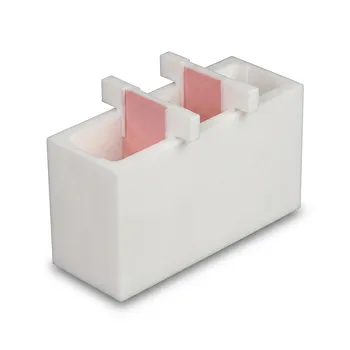
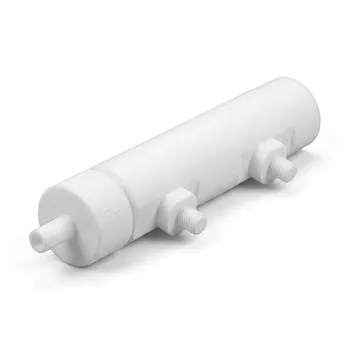
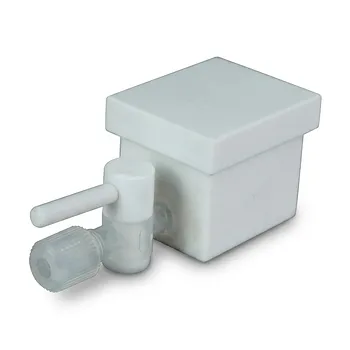
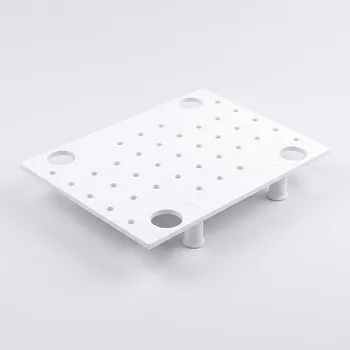
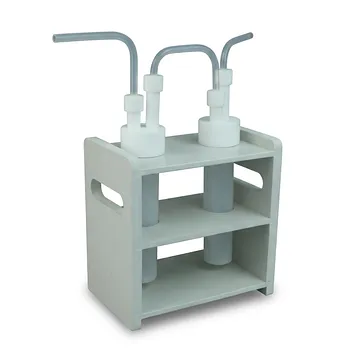
PTFE electrode bodies leverage low surface energy and inherent hydrophobicity to resist fouling. These properties prevent the accumulation of proteins, oils, and environmental contaminants on the sensor surface. By maintaining a clean interface, these sensors experience significantly less signal drift and require far fewer manual cleanings or recalibrations in continuous-duty applications.
The "non-stick" nature of PTFE is a critical design choice for continuous-duty sensors because it maintains measurement accuracy by preventing contaminant buildup, thereby extending maintenance intervals and ensuring data integrity in harsh industrial or environmental conditions.
The Mechanics of PTFE Resistance
Low Surface Energy and Molecular Stability
PTFE (Polytetrafluoroethylene) possesses one of the lowest surface energies of any solid material. This means the molecular bonds are extremely stable and do not easily form "hooks" for other substances to latch onto.
Because contaminants like proteins and oils cannot easily form chemical or physical bonds with the surface, they are often washed away by the natural flow of the process liquid. This characteristic is what gives PTFE its well-known "non-stick" properties.
Hydrophobicity and Water Repellency
The material is naturally hydrophobic, meaning it actively repels water and aqueous solutions. This prevents the formation of a stagnant liquid film on the electrode body where minerals or biological matter could settle.
In environmental monitoring, this hydrophobicity is particularly effective at preventing the early stages of biofouling. When microorganisms cannot establish a firm foothold, the sensor remains operational for much longer periods.
Operational Benefits in Continuous Monitoring
Minimizing Signal Drift
In a continuous-duty sensor, "drift" is often caused by the gradual buildup of material on the sensing interface, which interferes with the electrode’s ability to read the environment. By resisting this buildup, PTFE ensures that the sensor output remains stable over weeks or months of operation.
Consistent signal output is vital for automated control systems that rely on real-time data. Without anti-fouling bodies, these systems would require frequent manual offsets to account for the "noise" created by contamination.
Reducing Maintenance Overheads
Manual cleaning and recalibration are the primary drivers of high operational costs for remote or industrial sensors. PTFE bodies significantly extend the time between these maintenance interventions.
This is especially valuable in hazardous industrial processes or remote environmental sites where accessing the sensor is difficult, dangerous, or expensive. The material's durability ensures that the physical body does not degrade despite constant exposure to harsh chemicals.
Understanding the Trade-offs
Mechanical Softness and Wear
While PTFE is chemically inert and anti-foulding, it is a relatively soft plastic compared to materials like PEEK or stainless steel. In high-velocity flows containing abrasive particulates, the PTFE body can suffer from physical erosion or "cold flow" deformation.
Temperature and Pressure Constraints
PTFE has a wide operating temperature range, but it can lose structural integrity under extreme pressure-temperature combinations. It is essential to ensure the housing design accounts for the material’s thermal expansion to prevent seal failure.
How to Apply This to Your Project
When selecting a sensor body for a long-term installation, the material choice should be dictated by the specific contaminants present in your process.
- If your primary focus is protein or oil-rich environments: PTFE is the gold standard for preventing the sticky "masking" effect that these substances cause on other plastics.
- If your primary focus is reducing operational expenditure (OPEX): Specify PTFE bodies to maximize the intervals between manual cleaning and recalibration cycles.
- If your primary focus is high-pressure/abrasive slurries: Consider a reinforced PTFE or a more rigid fluoropolymer to balance anti-fouling with mechanical durability.
By prioritizing materials with low surface energy, you ensure that your sensor remains a source of truth rather than a maintenance burden.
Summary Table:
| Feature | PTFE Characteristic | Operational Benefit |
|---|---|---|
| Surface Energy | Extremely low molecular bond strength | Prevents proteins and oils from adhering to the sensor |
| Wettability | High Hydrophobicity | Repels aqueous films to stop mineral and biofouling buildup |
| Signal Stability | Foul-resistant interface | Minimizes signal drift and ensures long-term data integrity |
| Maintenance | Non-stick surface | Extends recalibration intervals and reduces manual cleaning (OPEX) |
| Durability | High chemical inertness | Maintains structural integrity in harsh industrial environments |
Optimize Your Continuous Monitoring with KINTEK
Stop battling signal drift and high maintenance costs. KINTEK specializes in precision-engineered solutions crafted from high-performance fluoropolymers like PTFE and PFA. From custom electrochemical cells and electrode accessories to high-purity fluid transfer components, we provide the anti-fouling hardware necessary for reliable data.
Our expertise extends from everyday labware (beakers, tubes, and filtration tools) to complex, bespoke CNC-fabricated parts designed for your specific application. Whether you need standard consumables or advanced reaction apparatus like hydrothermal synthesis liners and microchannel reactors, KINTEK delivers end-to-end manufacturing excellence.
Ready to upgrade your sensor reliability?
Contact KINTEK Today for Custom Fluoropolymer Solutions
Related Products
- White PTFE Electrolytic Cell with Movable Slider and Insulated Lid for Fluorine Corrosion Resistance
- Custom PTFE Corrosion Resistant Insulating Electrophoresis Reaction Cell with Septum and Valves for Low Background Trace Analysis
- Custom PTFE Electrolytic Cell Corrosion Resistant Low Background Reaction Vessel with Inlet Outlet Ports
- Corrosion Resistant PTFE Electrochemical Cell for New Energy Research Inert Insulating Customizable Lab Reaction Vessel
- Square PTFE Electrochemical Cell for Silicon Wafer Processing and Hydrofluoric Acid Resistance in Semiconductor and New Energy Research
People Also Ask
- What makes PTFE an ideal construction material for custom electrochemical cells and electronic analytical instrumentation housings? Discover superior chemical resistance and electrical insulation
- How do custom PTFE electrochemical cells improve the accuracy of stability testing for alkaline catalysts compared to glass cells?
- How does the hydrophobicity of PTFE benefit electrochemical measurements? Enhance Stability and Precision in Your Lab
- How are electrolytic cells utilized in the Hall-Héroult process? Optimizing Purity and Energy Efficiency
- What are the primary components required for the construction of a standard electrolytic cell? Essential Hardware Guide