PTFE (Polytetrafluoroethylene) serves as an ideal electrode jacket because of its near-infinite electrical resistance and high dielectric strength. These properties ensure that electrical current is strictly confined to the intended electrode surface, preventing leakage currents and signal interference that would otherwise degrade the accuracy of electrochemical measurements.
PTFE’s exceptional volume resistivity and dielectric strength create a near-perfect electrical barrier. This isolation is critical for ensuring that measured data reflects true faradaic processes rather than stray capacitance or parasitic losses along the electrode shaft.
The Foundation of Electrical Isolation
Extreme Volume Resistivity
PTFE possesses a volume resistivity exceeding 10¹⁸ Ω·cm, which is among the highest of any known solid material. This level of resistance effectively eliminates leakage currents, ensuring that the electrical path remains entirely through the electrolyte and the active electrode tip.
High Dielectric Strength
With a dielectric strength of up to 60 MV/m, PTFE can withstand intense electrical fields without experiencing insulation breakdown. This allows for thin-walled jacketing that remains reliable even in high-voltage electrochemical applications.
Molecular Neutrality and Electronic Balance
The insulation performance of PTFE stems from its molecular neutrality and electronic balance. Because the fluorine atoms tightly bound to the carbon backbone are highly electronegative, there are no "free" electrons available to facilitate conduction.
Impact on Signal Accuracy and Integrity
Minimizing Stray Capacitance
In high-frequency applications, the low dielectric constant of PTFE minimizes stray capacitance along the electrode shaft. This prevents the "smearing" of signals and ensures that the response time of the electrode remains fast and accurate.
Reducing Ohmic Drops
By providing a robust barrier, PTFE prevents current from bypassing the intended circuit through the jacket material. This minimizes ohmic drops, allowing the researcher to maintain precise control over the potential at the electrode-solution interface.
Stability Across Frequencies and Temperatures
Unlike many polymers that lose insulating properties when heated, PTFE remains stable across a wide range of temperatures and frequencies. This makes it indispensable for electrodes used in varying environmental conditions or complex impedance spectroscopy.
Understanding the Trade-offs
Mechanical Vulnerability and "Cold Flow"
While PTFE is an excellent electrical insulator, it is physically soft and subject to creep or "cold flow" under mechanical pressure. If an electrode is clamped too tightly, the insulation may thin out over time, potentially leading to a localized electrical short.
Challenges in Bonding
The same molecular neutrality that makes PTFE a great insulator also gives it extremely low surface energy. This makes it notoriously difficult to bond to the electrode metal, often requiring specialized etching or mechanical interference fits to prevent electrolyte seepage behind the jacket.
Thermal Expansion Mismatch
PTFE has a relatively high coefficient of thermal expansion compared to most electrode metals (like platinum or gold). Rapid temperature cycling can cause the jacket to expand away from the metal, creating micro-gaps that allow moisture to enter and compromise the electrical isolation.
Making the Right Choice for Your Goal
How to Apply This to Your Project
When selecting or designing an electrode jacket, the specific demands of your experiment should dictate how you leverage PTFE's properties.
- If your primary focus is high-precision analytical chemistry: Utilize PTFE to ensure that the extremely low currents being measured are not masked by background leakage or parasitic noise.
- If your primary focus is high-voltage electrolysis: Rely on PTFE’s high dielectric strength to prevent insulation failure and ensure operator safety during high-potential experiments.
- If your primary focus is variable-temperature testing: Account for PTFE's thermal expansion by using a spring-loaded or compression-fit seal to maintain a tight interface between the jacket and the electrode.
PTFE remains the gold standard for electrode insulation because it provides a nearly transparent electrical interface between the instrument and the chemical reaction.
Summary Table:
| Property | Value / Characteristic | Impact on Electrode Performance |
|---|---|---|
| Volume Resistivity | >10¹⁸ Ω·cm | Eliminates leakage currents for precise measurements. |
| Dielectric Strength | Up to 60 MV/m | Prevents insulation breakdown in high-voltage applications. |
| Dielectric Constant | Exceptionally Low | Minimizes stray capacitance and signal "smearing." |
| Chemical Structure | Highly Electronegative | No free electrons available to facilitate conduction. |
| Thermal Stability | Consistent Performance | Maintains insulation across wide temperature ranges. |
Elevate Your Lab’s Precision with KINTEK Fluoropolymer Solutions
Ensure the integrity of your electrochemical data with high-performance insulation from KINTEK. We specialize exclusively in high-performance fluoropolymers, offering an exhaustive range of PTFE and PFA laboratory supplies. From everyday basic labware (beakers, crucibles, reagent bottles) and sample prep tools (filters, pipettes, tweezers) to advanced reaction apparatus like custom electrochemical cells, battery testing fixtures, and microwave digestion vessels, we provide the ultimate barrier against electrical interference.
Whether you require high-purity trace analysis instruments, complex fluid transfer components (tubing, valves, fittings), or bespoke CNC-fabricated parts tailored to your unique specifications, KINTEK delivers end-to-end manufacturing excellence. Don't let leakage currents compromise your research—leverage our expertise in non-standard machined parts and high-volume orders.
Contact us today to discuss your custom project or high-volume needs!
Related Products
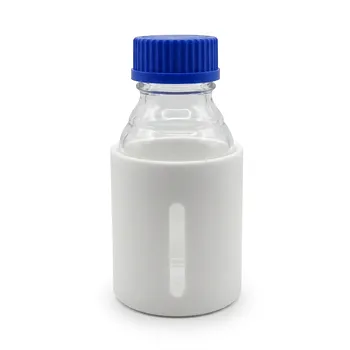
- Custom PTFE Thermal Insulation Sleeves Laboratory Vessel Condensation Jackets Virgin Fluoropolymer Machined Components
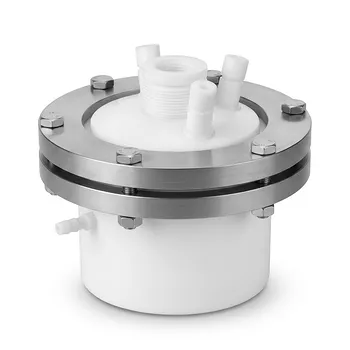
- Custom PTFE Reaction Apparatus Flange Sealed Corrosion Resistant Jacketed Vessel with Stirring Bar and Thermometer Ports
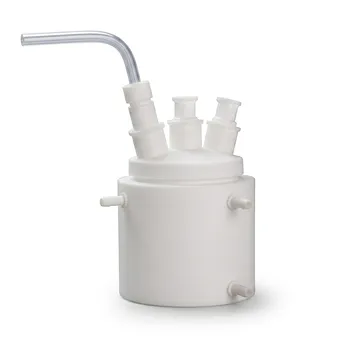
- PTFE Continuous Reaction System Jacketed Constant Pressure Dropping Funnel Corrosion Resistant HF Resistant Customizable
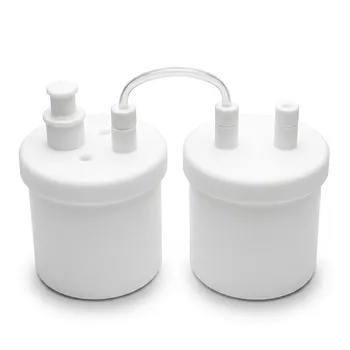
- Custom PTFE Absorption Bottle with Condensation Jacket Corrosion Resistant Low Background High Purity
- White PTFE Electrolytic Cell with Movable Slider and Insulated Lid for Fluorine Corrosion Resistance
People Also Ask
- What is the temperature range for different types of PTFE polymer seal jackets? Find the Right Material for Extreme Temperatures
- Why is PTFE used in electrical applications? Unmatched Insulation for High-Performance Components
- How do PTFE electrode jackets benefit cyclic voltammetry and trace-metal analysis? Achieve High-Purity Precision
- What mechanical and fabrication advantages do PTFE electrode jackets provide? Strength & Precision for Lab Applications
- What are the technical limitations and safety considerations for PTFE electrode jackets? Master Thermal & Mechanical Limits