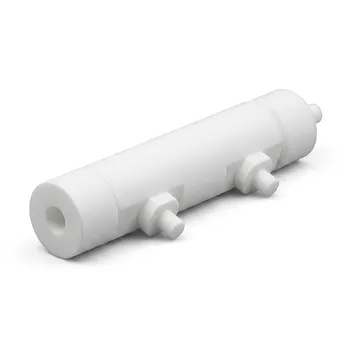
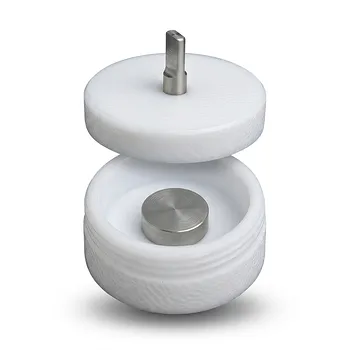
The standard PTFE electrode jacket assembly is a specialized protective housing comprising a precision-machined PTFE outer tube, an internal conductive core, a distal sealing zone, and a proximal electrical interface. This configuration ensures that the electrode's active element is isolated from harsh chemical environments while maintaining a precise, repeatable surface area for electrochemical measurement.
An electrode jacket assembly serves as both a chemical barrier and an electrical insulator, leveraging PTFE's high resistivity to ensure that signals captured by the potentiostat are not corrupted by leakage currents or environmental degradation.
The Core Structural Components
The PTFE Outer Shell
The primary structural member is a precision-machined or extruded PTFE tube with a typical wall thickness of 0.5 to 2 mm. This component provides the necessary mechanical rigidity while acting as a high-performance electrical insulator.
The Internal Conductive Core
Housed within the PTFE shell is the conductive core, which carries the electrical signal from the sensing surface to the instrumentation. This core is typically made of noble metals or carbon, depending on the specific sensing requirements of the application.
The Distal Sealing Zone
The distal sealing zone is a critical interface located at the tip of the electrode where the PTFE and the core meet. It is designed to expose a specific, fixed geometric area of the electrode to the electrolyte, ensuring consistent current density measurements.
The Proximal Connection Point
At the opposite end, the assembly terminates in a proximal connection point, usually featuring a metallic contact like a banana plug. This interface allows for a secure, low-resistance connection to potentiostat cables and high-precision measurement hardware.
Functional Advantages of PTFE Integration
Electrical Insulation and Signal Integrity
PTFE possesses a volume resistivity exceeding 10¹⁸ Ω·cm and a dielectric strength of up to 60 MV/m. These properties are essential for minimizing leakage currents and stray capacitance, which can otherwise obscure faradaic processes.
Chemical and Thermal Resilience
The assembly leverages PTFE’s hydrophobicity and chemical inertness to protect the internal core from aggressive electrolytes that would destroy glass or metal housings. This allows the assembly to maintain structural integrity in highly corrosive or high-temperature environments.
Defining the Active Surface
By encasing the core tightly, the jacket ensures that only the intended sensing surface interacts with the electrolyte. This prevents "creeping" of the liquid behind the insulation, which is a common cause of measurement error in lower-quality assemblies.
Understanding the Trade-offs
Thermal Expansion Mismatch
PTFE has a high coefficient of thermal expansion compared to the metallic conductive core. Rapid temperature cycling can cause the distal seal to expand and contract at different rates, potentially leading to electrolyte leakage into the jacket.
Mechanical Softness
While PTFE is chemically robust, it is mechanically soft and prone to "cold flow" or deformation under high pressure. Over-tightening mounting brackets or physical impacts can distort the precision-machined wall, affecting the electrode's alignment.
Porosity and Contamination
If the PTFE is not high-grade or is poorly machined, it can exhibit microporosity. This can trap trace contaminants from previous experiments, leading to cross-contamination that is difficult to remove through standard cleaning protocols.
Making the Right Choice for Your Goal
To ensure your electrode jacket assembly meets the demands of your specific laboratory environment, consider the following recommendations:
- If your primary focus is low-current sensing: Prioritize assemblies with thicker PTFE walls (near 2 mm) to maximize dielectric strength and minimize stray capacitance.
- If your primary focus is high-temperature chemistry: Opt for assemblies with specialized distal seals designed to accommodate the thermal expansion differences between PTFE and the metal core.
- If your primary focus is aggressive acidic or basic media: Ensure the assembly uses high-purity, non-porous PTFE to prevent chemical ingress and ensure long-term housing stability.
By understanding these structural components and material properties, you can maintain the high level of signal precision required for definitive electrochemical research.
Summary Table:
| Component | Key Feature | Primary Function |
|---|---|---|
| PTFE Outer Shell | Precision-machined (0.5-2mm) | Chemical isolation and high-performance electrical insulation |
| Internal Conductive Core | Noble metals or Carbon | Reliable signal transmission from sensing surface to hardware |
| Distal Sealing Zone | Fixed geometric tip interface | Defines the active surface area and prevents electrolyte leakage |
| Proximal Connection | Metallic contact point | Ensures a secure, low-resistance connection to potentiostats |
Elevate Your Laboratory Precision with KINTEK
Ensure absolute signal integrity and chemical resilience in your research with KINTEK’s high-performance fluoropolymer solutions. Whether you need everyday basic labware (beakers, measuring cylinders, crucibles, reagent bottles, and digestion tubes) or specialized components for electrochemical research, we provide the precision your data demands.
Why Choose KINTEK?
- Comprehensive Range: From fluid transfer components (tubing, valves) and sample prep tools (filters, pipettes, tweezers) to advanced reaction apparatus like custom electrochemical cells, battery testing fixtures, and microwave digestion vessels.
- Custom Engineering: Backed by end-to-end custom CNC fabrication, we deliver everything from complex non-standard machined parts to bespoke laboratory setups.
- Material Expertise: Our exclusive focus on high-performance PTFE and PFA ensures your equipment survives the most aggressive chemical and thermal environments.
Ready to upgrade your lab setup? Contact our experts today to discuss your custom requirements!
Related Products
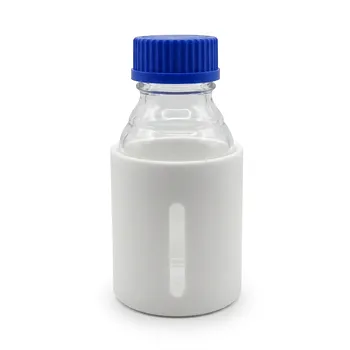
- Custom PTFE Thermal Insulation Sleeves Laboratory Vessel Condensation Jackets Virgin Fluoropolymer Machined Components
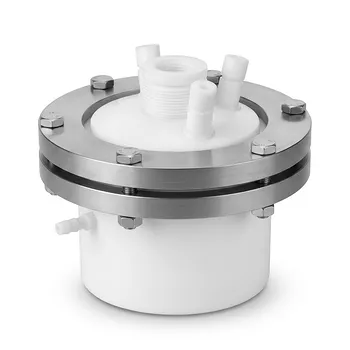
- Custom PTFE Reaction Apparatus Flange Sealed Corrosion Resistant Jacketed Vessel with Stirring Bar and Thermometer Ports
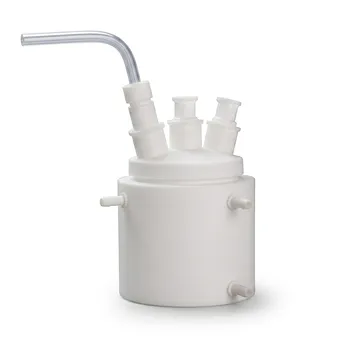
- PTFE Continuous Reaction System Jacketed Constant Pressure Dropping Funnel Corrosion Resistant HF Resistant Customizable
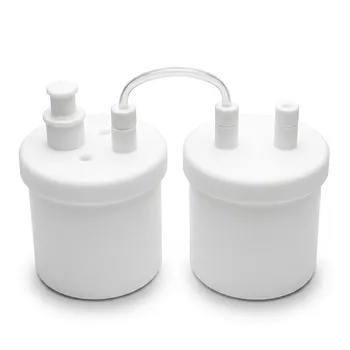
- Custom PTFE Absorption Bottle with Condensation Jacket Corrosion Resistant Low Background High Purity
- Custom PTFE Acid Resistant Support Rack Multi Hole PFA Hydrogen Absorption System Bracket
People Also Ask
- What is the temperature range for different types of PTFE polymer seal jackets? Find the Right Material for Extreme Temperatures
- Why is PTFE used in electrical applications? Unmatched Insulation for High-Performance Components
- How do PTFE electrode jackets benefit cyclic voltammetry and trace-metal analysis? Achieve High-Purity Precision
- What mechanical and fabrication advantages do PTFE electrode jackets provide? Strength & Precision for Lab Applications
- What are the technical limitations and safety considerations for PTFE electrode jackets? Master Thermal & Mechanical Limits