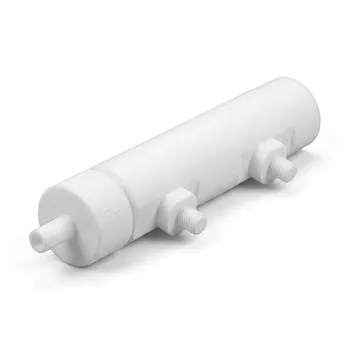
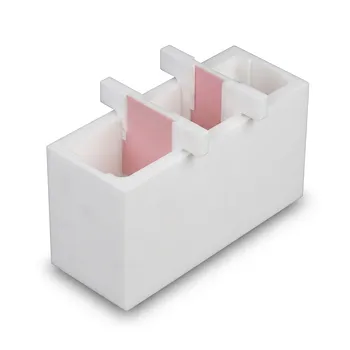
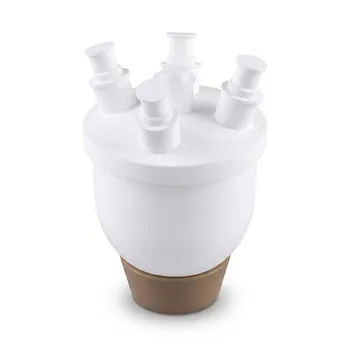
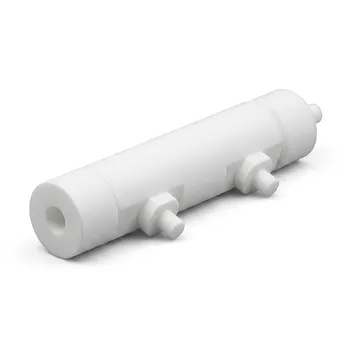
PTFE jackets serve as the primary safeguard for electrical and chemical integrity within electrochemical reactors and fuel cells. They provide essential hermetic sealing and electrical isolation, preventing parasitic currents and protecting internal conductors from corrosive electrolytes. This ensures that electrochemical reactions occur exclusively at the intended active electrode tip, rather than along the supporting shaft.
PTFE is the material of choice for electrode jackets because its near-universal chemical resistance and high dielectric strength prevent both contamination and electrical leakage. It transforms a vulnerable conductor into a precise, protected measurement tool capable of surviving aggressive chemical environments.
Achieving Electrical and Chemical Isolation
Preventing Parasitic Currents
The primary role of a PTFE jacket is to act as a dielectric barrier along the length of an electrode. By insulating the shaft, the jacket ensures that the electrical current is directed solely to the active tip, eliminating stray or parasitic currents that would otherwise skew data.
With a dielectric strength exceeding 60 MV/m, PTFE maintains this isolation even under high-voltage conditions. This property is critical for obtaining clean, reproducible results in sensitive electrochemical measurements.
Protecting Conductors from Corrosion
Electrochemical reactors often utilize highly aggressive media, including concentrated acids or oxidizing agents. PTFE’s stable carbon-fluorine bonds resist chemical attack, shielding the internal metallic conductors from degradation.
Without this protective sheath, the electrolyte would quickly corrode the electrode shaft. This would not only destroy the hardware but also introduce metal ions into the solution, compromising the experiment.
Maintaining Purity and Reaction Integrity
Eliminating Ion Leaching
PTFE is prized for its chemical inertness, meaning it does not leach organic solvents or ions into the electrolyte. This is particularly vital when working with sensitive media like hydrofluoric or sulfuric acid.
By preventing contamination, PTFE jackets ensure that the observed electrochemical behavior is a result of the intended reaction. This makes them indispensable for long-term cycling tests and high-purity fuel cell applications.
Facilitating Accurate Product Detection
In specialized applications like photoelectrochemical testing, the anti-adsorption properties of PTFE are a major advantage. The material prevents trace liquid products from sticking to the surfaces of tubes and fittings.
This non-stick characteristic allows for the accurate collection and detection of reaction products. It ensures that even minute quantities of generated substances are accounted for during analysis.
Enhancing Operational Reliability
Facilitating Ease of Assembly
PTFE is a low-friction material that prevents components from seizing or "galling" during reactor setup. This allows for the smooth assembly and disassembly of cell components and stoppers without damaging delicate parts.
Its mechanical versatility also allows it to be precision-machined into various forms. Whether as thin-walled sleeves or multi-ring junctions, PTFE can be customized to fit specific laboratory or industrial reactor designs.
Thermal and Dielectric Stability
Electrochemical processes often generate heat or require specific thermal environments. PTFE maintains its structural and electrical properties across a massive temperature range, typically from –200 °C to +250 °C.
This thermal stability ensures that the jacket remains functional during high-temperature fuel cell operations. It will not melt, become brittle, or lose its insulating capabilities under standard operating conditions.
Understanding Technical Limitations and Trade-offs
Addressing Viscoelastic Creep
While PTFE is chemically robust, it is susceptible to viscoelastic creep (also known as "cold flow") under sustained mechanical loads. Over time, a PTFE jacket or seal may deform if subjected to constant high pressure.
In high-pressure cell applications, this can lead to a loss of seal integrity. Engineers must account for this by incorporating mechanical reinforcements or specific hardware to compensate for the material's movement.
Mechanical Reinforcement Requirements
To combat creep, PTFE components are often paired with more rigid materials like PEEK. Alternatively, the use of Belleville washers can help maintain constant tension on seals and compression fittings.
While these additions increase the complexity of the reactor design, they are necessary for ensuring long-term reliability. Understanding this trade-off is key to preventing leaks in industrial or high-pressure environments.
How to Apply This to Your Project
When integrating PTFE jackets into your electrochemical system, your choice should be driven by the specific demands of your reaction environment.
- If your primary focus is aggressive chemical resistance: Utilize high-density PTFE jackets to ensure zero ion leaching and maximum protection against acids and strong oxidizers.
- If your primary focus is high-pressure operation: Reinforce PTFE seals with PEEK sleeves or spring-loaded washers to counteract the effects of viscoelastic creep.
- If your primary focus is trace product analysis: Prioritize PTFE or PFA components for all electrolyte-contact surfaces to take advantage of their superior anti-adsorption properties.
By matching the specific grade and reinforcement of the PTFE jacket to your operational parameters, you ensure both the precision of your data and the longevity of your equipment.
Summary Table:
| Feature | Benefit to Electrochemical Systems |
|---|---|
| High Dielectric Strength | Prevents parasitic currents; ensures reaction occurs only at the electrode tip. |
| Chemical Inertness | Resists aggressive acids and oxidizers; eliminates ion leaching/contamination. |
| Thermal Stability | Maintains integrity across a wide range (–200 °C to +250 °C). |
| Anti-adsorption | Prevents trace products from sticking to surfaces for accurate detection. |
| Low Friction | Facilitates easy assembly and prevents components from seizing. |
Optimize Your Electrochemical Performance with KINTEK’s Precision Fluoropolymers
Ensure the integrity of your research with high-performance PTFE and PFA solutions. From standard labware like beakers and reagent bottles to advanced electrochemical cells, battery testing fixtures, and custom-machined reactor components, KINTEK delivers the chemical resistance and electrical isolation your sensitive applications demand.
Whether you need high-purity trace analysis tools or complex, non-standard parts crafted via end-to-end custom CNC fabrication, our exclusive focus on high-performance fluoropolymers guarantees unmatched durability and precision.
Ready to eliminate contamination and protect your conductors?
Contact our experts today to discuss your bespoke laboratory setup or high-volume order!
Related Products
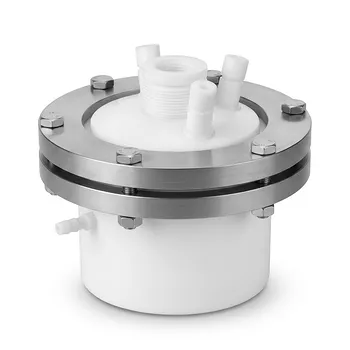
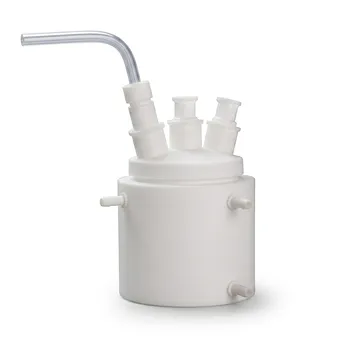
- Custom PTFE Reaction Apparatus Flange Sealed Corrosion Resistant Jacketed Vessel with Stirring Bar and Thermometer Ports
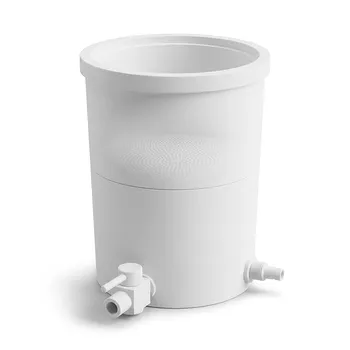
- PTFE Continuous Reaction System Jacketed Constant Pressure Dropping Funnel Corrosion Resistant HF Resistant Customizable
- Custom TFM Reaction Vessel with Stainless Steel Jacket and PTFE Inner Cup for High Corrosion Resistance
- Custom PTFE Thermal Insulation Sleeves Laboratory Vessel Condensation Jackets Virgin Fluoropolymer Machined Components
- Large Scale PTFE Double Layer Reaction Tank with Integrated Filter Plate for Chemical Processing
People Also Ask
- How do perfluorinated solvent environments influence the selection of reaction vessels and fluid handling components in nonaqueous emulsion polymerizations? Choose fluoropolymer materials.
- Why are high-purity PTFE or PFA reaction vessels recommended for the synthesis of PANI-TiC hybrid materials? - Guide
- Why are fluoroplastic (PTFE) reaction vessels recommended for Methylene Blue (MB) adsorption kinetic experiments?
- Why is a PTFE reaction vessel required for Ti3C2Tx MXene synthesis? Ensure Safe HF Etching & High Purity
- Why is a high-quality PTFE reaction vessel required for the etching preparation of Ti3C2Tx MXene? Ensure Pure Synthesis.