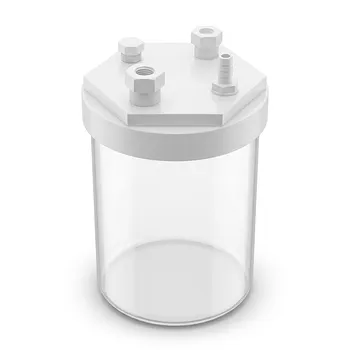
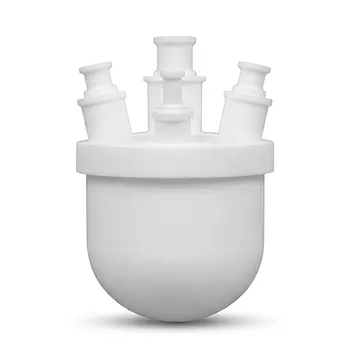
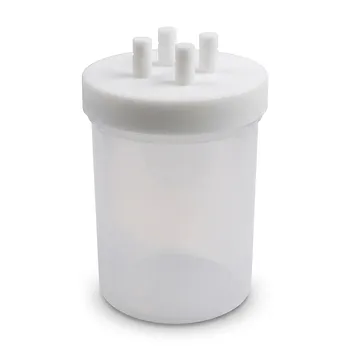
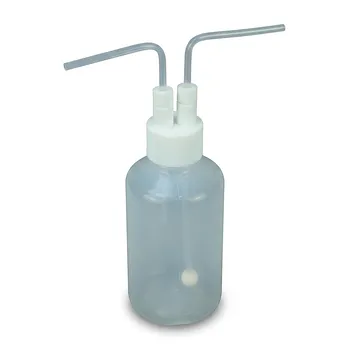
Precision environmental control is the primary driver of success in sol-gel synthesis. In the production of mesoporous iron-carbon nanocomposites, sealed reaction vessels prevent the evaporation of solvents and volatile components to maintain constant pressure, while constant-temperature drying ovens ensure the stable thermal energy required for precursors to organize correctly around surfactant templates.
The use of sealed, temperature-controlled environments is not merely a preference but a structural necessity. These tools ensure that the chemical stoichiometry and thermal kinetics remain consistent enough to allow iron precursors to assemble into a highly ordered, mesoporous architecture.
The Critical Role of Sealed Reaction Vessels
Preventing Solvent Evaporation and Concentration Shifts
Sealed vessels act as a closed system that stops the loss of liquid solvents during the heating process. If the solvent were allowed to evaporate, the concentration of the reactants would shift unpredictably, likely causing the surfactant templates to collapse or aggregate.
Maintaining System Pressure and pH Stability
A sealed environment maintains internal pressure, which stabilizes the liquid phase even as temperatures rise toward the solvent's boiling point. Furthermore, sealing prevents the volatilization of critical chemical agents that regulate the solution's pH, ensuring that the iron components deposit uniformly across the carbon framework.
Facilitating Uniform Precursor Deposition
By trapping all components within the vessel, the system ensures that iron precursors stay in constant contact with the template surfaces. This leads to uniform electrostatic adsorption, allowing the iron to integrate deeply within the pores rather than just coating the exterior of the material.
The Necessity of Constant-Temperature Ovens
Managing the 40°C Stirring Phase
The initial stirring phase at 40°C provides the specific kinetic energy needed for the precursors to begin their alignment without triggering a premature or violent reaction. A constant-temperature oven ensures this energy remains even, preventing "hot spots" that could cause localized structural defects.
Driving Ordered Assembly at 90°C
Increasing the temperature to 90°C facilitates the final transition where iron precursors "lock" into place around the surfactant templates. This precise thermal window is necessary to harden the mesoporous structure while the template is still intact, providing the mechanical strength needed for the final composite.
Ensuring Thermal Homogeneity
Large fluctuations in temperature can lead to varied pore sizes or the complete loss of the mesoporous network. Drying ovens provide the stable, stagnant air environment necessary to ensure every part of the reaction vessel experiences the same thermal conditions simultaneously.
Understanding the Trade-offs and Risks
The Risk of Structural Collapse
If a reaction is conducted in an open vessel, the rapid loss of solvent causes high surface tension forces during drying. This often leads to the collapse of the pores, transforming what should be a mesoporous material into a dense, non-functional solid.
Challenges with Chemical Inhomogeneity
Without the stable environment provided by an oven, the rate of reaction may vary across the sample. This results in chemical gradients, where some areas of the nanocomposite are rich in iron while others are purely carbon, significantly degrading the material's performance.
Making the Right Choice for Your Goal
How to Apply This to Your Project
- If your primary focus is maximizing surface area: You must use high-precision sealed vessels to ensure the surfactant templates remain fully hydrated and structural integrity is maintained.
- If your primary focus is achieving uniform iron distribution: Prioritize the use of a digital constant-temperature oven to eliminate thermal gradients that cause uneven precursor deposition.
- If your primary focus is process repeatability: Standardize the seal integrity and the oven’s ramp-up time to ensure that every batch of nanocomposite meets identical structural specifications.
By meticulously controlling the physical environment of the sol-gel process, you transform a sensitive chemical reaction into a predictable manufacturing standard.
Summary Table:
| Equipment | Primary Function | Impact on Nanocomposite |
|---|---|---|
| Sealed Reaction Vessels | Prevents solvent evaporation & maintains pH/pressure | Ensures uniform precursor deposition and prevents pore collapse. |
| Constant-Temp Ovens | Provides stable thermal kinetics (40°C - 90°C) | Drives ordered assembly and eliminates chemical gradients/hot spots. |
| Environment Control | Eliminates thermal & concentration fluctuations | Guarantees process repeatability and high surface area. |
Elevate Your Sol-Gel Synthesis with KINTEK Precision
Achieving the perfect mesoporous architecture requires labware that can withstand demanding chemical environments without compromising purity. KINTEK specializes in high-performance fluoropolymer solutions designed specifically for advanced material research.
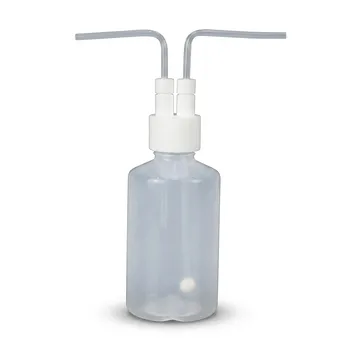
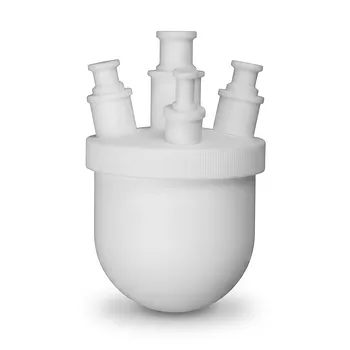
From everyday basic labware like beakers, measuring cylinders, crucibles, and reagent/wash bottles to specialized centrifuge and digestion tubes, we ensure your solvents stay contained and your reactions remain stable. Our expertise extends to high-purity trace analysis instruments, fluid transfer components (tubing, fittings, valves), and sample prep tools (filters, pipettes, tweezers). For complex sol-gel setups, we provide advanced reaction apparatus, microwave digestion vessels, and custom CNC-fabricated parts crafted from premium PTFE and PFA.
Whether you need high-volume consumables like stirring bars and O-rings or a bespoke laboratory setup for iron-carbon nanocomposite production, KINTEK delivers end-to-end excellence.
Ready to standardize your results? Contact us today to discuss your custom fluoropolymer needs!
References
- Maria Ulfa, Hadi Nur. Fuzzy logic-assisted development of high-performance mesoporous iron-carbon nanocomposites for environmental applications. DOI: 10.4491/eer.2025.506
This article is also based on technical information from Kintek Knowledge Base .
Related Products
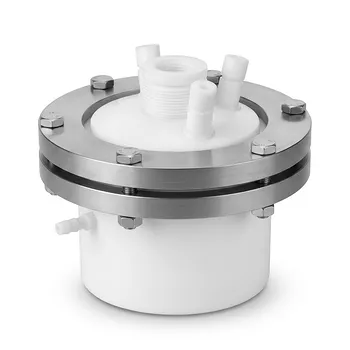
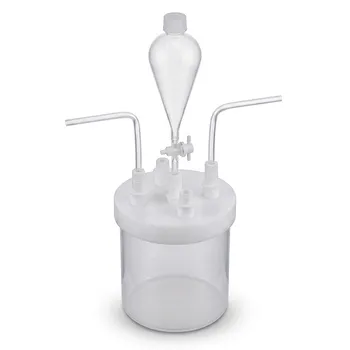
- Custom PTFE Reaction Apparatus Flange Sealed Corrosion Resistant Jacketed Vessel with Stirring Bar and Thermometer Ports
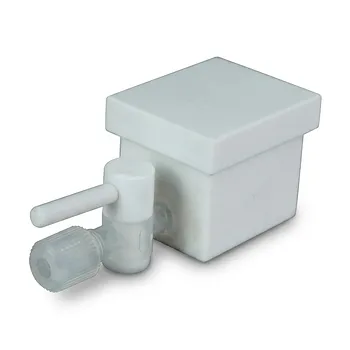
- Corrosion Resistant PTFE Evaporation Cell Electrophoresis Tank 400ml Flame Retardant Insulated Reaction Vessel Customizable
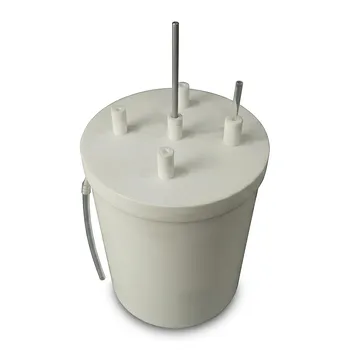
- PTFE 10L Reaction Vessel with Stirring Paddle Customizable Corrosion Resistant High Temperature Reactor for Biopharmaceutical and Chemical Processing
- High Purity PTFE Corrosion Resistant Reaction Vessel with Luer Fittings and Caps for Trace Analysis
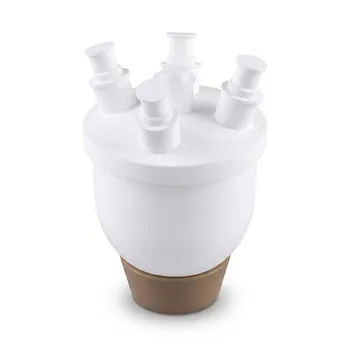
- Custom PTFE Multi Port Reaction Bottle Caps Corrosion Resistant High Purity GL32 GL45 Laboratory Closures
People Also Ask
- How do perfluorinated solvent environments influence the selection of reaction vessels and fluid handling components in nonaqueous emulsion polymerizations? Choose fluoropolymer materials.
- Why are high-purity PTFE or PFA reaction vessels recommended for the synthesis of PANI-TiC hybrid materials? - Guide
- Why are fluoroplastic (PTFE) reaction vessels recommended for Methylene Blue (MB) adsorption kinetic experiments?
- Why is a PTFE reaction vessel required for Ti3C2Tx MXene synthesis? Ensure Safe HF Etching & High Purity
- Why is a high-quality PTFE reaction vessel required for the etching preparation of Ti3C2Tx MXene? Ensure Pure Synthesis.