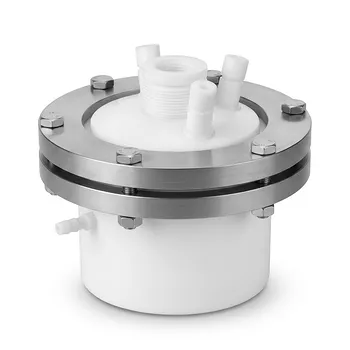
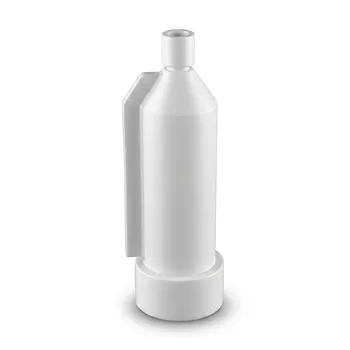
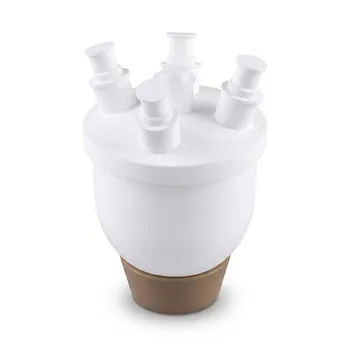
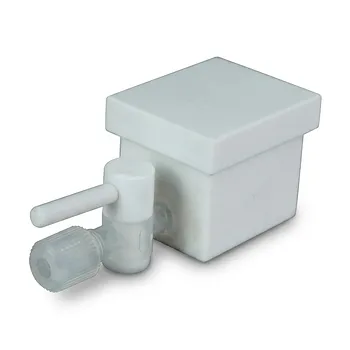
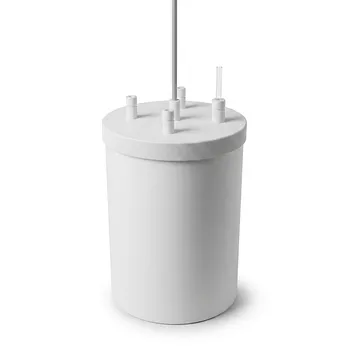
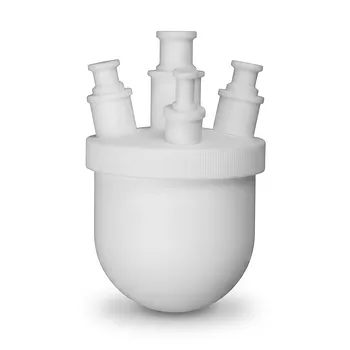
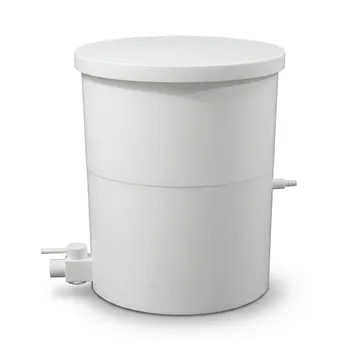
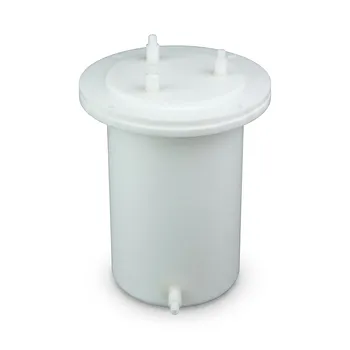
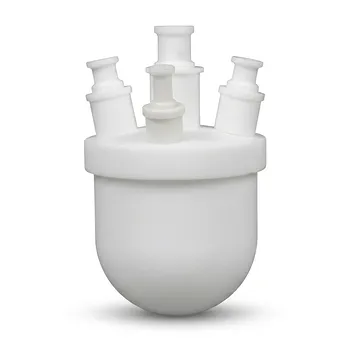
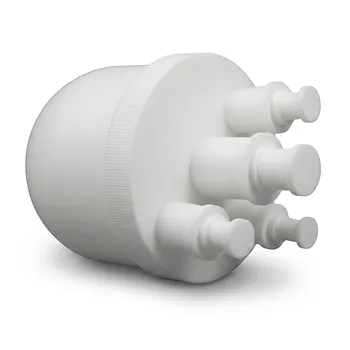
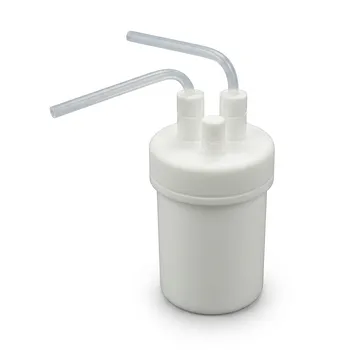
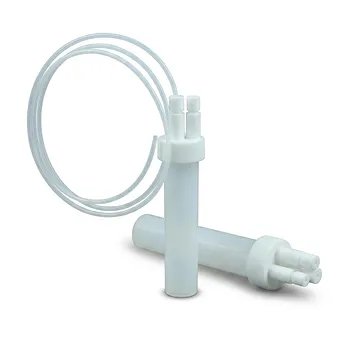
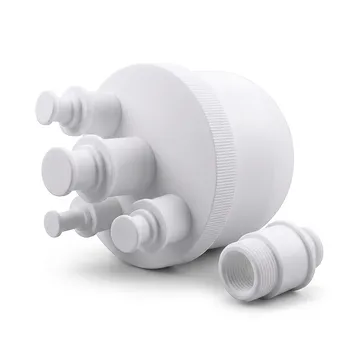
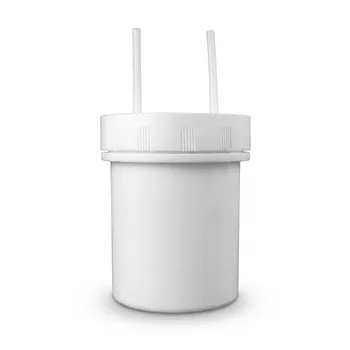
Polytetrafluoroethylene (PTFE) lined sealed reaction vessels are essential because they combine total microwave transparency with extreme chemical inertness and pressure resistance. This unique combination allows microwave energy to heat the reaction solution directly and instantaneously without energy loss, while ensuring that highly reactive precursors like sodium hydrogen selenide (NaHSe) remain uncontaminated. The sealed environment also enables the superheating of solvents, which is critical for the rapid nucleation and precise growth required to produce high-purity CIZSe quantum dots.
The success of CIZSe quantum dot synthesis depends on a "clean" electromagnetic and chemical environment; PTFE provides the necessary transparency for uniform heating and the structural integrity to withstand the high pressures generated during rapid microwave irradiation.
The Role of Microwave Transparency in Thermal Kinetics
Direct Energy Coupling
Unlike traditional heating, which relies on thermal conduction through the vessel walls, PTFE allows microwave energy to pass through the liner virtually unimpeded. This ensures that the energy acts directly on the polar molecules within the reaction solution, leading to volumetric heating.
Instantaneous Temperature Control
The lack of microwave absorption by the PTFE material prevents the vessel itself from becoming a heat sink or a source of thermal lag. This allows for the instantaneous generation of pressure and temperature, which is necessary to drive the specific chemical transitions required for CIZSe core formation.
Safeguarding Chemical Purity and Precursor Integrity
Resistance to Highly Reactive Precursors
The synthesis of CIZSe often involves strong reducing agents and reactive precursors, such as sodium hydrogen selenide (NaHSe) or copper chloride. PTFE’s exceptional chemical inertness ensures that these aggressive reagents do not react with the vessel walls, preventing the introduction of metallic impurities.
Prevention of Autoclave Corrosion
In high-temperature environments, chemical reagents can become highly corrosive to the metallic bodies of standard autoclaves. The PTFE liner acts as a definitive barrier, protecting the outer structural components from erosion and ensuring that no secondary ions leach into the nanocrystal solution.
Minimizing Material Loss
PTFE features extremely smooth, non-stick inner walls that minimize the adsorption of trace elements. This characteristic is vital for ensuring that the synthesized colloidal quantum dots can be fully recovered without loss of yield or cross-contamination between batches.
Managing the High-Pressure Solvothermal Environment
Sustaining Superheated Conditions
A sealed PTFE vessel allows the reaction to occur under autogenous pressure, keeping solvents in a liquid state even when heated well above their boiling points. This superheating significantly accelerates the nucleation kinetics, allowing for a much faster synthesis than open-vessel methods.
Structural Integrity Under Stress
Microwave heating can generate sudden, intense internal pressure. High-performance PTFE liners are engineered to withstand these instantaneous pressure spikes without deforming, maintaining a hermetic seal that is critical for stable crystal growth and morphology control.
Understanding the Trade-offs
Temperature Limitations
While PTFE is highly resilient, it has a functional temperature ceiling, typically around 250°C to 280°C. Exceeding these limits can lead to material softening or the release of fluorinated vapors, which can compromise both the experiment and the equipment.
Thermal Expansion Mismatch
PTFE has a high coefficient of thermal expansion compared to the stainless steel jackets often used in microwave reactors. If the cooling process is not managed correctly, this mismatch can cause the liner to deform or make it difficult to remove from the reactor body.
Pressure Safety Boundaries
While these vessels are designed for high pressure, they are not invincible. Users must strictly adhere to filling volume limits (typically 30%–60% of capacity) to prevent over-pressurization, which could lead to a catastrophic failure of the sealed system.
How to Apply This to Your Project
Choosing the Right Setup
- If your primary focus is Maximum Purity: Prioritize high-purity PTFE liners with documented low-leachable profiles to ensure your CIZSe quantum dots remain free of metallic contaminants.
- If your primary focus is Controlled Morphology: Ensure your reaction vessel is rated for high pressure and features a reliable sealing mechanism to maintain the stable solvothermal environment required for precise crystal growth.
- If your primary focus is High-Throughput Synthesis: Utilize the non-stick properties of PTFE to facilitate rapid cleaning and minimize material loss between consecutive synthesis runs.
By leveraging the electromagnetic transparency and chemical resilience of PTFE, researchers can achieve the rapid, clean, and controlled environments necessary for high-performance quantum dot fabrication.
Summary Table:
| Key Feature | Benefit to CIZSe Synthesis | Operational Consideration |
|---|---|---|
| Microwave Transparency | Enables direct volumetric heating for uniform nucleation | Eliminates thermal lag from vessel walls |
| Chemical Inertness | Prevents contamination from NaHSe and reactive precursors | Acts as a barrier against autoclave corrosion |
| Pressure Resistance | Allows superheating of solvents for faster growth | Maintain filling volumes between 30%–60% |
| Non-stick Surface | Minimizes material loss and ensures full recovery | Temperature limit typically 250°C–280°C |
Elevate Your Synthesis with KINTEK’s High-Performance Fluoropolymers
Precision in CIZSe quantum dot fabrication starts with the right environment. KINTEK specializes in manufacturing high-performance laboratory supplies crafted exclusively from PTFE and PFA, ensuring your microwave-assisted reactions are free from contamination and optimized for pressure.
From everyday basics like beakers, crucibles, and reagent bottles to specialized microwave digestion vessels, hydrothermal synthesis liners, and custom reaction apparatus, we offer everything you need for advanced material research. Whether you require standard consumables—such as stirring bars and septa—or bespoke laboratory setups delivered through our end-to-end custom CNC fabrication, KINTEK provides the structural integrity and chemical purity your project demands.
Ready to optimize your lab’s efficiency? Contact our experts today to discuss your custom requirements and secure absolute focus on high-performance materials!
References
- Shubham Shishodia, Raphaël Schneider. Microwave-assisted synthesis of highly photoluminescent core/shell CuInZnSe/ZnS quantum dots as photovoltaic absorbers. DOI: 10.1039/d4na00893f
This article is also based on technical information from Kintek Knowledge Base .
Related Products
- Custom PTFE Reaction Apparatus Flange Sealed Corrosion Resistant Jacketed Vessel with Stirring Bar and Thermometer Ports
- Custom TFM Reaction Vessel with Stainless Steel Jacket and PTFE Inner Cup for High Corrosion Resistance
- PTFE Lined High Pressure Digestion Vessel 50ml High Temperature Hydrothermal Synthesis Tank
- High Purity PTFE Corrosion Resistant Reaction Vessel with Luer Fittings and Caps for Trace Analysis
- High Performance Customizable PTFE Reaction Vessel and Corrosion Resistant Polytetrafluoroethylene Flask for Chemical Laboratory Use
People Also Ask
- How do perfluorinated solvent environments influence the selection of reaction vessels and fluid handling components in nonaqueous emulsion polymerizations? Choose fluoropolymer materials.
- Why are high-purity PTFE or PFA reaction vessels recommended for the synthesis of PANI-TiC hybrid materials? - Guide
- Why are fluoroplastic (PTFE) reaction vessels recommended for Methylene Blue (MB) adsorption kinetic experiments?
- Why is a PTFE reaction vessel required for Ti3C2Tx MXene synthesis? Ensure Safe HF Etching & High Purity
- Why is a high-quality PTFE reaction vessel required for the etching preparation of Ti3C2Tx MXene? Ensure Pure Synthesis.