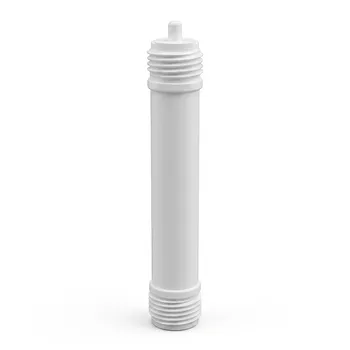
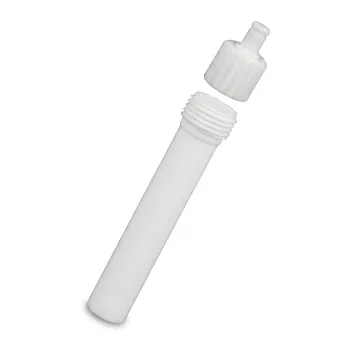
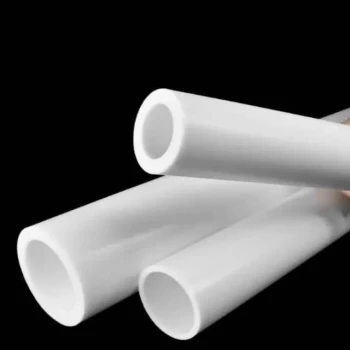
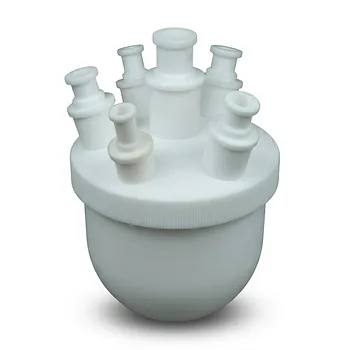
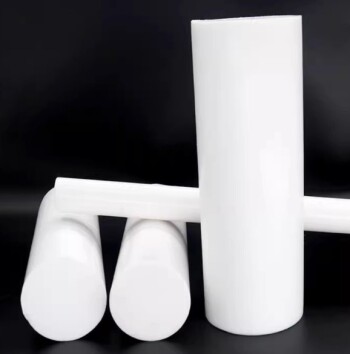
PTFE and PFA liners act as the critical chemical and physical barrier during solvothermal synthesis. They provide a strictly inert reaction environment that prevents precursor solutions from reacting with or corroding the metal autoclave body. This isolation is essential for maintaining the high purity, structural integrity, and specific crystal morphology required for high-quality Metal-Organic Frameworks (MOFs).
These fluoropolymer liners serve as "chemical reactors within a reactor," ensuring that the delicate coordination chemistry of MOFs occurs in a sterile, non-reactive environment. By blocking metal ion contamination and resisting aggressive solvents, they allow for precise control over crystal nucleation and growth.
The Essential Function of Chemical Isolation
Preventing Metal Ion Contamination
The primary role of the PTFE (Polytetrafluoroethylene) or PFA (Perfluoroalkoxy) liner is to isolate the reaction mixture from the stainless steel walls of the autoclave. Without this barrier, the metal ions from the steel vessel could leach into the solution, introducing impurities that disrupt the specific coordination between the intended metal ions and organic ligands.
Resilience Against Aggressive Solvents
Solvothermal synthesis often employs strong polar organic solvents like dimethylformamide (DMF) or ethanol, along with acidic or alkaline reagents. Fluoropolymer liners are chosen for their exceptional chemical inertness, allowing them to withstand these corrosive media at elevated temperatures without degrading or leaching into the product.
Preservation of Structural Integrity
By maintaining a pure environment, these liners ensure that the resulting MOF crystals, such as ZIF-8 or HKUST-1, possess a well-defined porous structure. Any interference from the vessel material could lead to irregular crystal morphology or a loss of the high surface area that defines MOF performance.
Influencing Crystal Morphology and Nucleation
Low Surface Energy and Non-Adhesive Properties
Fluoropolymers possess low surface energy, which prevents the reaction components from sticking to the container walls. This "non-stick" quality ensures that the synthesis yield is maximized and facilitates much easier cleaning of the vessel after the reaction is complete.
Facilitating Controlled Nucleation
The smooth surface of the liner encourages controlled nucleation within the bulk solution or on specific submerged substrates rather than on the vessel walls. This allows researchers to achieve more uniform crystal sizes and shapes, which is critical for applications in gas storage and catalysis.
Microwave-Assisted Synthesis Advantages
In microwave-assisted MOF synthesis, PTFE is particularly valuable because it is microwave-transparent. This allows electromagnetic energy to pass through the liner and heat the reaction mixture directly, facilitating rapid nucleation and significantly faster crystal growth compared to traditional thermal heating.
Understanding Technical Limitations and Trade-offs
Temperature and Pressure Thresholds
While robust, PTFE and PFA have upper temperature limits, typically around 250°C to 260°C. Exceeding these temperatures can lead to mechanical softening or "cold flow," which risks compromising the seal and potentially damaging the outer stainless steel autoclave.
Permeability and Gas Diffusion
At high temperatures and pressures, certain small molecules or gases may slowly permeate through the fluoropolymer material. This can lead to a slight loss of pressure over very long synthesis durations or cause the liner to discolor or "bulge" if gases become trapped between the liner and the metal shell.
Mechanical Deformation Over Time
Repeated heating and cooling cycles can cause the liners to deform or lose their original shape. Ensuring a tight fit between the liner and the autoclave is necessary to prevent the stainless steel shell from being exposed to the reaction vapors if the liner warps or shrinks.
How to Optimize Liner Use for MOF Synthesis
Selecting and maintaining the right liner is a prerequisite for reproducible MOF production.
- If your primary focus is high-purity crystalline structures: Always use a fresh or meticulously cleaned PTFE liner to eliminate cross-contamination from previous synthesis batches.
- If your primary focus is rapid or microwave-assisted synthesis: Utilize PTFE liners specifically for their microwave-transparent properties to ensure uniform heating of the reaction medium.
- If your primary focus is high-temperature reactions (above 200°C): Monitor the liner for signs of mechanical deformation or "creeping" to prevent potential leaks and damage to the autoclave body.
- If your primary focus is alkaline-heavy environments: Rely on the superior corrosion resistance of PFA or PTFE to protect the structural integrity of your high-pressure digestion tanks.
By serving as a robust, non-reactive internal vessel, these liners provide the stable environment necessary for the precise molecular assembly of Metal-Organic Frameworks.
Summary Table:
| Key Role | Benefit to MOF Synthesis | Material Property |
|---|---|---|
| Chemical Isolation | Prevents metal ion leaching and contamination | Exceptional chemical inertness |
| Surface Protection | Facilitates non-stick, high-yield crystal recovery | Low surface energy |
| Nucleation Control | Ensures uniform crystal size and morphology | Smooth, non-adhesive surface |
| Energy Transfer | Enables rapid, uniform heating in microwave reactors | Microwave-transparent (PTFE) |
| Corrosion Barrier | Protects stainless steel autoclave bodies | High resistance to acids/alkalis |
Elevate Your MOF Research with KINTEK’s Fluoropolymer Expertise
Precision in solvothermal synthesis demands uncompromising material purity. KINTEK specializes in high-performance PTFE and PFA laboratory supplies, providing the critical barriers needed for successful Metal-Organic Framework production.
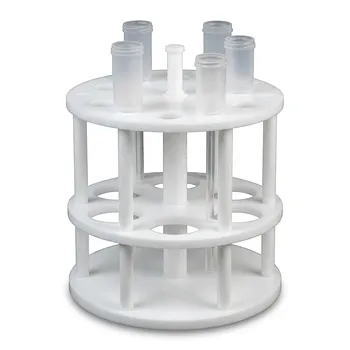
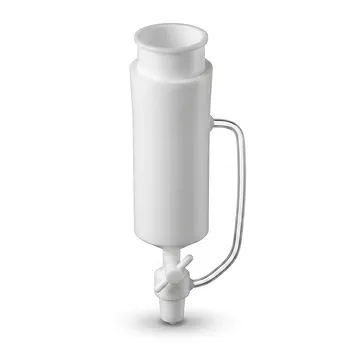
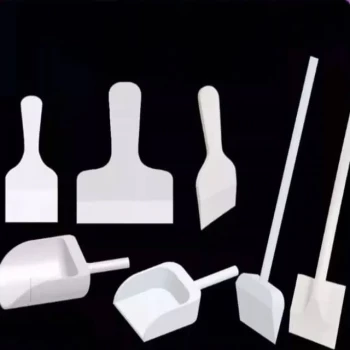
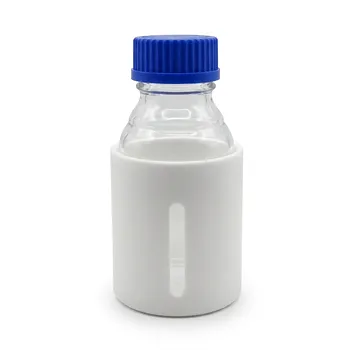
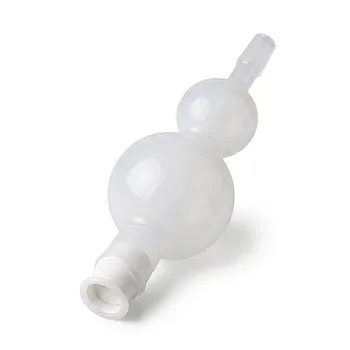
From everyday basic labware—including beakers, crucibles, reagent bottles, and digestion tubes—to advanced components like high-purity trace analysis instruments and fluid transfer systems (tubing, valves, and fittings), we cover every stage of your workflow. For complex research, we offer custom CNC fabrication for non-standard machined parts, electrochemical cells, and microwave digestion vessels tailored to your exact specifications.
Why choose KINTEK?
- End-to-End Customization: Bespoke laboratory setups designed for unique reaction environments.
- Comprehensive Range: Everything from stir bars and O-rings to high-volume reactor liners.
- Absolute Material Focus: Specialized exclusively in high-performance fluoropolymers to ensure zero contamination.
Ensure the integrity of your next synthesis. Contact our technical team today to source standard supplies or develop custom-engineered solutions for your laboratory.
References
- E. S. Sowbakkiyavathi, Subramania Angaiah. Recent advances in MOFs, MOF-derived materials and their composites as electrocatalysts for hydrogen production. DOI: 10.1039/d5su00199d
This article is also based on technical information from Kintek Knowledge Base .
Related Products
- High Purity PTFE Microwave Digestion Vessel for Soil and Food Analysis Acid Resistant Fluoropolymer Sample Preparation Liners
- High Purity PTFE Microwave Digestion Vessel Replacement Liner for Acid Sample Preparation and Trace Analysis
- High Purity PFA Crucible and Corrosion Resistant PTFE Beaker for Trace Analysis and Custom Laboratory Applications
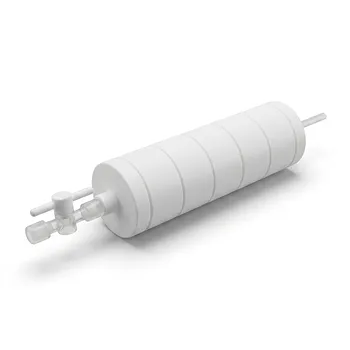
- PTFE Corrosion Resistant Filter with PFA Valve Connections and Integrated Sieve Plate
- PTFE PFA Vacuum Filtration System Corrosion Resistant Customizable Shatterproof Laboratory Device
People Also Ask
- Why is PTFE preferred for microwave-assisted Ln-MOF synthesis? Key Benefits for Purity & Speed
- How does the dielectric property of PTFE benefit microwave-assisted digestion? Unlock Rapid and Uniform Sample Heating
- What are the advantages of using microwave digestion vessels? Optimize EG@MO synthesis with superior thermal control.
- What safety features are commonly integrated into microwave digestion vessels? Ensuring High-Pressure Laboratory Safety
- What are the advantages of using microwave digestion vessels for environmental analysis? Boost speed and sample accuracy.