Perfluorinated surfactant salts act as emulsifiers and processing aids in fluoropolymer synthesis, while PTFE and PFA equipment protects the process from corrosion and contamination. In aqueous emulsion polymerization, salts such as those derived from perfluorooctanoic acid (PFOA) help disperse fluorinated monomers and growing polymer particles, stabilize the reaction mixture, and support consistent polymerization. The associated chemical processing can involve highly corrosive fluorinated precursors, hydrofluoric acid, and strong oxidizers, making inert fluoropolymer tubing, fittings, valves, and vessels essential for reliable fluid handling.
The surfactant controls the reaction environment; PTFE and PFA preserve the chemical environment. Together, they support stable polymerization while reducing equipment degradation, leaks, and ionic contamination that could compromise product quality or process safety.
How Perfluorinated Surfactant Salts Support Polymerization
Stabilizing the Aqueous Emulsion
Fluorinated monomers and oligomeric particles do not naturally remain uniformly dispersed in water. Perfluorinated surfactant salts position themselves at the interface between the fluorinated phase and the aqueous phase, helping prevent particles from agglomerating.
This produces a more stable emulsion in which polymer particles can grow under controlled conditions.
Improving Reaction Consistency
A stable dispersion gives initiators and monomers more consistent access to the growing polymer particles. That can increase polymerization rates and improve control over particle formation and reaction behavior.
The result is a more repeatable process, which is important when the polymer must meet tightly controlled mechanical, chemical, or purity specifications.
Influencing Final Polymer Properties
Surfactant selection and concentration can affect polymer particle size, dispersion stability, and downstream processing behavior. These factors influence how consistently the resulting resin can be isolated, processed, and converted into finished fluoropolymer products.
The surfactant must also be chemically compatible with the fluorinated monomer and reaction conditions.
Why Surfactant Chemistry Must Be Controlled
Avoiding Unintended Chain Transfer
Fluoropolymer molecular weight strongly affects mechanical integrity and chemical resistance. In free-radical polymerization, a chain transfer agent such as methanol can intentionally limit chain growth by terminating one radical and initiating another.
A surfactant with easily transferable hydrogen atoms could unintentionally perform a similar function. That would reduce molecular weight or alter the polymer structure, potentially impairing the final material's performance.
Maintaining High-Purity Resin
The surfactant should support dispersion without introducing reactive impurities or unwanted ionic residues. Residual process chemicals may affect resin purification, thermal behavior, electrical properties, or the suitability of the polymer for high-purity applications.
PFOA-based surfactants have also faced significant environmental and regulatory restrictions. Their historical technical role should therefore be distinguished from current process choices, which may use alternative surfactant systems where required.
Why PTFE and PFA Are Used for Fluid Transfer
Resisting Aggressive Fluorinated Chemicals
Fluoropolymer synthesis and related processing can involve anhydrous hydrofluoric acid, carbonyl fluoride, strong halide acids, oxidizing agents, and other highly aggressive chemicals. Glass, elastomers, and many metals can corrode, embrittle, or release contaminants under these conditions.
PTFE and PFA have highly stable carbon-fluorine structures that provide exceptional resistance to many acids, solvents, oxidizers, and bases. This helps preserve tubing, fittings, valve bodies, reaction vessels, and storage components during demanding processing.
Preventing Ionic Contamination
Equipment degradation is not only a maintenance problem. Corroding metals or deteriorating wetted materials can release ions and particles into the process stream.
High-purity PTFE and PFA offer low levels of extractable and leachable contaminants compared with less suitable construction materials. That is especially important when the fluoropolymer resin or reagent stream must meet demanding purity requirements.
Maintaining Leak-Free Transfer
Chemical fatigue and corrosion can weaken seals, fittings, and fluid lines. A degraded component may leak hazardous material or alter the delivered flow and composition.
PTFE and PFA components maintain their chemical integrity across extended exposure to corrosive fluids. Correctly designed systems still require suitable joints, support, temperature control, and pressure ratings, but the fluoropolymer wetted path substantially reduces material-related failure risk.
Why PFA and PTFE Serve Different Equipment Needs
PFA for Tubing and Welded Assemblies
PFA is valued for fluid transfer lines and valve bodies because it can be melt-processed and welded. This supports smooth, continuous fluid paths with fewer mechanically assembled joints.
Its smooth, non-porous surfaces can also reduce particle entrapment and help limit bubble-related problems in precision chemical delivery.
PTFE for Linings and Machined Components
PTFE provides excellent chemical and thermal resistance and is widely used for vessel linings, seals, storage containers, and custom-machined components. It is particularly useful where chemical inertness matters more than melt-welded fabrication.
The final material choice should account for temperature, pressure, permeability, mechanical loading, dimensional stability, and the specific chemical mixture.
Understanding the Trade-offs
“Inert” Does Not Mean Universal or Unlimited
PTFE and PFA are among the most chemically resistant engineering materials, but no material is immune to every condition. Extreme temperatures, radiation, mechanical stress, permeation, and certain reactive species can still limit service life.
Compatibility must be evaluated against the actual concentration, temperature, pressure, exposure time, and geometry of the system.
Surfactant Residues Require Management
A surfactant can be essential during polymerization but undesirable in the finished resin. Residual surfactant, counterions, or decomposition products may require washing, separation, or other purification steps.
Process design must therefore balance emulsion stability against downstream purity and environmental requirements.
Equipment Purity Depends on the Entire System
Using PTFE or PFA alone does not guarantee a contamination-free process. Particulates, non-fluoropolymer seals, poorly cleaned components, dead legs, and inappropriate joining methods can still introduce impurities.
High-purity performance depends on material selection, manufacturing quality, cleaning, assembly, validation, and disciplined operating procedures.
Making the Right Choice for Your Goal
The correct approach depends on whether the priority is reaction control, final resin quality, or safe chemical handling.
- If your primary focus is stable polymerization: Select a surfactant system that effectively stabilizes the emulsion without acting as an unintended chain transfer agent or interfering with the fluoropolymer's target molecular weight.
- If your primary focus is high-purity resin: Control surfactant residues, counterions, extractables, and equipment leachables through validated purification and cleaning procedures.
- If your primary focus is corrosion resistance: Use appropriately specified PTFE or PFA for wetted tubing, fittings, valves, vessels, and linings exposed to aggressive fluorinated chemicals.
- If your primary focus is precision fluid delivery: Favor high-purity components with suitable surface finish, connection design, pressure rating, and, where useful, PFA's melt-weldable construction.
- If your primary focus is regulatory compliance: Treat PFOA-based surfactants as a historically important technology and verify that the selected process chemistry meets current environmental, occupational, and product requirements.
Understanding both the surfactant's reaction role and the equipment's contamination-control role is the foundation for a controlled, durable, and high-purity fluoropolymer process.
Summary Table:
| Aspect | Perfluorinated Surfactant Salts | PTFE/PFA Equipment |
|---|---|---|
| Role | Emulsifier, processing aid | Corrosion-resistant fluid handling |
| Function | Stabilizes aqueous emulsion | Protects against aggressive chemicals |
| Impact | Affects particle size, molecular weight | Prevents ionic contamination, leaks |
| Key Benefit | Consistent polymerization | High-purity, durable processing |
| Consideration | Avoid chain transfer, manage residues | Material selection, system design |
Optimize your fluoropolymer synthesis with our high-purity PTFE/PFA components. From tubing and valves to custom machined parts, ensure corrosion resistance and contamination control. Contact us today for tailored solutions for your lab or production line.
Related Products
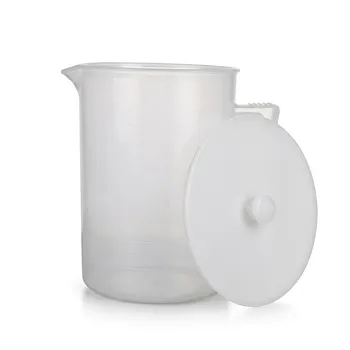
- High Purity PFA Beaker with Handle and Large Capacity Washable Soak Basket Multi Spec Teflon Laboratory Labware
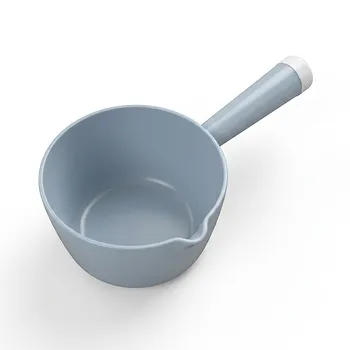
- High Purity PFA Sampling Ladle Custom Molded PTFE Water Scoop Chemical Resistant Laboratory Dipper
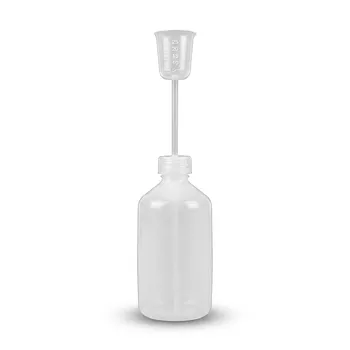
- Corrosion Resistant PFA Bottle Top Dispenser Translucent Squeeze Liquid Extraction System for Ultra Pure Chemical Handling
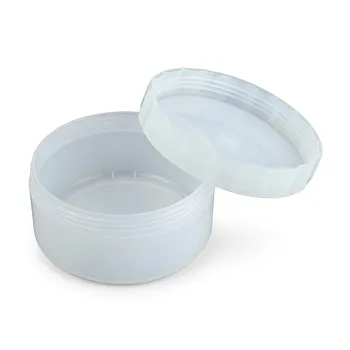
- Corrosion Resistant PFA Reaction Tank High Purity Laboratory Reaction Bottle Wide Mouth PTFE Jar Multiple Specifications
- High Purity PFA Reaction Bottle with Tubing Connection for Corrosive Chemical Synthesis and Trace Analysis
People Also Ask
- Why use chemical-resistant labware for magnesium etching? Ensure High-Purity Results with PFA Beakers
- What are the advantages of high-purity PFA labware for NiFe catalyst prep? Ensure Precision and Trace-Level Purity.
- Why Use PFA Labware for MnFe2O4/rGO Precursors? Ensure Stoichiometric Precision and Purity
- How do fluorinated groups affect monomer design for redox-active fluoropolymers? Balance electronics, sterics, and purity for optimal performance.
- How does thermal cross-linking in multifunctional fluoropolymer monomers affect chemical resistance and thermal stability, and why is high-purity fluoropolymer labware essential during their processing? Discover key insights for robust lab practices.