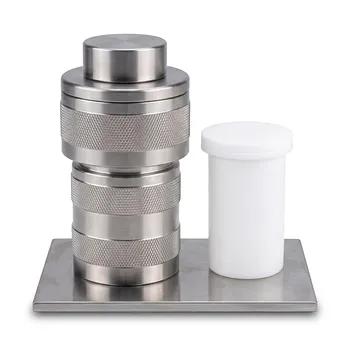
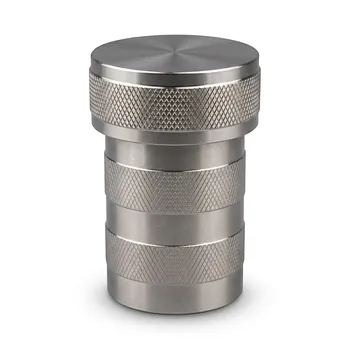
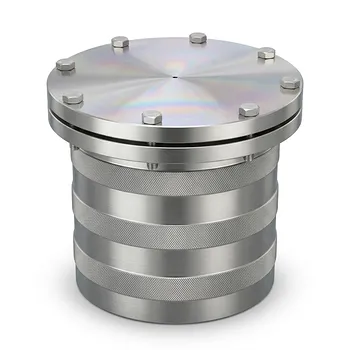
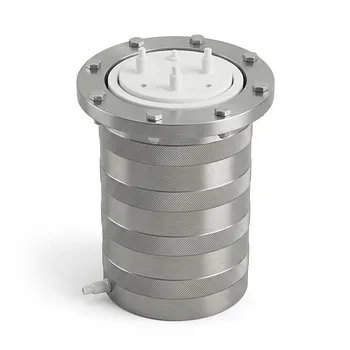
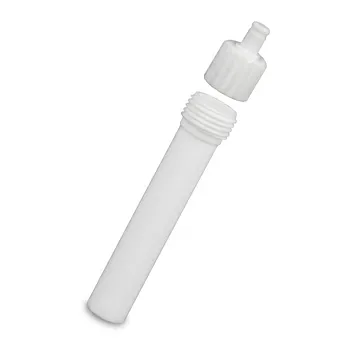
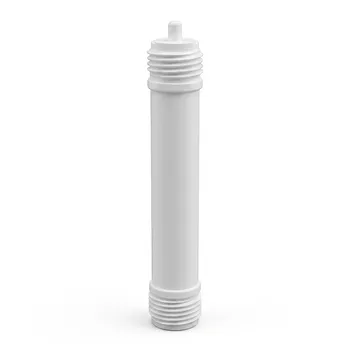
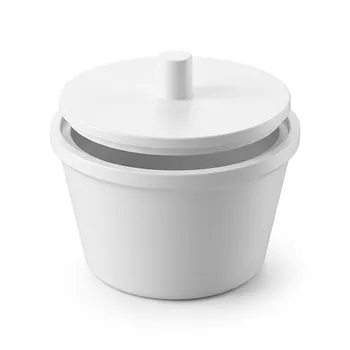
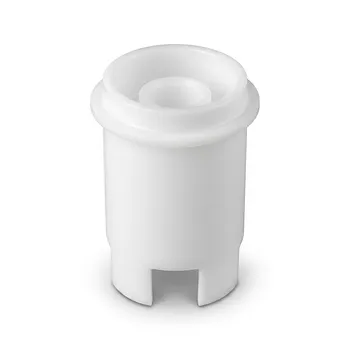
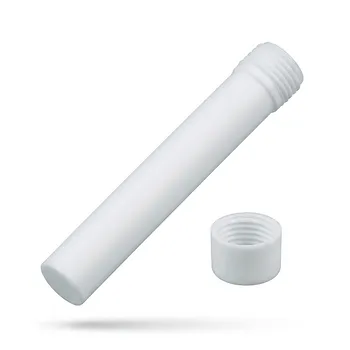
High-pressure autoclaves and chemically inert liners act as the fundamental reactor system for the hydrothermal carbonization (HTC) of carbohydrates. This equipment creates a sealed, high-temperature environment that allows aqueous solutions to remain liquid well above their boiling point, triggering the chemical transformation of sugars into uniform, spherical carbon nanoparticles (CNPs). The liner specifically serves as a protective barrier, preventing metallic contamination and ensuring the high purity required for advanced applications.
The autoclave-liner system enables the synthesis of high-purity CNPs by providing the extreme pressure and temperature necessary to accelerate carbonization kinetics while isolating the reaction from external contaminants. This synergy allows for precise control over particle morphology and chemical integrity.
The Role of the High-Pressure Autoclave
Creating a Superheated Liquid Environment
The autoclave functions by sealing aqueous carbohydrate solutions, allowing the internal pressure to rise as the temperature increases. This pressure keeps the water in a liquid state even when heated to temperatures like 120°C to 220°C, which far exceed the standard atmospheric boiling point.
Accelerating Reaction Kinetics
In this high-pressure environment, the solubility of solid reactants increases and the rate of chemical reactions is significantly boosted. Specifically for CNP synthesis, these conditions accelerate the dehydration and carbonization of glucose or other sugars, leading to faster particle formation.
Regulating Particle Morphology
The controlled environment within the autoclave allows for the precise regulation of nucleation and growth kinetics. This control is what ensures the resulting carbon nanoparticles are spherical and possess uniform dimensions rather than irregular shapes.
The Importance of Chemically Inert Liners
Preventing Metallic Contamination
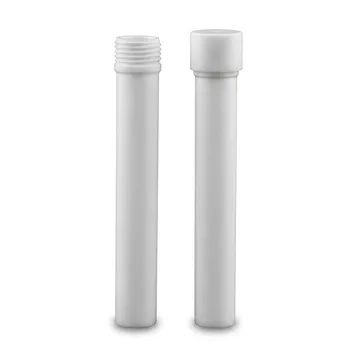
Autoclaves are typically made of high-strength metals that could leach ions into the reaction at high temperatures and pressures. High-performance fluoropolymer liners, such as PTFE (Polytetrafluoroethylene) or PFA, provide exceptional chemical inertness and corrosion resistance to prevent these impurities from entering the CNPs.
Enhancing Product Recovery
Fluoropolymer liners possess extremely low surface energy, which prevents the synthesized nanoparticles from adhering to the container walls. This characteristic ensures that the reaction products can be collected completely and easily after the process is finished.
Facilitating Radical Chemical Stability
By providing a stable interface, the liner ensures that the precursors react only with each other as intended. This stability is critical for maintaining the high purity of the carbonized product, which is essential for its performance in electronics or catalysis.
Understanding the Trade-offs
Temperature and Pressure Limitations
While PTFE liners are highly inert, they have specific thermal limits (typically around 250°C) beyond which they can deform or release toxic fumes. Operators must carefully balance the need for high-temperature kinetics with the physical limitations of the liner material.
Scaling and Heat Transfer Issues
Autoclaves are excellent for batch synthesis at the laboratory scale, but scaling the process to industrial levels presents challenges. Large-vessel heating can be uneven, and the reliance on a secondary liner can slow down the heat transfer from the autoclave walls to the actual reaction solution.
How to Apply This to Your Project
Recommendations for Implementation
- If your primary focus is Maximum Purity: Utilize high-purity PTFE or PFA liners to ensure no metal ions from the autoclave wall interfere with the carbonization process.
- If your primary focus is Particle Uniformity: Carefully calibrate the temperature-time profile of the autoclave to manage the nucleation rate of the carbohydrate precursors.
- If your primary focus is High Yield: Leverage the low surface energy of fluoropolymer liners to ensure total recovery of the synthesized spherical particles.
By integrating the pressure-bearing strength of the autoclave with the chemical protection of an inert liner, researchers can reliably produce carbon nanoparticles with the precise purity and structure required for modern material science.
Summary Table:
| Component | Key Role in CNP Synthesis | Material Benefits |
|---|---|---|
| High-Pressure Autoclave | Creates superheated liquid environment (120°C–220°C) | Accelerates carbonization kinetics & regulates particle morphology. |
| Chemically Inert Liner | Acts as a protective reaction barrier | Prevents metal ion leaching & ensures high chemical purity. |
| Fluoropolymer (PTFE/PFA) | Low surface energy interface | Facilitates easy product recovery & prevents nanoparticle adhesion. |
Elevate Your Synthesis with KINTEK’s High-Performance Fluoropolymer Solutions
Precision in Carbon Nanoparticle (CNP) synthesis requires equipment that can withstand extreme conditions without compromising purity. At KINTEK, we provide an exhaustive range of laboratory supplies crafted exclusively from high-performance PTFE and PFA to ensure your research remains free from contamination.
From everyday basic labware (beakers, measuring cylinders, and reagent bottles) to specialized hydrothermal synthesis liners, microwave digestion vessels, and custom electrochemical cells, our products are designed for chemical inertness and thermal stability. Whether you need standard consumables like stirring bars and O-rings or complex, non-standard machined parts delivered via our end-to-end custom CNC fabrication, we have the expertise to support your most advanced projects.
Ready to optimize your lab’s efficiency and product purity?
Contact us today to discover how KINTEK’s bespoke fluoropolymer solutions can transform your material science workflows!
References
- Pietro Di Matteo, Águeda Sonseca. Carbon Nanoparticle-Loaded PLA Nanofibers via Electrospinning for Food Packaging. DOI: 10.3390/jcs9010025
This article is also based on technical information from Kintek Knowledge Base .
Related Products
- PTFE Lined High Pressure Digestion Vessel 50ml High Temperature Hydrothermal Synthesis Tank
- High Temperature Corrosion Resistant Hydrothermal Synthesis Reactor with TFM Inner Liner and Straight Cylinder Design
- Custom TFM Reaction Vessel with Stainless Steel Jacket and PTFE Inner Cup for High Corrosion Resistance
- High Pressure Custom TFM Reactor Stainless Steel Outer Vessel PTFE Inner Cup for Corrosive Synthesis
- High Purity PTFE Microwave Digestion Vessel Replacement Liner for Acid Sample Preparation and Trace Analysis
People Also Ask
- What are the benefits of using a PTFE-lined vessel for carbon-sulfur cathode treatment? Maximize Purity & Performance
- Why are PTFE-lined pressure digestion vessels required for the preparation of Ag/CeO2 catalysts? Purity & Performance
- What is the function of high-pressure PTFE digestion vessels in mineral analysis? Optimize Sample Mineralization
- What safety features are typically incorporated into high-pressure PTFE digestion vessel designs? Ensure Lab Safety
- What is the function of PTFE lined high-pressure vessels in g-C3N4 synthesis? Achieve High-Purity Material Growth