Fluorinated polymers serve two connected roles: they are engineered as functional membrane materials and used as chemically inert hardware in the systems that develop, test, and operate those membranes. Their chemical resistance, thermal stability, low surface energy, and controllable transport properties make them valuable for gas separation, ion-conductive membranes, protein-exchange membranes, fuel cells, electrolyzers, and other electrochemical platforms.
Membrane performance depends on both the polymer chemistry and the cleanliness of the surrounding equipment. Specialized PTFE and PFA components prevent corrosion, leaching, adsorption, and contamination that could otherwise distort electrochemical measurements or damage sensitive membranes and catalysts.
How Fluorinated Polymers Function in Membrane Applications
They provide chemical and thermal stability
Fluorine strengthens a polymer’s resistance to chemical degradation, particularly in the presence of strong acids, alkaline electrolytes, aggressive organic solvents, and reactive intermediates.
This stability allows fluorinated polymers to operate under demanding temperatures and chemical conditions without rapidly breaking down or releasing degradation products.
They enable tailored molecular transport
Fluorinated polymer structures can be designed to control the movement of gases, ions, solvents, or biomolecules through a membrane.
This makes them useful in gas separation, anion-conductive membranes, protein-exchange membranes, and related separation or ion-transport technologies. The membrane is not merely a barrier; its structure determines which species pass through, how quickly they move, and how selectively the system operates.
They influence surfaces and interfaces
Fluorinated polymers generally have low surface energy, low moisture absorption, and strong chemical non-wetting behavior.
These properties can reduce unwanted interactions with solvents, reagents, and biological materials. They are especially useful where phase separation, fluorinated solvents, amphiphilic materials, or sensitive interfaces must remain stable and uncontaminated.
Why Electrochemical Systems Need High-Purity Fluoropolymers
Electrolytes can attack ordinary materials
Electrochemical systems commonly use highly acidic or alkaline electrolytes. Hydrogen electrolysis, carbon dioxide reduction, fuel-cell testing, and peroxide electrosynthesis can also generate oxidizing or reducing intermediates.
Conventional metals, elastomers, or lower-grade plastics may corrode, swell, degrade, or release extractable species under these conditions. PTFE and PFA provide a much more chemically resistant material platform for tubing, vessels, fittings, valves, seals, and reactor components.
Trace metals can compromise the experiment
Even small amounts of leached iron, copper, or other metal ions can affect catalysts and membranes.
These contaminants may poison catalytic sites, accelerate membrane degradation, or alter ion transport. The result can be a false interpretation of catalyst activity, membrane durability, or electrochemical efficiency.
Clean hardware protects measurement integrity
Electrochemical characterization often measures relatively small changes in current, voltage, impedance, selectivity, or transport rate.
If the cell, tubing, seals, or sampling lines introduce contaminants, the measured response may reflect the apparatus rather than the material under investigation. High-purity fluoropolymer components help maintain a low-background, low-contamination test environment.
What Specialized PTFE and PFA Components Provide
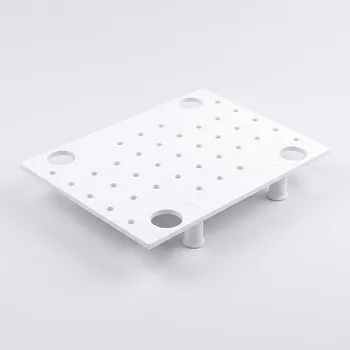
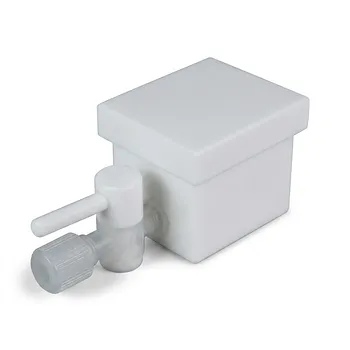
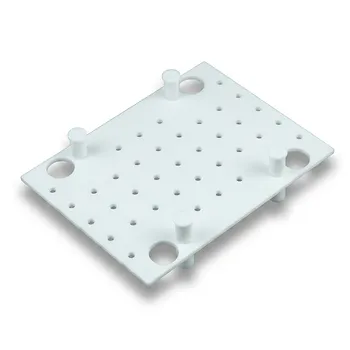
Custom-machined electrochemical cells
A custom PTFE or PFA cell can be designed around the electrode geometry, membrane dimensions, electrolyte volume, flow path, and sampling requirements of a particular experiment.
This is important because membrane and electrochemical studies often require controlled spacing, reliable sealing, defined fluid residence times, and compatibility with aggressive media.
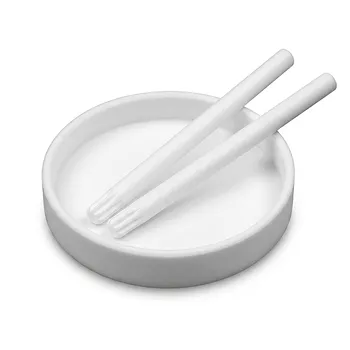
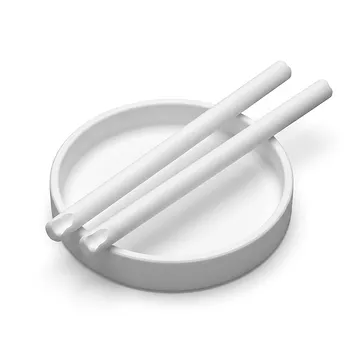
Reaction vessels and synthesis apparatus
Electropolymerization, electro-click functionalization, and related polymer synthesis processes may involve reactive monomers, strong electrolytes, fluorinated reagents, or elevated temperatures.
Fluoropolymer vessels and reaction components resist attack from these materials and minimize the risk that the apparatus will participate chemically in the reaction.
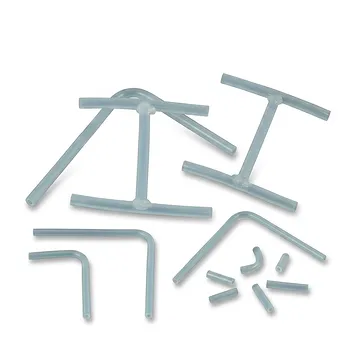
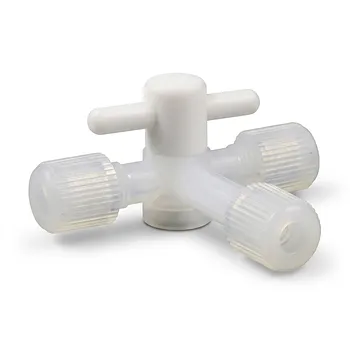
Tubing, fittings, valves, and seals
Fluid-transfer components are part of the chemical environment, not passive accessories.
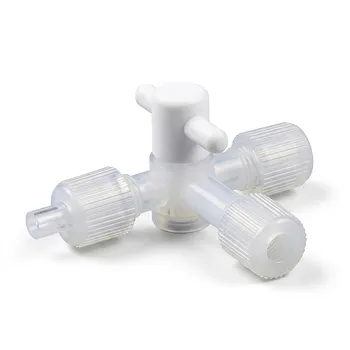
PTFE and PFA tubing, fittings, valves, and seals help maintain leak-free circulation while reducing the risk of corrosion, swelling, metal contamination, and extractables entering the electrolyte or sample stream.
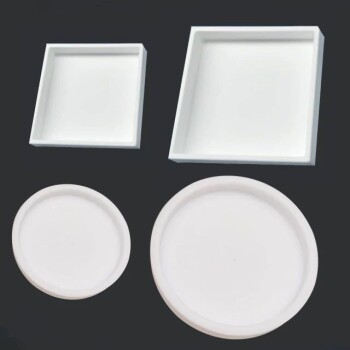
Cleaning and storage tanks
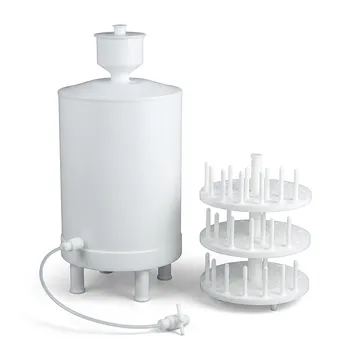
Inert cleaning and storage vessels are useful when components or membranes must be rinsed, conditioned, or stored without exposure to reactive container materials.
This is particularly important for high-purity analytical samples and membranes whose surfaces or ion-exchange groups can be altered by contamination.
High-purity sampling and transfer paths
Sampling lines can introduce contamination after the reaction has already been completed.
Using compatible fluoropolymer lines and fittings helps preserve sample composition during transfer, preventing the analytical result from being changed by the sampling hardware itself.
PTFE and PFA: Why Both Are Used
PTFE is valuable for inert, robust components
PTFE is widely selected where strong chemical resistance, low friction, and non-wetting behavior are required.
It is especially useful for custom-machined cells, seals, liners, containers, and other components exposed to aggressive chemical environments.
PFA supports high-purity fluid handling
PFA offers the same general fluoropolymer advantages—high chemical resistance, thermal stability, and low contamination risk—while being well suited to tubing, fittings, vessels, and other fluid-contact components.
The appropriate choice depends on the operating temperature, pressure, mechanical design, fabrication method, flexibility, transparency requirements, and chemical exposure.
Material grade matters
“Fluoropolymer” alone does not guarantee suitability.
For sensitive membrane and electrochemical work, the purity, manufacturing history, surface condition, additives, seals, joining methods, and cleaning protocol must all be considered. A chemically resistant component can still create problems if it contains unsuitable fillers, residues, or poorly controlled interfaces.
Understanding the Trade-offs
Chemical inertness does not mean universal compatibility
PTFE and PFA resist a broad range of aggressive chemicals, but no material should be treated as immune to every reagent and operating condition.
Compatibility must be checked against the specific electrolyte, solvent, temperature, pressure, exposure time, and mechanical load.
Low surface energy can affect wetting
Fluoropolymer surfaces are non-wetting and low-energy by nature.
That is beneficial for reducing contamination and adhesion, but it can complicate coating, bonding, priming, or uniform wetting of a membrane or electrode assembly. The surface behavior must therefore match the process design.
Mechanical and sealing requirements still matter
A chemically inert material can fail mechanically if it is poorly supported, over-compressed, exposed to unsuitable pressure, or subjected to repeated thermal cycling.
Sealing design, dimensional tolerances, compression control, and compatibility with adjacent materials are as important as the polymer selection itself.
Clean components are not automatically clean systems
Contamination can originate from machining fluids, packaging, assembly tools, previous use, seals, electrodes, or electrolyte preparation.
PTFE and PFA reduce a major source of chemical interference, but they must be integrated into a validated cleaning, handling, and system-qualification procedure.
Making the Right Choice for Your Goal
The best design treats the membrane, electrolyte, reactor, transfer path, and analytical method as one contamination-controlled system.
- If your primary focus is membrane development: Select fluorinated membrane chemistries for the required transport, ion-conduction, separation, and chemical-stability properties, then use inert contact materials during synthesis and testing.
- If your primary focus is electrochemical characterization: Use high-purity PTFE or PFA for cells, tubing, fittings, seals, and sampling paths to minimize leaching and measurement artifacts.
- If your primary focus is fuel-cell or electrolyzer reliability: Prioritize resistance to acidic or alkaline media, pressure stability, durable sealing, and protection against catalyst-poisoning impurities.
- If your primary focus is polymer synthesis or surface functionalization: Use inert reaction vessels and transfer components that will not react with, absorb, or contaminate aggressive reagents and intermediates.
- If your primary focus is analytical accuracy: Control the entire sample path—including storage, cleaning, transfer, and sampling—not only the main reactor material.
Fluorinated polymers protect performance twice: through the controlled transport properties of the membrane and through the chemical cleanliness of the equipment surrounding it.
Summary Table:
| Role of Fluorinated Polymers | Why Specialized PTFE/PFA Components Are Required |
|---|---|
| Chemical and thermal stability | Resist aggressive electrolytes and solvents |
| Tailored molecular transport | Control gas, ion, and solvent permeability |
| Surface and interface control | Low surface energy reduces contamination |
| Electrochemical system protection | Prevent corrosion and metal leaching |
| Measurement integrity | High-purity materials avoid trace contamination |
| Customization | Custom machining supports exact cell design |
Elevate your membrane and electrochemical research with high-purity PTFE and PFA components. At KINTEK, we specialize in custom-machined cells, tubing, valves, and vessels designed to withstand aggressive chemicals and prevent contamination. Whether you're developing fuel cells, electrolyzers, or advanced membranes, our fluoropolymer solutions ensure accurate measurements and reliable performance. Contact us today to discuss your custom requirements and benefit from our end-to-end CNC machining capabilities.
Related Products
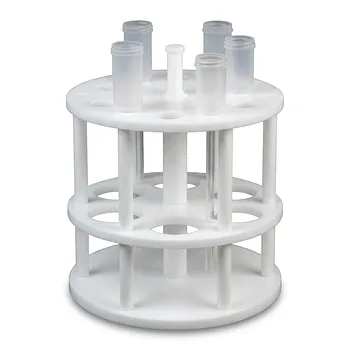
- Custom PFA Microcolumn Racks and PTFE Machined Low Background Corrosion Resistant Laboratory Fixtures
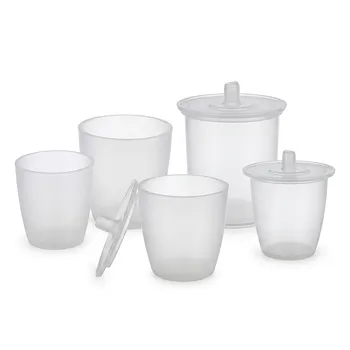
- High Purity PFA Crucible and Corrosion Resistant PTFE Beaker for Trace Analysis and Custom Laboratory Applications
- PTFE PFA Vacuum Filtration System Corrosion Resistant Customizable Shatterproof Laboratory Device
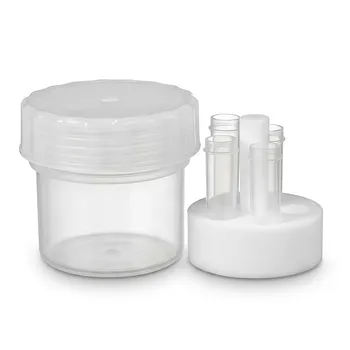
- Corrosion Resistant PTFE Support with PFA Transparent Reaction Tank and High Purity PFA Sampling Tube for Trace Analysis
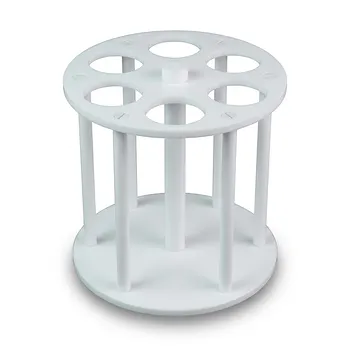
- Custom PFA Separatory Funnel Rack PTFE Machined Laboratory Support Stand Corrosion Resistant Low Background Fluoropolymer Fixture
People Also Ask
- What other PTFE lab accessories are commonly used? Essential Tools for Chemical Resistance & Purity
- How does high fluorination in perfluorinated polymers improve chemical resistance and thermal stability of lab apparatus? Discover the science behind PTFE and PFA's superior performance.
- What inherent material characteristics of non-melt-processable PTFE make it suitable for manufacturing high-purity laboratory containers and custom-machined apparatus?
- How do extreme temperatures and harsh chemical environments affect PTFE and PFA lab apparatus? Achieve Reliable Performance in Demanding Conditions
- What material considerations are critical for laboratory apparatus when performing cage-opening reactions on fluorinated silsesquioxanes using strong superacids? Choose PTFE/PFA for inertness and purity