The Saturated Calomel Electrode (SCE) acts as a fixed, non-polarizable reference point used to accurately monitor the potential of the Nickel-Cobalt Carbonate Hydroxide (Ni-Co-CHH) working electrode. In alkaline environments like 1M KOH, it provides the constant baseline necessary to measure the potential window and Faradaic redox reactions during Cyclic Voltammetry (CV) and Galvanostatic Charge-Discharge (GCD) testing.
The SCE is the "standard ruler" of the electrochemical cell, providing a stable potential that allows researchers to isolate and quantify the specific performance of the Ni-Co-CHH active material without interference from other cell components.
The Functional Necessity of the SCE in Alkaline Testing
Establishing a Constant Potential Baseline
The SCE serves as a highly stable reference point with a known electrochemical potential. This stability is critical because it allows the recorded voltage changes during a test to be attributed exclusively to the Faradaic reactions occurring on the Ni-Co-CHH surface.
Facilitating Precision in Three-Electrode Cells
In a three-electrode configuration, the SCE is decoupled from the current-carrying circuit. This separation ensures that the polarization effects of the counter electrode do not interfere with the measurement of the working electrode's potential.
Monitoring the Electrochemical Window
During CV and GCD tests, the SCE allows for the precise monitoring of the potential window across various scan rates. This precision is essential for calculating the specific capacitance and energy density of the Ni-Co-CHH material.
Advanced Diagnostics and Measurement Accuracy
Enabling Complex Impedance Analysis
The use of an SCE is vital for Electrochemical Impedance Spectroscopy (EIS). By providing a stable reference, it allows for the quantitative isolation of ohmic resistance, surface charge transfer resistance, and Warburg diffusion impedance within the Ni-Co-CHH system.
Mitigating IR Drop Errors
Technical setups often utilize a Luggin capillary to position the SCE salt bridge as close to the Ni-Co-CHH electrode as possible. This proximity reduces IR drop, which is the potential error caused by the resistance of the electrolyte between the reference and working electrodes.
Benchmarking Performance for Mechanistic Studies
The SCE provides an objective baseline for determining redox potentials. This allows researchers to understand the specific chemical transitions occurring within the Ni-Co-CHH material as it charges and discharges in an alkaline medium.
Understanding the Trade-offs
Chloride Contamination Risks
The SCE contains a saturated potassium chloride (KCl) solution. If the salt bridge leaks into the alkaline electrolyte, chloride ions can contaminate the system and potentially alter the electrochemical behavior of the Ni-Co-CHH material.
Electrolyte Incompatibility
While stable, the SCE is not always the native choice for highly alkaline environments. The junction between the neutral KCl inside the electrode and the basic KOH electrolyte creates a liquid junction potential that must be accounted for to ensure absolute accuracy.
Temperature Sensitivity
The potential of an SCE is sensitive to temperature fluctuations. In high-power experiments where heat is generated, any shift in the reference potential can lead to significant errors in the calculated specific capacitance.
Applying This to Your Research Goal
How to Select and Use Your Reference Setup
- If your primary focus is high-precision capacitance calculation: Ensure the use of a Luggin capillary to minimize IR drop and use a three-electrode setup to isolate the Ni-Co-CHH performance.
- If your primary focus is understanding redox mechanisms: Utilize the SCE during CV at multiple scan rates to clearly define the peak potentials associated with the Nickel and Cobalt transitions.
- If your primary focus is long-term cycling stability: Monitor the SCE potential periodically against a fresh reference to ensure no drift or chloride leakage has occurred over hundreds of cycles.
By correctly utilizing the Saturated Calomel Electrode, you ensure that the performance metrics of your Ni-Co-CHH material are both accurate and reproducible across different testing environments.
Summary Table:
| Feature | Role in Ni-Co-CHH Testing | Key Benefit |
|---|---|---|
| Stable Potential | Baseline for alkaline (KOH) environments | Accurate redox peak detection |
| 3-Electrode Config | Decouples potential from current flow | Isolates active material performance |
| Luggin Capillary | Bridges SCE to the Ni-Co-CHH surface | Minimizes IR drop & voltage error |
| EIS Analysis | Reference for complex impedance | Quantifies charge transfer resistance |
Elevate Your Electrochemical Research with KINTEK
Precision in supercapacitor testing requires more than just a stable reference electrode—it demands a high-performance environment free from contamination and interference. KINTEK specializes in manufacturing premium laboratory supplies crafted from PTFE and PFA, specifically designed to withstand the harsh alkaline conditions of Ni-Co-CHH research.
From high-purity trace analysis instruments and custom electrochemical cells to essential labware like beakers, digestion tubes, and fluid transfer components (tubing, valves, fittings), we provide the tools you need for reproducible results. Whether you require standard consumables like stirring bars and O-rings or bespoke battery testing fixtures and microchannel reactors through our end-to-end custom CNC fabrication, KINTEK is your ultimate partner for high-performance fluoropolymer solutions.
Ready to optimize your lab setup? Contact us today to discuss your specific testing requirements and discover how our specialized materials can enhance your research accuracy.
References
- Mohit Bhatt, A. K. Sinha. Superior charge storage performance of optimized nickel cobalt carbonate hydroxide hydrate nanostructures for supercapacitor application. DOI: 10.1038/s41598-025-85113-z
This article is also based on technical information from Kintek Knowledge Base .
Related Products
- Customizable PTFE Scrapers and Shovels for Demanding Applications
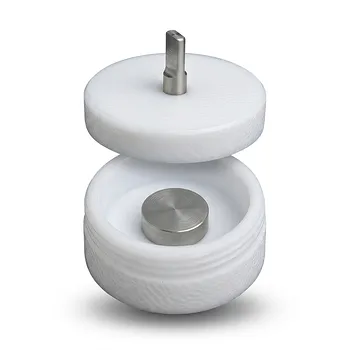
- Acid Resistant PTFE Button Cell Battery Test Fixture Customizable Machining High Purity Electrochemical Testing Clamp
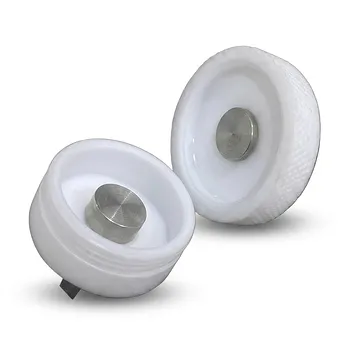
- Corrosion Resistant PTFE Coin Cell Battery Testing Clamps and Acid Proof Custom Fluoropolymer Battery Fixtures
- Custom PTFE Electrolytic Cell Corrosion Resistant Low Background Reaction Vessel with Inlet Outlet Ports
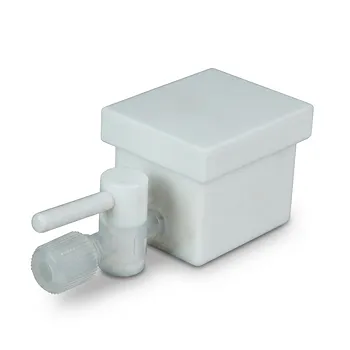
- Custom PTFE Corrosion Resistant Insulating Electrophoresis Reaction Cell with Septum and Valves for Low Background Trace Analysis
People Also Ask
- Why are PTFE shovels considered cost-effective? Maximize ROI with Superior Durability
- What are some specific applications of PTFE shovels in the laboratory? Ensure Sample Purity and Safety
- What are the key properties that make PTFE shovels ideal for laboratory use? Ensure Sample Integrity with Chemically Inert Tools
- What are the advantages of PTFE shovels in terms of chemical resistance? Unmatched Inertness for Handling Corrosives
- How does the durability of PTFE shovels compare to plastic shovels? Discover the Superior Choice for Harsh Conditions