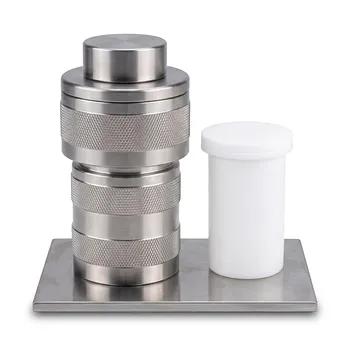
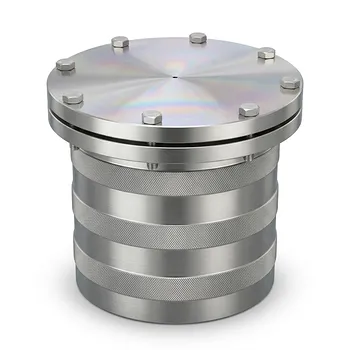
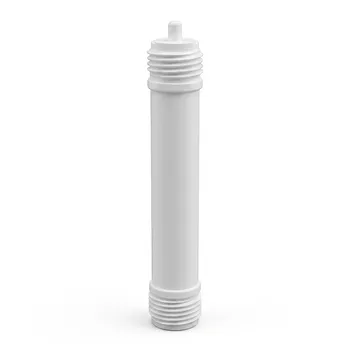
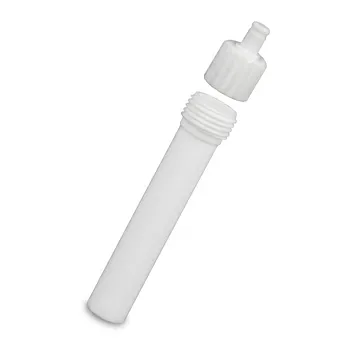
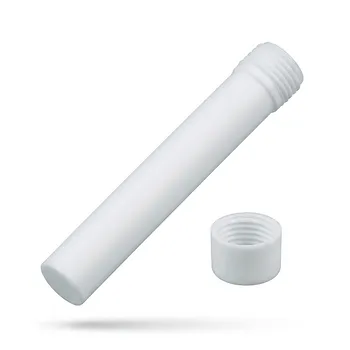
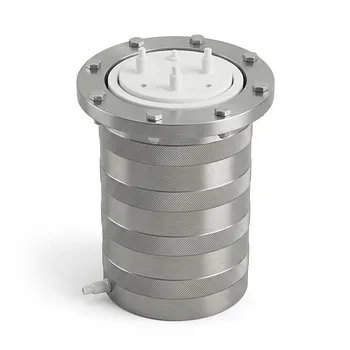
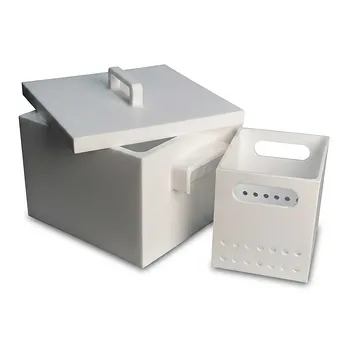
The use of Polytetrafluoroethylene (PTFE) liners is mandatory for synthesizing MIL-125(TiV) precursors to prevent chemical corrosion and ensure product purity. During solvothermal synthesis, these liners provide a chemically inert barrier that protects the stainless steel autoclave from aggressive organic solvents and acidic precursors. Furthermore, the non-stick properties of PTFE are essential for maintaining high crystal yield and structural integrity.
Core Takeaway: PTFE liners serve as a critical interface that shields the reaction environment from metallic contamination and corrosive erosion, while its low surface energy facilitates the recovery of high-purity microcrystals.
Protection Against Corrosive Environments
Shielding the Autoclave Body
The solvothermal synthesis of MIL-125(TiV) involves organic solvents like dimethylformamide (DMF) and methanol, which can become highly aggressive at elevated temperatures. PTFE is chemically inert, meaning it does not react with these solvents or the metal precursors, effectively shielding the external stainless steel shell from erosion and pitting.
Maintaining Structural Integrity under Pressure
As the temperature rises—often reaching 130°C to 150°C—internal pressure builds significantly within the sealed vessel. The PTFE liner is specifically designed to fit within a high-pressure hydrothermal autoclave, allowing the reaction to proceed safely under autogenous pressure without compromising the safety of the metal housing.
Ensuring Chemical Purity and Crystal Quality
Preventing Metal Ion Contamination
Without a liner, the acidic or polar reaction mixture would leach impurity ions (such as iron, chromium, or nickel) from the stainless steel walls. In the synthesis of Metal-Organic Frameworks (MOFs) like MIL-125(TiV), even trace amounts of these ions can disrupt the crystal framework or alter the precision of the metal doping ratio.
Facilitating High Yield through Non-Stick Surfaces
PTFE has an extremely low surface energy, which prevents synthesized microcrystals from adhering to the vessel walls. This non-stick characteristic ensures that the generated white precipitate can be fully collected, maximizing the yield and monodispersity of the resulting crystals.
Promoting Proper Nucleation
A clean, inert environment is vital for the heterogeneous nucleation processes required to form complex MOF structures. By providing a stable and consistent surface, the PTFE liner helps maintain the crystallinity and phase purity of the MIL-125(TiV) precursors throughout long reaction cycles.
Understanding the Trade-offs
Temperature Limitations
While PTFE is highly stable, it has a functional temperature ceiling, typically around 200°C to 250°C. Exceeding these limits can cause the liner to soften or deform, potentially leading to leaks or the release of fluorinated vapors, which restricts the synthesis to specific thermal windows.
Thermal Lag and Heat Transfer
PTFE is an effective thermal insulator, which means it transfers heat more slowly than the surrounding stainless steel. Researchers must account for this "thermal lag" during the heating ramp-up phase to ensure the internal reaction mixture reaches the target temperature at the intended rate.
How to Apply This to Your Synthesis
- If your primary focus is Maximum Phase Purity: Always inspect the PTFE liner for discoloration or scratches before use to prevent trace metal contamination from previous experiments.
- If your primary focus is High Crystal Yield: Ensure the liner is thoroughly cleaned using a non-abrasive method to maintain its low-surface-energy properties and prevent crystal "seeding" on the walls.
- If your primary focus is Operational Safety: Strictly adhere to the 130°C–150°C temperature range specified for MIL-125(TiV) to avoid the mechanical deformation of the liner under high autogenous pressure.
By utilizing PTFE liners correctly, you transform a standard pressure vessel into a precise laboratory environment capable of producing high-performance MOF precursors.
Summary Table:
| Key Feature | Functional Mechanism | Impact on Synthesis Results |
|---|---|---|
| Corrosion Resistance | Chemically inert barrier against aggressive DMF/solvents | Prevents erosion and pitting of the steel autoclave |
| Metal Ion Isolation | Blocks leaching of Fe, Cr, and Ni from vessel walls | Ensures high phase purity and precise metal doping |
| Non-Stick Surface | Low surface energy prevents crystal adhesion | Maximizes recovery and yield of microcrystals |
| Stable Nucleation | Provides a consistent, clean reaction interface | Enhances crystallinity and structural integrity |
| Pressure Safety | Designed for autogenous pressure (130°C–150°C) | Safe solvothermal processing within metal housing |
Elevate Your Material Research with KINTEK Precision Fluoropolymers
Precision in Metal-Organic Framework (MOF) synthesis requires an environment free from contamination. At KINTEK, we specialize in high-performance fluoropolymer solutions tailored for the most demanding laboratory environments.
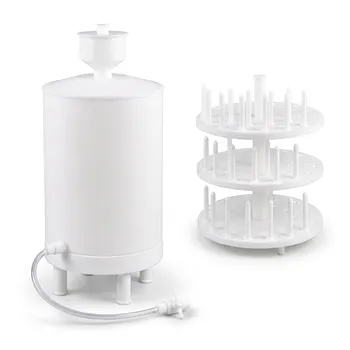
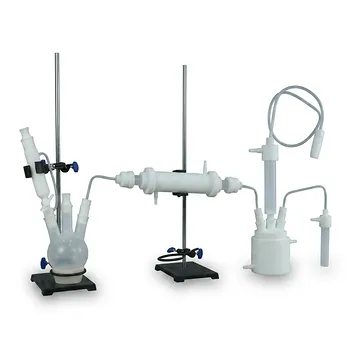
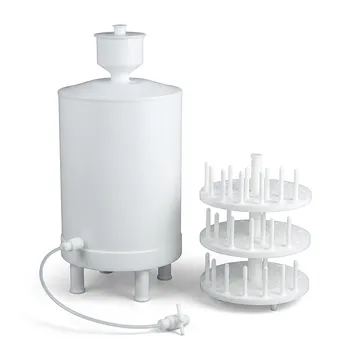
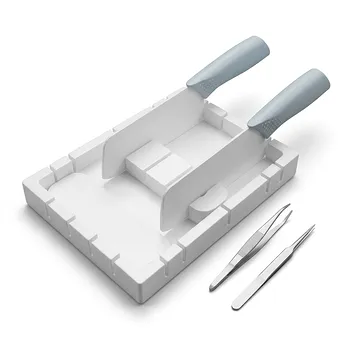
From everyday basic labware like beakers, crucibles, and reagent bottles to specialized high-purity trace analysis instruments and cleaning tanks, we provide the foundational tools for your success. Our expertise extends to comprehensive fluid transfer components (tubing, fittings, valves), sample prep tools (filters, pipettes, tweezers), and advanced reaction apparatus—including the PTFE hydrothermal synthesis liners and microwave digestion vessels essential for MIL-125(TiV) precursors.
Why choose KINTEK?
- Custom CNC Fabrication: We deliver everything from complex non-standard machined parts to high-volume bespoke laboratory setups.
- Total Material Focus: An absolute commitment to high-performance PTFE and PFA materials for maximum chemical resistance.
- End-to-End Solutions: Whether you need stirring bars and gaskets or advanced electrochemical cells, we manufacture virtually all imaginable fluoropolymer supplies.
Ensure the integrity of your next synthesis. Contact us today to discuss your custom laboratory requirements!
References
- Bo Li, Qingju Liu. Asymmetric coordination enhances the synergy of Pt species dual active sites for efficient photocatalytic H2 evolution. DOI: 10.1038/s41467-025-63637-2
This article is also based on technical information from Kintek Knowledge Base .
Related Products
- PTFE Lined High Pressure Digestion Vessel 50ml High Temperature Hydrothermal Synthesis Tank
- Custom TFM Reaction Vessel with Stainless Steel Jacket and PTFE Inner Cup for High Corrosion Resistance
- High Purity PTFE Microwave Digestion Vessel for Soil and Food Analysis Acid Resistant Fluoropolymer Sample Preparation Liners
- High Purity PTFE Microwave Digestion Vessel Replacement Liner for Acid Sample Preparation and Trace Analysis
- High Purity TFM Microwave Digestion Vessels PTFE Acid Evaporation Liners Domestic GT-400 Equivalent Laboratory Reaction Containers
People Also Ask
- What are the benefits of using a PTFE-lined vessel for carbon-sulfur cathode treatment? Maximize Purity & Performance
- Why are PTFE-lined pressure digestion vessels required for the preparation of Ag/CeO2 catalysts? Purity & Performance
- What is the function of high-pressure PTFE digestion vessels in mineral analysis? Optimize Sample Mineralization
- What safety features are typically incorporated into high-pressure PTFE digestion vessel designs? Ensure Lab Safety
- What is the function of PTFE lined high-pressure vessels in g-C3N4 synthesis? Achieve High-Purity Material Growth