Maintaining the integrity of precious metal concentrations requires specialized materials to prevent sample loss. During the dilution of digested Platinum (Pt) and Gold (Au) nanoparticle solutions to low concentrations (e.g., ~3–5 mg/L), high-purity PFA or PTFE consumables are essential. These materials possess extremely low surface energy that prevents metal ions from adhering to container walls, ensuring the final measured concentration is an accurate reflection of the actual metal loading.
Core Takeaway: PFA and PTFE materials are critical because their non-stick properties and chemical inertness eliminate non-specific adsorption and leaching. This ensures that precious metal ions remain in the solution, which is the only way to calculate an accurate metal loading percentage (W%) and maintain the reliability of downstream analytical data.
The Mechanics of Non-Specific Adsorption
Low Surface Energy and Ion Retention
High-purity fluoropolymers like PFA and PTFE are characterized by their extremely low surface energy. In standard glass or lower-grade plastic containers, platinum and gold ions often migrate from the liquid phase and "stick" to the solid surfaces of the container.
By using PFA or PTFE, labs can ensure that these ions remain suspended in the solution. This is vital when working with low-concentration dilutions, where even a minor loss of ions to the container walls can result in a significant percentage error in the final data.
Impact on Metal Loading Calculations (W%)
The primary goal of precise dilution is to calculate the metal loading percentage (W%) of a sample. If ions are lost to the walls of a pipette tip or a volumetric flask, the resulting concentration reading will be artificially low.
Because the metal loading is a calculated value based on these concentrations, any adsorption leads to a fundamental underestimation of the material's performance. Using PFA/PTFE ensures that the physical basis for these mass concentration calculations remains sound.
Ensuring Analytical Purity and Accuracy
Eliminating Leaching and Trace Impurities
Beyond adsorption, high-purity fluoropolymers are required because they have near-perfect chemical inertness. In trace analysis (such as ICP-OES), even parts-per-billion (ppb) levels of impurities can compromise a study.
PFA and PTFE containers prevent the leaching of metallic impurities (like sulfur, titanium, or potassium) from the container walls into the sample. This ensures that the results of catalytic efficiency tests reflect the properties of the nanoparticles themselves, rather than artifacts of the preparation process.
Volumetric Precision and Sample Recovery
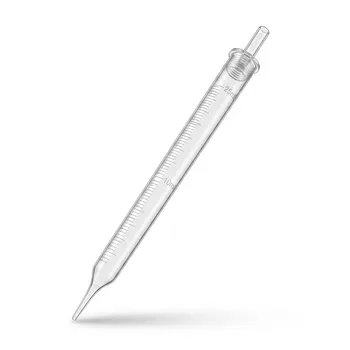
The final volume of a diluted sample is the denominator in every concentration equation. High-performance PFA volumetric flasks and pipettes provide the physical precision necessary to reach exact target volumes.
The non-adhesive properties of these materials also facilitate complete sample recovery. When transferring a digested sample from one vessel to another, PFA ensures that no droplets or ions are left behind, maintaining the quantitative integrity of the entire process.
Understanding the Trade-offs
Cost and Maintenance Requirements
While PFA and PTFE offer superior performance, they come with a significantly higher upfront cost compared to borosilicate glass or disposable polypropylene. Their longevity justifies the price, but it requires a dedicated budget for specialized labware.
Rigorous Cleaning Protocols
To maintain their "high-purity" status, these containers must undergo stringent acid-washing procedures. Because they are used for ultra-trace analysis, any residual contaminants from previous experiments can linger if the cleaning protocol is insufficient, negating the material's inherent benefits.
How to Apply This to Your Project
Recommendations for Precise Quantitative Dilution
- If your primary focus is determining Metal Loading (W%): Use PFA volumetric flasks for the final dilution stage to ensure no loss of Pt or Au ions occurs during the measurement.
- If your primary focus is Photocatalytic Research: Prioritize high-purity PTFE containers for all storage and rinsing to prevent trace metal impurities from skewing your catalytic degradation data.
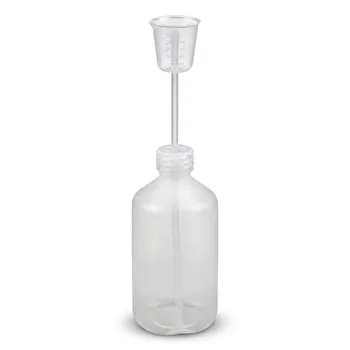
- If your primary focus is Ultra-Trace ICP Analysis: Utilize PFA pipette tips and reagent bottles to minimize the metallic background and ensure your "blanks" remain at sub-ppb levels.
Using the correct fluoropolymer consumables transforms a volatile dilution process into a repeatable, high-precision scientific measurement.
Summary Table:
| Property | Technical Benefit | Impact on Laboratory Analysis |
|---|---|---|
| Low Surface Energy | Prevents non-specific adsorption of Pt/Au ions | Ensures accurate Metal Loading (W%) calculations |
| Chemical Inertness | Eliminates leaching of metallic impurities | Maintains sub-ppb background for ICP-OES accuracy |
| Non-Adhesive Surface | Facilitates complete sample recovery | Maximizes volumetric precision and repeatability |
| Thermal Stability | Resists degradation during digestion processes | Provides long-term durability for rigorous lab protocols |
Elevate Your Analytical Precision with KINTEK Fluoropolymer Expertise
Don't let sample loss or trace contamination compromise your precious metal research. KINTEK specializes in high-performance fluoropolymer solutions designed for the most demanding laboratory environments. From everyday basic labware like beakers, measuring cylinders, crucibles, and reagent bottles to specialized high-purity trace analysis instruments and cleaning tanks, we provide the tools necessary for absolute accuracy.
Our extensive range includes comprehensive fluid transfer components (tubing, fittings, valves), sample prep tools (separatory funnels, filters, pipettes), and essential consumables (stirring bars, O-rings, gaskets). For advanced research, we offer standard and custom electrochemical cells, battery testing fixtures, and microwave digestion vessels, all crafted from premium PTFE and PFA.
With our end-to-end custom CNC fabrication, KINTEK can deliver everything from high-volume orders to complex, non-standard machined parts tailored to your unique setup. Contact us today to discover how our exclusive focus on high-performance fluoropolymers can safeguard your data integrity and optimize your lab's performance.
References
- Xiao Yu, Qixian Zhang. One‐Pot Solvothermal Synthesis of PtAu/3d Graphene Aerogels for Methanol Fuel Cells. DOI: 10.1002/elan.12051
This article is also based on technical information from Kintek Knowledge Base .
Related Products
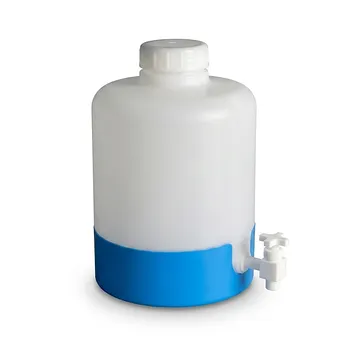
- High Corrosion Resistant PTFE Faucet Polytetrafluoroethylene Valve for Chemical Storage Drums and Fluid Transfer Systems Customizable Industrial Grade
- High Purity PFA Crucible and Corrosion Resistant PTFE Beaker for Trace Analysis and Custom Laboratory Applications
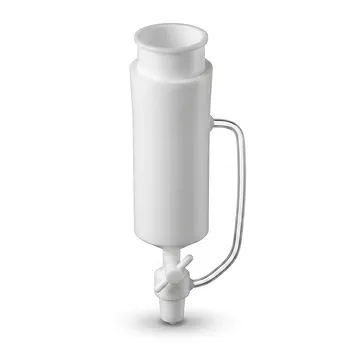
- Custom PTFE Constant Pressure Separatory Funnel Corrosion Resistant Low Background Labware for PFA Flasks
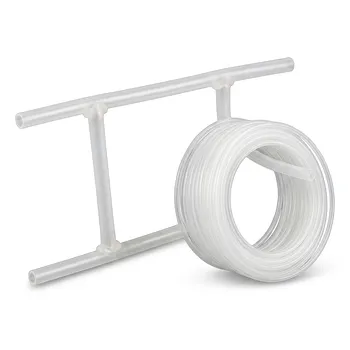
- Corrosion Resistant PFA Tubing 1/4 Inch Custom Molded Welded Fluid Transfer Components
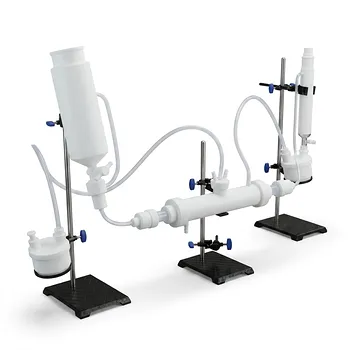
- PTFE PFA Vacuum Filtration System Corrosion Resistant Customizable Shatterproof Laboratory Device
People Also Ask
- What is the typical operating temperature and pressure range for PTFE valves? Key Specs for Optimal Performance
- What industries commonly use PTFE valves and components? Essential for Chemical & Purity Applications
- What specific advantages do PTFE valves offer? Unmatched Corrosion Resistance for Industrial Chemical Handling
- How do PTFE valves and components support high-purity liquid transfer? Ensure Product Integrity with Inert Materials
- What are the key properties of PTFE valves? Ensure Purity, Safety, and Reliability in Demanding Processes