Core-shell polymerization is a staged fluoropolymer synthesis method in which tetrafluoroethylene (TFE) and modifying comonomers are introduced at different points during polymerization. TFE polymerized first forms a PTFE-rich core, while later-added monomers create an outer shell with a different composition, molecular weight, or degree of modification.
The timing, rate, and quantity of monomer feed determine the particle’s internal architecture. A high-molecular-weight PTFE core preserves chemical resistance and durability, while a deliberately modified shell can improve paste extrusion, melt-processability, dispersion, surface behavior, and resistance to processing defects.
How Core-Shell Polymerization Works
The core is formed first
In a typical emulsion polymerization, relatively pure TFE is polymerized at the beginning of the reaction. This produces the particle’s inner region, usually characterized by a PTFE-rich composition and high molecular weight.
The core provides the properties associated with conventional PTFE, including excellent chemical resistance, thermal stability, low friction, and durability.
Modifiers are introduced later
After a controlled amount of TFE has been consumed, the manufacturer introduces comonomers or modifiers such as perfluoroalkyl vinyl ethers, including PPVE, or other fluorinated monomers such as CTFE.
These monomers polymerize preferentially into the growing outer region of the particle. The result is a particle with a compositionally distinct modified shell surrounding the PTFE-rich core.
Feed timing controls morphology
Core-shell morphology is not created simply by adding a modifier to the reactor. It depends on when the modifier is introduced, how quickly it is fed, and how much is added relative to the total polymer.
Early modifier addition produces a more broadly modified particle. Late addition concentrates the modifier near the surface, producing a more clearly differentiated core and shell.
How Monomer Feed Changes Material Properties
Late feed can reduce molecular weight in the shell
Late-stage modifier addition commonly produces a high-molecular-weight PTFE core and a lower-molecular-weight modified shell.
This structure can reduce melt creep viscosity and make the resin easier to deform or process without sacrificing the core’s chemical resistance. The referenced examples report reductions in melt creep viscosity from approximately (10 \times 10^{10}) poise to about (3–6 \times 10^{10}) poise, although the actual value depends on grade and test conditions.
Feed composition affects paste extrusion
Fine-powder PTFE is processed through paste extrusion rather than conventional melt flow. Its particles must deform and fuse under pressure, and excessive fibrillation can make extrusion difficult.
A modified shell can control particle fibrillation, improve particle fusion, and lower the tendency toward excessive extrusion pressure. This supports high reduction ratios and the manufacture of thin-walled tubing, profiles, and other precision components.
Core-shell structure supports high reduction ratios
When the core and shell contain different comonomer concentrations, the particle can achieve a more favorable balance between strength and processability.
The referenced applications describe paste extrusion at reduction ratios exceeding 10,000:1 and illustrate how core-shell design can produce smoother surfaces, fewer structural defects, and high mechanical strength. These results are formulation- and process-dependent rather than universal values for every modified PTFE grade.
Shell modification improves surface behavior
The shell is the portion most directly involved in particle-to-particle contact, wetting, dispersion, and fusion.
Consequently, shell composition can improve surface wetting, dispersion stability, particle fusion, and the smoothness of the finished product. This is particularly useful for laboratory tubing, valves, seals, reaction vessels, and other fluid-contact components.
Modifier distribution affects density and crystallinity
Changing the core-to-shell ratio changes the polymer’s molecular composition and therefore properties such as standard specific gravity, crystallinity, melting behavior, and dimensional response.
Illustrative core-shell formulations, such as an 88% core and 12% shell, have been associated with standard specific gravity values in the approximate range of 2.173–2.186. These values should be treated as grade-specific examples, not fixed limits for all core-shell PTFE materials.
Why Modified PTFE Retains a PTFE-Like Core
Chemical resistance remains concentrated in the interior
Because the core remains predominantly PTFE, the material can retain much of PTFE’s robust resistance to aggressive chemicals and elevated temperatures.
The shell changes how the particle processes and interacts with its surroundings, but it does not necessarily replace the core’s fundamental function. This is the principal advantage over uniformly modifying the entire polymer.
Processing properties can be changed without changing the whole particle
A uniform modification changes the chemistry throughout the polymer. Core-shell polymerization instead places the modification where it has the greatest processing effect: near the particle surface.
This provides a practical way to decouple properties that are otherwise difficult to combine, such as high chemical resistance in the bulk and improved deformability or fusion at the particle surface.
Effects on Laboratory and Industrial Components
Thin-walled tubing
For tubing made by paste extrusion, controlled fibrillation and lower extrusion resistance can improve dimensional consistency and surface quality.
This is important in high-purity fluid handling, where roughness, cracks, or processing defects can affect cleaning, contamination control, and long-term reliability.
Valves, seals, and fittings
Core-shell modified PTFE can improve particle fusion during sintering and produce smoother, more consistent finished surfaces.
The resulting balance of chemical resistance, processability, and mechanical performance is useful for valve seats, sealing components, fittings, and custom-machined laboratory parts.
Coatings and dispersion films
Particle architecture also affects the behavior of fluoropolymer dispersions and films. With suitable surfactant and formulation control, core-shell particles can increase the critical cracking thickness of a dispersion film.
The cited example describes an increase from approximately 29 µm to 42.5 µm under particular conditions. Such results depend on the surfactant, substrate, drying process, particle size, and coating formulation.
Understanding the Trade-offs
More modifier is not automatically better
Increasing shell modification may improve processability, but it can also change density, crystallinity, melting behavior, mechanical strength, and chemical performance.
The objective is not maximum modifier concentration. It is the correct modifier type, shell thickness, and core-to-shell ratio for the intended process.
Feed timing can create property gradients
If the modifier is introduced too early, the particle may become broadly modified rather than distinctly core-shell. If it is introduced too late or unevenly, the shell may be thin, discontinuous, or inconsistent between particles.
Poor feed control can therefore produce batch-to-batch variation in extrusion pressure, surface finish, strength, and dimensional stability.
Lower processing resistance does not mean unlimited load resistance
A lower melt creep viscosity or easier deformation can improve processing, but it should not be interpreted as universally improved creep resistance in the finished component.
Long-term mechanical performance still depends on molecular weight, crystallinity, porosity, sintering conditions, geometry, temperature, and applied stress.
Extrusion pressure must be optimized, not merely minimized
Core-shell composition can substantially alter paste-extrusion pressure. The cited example shows pressure changes from approximately 52 MPa to 118 MPa at a reduction ratio of 1500:1 for different compositions.
Lower pressure may ease processing, but the best formulation must also meet requirements for tensile strength, elongation, surface quality, and dimensional control.
How to Apply This to Your Project
The correct grade should be selected from the required combination of chemistry, processing method, geometry, and mechanical performance.
- If your primary focus is chemical resistance: Favor a formulation with a PTFE-rich core and verify the finished grade’s chemical and temperature limits rather than judging performance from shell composition alone.
- If your primary focus is paste extrusion: Compare core-shell grades using extrusion pressure, reduction ratio, fibrillation behavior, and defect rate under your actual processing conditions.
- If your primary focus is thin-wall tubing: Prioritize controlled fibrillation, surface smoothness, tensile performance, and dimensional stability after extrusion and sintering.
- If your primary focus is dispersion coating: Evaluate particle wetting, film uniformity, critical cracking thickness, surfactant compatibility, and drying conditions together.
- If your primary focus is machined labware or seals: Consider how the modified structure affects fusion, porosity, creep, surface finish, and long-term dimensional stability.
Monomer feed is the main design lever: control when and how modifiers enter the reactor to tailor the shell while preserving the PTFE-rich core that provides the material’s fundamental chemical resilience.
Summary Table:
| Feature | Core-Shell Polymerization | Uniform Modification |
|---|---|---|
| Architecture | PTFE-rich core, modified shell | Homogeneous composition |
| Processing | Improved paste extrusion, lower melt viscosity | May be harder to process |
| Chemical resistance | Preserved by core | May be compromised |
| Surface properties | Tunable shell for wetting, fusion | Uniform but less flexible |
| Design flexibility | High | Limited |
Optimize Your Fluoropolymer Performance with KINTEK
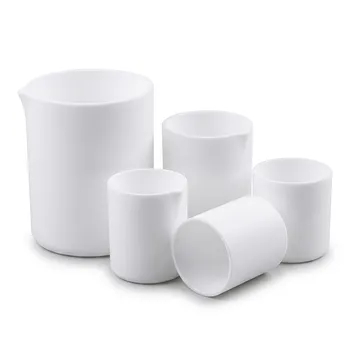
At KINTEK, we specialize in high-performance PTFE and PFA lab supplies, from basic beakers to custom electrochemical cells. Our core-shell expertise ensures products with superior chemical resistance and processing ease. Whether you need tubing for high-purity applications or bespoke machined parts, our end-to-end CNC capabilities deliver solutions tailored to your needs. Contact us today to discuss your requirements and experience the KINTEK advantage!
Related Products
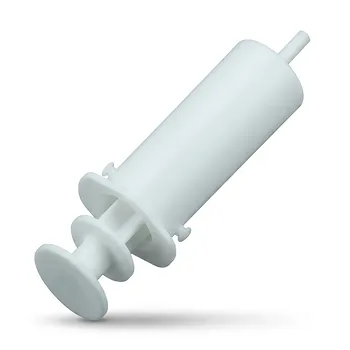
- High Purity Laboratory Grade PTFE Syringe Chemical Resistant Fluoropolymer Injector for Trace Analysis
- Custom PTFE Insulating Gaskets and Corrosion Resistant Fluoropolymer Seals for Industrial Electrical Applications
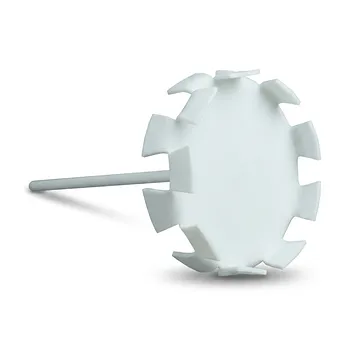
- High Purity PTFE Dispersion Disk for Food and Cosmetic Processing Non Stick Corrosion Resistant Large Stirring Paddle Customizable Fluoropolymer Impeller
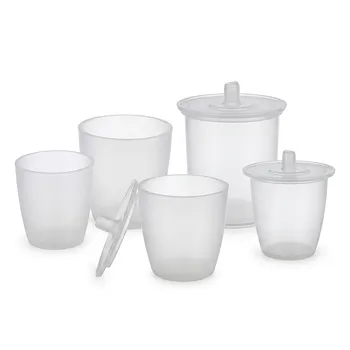
- High Purity PFA Crucible and Corrosion Resistant PTFE Beaker for Trace Analysis and Custom Laboratory Applications
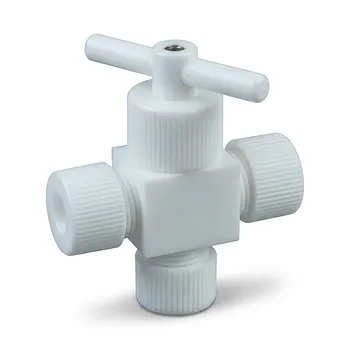
- Custom PTFE Valve 2-Way 3-Way Corrosion Resistant Low Background Virgin Fluoropolymer Industrial Fluid Control
People Also Ask
- In what medical devices is PTFE commonly used? Essential Components for Safety and Reliability
- What are the benefits of PTFE's chemical resistance? Achieve Unmatched Reliability in Corrosive Environments
- What chemicals is PTFE resistant to? Discover Its Near-Universal Chemical Inertness
- How does the surrounding atmosphere affect the thermal decomposition mechanism of PTFE fluoropolymer used in high-temperature laboratory reaction apparatus? Discover Key Insights for Safe and Reliable High-Temp Lab Operations
- How do surfactants like APFO impact TFE polymerization, and why are alternatives essential?