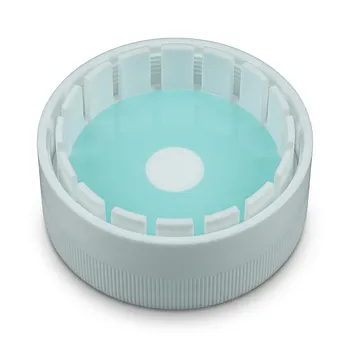
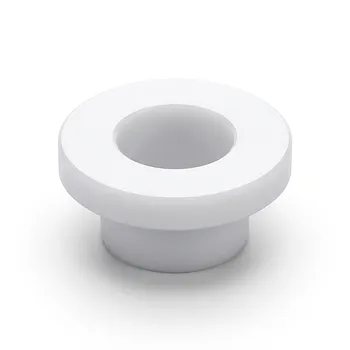
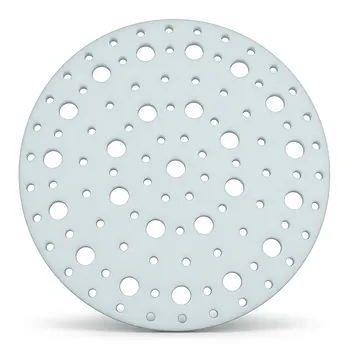
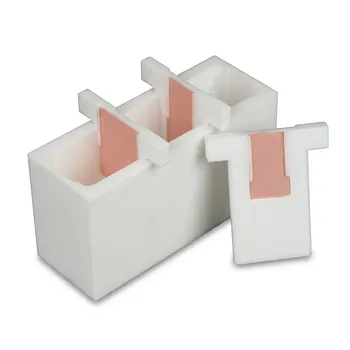
Polytetrafluoroethylene (PTFE) serves as a critical dielectric barrier by providing a high dielectric strength of approximately 60 MV/m, which prevents internal short circuits between current collectors and conductive molds during high-pressure assembly. This electrical isolation ensures the integrity of electrochemical components while providing a low-friction interface that facilitates the assembly process.
PTFE is the industry standard for insulating battery components under mechanical stress due to its unique combination of extreme electrical resistivity, chemical inertness, and the lowest coefficient of friction of any solid. It ensures both the safety of the fabrication process and the analytical purity of the resulting cell.
Superior Electrical Insulation and Safety
Preventing Internal Short Circuits
During the high-pressure assembly of battery cells, current collectors are often forced into proximity with conductive metal mold bodies. PTFE liners and guide sleeves act as a robust physical and electrical shield, withstanding approximately 60 MV/m of electrical stress.
High Volume Resistivity
With a volume resistivity of approximately 10¹⁸ Ω·cm, PTFE effectively eliminates stray currents within the assembly. This is critical for preventing parasitic background noise and ensuring that signal transmission remains pure during subsequent testing phases.
Minimal Dielectric Interference
The low parasitic capacitance of PTFE ensures that the barrier does not distort high-frequency signals. This makes it an ideal material for battery clamps used in impedance spectroscopy, where signal clarity is paramount.
Mechanical and Thermal Advantages
Exceptional Lubricity
PTFE possesses the lowest coefficient of friction among solid materials. This allows battery components to slide into precise configurations within a mold without binding or mechanical damage during high-pressure pressing.
Wide Thermal Operating Range
The material remains stable at temperatures up to 260°C, the highest for any fluoropolymer. This thermal resilience allows for pressing operations that require heat or for the assembly of cells destined for high-temperature applications.
Non-Stick and Hydrophobic Properties
The strong carbon-fluorine bonds in PTFE create a non-stick surface that repels water-based substances. This makes the pressing equipment easier to clean and prevents the adhesion of active materials to the mold walls.
Chemical Purity and Integrity
Chemical Inertness and Corrosion Resistance
PTFE is virtually unaffected by most solvents, bases, and strong acids like concentrated sulfuric or nitric acid. This prevents the dielectric barrier from degrading when exposed to aggressive battery electrolytes.
Low Leaching for Analytical Precision
In laboratory and testing environments, high-purity PTFE prevents the precipitation of impurity ions from container walls into the electrolyte. This ensures that the fine redox mechanisms of multivalent metal carriers, such as copper or zinc, can be studied without contamination.
Precision Machinability
The material's high machinability allows for the creation of complex configurations, such as three-electrode systems or flow-through cells. This versatility ensures that the dielectric barrier can be tailored to specific battery architectures.
Understanding the Trade-offs
The Risk of Cold Flow (Creep)
Standard PTFE is susceptible to "cold flow," meaning it can deform over time when subjected to constant, high-pressure loads. In heavy battery pressing operations, designers often use filled PTFE materials to enhance structural stability and reduce this deformation.
Thermal Expansion Considerations
PTFE has a high coefficient of thermal expansion compared to metal molds. Engineers must account for dimensional changes during temperature fluctuations to maintain the precision of the battery assembly.
Limited Thermal Conductivity
While PTFE is an excellent electrical insulator, it is also a thermal insulator. If the pressing operation generates significant heat that must be dissipated, the PTFE barrier may act as a thermal bottleneck.
How to Apply This to Your Project
When integrating PTFE into your battery fabrication or testing workflow, consider your specific environmental stressors:
- If your primary focus is high-voltage safety during assembly: Utilize virgin PTFE liners with a verified dielectric strength of 60 MV/m to prevent catastrophic shorts.
- If your primary focus is analytical precision and data purity: Opt for high-purity PTFE to minimize leaching and ensure a volume resistivity of 10¹⁸ Ω·cm for clean impedance data.
- If your primary focus is high-cycle manufacturing durability: Select filled PTFE grades to mitigate cold flow and ensure the dielectric barrier maintains its shape under repeated high-pressure loads.
Integrating PTFE into your battery pressing operation provides a robust, chemically pure, and electrically secure environment for sophisticated cell fabrication.
Summary Table:
| Key Property | Technical Value | Benefit for Battery Pressing |
|---|---|---|
| Dielectric Strength | ~60 MV/m | Prevents internal short circuits under high pressure |
| Volume Resistivity | ~$10^{18}$ Ω·cm | Eliminates stray currents and reduces signal noise |
| Friction Coefficient | Lowest among solids | Facilitates smooth assembly without mechanical damage |
| Thermal Stability | Up to 260°C | Maintains integrity during high-temperature operations |
| Chemical Inertness | High resistance | Prevents degradation from aggressive electrolytes |
Optimize Your Battery Fabrication with KINTEK
Elevate your research and production standards with high-performance fluoropolymer solutions from KINTEK. Whether you need standard labware like beakers and reagent bottles or specialized components like precision-machined PTFE dielectric barriers and battery testing fixtures, we deliver unmatched quality and chemical purity.
Our expertise extends from high-purity trace analysis instruments and fluid transfer components (tubing, valves, fittings) to advanced custom CNC-fabricated reaction apparatus, including electrochemical cells and microwave digestion vessels. We focus exclusively on PTFE and PFA to ensure your processes remain free from contamination and electrical interference.
Ready to enhance your lab's efficiency and analytical precision? Contact KINTEK today to discuss your custom project or high-volume needs.
Related Products
- Custom PTFE Insulating Gaskets and Corrosion Resistant Fluoropolymer Seals for Industrial Electrical Applications
- High Temperature Resistant PTFE Thermal Insulation Board Corrosion Resistant Metal Free Fluoropolymer Stand for Ultra Clean Laboratories
- PTFE Anti Scald Heat Insulation Sleeve Hot Plate Support Feet Laboratory Benchtop Protection Customizable Thermal Barrier
- Custom PTFE Filtration System Acid Resistant High Purity Semiconductor Grade Chemical Processing Filter
- PTFE PFA Vacuum Filtration System Corrosion Resistant Customizable Shatterproof Laboratory Device
People Also Ask
- What are the three primary types of PTFE available for gaskets and seals? Choose the Right Material for Your Application
- Why is PTFE an ideal material choice for sealing gaskets, valves, and fluid transfer tubing exposed to extremely aggressive chemicals? Discover Its Superior Chemical Resistance and Reliability
- How is PTFE utilized in seals and gaskets? Leverage Its Chemical & Temperature Resistance
- What are the key properties of PTFE that make it suitable for seals and gaskets? Unlock Superior Sealing Performance
- How are custom PTFE parts used in the automotive sector? Enhance Vehicle Performance & Durability