The primary perfluoroplastics used in high-purity laboratory apparatus and fluid handling are PTFE, PFA, and FEP. PTFE provides the highest combination of chemical resistance, thermal stability, lubricity, and non-wetting behavior. PFA adds melt-processability and optical clarity, making it well suited to ultra-pure molded components and tubing, while FEP offers melt-processability, transparency, chemical resistance, and flexibility for films, linings, and specialized tubing.
Material selection depends on the balance between chemical resistance, temperature capability, processability, transparency, flexibility, and purity requirements. PTFE is generally preferred for machined and high-temperature components, PFA for ultra-pure molded or transparent parts, and FEP where flexible, transparent, melt-processed components are needed.
Why Perfluoroplastics Suit High-Purity Systems
Strong Carbon-Fluorine Bonds
Perfluoroplastics are fully fluorinated polymers. Their fluorine-rich molecular structure and strong carbon-fluorine bonds provide exceptional resistance to aggressive organic and inorganic chemicals.
This resistance allows components to remain stable when exposed to corrosive reagents, solvents, and demanding chemical processes. Compared with partially fluorinated materials such as PVDF, ETFE, and ECTFE, fully fluorinated polymers generally provide a higher level of chemical inertness.
Low Surface Energy
These materials have extremely low surface energy, which gives them non-wetting, non-stick, and low-adhesion surfaces. Fluids and residues are less likely to cling to the material or remain trapped in the system.
That behavior helps reduce sample carryover, fluid retention, analyte adsorption, and cleaning difficulty. It is particularly valuable in trace analysis and systems handling very small or contamination-sensitive samples.
Purity and Stability
High-purity PTFE and PFA do not require the same types of plasticizers, antioxidants, or thermal stabilizers commonly used in other polymer systems. Their inherent chemical stability can therefore reduce the risk of additive leaching.
This does not mean contamination is impossible. Manufacturing cleanliness, surface treatment, seals, fittings, cleaning procedures, and the chemical environment must all be controlled to achieve the required purity level.
PTFE: The Choice for Machined and Extreme-Service Components
Key Characteristics
Polytetrafluoroethylene, or PTFE, offers the broadest combination of chemical resistance, thermal tolerance, low friction, and non-wetting performance among the three materials discussed here.
It can withstand service temperatures up to approximately 260°C, depending on the design, exposure conditions, mechanical load, and manufacturer specifications. PTFE is also flame resistant and has strong dielectric properties.
Typical Applications
PTFE is commonly used for:
- Custom CNC-machined laboratory vessels
- Digestion vessels
- Reaction apparatus
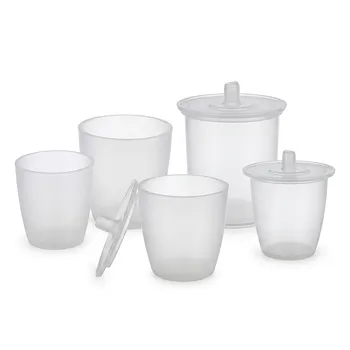
- Crucibles
- Seals and gaskets
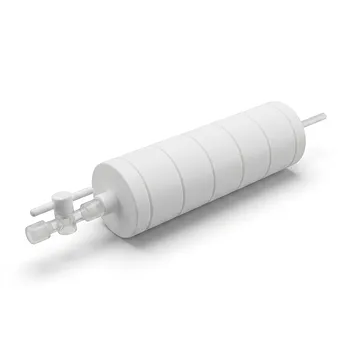
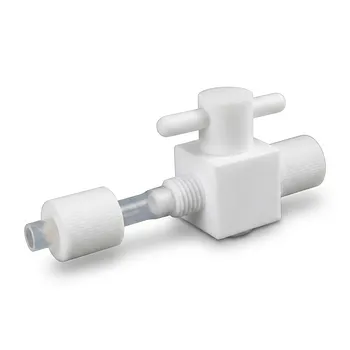
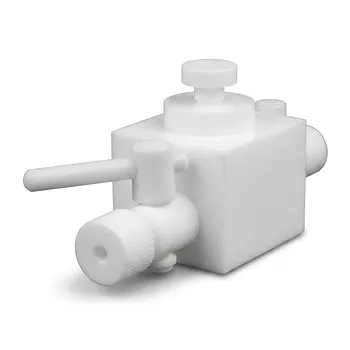
- Valves and other fluid-handling components
Its low friction and self-lubricating behavior are useful in moving seals, valve components, and interfaces where mechanical wear or sticking must be minimized.
Why PTFE Is Selected
PTFE is especially suitable when the component must tolerate aggressive chemistry and elevated temperatures while maintaining dimensional and chemical stability. It is also valuable when a part must be machined into a complex custom geometry.
The main limitation is that conventional PTFE is not melt-processable in the same way as PFA or FEP. Fabrication therefore often relies on compression molding, sintering, machining, or other specialized methods.
PFA: The Choice for Ultra-Pure, Molded, and Transparent Parts
Key Characteristics
Perfluoroalkoxy copolymer, or PFA, combines chemical inertness comparable to PTFE with melt-processability. This makes it easier to mold into consistent tubing, fittings, vessels, and other complex components.
PFA also offers high optical clarity. Operators can inspect fluid flow, bubbles, residues, and particulates without opening the system.
Typical Applications
PFA is commonly selected for:
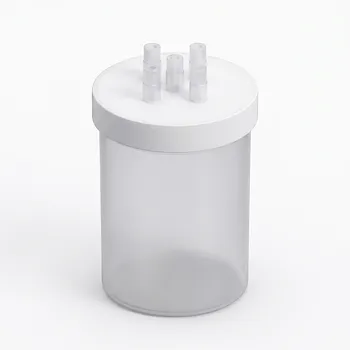
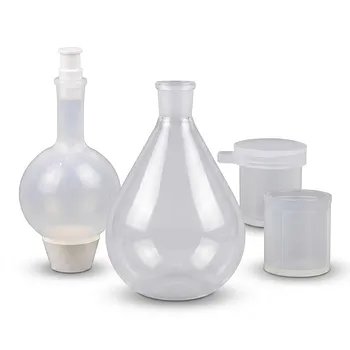
- Ultra-pure trace-analysis labware
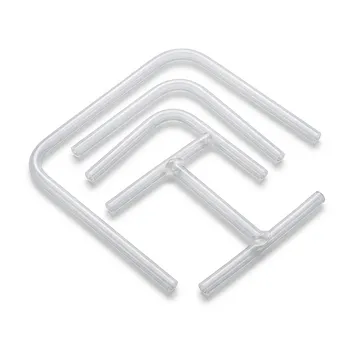
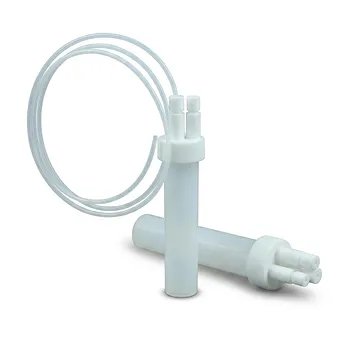
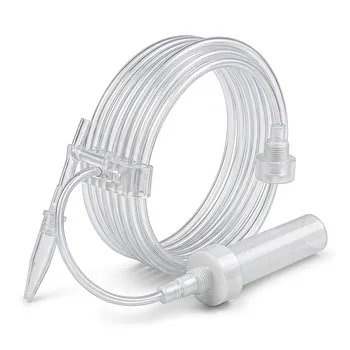
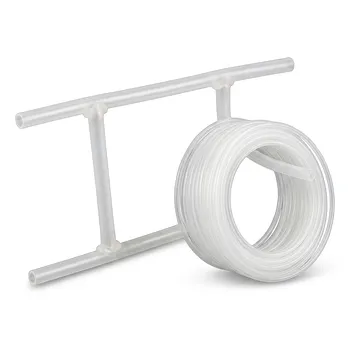
- Flexible fluid-transfer tubing
- Molded fittings
- Wash bottles
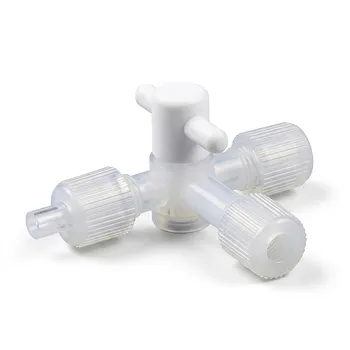
- Valves and fluid-handling assemblies
- Components requiring smooth internal surfaces
Its smooth surface morphology can help limit sites where contaminants or residues accumulate. This is important in systems that must be flushed thoroughly between process steps.
Why PFA Is Selected
PFA is often the strongest choice when purity, transparency, manufacturability, and fluid-transfer performance must be combined. It is particularly useful in analytical chemistry and high-purity processing, where low elemental leaching and low contamination are critical.
PFA may be favored over machined PTFE when a molded, seamless, transparent, or geometrically consistent component is required.
FEP: The Choice for Transparent and Flexible Components
Key Characteristics
Tetrafluoroethylene-hexafluoropropylene copolymer, or FEP, is melt-processable and provides high transparency, chemical resistance, and flexibility.
Its processing behavior allows it to be produced as films, linings, tubing, and other thin or flexible forms. Its temperature capability and mechanical behavior should be checked against the specific operating conditions because it is not interchangeable with PTFE in every high-temperature application.
Typical Applications
FEP is commonly used for:
- Flexible tubing
- Lining materials
- Laboratory films
- Specialized film tools
- Transparent fluid-contact components
Transparency is useful when visual monitoring is important, while flexibility helps simplify routing and installation in fluid-handling assemblies.
Why FEP Is Selected
FEP is appropriate when a system needs chemical resistance together with melt-processability, clarity, and flexibility. It is often more practical than PTFE for thin films or flexible transparent components.
When the application involves the highest temperatures, heavy mechanical loads, or maximum dimensional stability, PTFE or PFA may be more suitable, subject to the supplier’s ratings.
How Material Characteristics Determine Applications
Chemical Resistance
All three materials resist a wide range of aggressive chemicals, which is the central reason they are used in high-purity systems. The specific reagent, concentration, temperature, exposure time, and mechanical stress still determine compatibility.
Chemical compatibility should therefore be confirmed using application-specific data rather than assumed from the polymer family alone.
Temperature Capability
PTFE is widely used for high-temperature apparatus and can tolerate temperatures up to approximately 260°C in suitable service conditions. PFA also supports demanding thermal applications, while FEP is generally chosen more often for flexible and transparent components than for the most severe thermal environments.
The actual limit is controlled by more than the polymer’s nominal rating. Pressure, cyclic heating, creep, dimensional tolerances, and the presence of chemical media can all reduce the practical operating range.
Processability and Geometry
PTFE’s processing limitations make it well suited to machined, sintered, or compression-molded components. PFA and FEP can be melt-processed, enabling efficient production of tubing, films, molded fittings, and complex continuous shapes.
This distinction often determines the material before other properties are considered. A design requiring a long transparent tube or a thin flexible film may favor PFA or FEP, while a custom solid vessel may favor PTFE.
Transparency and Inspection
PFA and FEP provide high optical clarity, allowing users to inspect fluid movement and detect visible contamination or bubbles. Conventional PTFE is generally opaque, so it is better suited to applications where visual inspection is not essential.
Transparency is not itself a purity guarantee. It is an operational advantage that must be evaluated alongside extractables, surface finish, cleaning, and manufacturing controls.
Understanding the Trade-offs
PTFE Can Be Difficult to Fabricate
PTFE offers outstanding chemical and thermal performance, but it is not conventionally melt-processable. Complex parts may require machining or specialized forming processes, which can increase cost and limit production flexibility.
Its low friction and relatively soft surface can also require careful consideration of creep, wear, and dimensional stability under sustained loads.
PFA and FEP Are Not Universal Replacements
PFA and FEP provide important processing and transparency advantages, but their performance must be matched to the application’s temperature, pressure, mechanical, and chemical requirements. A transparent or flexible component is not automatically the best choice for a high-load or extreme-temperature assembly.
Material selection should use the manufacturer’s compatibility and operating data for the actual chemical and process conditions.
Purity Depends on the Complete System
Selecting a perfluoroplastic alone does not ensure contamination-free operation. Contaminants can originate from manufacturing residues, improperly cleaned surfaces, adjoining seals, metal fittings, tubing connections, or the process fluid itself.
High-purity systems require controlled fabrication, appropriate cleaning, validated handling, and compatible materials throughout the fluid path.
Making the Right Choice for Your Goal
The most suitable material is the one whose chemical, thermal, mechanical, and fabrication characteristics match the full operating environment.
- If your primary focus is maximum chemical and thermal resistance: Select PTFE for machined labware, digestion vessels, reaction equipment, crucibles, and seals, subject to the required mechanical design limits.
- If your primary focus is ultra-pure fluid handling and inspection: Select PFA for transparent tubing, molded fittings, wash bottles, and trace-analysis labware where smooth surfaces and low leaching are important.
- If your primary focus is flexible transparent components: Select FEP for tubing, films, linings, and specialized components that benefit from melt-processability and flexibility.
- If your primary focus is minimizing contamination: Evaluate the entire fluid path, including fabrication quality, cleaning, seals, fittings, surface finish, and chemical compatibility, rather than selecting a polymer in isolation.
Understanding the relationship between polymer characteristics and operating demands is the key to building durable, low-contamination laboratory and fluid-handling systems.
Summary Table:
| Material | Key Characteristics | Typical Applications |
|---|---|---|
| PTFE | Highest chemical resistance, thermal stability up to 260°C, low friction, non-wetting, opaque | Labware, digestion vessels, reaction apparatus, seals, valves, custom CNC-machined parts |
| PFA | Comparable chemical resistance, melt-processable, high clarity, smooth surfaces | Ultra-pure trace-analysis labware, flexible tubing, molded fittings, wash bottles, valves |
| FEP | Melt-processable, transparent, flexible, good chemical resistance | Flexible tubing, linings, films, specialized transparent fluid-contact components |
Need high-purity perfluoroplastic components? KINTEK offers a comprehensive range of PTFE and PFA labware, custom CNC-machined parts, and fluid handling systems. Our expertise in fluoropolymers ensures top-quality solutions for your lab. Contact us today to discuss your specific requirements and experience the KINTEK advantage.
Related Products
- PTFE PFA Vacuum Filtration System Corrosion Resistant Customizable Shatterproof Laboratory Device
- High Purity PFA Crucible and Corrosion Resistant PTFE Beaker for Trace Analysis and Custom Laboratory Applications
- PTFE Corrosion Resistant Filter with PFA Valve Connections and Integrated Sieve Plate
- High Purity PTFE Filter with PFA Valve Connections and Integrated Sieve Plate for Corrosive Fluid Processing
- High Purity PFA Coiled Tubing Custom PTFE Machining PFA Welding and Precision Bending Solutions
People Also Ask
- What makes PTFE filtration systems advantageous for industrial and scientific use? Unmatched Chemical & Thermal Stability
- How does the hydrophobicity of PTFE filters benefit their use? Ensure Uninterrupted Gas Flow and Solvent Filtration
- What temperature resistance do PTFE filters offer? Unmatched Thermal Stability from -200°C to +260°C
- Which chemicals are fully compatible with PTFE filters? Discover Unmatched Chemical Resistance
- What sizes and pore options are available for PTFE filters? Choose the Right Filter for Your Application