Fluorine-doped Tin Oxide (FTO) serves as a high-performance, chemically resilient substrate that optimizes charge transfer for $V_2O_5$/MWCNTs composites. It provides a highly conductive foundation and mechanical support, ensuring that electrical signals are transmitted with minimal resistance during testing. Its chemical stability in corrosive environments, such as 1.0 M $Na_2SO_4$, makes it indispensable for obtaining accurate and reproducible electrochemical data.
FTO glass acts as a critical bridge between the active material and the measurement hardware, combining high conductivity with exceptional chemical durability. Its primary value lies in its ability to facilitate rapid electron transport while maintaining structural integrity during rigorous electrochemical cycling.
Enhancing Electrical and Charge Transport
Superior Conductivity and Electron Transport
FTO glass provides a fast electron transport path for the $V_2O_5$/MWCNTs active materials. By offering a highly conductive surface, it ensures that electrons generated during electrochemical reactions move efficiently toward the workstation.
Minimizing Interface Resistance
One of the most significant advantages is the extremely low interface resistance between the FTO substrate and the deposited film. This allows researchers to accurately characterize the charge transfer properties and migration rates of photogenerated carriers within the composite.
Accurate Signal Transmission
Because the substrate is highly efficient, it ensures that electrical signals are accurately transmitted during cyclic voltammetry (CV) and galvanostatic charge-discharge (GCD) tests. This minimizes data noise and provides a true reflection of the material's performance.
Mechanical and Chemical Durability
Robust Mechanical Support
FTO glass provides the necessary mechanical support for thin films of $V_2O_5$/MWCNTs, which are often deposited via drop-casting. It creates a stable platform that prevents the active material from delaminating during handling or immersion.
Chemical Stability in Corrosive Environments
The substrate is known for its exceptional chemical stability, allowing it to withstand harsh electrolytes like 1.0 M $Na_2SO_4$. This resilience prevents the substrate from reacting with the electrolyte, which would otherwise skew test results.
Suitability for Thin Film Deposition
The surface properties of FTO are ideal for supporting thin films of photocatalytic materials. This makes it a versatile choice for researchers looking to test a variety of composite structures beyond just $V_2O_5$ and carbon nanotubes.
Understanding the Trade-offs
Thermal and Physical Limitations
While FTO is chemically stable, it is still a glass-based substrate, making it brittle and susceptible to cracking under mechanical stress. Additionally, while it can handle high temperatures, extreme thermal cycling can sometimes affect the conductivity of the fluorine-doped layer.
Surface Roughness and Adhesion
The surface morphology of FTO can vary, which may impact the uniformity of the deposited layer. If the $V_2O_5$/MWCNTs mixture is not deposited correctly, the interface may still suffer from localized contact issues despite the substrate's inherent conductivity.
Cost and Scalability
FTO glass is generally more expensive than other substrates like ITO (Indium Tin Oxide) or simple carbon cloth. For large-scale industrial applications, the cost of high-quality FTO glass can be a limiting factor compared to flexible, low-cost alternatives.
Applying FTO to Your Electrochemical Research
Choosing the Right Path for Your Goal
To maximize the utility of FTO glass in your experiments, consider your primary research objective when preparing your electrodes.
- If your primary focus is high-precision kinetics: Prioritize FTO to benefit from the lowest possible interface resistance and the most accurate charge transfer data.
- If your primary focus is long-term cycling stability: Utilize FTO’s chemical resilience to ensure the substrate does not degrade when exposed to corrosive sulfate-based electrolytes.
- If your primary focus is optical characterization: Leverage the high transparency of FTO to perform simultaneous electrochemical and spectroscopic measurements.
By integrating FTO glass into your testing protocol, you ensure a stable, conductive, and reliable environment for evaluating advanced energy storage materials.
Summary Table:
| Key Feature | Advantage | Benefit for Research |
|---|---|---|
| Electron Transport | High conductivity | Ensures accurate CV and GCD signal transmission |
| Interface Resistance | Extremely low | Precise characterization of charge migration rates |
| Chemical Stability | High resilience | Reliable performance in corrosive 1.0 M Na2SO4 |
| Structural Support | Mechanical robustness | Prevents delamination of drop-casted active materials |
| Optical Clarity | High transparency | Enables integrated spectro-electrochemical analysis |
Achieve Research Excellence with KINTEK
Precision in electrochemical testing requires substrates and labware that can withstand demanding environments. KINTEK is your premier partner for high-performance laboratory supplies, specializing in PTFE and PFA materials crafted for durability and purity.
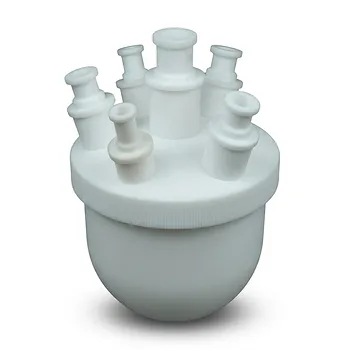
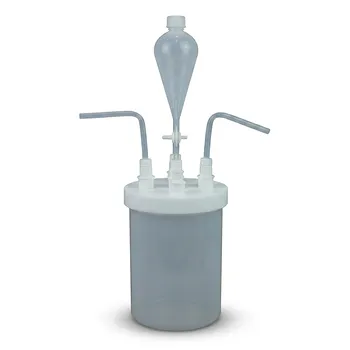
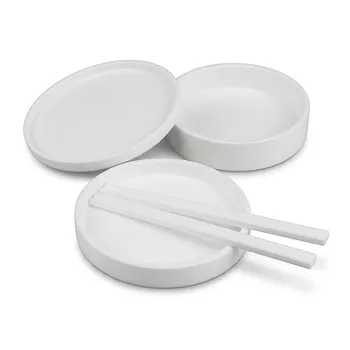
From essential labware like beakers, crucibles, and reagent bottles to advanced custom electrochemical cells, electrode accessories, and hydrothermal synthesis liners, we manufacture virtually every tool imaginable for the modern lab. Our expertise extends to end-to-end custom CNC fabrication, allowing us to deliver bespoke non-standard machined parts, high-purity trace analysis instruments, and comprehensive fluid transfer components (tubing, valves, and fittings) tailored to your exact specifications.
Whether you are performing high-volume testing or complex material synthesis, KINTEK maintains an absolute focus on high-performance fluoropolymers to ensure your results are never compromised.
Unlock the full potential of your laboratory—contact KINTEK today to discuss your custom requirements and experience the value of precision engineering!
References
- Usama Younas, Mashkoor Ahmad. Investigating the synergistic effect of defect rich V<sub>2</sub>O<sub>5</sub>/MWCNTs heterostructure for improved electrochemical performance of supercapacitors. DOI: 10.1039/d5ra03394b
This article is also based on technical information from Kintek Knowledge Base .
Related Products
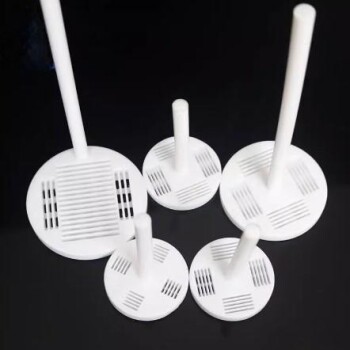
- Custom Machined Molded PTFE Teflon Parts Manufacturer for Laboratory ITO FTO Conductive Glass Cleaning Flower Basket
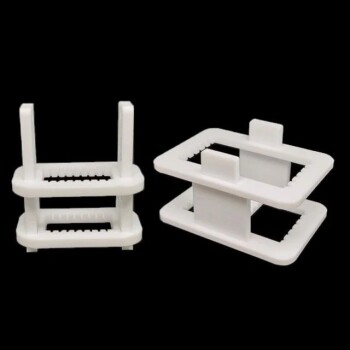
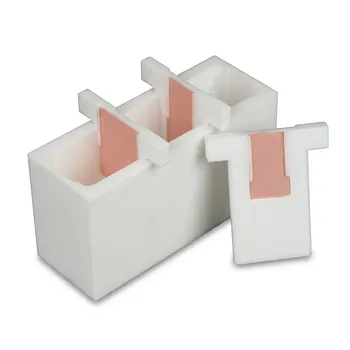
- Custom PTFE Teflon Parts Manufacturer Conductive Glass Substrate Cleaning Rack
- High Temperature PTFE Reaction Flask 1000ml Single Neck Round and Flat Bottom Laboratory Bottle
- Custom PTFE Flask 250ml High Purity Fluoropolymer Laboratory Vessel for Chemical Research
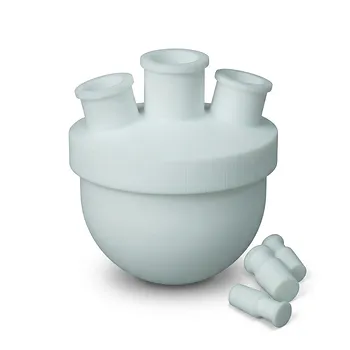
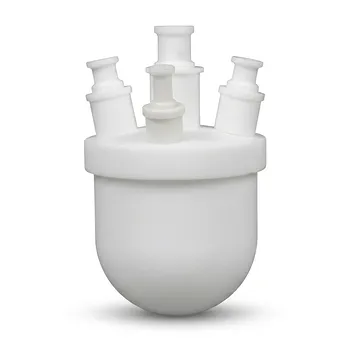
- Custom Multi Neck PTFE Flask 18L Laboratory Chemical Reactor Vessel for High Purity Synthesis and Stirring Applications
People Also Ask
- What advantages do PTFE flower baskets provide for the photovoltaic and solar energy industry? Boost Cell Efficiency
- What is the primary function and application of a PTFE flower basket? Expert Guide to High-Purity Processing
- What are the primary functions and design features of a PTFE flower basket? Optimize High-Purity Chemical Processing
- What is the working principle of a PTFE flower basket? Optimize Fluid Flow and Purity for Chemical Immersion
- How does the structural design of a PTFE flower basket ensure uniform fluid access to substrates? Optimize Lab Yields