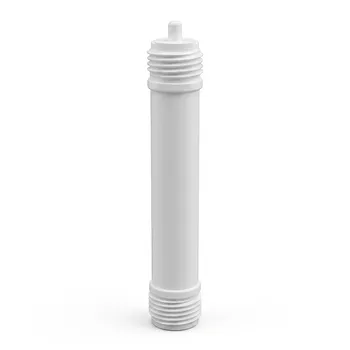
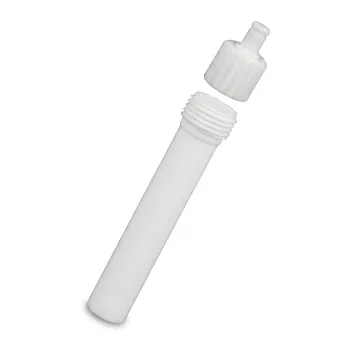
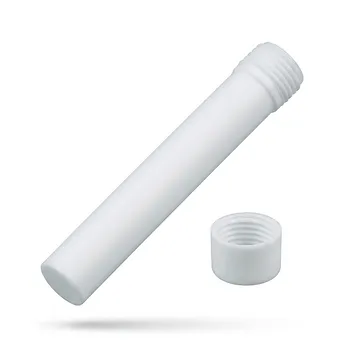
The primary advantages of using a PTFE-lined autoclave for LDH synthesis are its total chemical inertness, which prevents contamination, and its superior sealing properties, which ensure uniform film growth. In a high-pressure steam environment (typically around 140°C), the fluoropolymer liner acts as a critical barrier that prevents metal ion exchange between the reaction solution and the stainless steel autoclave body. This ensures the chemical purity of the Mg-Al LDH film while maintaining the stable saturated vapor pressure required for consistent crystal development.
A PTFE liner transforms a standard high-pressure vessel into a chemically neutral reactor. By isolating precursors from the metal housing and providing a non-stick, high-pressure seal, it guarantees the phase purity and morphological uniformity of the resulting LDH coatings.
Ensuring Chemical Purity and Phase Integrity
Prevention of Metal Ion Exchange
The most critical role of the PTFE liner is to isolate the reaction medium from the stainless steel autoclave body. This prevents iron, nickel, or chromium ions from leaching into the solution and substituting into the LDH crystal lattice.
Resistance to Corrosive Precursors
LDH synthesis often involves strong alkaline conditions or acidic precursors that would otherwise attack metallic surfaces. PTFE’s exceptional corrosion resistance ensures that the chemical environment remains stable and free from side reactions throughout the hydrothermal process.
High Phase Purity
By eliminating external metallic interference, the liner ensures that the Mg-Al or Ni-Co ratios remain precisely as intended. This results in high-crystallinity layered structures and prevents the formation of unwanted secondary phases or impurities.
Facilitating Uniform Nanostructure Growth
Maintenance of Saturated Vapor Pressure
The excellent sealing properties of PTFE allow the system to maintain a stable saturated vapor pressure. This constant pressure is the driving force behind the directional growth of complex nanostructures and the uniform thickness of the steam coating.
Non-Stick Surface Properties
PTFE possesses an extremely low surface energy, which prevents synthesized LDH particles or precursors from adhering to the vessel walls. This "non-stick" quality ensures that the maximum amount of material contributes to the coating process rather than being lost to the container surface.
Thermal Stability and Uniformity
The liner can withstand long-term reactions at constant temperatures ranging from 95°C to over 200°C. This thermal stability allows for the slow, controlled nucleation and growth of LDH nanosheets on substrates like nickel foam or aluminum alloys.
Understanding the Trade-offs
Temperature Limitations
While PTFE is highly versatile, it has a functional upper limit, typically around 250°C. Exceeding this temperature can cause the liner to soften or release toxic fumes, making it unsuitable for ultra-high-temperature solvothermal reactions.
Thermal Expansion and Creep
PTFE has a different coefficient of thermal expansion than the stainless steel shell. Over many cycles, the liner may undergo "creep" or permanent deformation, which can eventually compromise the seal if the liner is not inspected and replaced regularly.
Heat Transfer Delays
The liner acts as an insulator, meaning the internal reaction solution may take longer to reach the target temperature than the external autoclave body. Precision in timing is required to account for this lag in thermal equilibrium.
Making the Right Choice for Your Goal
When selecting or operating a PTFE-lined autoclave for LDH synthesis, consider your primary objective:
- If your primary focus is maximum chemical purity: Ensure the PTFE liner is thoroughly cleaned with dilute acid between runs to remove any trace ions embedded in the surface.
- If your primary focus is uniform film thickness: Prioritize the integrity of the PTFE seal and the "spring" mechanism in the autoclave cap to maintain constant pressure.
- If your primary focus is high-temperature synthesis (>220°C): Consider upgrading to a PPL (polyphenylene polymer) liner, which offers higher thermal resistance than standard PTFE.
By leveraging the inert and non-stick nature of PTFE, researchers can achieve the precise chemical control necessary for high-performance LDH steam coatings.
Summary Table:
| Advantage | Key Benefit | Impact on LDH Synthesis |
|---|---|---|
| Chemical Inertness | Prevents metal ion leaching from steel | Ensures high phase purity and crystal integrity |
| Superior Sealing | Maintains stable saturated vapor pressure | Drives uniform film thickness and directional growth |
| Corrosion Resistance | Withstands strong alkaline/acidic precursors | Protects the reactor and maintains a stable environment |
| Non-Stick Surface | Extremely low surface energy | Minimizes material loss and facilitates easy cleaning |
| Thermal Stability | Reliable performance up to 250°C | Supports controlled nucleation of nanosheets |
Elevate Your Synthesis Precision with KINTEK
Ready to achieve uncompromising purity in your LDH coatings? KINTEK specializes in high-performance fluoropolymer labware designed for the most demanding hydrothermal and steam coating processes.
From everyday essentials like PTFE beakers, crucibles, and reagent bottles to advanced hydrothermal synthesis liners, microwave digestion vessels, and custom electrochemical cells, we provide the chemical inertness your research requires. Our expertise extends to end-to-end custom CNC fabrication, allowing us to deliver everything from complex non-standard machined parts to high-volume orders of tubing, fittings, and seals.
Ensure your laboratory is equipped with the best in PTFE and PFA technology. Contact us today to discuss your bespoke requirements and discover how KINTEK’s absolute focus on high-performance materials can optimize your experimental outcomes.
References
- Io Matsui, Takahiro Ishizaki. Steam Coating-Based Synthesis and Corrosion Inhibition Performance of Mg–Al-Layered Double Hydroxide Films with Different Interlayer Anions on Al-Si-Cu Alloys. DOI: 10.3390/ma18235405
This article is also based on technical information from Kintek Knowledge Base .
Related Products
- PTFE Lined High Pressure Digestion Vessel 50ml High Temperature Hydrothermal Synthesis Tank
- Custom TFM Reaction Vessel with Stainless Steel Jacket and PTFE Inner Cup for High Corrosion Resistance
- High Purity PTFE Microwave Digestion Vessel for Soil and Food Analysis Acid Resistant Fluoropolymer Sample Preparation Liners
- High Purity PTFE Microwave Digestion Vessel Replacement Liner for Acid Sample Preparation and Trace Analysis
- High Purity TFM Microwave Digestion Vessels PTFE Acid Evaporation Liners Domestic GT-400 Equivalent Laboratory Reaction Containers
People Also Ask
- What are the benefits of using a PTFE-lined vessel for carbon-sulfur cathode treatment? Maximize Purity & Performance
- Why are PTFE-lined pressure digestion vessels required for the preparation of Ag/CeO2 catalysts? Purity & Performance
- What is the function of high-pressure PTFE digestion vessels in mineral analysis? Optimize Sample Mineralization
- What safety features are typically incorporated into high-pressure PTFE digestion vessel designs? Ensure Lab Safety
- What is the function of PTFE lined high-pressure vessels in g-C3N4 synthesis? Achieve High-Purity Material Growth