Perfluorinated CTA functionality and chain length directly determine how effectively VDF polymerization chains are capped and restarted, which controls the final molar-mass distribution. Difunctional agents such as 1,4-diiodoperfluorobutane (C4F8I2) generally produce much lower number-average molar mass ((M_n)) than monofunctional agents at equivalent molar amounts. Among monofunctional perfluoroalkyl iodides, shorter-chain CTAs such as C4F9I provide more active and linear molar-mass control than longer-chain compounds such as C6F13I.
The key design rule is to treat CTA functionality and perfluoroalkyl chain length as separate control variables: functionality determines how many growing chains a CTA can regulate, while chain length influences transfer activity and the concentration required for predictable control.
Why CTA Functionality Controls Molar Mass
Monofunctional CTAs Limit One Growing Chain
A monofunctional perfluoroalkyl iodide contains one transferable iodine end. During iodine transfer polymerization, it can regulate a growing radical by transferring the iodine-containing end group and generating a new radical capable of continuing propagation.
Because each CTA molecule primarily provides one transfer site, its effect on (M_n) depends strongly on its molar concentration and transfer efficiency. Increasing the amount of an effective monofunctional CTA generally increases the number of chains initiated or capped, reducing the average number of VDF units per chain.
Difunctional CTAs Increase Chain-Regulation Capacity
C4F8I2 contains two iodine-bearing ends. At an equivalent molar amount of CTA molecules, it therefore provides two potentially active transfer sites per molecule rather than one.
This higher functionality promotes the formation and regulation of more polymer chains. The result is a significantly lower (M_n) than that obtained with a monofunctional CTA at the same nominal CTA molar amount.
Functionality Changes More Than the Average (M_n)
A difunctional CTA can also influence the shape of the molecular-weight profile. Its two reactive ends may connect transfer events to the same central perfluorinated structure, producing polymers with different end-group architectures from those generated by monofunctional CTAs.
Therefore, CTA selection should consider chain-end structure and distribution, not only the target number-average molar mass.
How Perfluoroalkyl Chain Length Affects Transfer Activity
Shorter Chains Provide More Predictable Control
Among the monofunctional CTAs considered, C4F9I shows higher transfer activity than C6F13I. At practical CTA concentrations, this allows C4F9I to impose a more linear relationship between CTA use and molar-mass reduction.
That predictability is valuable when the polymerization must be tuned toward a particular molecular-weight range. The operator can adjust CTA concentration with a clearer expectation of how (M_n) will respond.
Longer Chains May Require Higher CTA Concentrations
C6F13I displays poorer molar-mass control, particularly at lower CTA concentrations. In that regime, transfer may not occur frequently enough relative to VDF propagation to maintain a consistent average chain length.
The polymer can consequently retain a higher or less predictably controlled (M_n), even though the longer-chain CTA is present in the reaction mixture.
Chain Length Is a Kinetic Variable
The perfluoroalkyl segment is not merely an inert spacer. Its structure affects the CTA's transfer behavior within the emulsion-polymerization environment, including how readily the iodine end participates in the relevant radical-transfer process.
The practical consequence is that two CTAs with the same nominal functionality cannot be assumed to provide equivalent control on a molar basis.
How CTA Choice Interacts With Emulsion Polymerization
Transfer Competes With VDF Propagation
The final molar mass reflects competition between VDF propagation and chain transfer. If transfer is fast relative to propagation, more chains are formed and each chain tends to contain fewer repeat units, lowering (M_n).
If transfer is slow or the CTA concentration is too low, propagation dominates for longer periods and higher-molar-mass chains are more likely to form.
Difunctional CTAs Can Affect Latex Development
C4F8I2 has been associated with a strong dependence of latex particle size on CTA concentration. In reported iodine transfer emulsion polymerizations, increasing its concentration corresponded to hydrodynamic particle radii ranging approximately from 18 nm to 112 nm.
This behavior is distinct from the negligible particle-size impact reported for the monofunctional CTAs C4F9I and C6F13I. The effect is attributed to early formation of short, amphiphilic oligomers with sulfonate end-groups that can contribute to particle stabilization.
Molar-Mass Control and Particle Control Are Coupled
For difunctional CTAs, changing concentration may therefore alter both molecular-weight regulation and colloidal structure. A formulation optimized only for (M_n) may unintentionally change particle size or latex stability.
This coupling makes difunctional CTAs powerful but less independent as formulation variables than monofunctional CTAs.
The Role of the Polymerization Medium
Solvent Chain Transfer Can Mask CTA Effects
The reaction medium can introduce its own chain-transfer pathways. DMF, DMAc, and NMP are reported to transfer readily to growing PVDF-related radicals, producing very low (M_n) values in the approximate range of 500 to 1,000 g/mol.
In such systems, the measured molar mass may reflect combined transfer from both the intended CTA and the solvent. CTA comparisons are therefore most meaningful when solvent composition, conversion, temperature, and CTA concentration are held constant.
Low-Transfer Media Reveal Higher Molecular Mass
ACN supports heterogeneous precipitation polymerization with comparatively little solvent chain transfer, allowing (M_n) values above 17,000 g/mol to form. This contrast shows why the same CTA structure can appear more or less effective depending on the surrounding polymerization chemistry.
The CTA should be evaluated as part of the complete formulation, rather than as an isolated additive.
Understanding the Trade-offs
Stronger Transfer Lowers (M_n) More Efficiently
A highly active or difunctional CTA is useful when low (M_n), controlled chain ends, or rapid chain regulation is required. C4F8I2 is particularly effective on a molecule-for-molecule basis because of its two iodine-bearing ends.
The trade-off is that strong transfer can produce chains that are too short if the concentration is not carefully adjusted.
Lower (M_n) Can Come With Greater Colloidal Sensitivity
With C4F8I2, increasing CTA concentration may substantially alter latex particle size. This can affect processing, storage, and downstream film or coating behavior even when the molecular-weight target is met.
A monofunctional CTA may offer less dramatic transfer but greater separation between molecular-weight tuning and particle-size control.
Longer-Chain CTAs Are Not Automatically Better
A longer perfluoroalkyl chain may appear attractive when a more fluorinated chain end is desired, but C6F13I exhibits weaker control at lower concentrations than C4F9I. Using it without compensating for its lower transfer activity can lead to inconsistent (M_n) results.
The CTA should be selected from measured transfer performance, not from chain length alone.
Experimental Hardware Can Affect Reproducibility
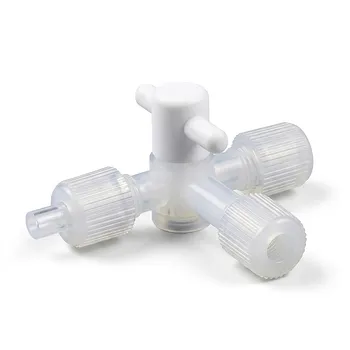
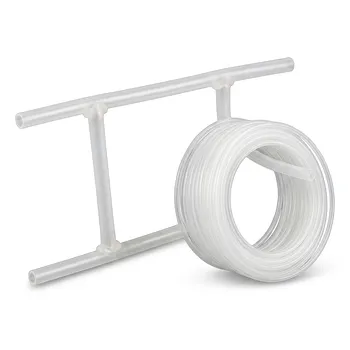
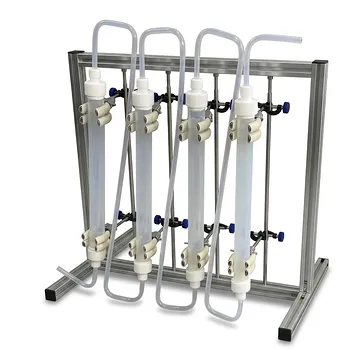
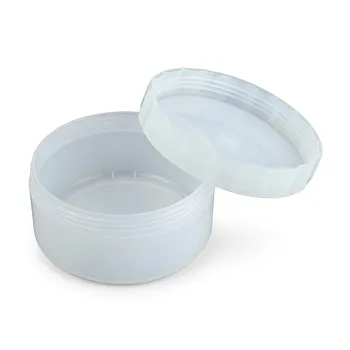
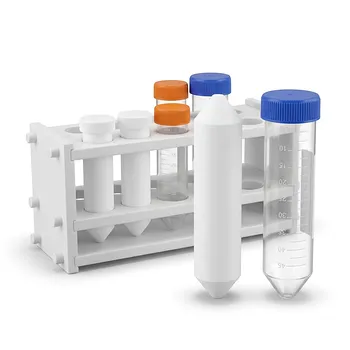
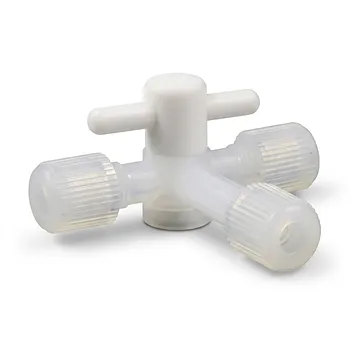
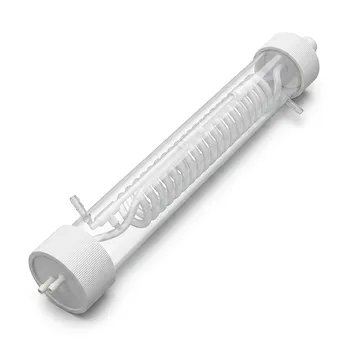
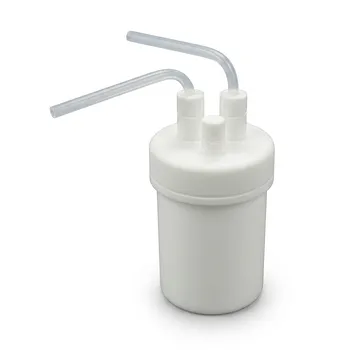
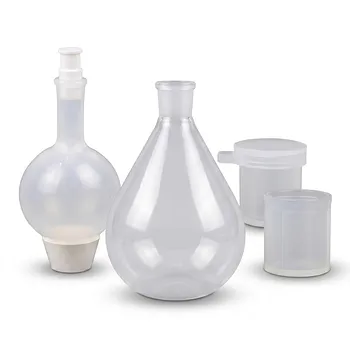
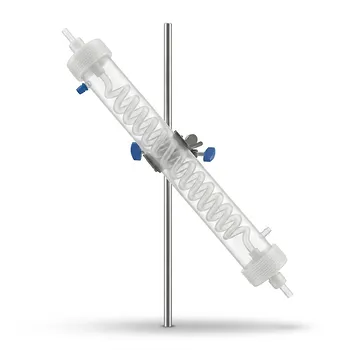
Aggressive polar solvents and volatile fluorinated monomers require chemically resistant equipment. PTFE and PFA vessels, tubing, containers, and filtration components help prevent swelling, leaching, contamination, and unwanted adsorption that could otherwise complicate interpretation of chain-transfer measurements.
These materials do not replace kinetic control, but they reduce non-CTA sources of variability.
Making the Right Choice for Your Goal
The best CTA is determined by the required (M_n), molecular-weight profile, latex behavior, and end-group architecture.
- If your primary focus is the lowest practical (M_n): Consider a difunctional CTA such as C4F8I2, while recalibrating concentration because its two iodine-bearing ends provide stronger chain regulation.
- If your primary focus is predictable linear control with a monofunctional CTA: Prefer a shorter-chain agent such as C4F9I over C6F13I under comparable conditions.
- If your primary focus is latex particle-size control: Evaluate CTA concentration as a colloidal variable, especially when using C4F8I2, because its transfer activity can change particle dimensions.
- If your primary focus is isolating CTA effects: Keep solvent, conversion, temperature, surfactant, and reactor materials consistent, since solvent chain transfer and contamination can otherwise obscure the CTA response.
In VDF emulsion polymerization, reliable molar-mass control comes from matching CTA functionality and perfluoroalkyl chain length to the desired transfer rate, rather than choosing an agent by concentration alone.
Summary Table:
| CTA Type | Example | Functionality | Effect on Molar Mass | Particle Size Impact |
|---|---|---|---|---|
| Monofunctional | C4F9I | One iodine end | Efficient, linear control | Negligible |
| Monofunctional | C6F13I | One iodine end | Poorer control at low concentration | Negligible |
| Difunctional | C4F8I2 | Two iodine ends | Strong transfer, lower M_n | Significant (18–112 nm) |
Optimize your VDF polymerization with precision-engineered PTFE and PFA labware from KINTEK. Our high-purity fluoropolymer products ensure reliable, contamination-free results for CTA studies and emulsion polymerization. Contact us today to enhance your research efficiency and reproducibility — Get in touch!
Related Products
- Corrosion Resistant High Purity PFA Valve and Weldable Transparent Tubing for Semiconductor Fluid Transfer
- Corrosion Resistant PFA Tubing 1/4 Inch Custom Molded Welded Fluid Transfer Components
- PFA Chromatography Column Series and Corrosion Resistant Resin Exchange Column with Filter Frit Support for Trace Analysis Customizable
- Corrosion Resistant PFA Reaction Tank High Purity Laboratory Reaction Bottle Wide Mouth PTFE Jar Multiple Specifications
- High Purity PFA Reaction Bottle with Tubing Connection for Corrosive Chemical Synthesis and Trace Analysis
People Also Ask
- Why are high-purity PFA fluid transfer components required for OSDAs and silica? Ensure Precision in Zeolite Synthesis
- Why are high-purity PFA fluid transfer components preferred for battery electrolytes? Ensure Purity & Data Accuracy
- How does high-purity PFA tubing maintain reagent purity? Achieve Ultra-Smooth, Zero-Contamination Fluid Transfer
- How do high-precision PFA fluid transfer components, such as tubing and fittings, affect the results of continuous-flow synthesis?
- How do PFA fluid transfer components contribute to chemical research precision? Achieve high-purity results today.