PTFE’s low surface energy and exceptionally low friction provide two practical advantages over conventional plastics: liquids are less likely to wet or remain on the surface, and moving components require less force to operate. In custom-machined laboratory components and fluid handling systems, this can improve sample recovery, reduce cross-contamination, simplify cleaning, and enable smooth valve, seal, and fitting operation without external lubricants. Compared with polyethylene and engineering plastics such as nylon, polyacetal, and polycarbonate, PTFE generally offers a more pronounced non-stick surface and lower friction.
The central benefit is control: PTFE minimizes both unwanted liquid adhesion and mechanical resistance, making it well suited to high-purity, micro-volume, and chemically demanding laboratory systems.
How Low Surface Energy Improves Fluid Handling
It Reduces Wetting and Liquid Hold-Up
PTFE has an extremely low critical surface energy, approximately 18 dynes/cm, compared with about 33 dynes/cm for polyethylene. This low-energy surface is strongly hydrophobic, so many liquids spread less readily and are less likely to remain attached to the material.
In custom-machined labware, fittings, valves, and transfer tubing, that behavior reduces liquid hold-up in cavities, channels, bores, and surface irregularities. More of the sample can pass through the system instead of remaining behind after dispensing or transfer.
It Improves Micro-Volume Sample Recovery
Small retained droplets can represent a meaningful percentage of a micro-volume sample. PTFE’s non-stick surface helps minimize droplet retention on beakers, digestion vessels, tubing walls, and machined fluid paths.
This supports more complete transfers and improves the consistency of analytical procedures where even small recovery losses can affect results.
It Reduces Cross-Contamination Risk
When a previous sample adheres to an internal surface, the next sample can become contaminated. PTFE reduces the tendency of many substances to stick, helping limit residue between operations.
This does not eliminate the need for validated cleaning procedures. It reduces one source of retention and makes cleaning and rinsing more effective.
It Facilitates Cleaning
Low surface energy makes PTFE easier to rinse and clean than many conventional plastics. Residues are less likely to form persistent films or remain attached to the component after flushing.
For custom-machined laboratory apparatus, this can be especially valuable when internal passages, valve seats, or fittings are difficult to access manually.
How Low Friction Improves Moving Components
It Enables Smooth Valve and Stopcock Actuation
The reported dynamic coefficient of friction for PTFE can be approximately 0.04 under the stated comparison, versus about 0.33 for polyethylene. Other test conditions and measurement methods may produce higher PTFE values, commonly within ranges around 0.05 to 0.10 or beyond.
Regardless of the exact test value, PTFE’s friction is substantially lower than that of many conventional engineering plastics. In custom valve assemblies, stopcocks, sliding seals, and rotating components, this reduces the force and torque required for movement.
It Helps Prevent Stick-Slip Behavior
PTFE also has unusually low static friction. Supplementary data places its static coefficient around 0.1 or less, compared with approximately 0.38 for polyacetal, 0.50 for nylon 6,6, and 0.51 for polycarbonate.
Low starting friction reduces the tendency of a component to remain stuck and then move suddenly. That supports smoother initial actuation, more precise flow adjustment, and less chattering in laboratory fluid-control hardware.
It Supports Lubricant-Free Operation
PTFE’s self-lubricating behavior can allow moving parts to operate without adding conventional external lubricants. This is important where oils or greases could contaminate high-purity chemicals, biological samples, reaction systems, or analytical instruments.
The result is a cleaner fluid path and fewer compatibility concerns associated with lubricant migration.
It Reduces Installation Torque
Low-friction PTFE surfaces can reduce torque losses during fitting installation. More of the applied torque is available to generate the compressive force needed for sealing.
This can simplify assembly of fluid fittings and sealing systems, although the correct design still depends on thread geometry, compression, temperature, pressure, and PTFE’s tendency to deform under load.
Why PTFE Can Outperform Conventional Plastics
Polyethylene Offers a Useful but Less Non-Stick Surface
Polyethylene has relatively low surface energy and can provide good chemical resistance and reasonable non-stick performance. However, the reference comparison places polyethylene at approximately 33 dynes/cm, substantially above PTFE’s 18 dynes/cm.
That difference generally makes PTFE less wettable and less prone to retaining droplets, particularly where maximum sample recovery is important.
Engineering Plastics Typically Generate More Friction
Polyacetal, nylon, and polycarbonate can provide useful strength, stiffness, and wear performance, but their friction values are generally higher than PTFE’s. Higher friction can increase actuation torque, encourage sticking, and require greater force in sliding or rotating assemblies.
For precision fluid control, those effects can make movement less smooth and increase the risk of residue or wear at contacting surfaces.
PTFE Combines Surface and Mechanical Advantages
The key distinction is that PTFE contributes both non-stick fluid behavior and low-friction mechanical behavior. A component machined from PTFE can therefore address liquid retention and moving-contact resistance within the same material.
This is particularly useful when a single custom component must function as a chemically resistant fluid path, sealing surface, and low-friction moving interface.
Where These Benefits Matter Most
Custom-Machined Valves and Stopcocks
PTFE valve bodies, seats, plugs, and seals can provide smooth rotation, low actuation torque, and reduced residue retention. These properties are valuable for precise control of corrosive chemicals, solvents, reagents, and biological samples.
The design must still account for dimensional stability, pressure rating, and deformation under load.
Sample Transfer Tubing and Fittings
The low-energy internal surface reduces adhesion to tubing walls and fitting passages. This helps maximize fluid recovery and reduces the amount of sample available to contaminate a subsequent transfer.
The benefit is most significant in small-volume or high-value applications where residual liquid is not negligible.
Laboratory Vessels and Apparatus
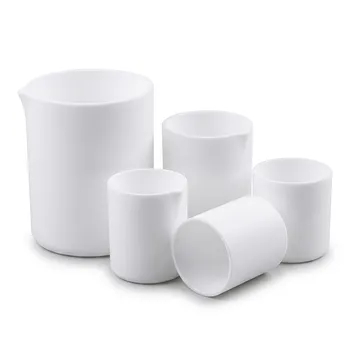
PTFE beakers, digestion vessels, reaction components, and custom-machined labware are easier to empty and rinse because liquids and residues are less likely to adhere strongly.
This supports repeatable sample handling and reduces cleaning effort without relying solely on aggressive cleaning chemicals or mechanical scrubbing.
Sliding Seals and Rotating Components
Low friction helps sliding seals and rotating elements move with less resistance. It can reduce initial sticking and support more predictable operation in fluid-handling mechanisms.
Seal geometry and contact pressure remain critical because low friction alone does not guarantee leak-free performance.
Understanding the Trade-offs
Coefficient of Friction Is Not a Universal Constant
Reported friction values vary with static versus dynamic measurement, load, speed, surface finish, temperature, counterface material, and test method. The values of 0.04, 0.05 to 0.10, and approximately 0.1 should therefore be treated as representative data under particular conditions, not as a guaranteed value for every design.
For critical assemblies, the actual PTFE grade and operating conditions should be tested against the mating material.
Low Friction Can Complicate Machining
PTFE’s low friction can allow the workpiece to slip during cutting. That can affect machining accuracy and surface finish if the part is not securely supported and clamped.
Custom machining should use fixturing, tooling, and process controls appropriate for a soft, low-friction fluoropolymer.
PTFE Is Not Always the Best Structural Material
PTFE is comparatively soft and can deform or creep under sustained compressive loads. A conventional engineering plastic may be preferable where high stiffness, dimensional stability, or load-bearing strength is the dominant requirement.
The correct selection may involve a PTFE grade, a filled PTFE compound, or a different polymer for the structural portion of the assembly.
Non-Stick Does Not Mean Contamination-Proof
PTFE reduces adhesion and retention, but it does not make a system immune to contamination. Residues can remain in dead legs, rough machining marks, damaged surfaces, threaded interfaces, or poorly designed valve cavities.
Fluid-path geometry, surface finish, cleaning validation, and component inspection remain essential.
Making the Right Choice for Your Goal
PTFE is most valuable when the design must prioritize clean fluid transfer and low-resistance movement simultaneously.
- If your primary focus is maximum sample recovery: Use PTFE for wetted surfaces, transfer tubing, fittings, and labware where low surface energy can reduce droplet retention and liquid hold-up.
- If your primary focus is smooth valve or stopcock operation: Use PTFE for sliding, rotating, or sealing interfaces where low friction can reduce actuation torque and stick-slip behavior.
- If your primary focus is contamination control: Use PTFE to minimize residue adhesion, while pairing it with validated cleaning procedures and low-retention fluid-path geometry.
- If your primary focus is structural precision: Evaluate PTFE’s creep, softness, and machining behavior before selecting it as the sole material for load-bearing components.
By matching PTFE’s non-stick and low-friction properties to the actual fluid path and mechanical loads, engineers can build laboratory systems that transfer samples more completely and operate more cleanly and predictably.
Summary Table:
| Property | PTFE | Polyethylene | Polyacetal | Nylon 6,6 | Polycarbonate |
|---|---|---|---|---|---|
| Typical Surface Energy (dynes/cm) | ~18 | ~33 | Higher | Higher | Higher |
| Typical Dynamic Coefficient of Friction | ~0.04 (can range 0.05-0.10) | ~0.33 | Higher | Higher | Higher |
| Static Coefficient of Friction | ~0.1 or less | Higher | ~0.38 | ~0.50 | ~0.51 |
| Non-stick / Liquid Release | Excellent | Good | Poor | Poor | Poor |
| Self-lubricating | Yes | No | No | No | No |
Optimize your laboratory fluid systems with custom PTFE components. At KINTEK, we specialize in high-performance fluoropolymers, offering a full range of labware, fluid transfer components, and custom CNC-machined parts. Our PTFE's low surface energy and friction ensure superior sample recovery, reduced contamination, and smooth operation. Whether you need standard labware or bespoke reaction apparatus, our expertise delivers quality and reliability. Contact us today to discuss your requirements and enhance your lab's efficiency.
Related Products
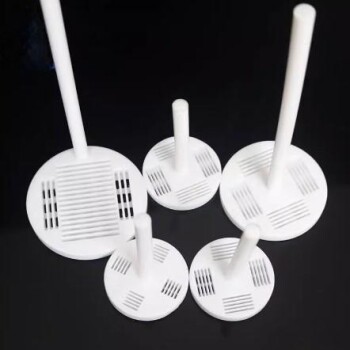
- Custom Machined Molded PTFE Teflon Parts Manufacturer for Laboratory ITO FTO Conductive Glass Cleaning Flower Basket
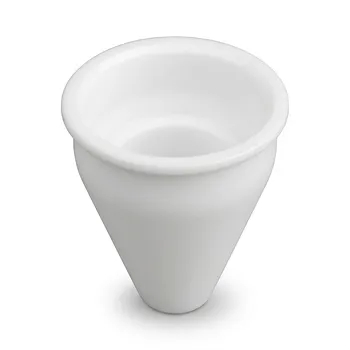
- Custom Machined PTFE Conical Sample Cell Corrosion Resistant Triangular Fluoropolymer Container for Trace Analysis
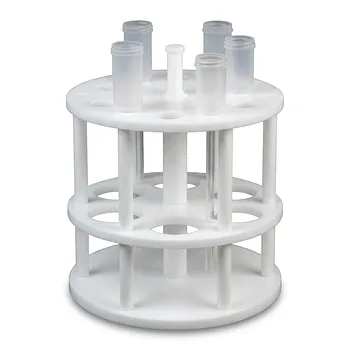
- Custom PFA Microcolumn Racks and PTFE Machined Low Background Corrosion Resistant Laboratory Fixtures
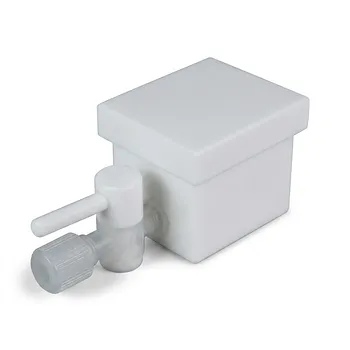
- Custom PTFE Laboratory Apparatus Corrosion Resistant Low Background Reaction Cells Precision CNC Fabrication
- Custom PTFE Parts Manufacturer for Teflon Containers and Components
People Also Ask
- What advantages do PTFE flower baskets provide for the photovoltaic and solar energy industry? Boost Cell Efficiency
- What is the primary function and application of a PTFE flower basket? Expert Guide to High-Purity Processing
- What is the operating temperature range for PTFE flower baskets? Thermal limits and performance from -200°C to +260°C.
- How do PTFE flower baskets compare to quartz or stainless-steel carriers? Maximize ROI with Low TCO Solutions
- How do PTFE flower baskets contribute to purity in semiconductor manufacturing? Achieve Sub-10 ppt Purity & Zero Leaching