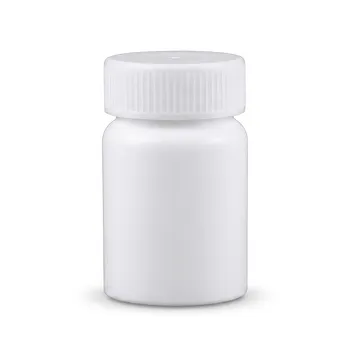
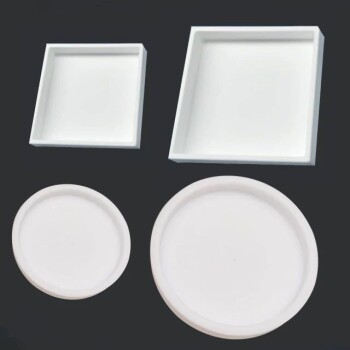
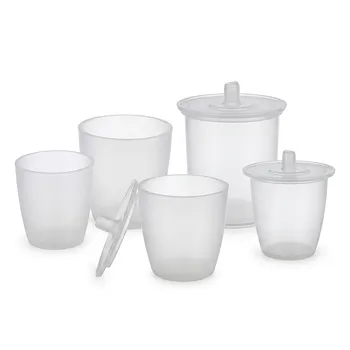
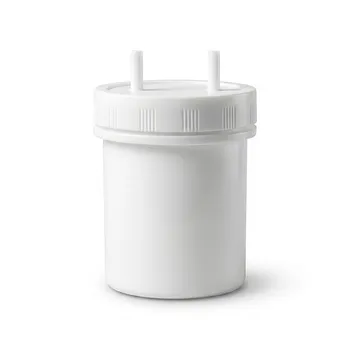
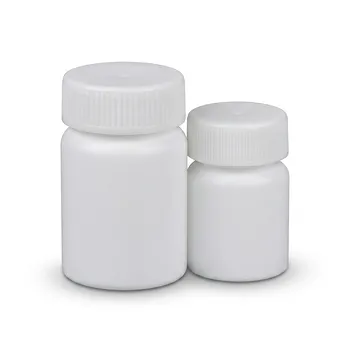
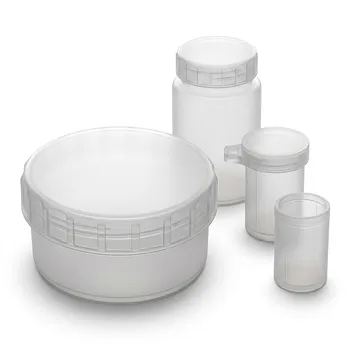
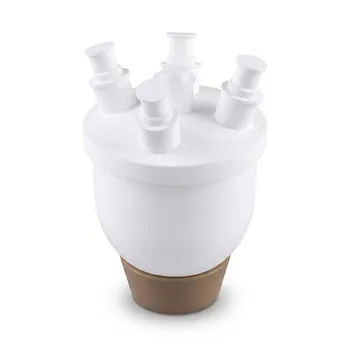
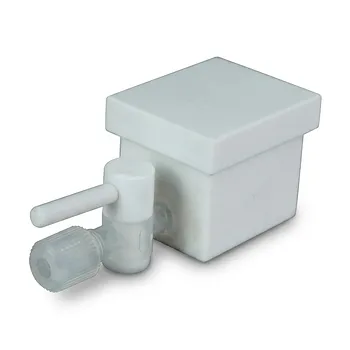
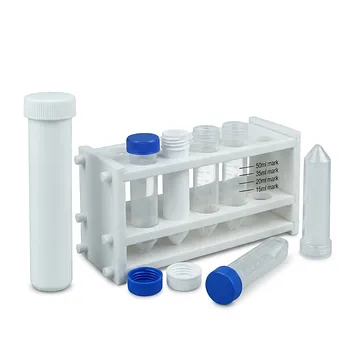
No—PTFE laboratory containers and fluid fittings are not resistant to every chemical solvent or reactive substance. PTFE is effectively insoluble and highly inert toward nearly all common laboratory acids, bases, and organic solvents below its melting point. However, certain highly fluorinated liquids can cause measurable swelling, while molten alkali metals, powerful fluorinating agents, and some high-temperature metal systems can chemically degrade the polymer.
PTFE is an excellent general-purpose material for solvent handling, but “chemically inert” does not mean universally compatible. Evaluate both the chemical species and the operating temperature, concentration, exposure time, pressure, and mechanical load before selecting PTFE labware or fittings.
Why PTFE Resists Most Laboratory Chemicals
The fluorinated structure provides strong protection
PTFE’s carbon backbone is surrounded by fluorine atoms. The resulting carbon–fluorine bonds and dense fluorine shell make the polymer unusually resistant to chemical attack, oxidation, and solvent dissolution.
This is why PTFE is widely used for containers, tubing, valves, gaskets, and fluid fittings handling aggressive laboratory chemicals.
Most common solvents do not dissolve PTFE
Below its melting point, PTFE has no known conventional solvent that readily dissolves it. Common hydrogen-containing organic solvents—including hexane, toluene, and chloroform—typically produce little absorption or dimensional change at room temperature.
PTFE also generally resists concentrated acids, bases, and many corrosive reagents, including hydrofluoric acid under ordinary laboratory conditions.
Resistance is not the same as zero physical change
A solvent may not chemically attack PTFE yet still cause absorption, swelling, or dimensional change. This distinction matters for precision fittings, valve seats, threaded connections, and seals.
Highly fluorinated or perfluorinated liquids can be more compatible with the molecular structure of PTFE and may cause swelling reported in the range of approximately 10–11% under some conditions. Compatibility data for the exact fluid, temperature, and exposure time should therefore be consulted.
Substances That Can Degrade PTFE
Molten alkali metals
The clearest chemical incompatibility is with molten elemental alkali metals, particularly:
- Sodium
- Potassium
- Lithium
- Cesium
These metals can remove fluorine from the PTFE chain. The resulting defluorination damages the polymer surface and can progress to oxidation and structural degradation.
A characteristic warning sign is discoloration from white to brown and eventually black. PTFE containers and fittings should not be treated as suitable containment for molten alkali metals.
Reactive alkali-metal systems
Certain alkali metals in highly reactive dissolved or activated states can also attack PTFE, depending on the solvent, temperature, concentration, and exposure conditions.
Because the risk is strongly condition-dependent, PTFE should not be selected automatically for solutions or reaction systems containing elemental sodium, potassium, lithium, or similar powerful reductants.
Fluorine and powerful fluorinating agents
PTFE can be attacked by highly reactive fluorinating species, especially under elevated-temperature conditions. Important examples include:
- Gaseous fluorine, F₂
- Chlorine trifluoride, ClF₃
- Oxygen difluoride, OF₂
These substances can promote defluorination or oxidation and may create severe fire or reaction hazards. Standard PTFE laboratory fittings should not be assumed safe for these gases or reagents.
High-temperature metal and etching conditions
Finely divided metals such as aluminum or magnesium can attack fluoropolymers under specific high-temperature or etching conditions. High-energy radiation can also cause polymer chain scission and loss of material properties.
These are not ordinary solvent-compatibility problems. They are specialized process hazards that require materials selection based on the complete reaction environment.
Concentrated hydroxides near extreme temperatures
PTFE is generally resistant to sodium hydroxide and potassium hydroxide in normal laboratory use. However, concentrated hydroxide solutions at or near PTFE’s melting temperature can attack the material.
Temperature is therefore a critical part of the compatibility assessment. A chemical that is acceptable at room temperature may become unsafe at extreme temperatures.
What This Means for Fluid Fittings
Chemical resistance does not guarantee mechanical reliability
PTFE may remain chemically intact while still becoming unsuitable mechanically. Swelling can affect threads, valve seats, tubing dimensions, and sealing forces.
PTFE also has inherent mechanical limitations, including creep under sustained load. A fitting can therefore fail through deformation or leakage even when the fluid has not chemically degraded the polymer.
Temperature changes the compatibility picture
PTFE’s exceptional resistance applies primarily within its usable temperature range and below its melting point. Increasing temperature can accelerate chemical attack, increase swelling, reduce mechanical strength, and worsen deformation under pressure.
For fittings, check the manufacturer’s pressure–temperature rating rather than relying only on a chemical-resistance chart.
The entire assembly must be compatible
A PTFE-lined fitting may contain other wetted materials, such as an elastomer seal, metal spring, adhesive, or backing component. The PTFE liner may resist the chemical while another component corrodes, swells, embrittles, or contaminates the process.
Compatibility must therefore be assessed for every wetted part, not just the PTFE body.
Understanding the Trade-offs
“Resistant to all solvents” is too broad
The accurate statement is that PTFE resists nearly all standard laboratory solvents and is not readily dissolved below its melting point. That does not mean every solvent produces zero absorption or zero dimensional change.
In particular, perfluorinated liquids may cause meaningful swelling even without conventional chemical degradation.
Chemical resistance does not eliminate process hazards
PTFE can be chemically compatible with a fluid while the overall application remains unsafe because of pressure, temperature, permeation, static charge, mechanical stress, or fitting failure.
Material compatibility is only one part of a safe design review.
Compatibility charts are not universal guarantees
Published ratings may vary because test conditions differ. Concentration, temperature, exposure time, pressure, fluid purity, mechanical stress, and whether the material is molded, machined, filled, or reinforced can all affect performance.
For critical service, use data for the exact PTFE grade and component design, and perform a controlled exposure test when appropriate.
How to Apply This to Your Project
Use the following decision rules when selecting PTFE containers, tubing, or fluid fittings:
- If your primary focus is routine solvent and acid handling: PTFE is generally an excellent choice for common organic solvents, concentrated acids, bases, and corrosive laboratory reagents below its rated temperature range.
- If your primary focus is perfluorinated-solvent handling: Check for swelling and dimensional-change data rather than assuming that insolubility means no physical effect.
- If your primary focus is molten or highly activated alkali metals: Do not use standard PTFE without specific compatibility evidence; select an alternative material and process design intended for the reaction.
- If your primary focus is fluorine, chlorine trifluoride, or oxygen difluoride: Treat PTFE as potentially incompatible, particularly at elevated temperatures, and obtain specialist materials guidance.
- If your primary focus is pressurized fluid fittings: Verify pressure–temperature limits, creep resistance, seal compatibility, and the materials of every wetted component.
- If your primary focus is high-temperature processing: Evaluate temperature-driven swelling, degradation, deformation, and attack by concentrated hydroxides or metal powders.
PTFE is best understood as exceptionally resistant—not universally indestructible—and careful evaluation of the chemical and operating conditions remains essential.
Summary Table:
| Substance/Condition | Effect on PTFE | Recommendation |
|---|---|---|
| Common acids, bases, organic solvents (e.g., hexane, toluene) | No chemical attack; minimal absorption | Suitable for general lab use |
| Perfluorinated liquids (e.g., some fluorinated solvents) | May cause swelling (approx. 10-11%) | Check compatibility data; consider mechanical effects |
| Molten alkali metals (Na, K, Li, Cs) | Defluorination, discoloration, structural damage | Avoid; use alternative materials |
| Fluorine, ClF3, OF2 | Defluorination/oxidation, potential fire hazards | Not recommended, especially at high temperatures |
| Concentrated hydroxides at near-melting temperatures | Possible attack and degradation | Avoid extreme temperature conditions |
| High-temperature metals (Al, Mg) | Potential attack under etching conditions | Evaluate specific process conditions |
Ensure the safety and reliability of your lab with KINTEK's high-performance PTFE/PFA products.
Our specialty is manufacturing laboratory supplies exclusively from PTFE and PFA, including containers, fluid fittings, and custom CNC-machined parts. We understand the subtle chemical interactions that can affect your experiments. Whether you're handling routine solvents or facing the challenges of highly reactive substances, our team can help you select the right solution.
Contact us today to discuss your specific application, benefit from our expertise, and ensure your lab operates with the highest safety and efficiency standards. Click here to reach our specialists: Contact KINTEK.
Related Products
- Large Mouth PTFE Sample Storage Drum Custom Chemical Resistant Fluoropolymer Container Acid Base Proof Labware
- Custom PTFE Flask Large Volume 18L Corrosion Resistant Low Background High Purity Chemical Vessel
- PTFE Small Reaction Bottle Corrosion Resistant Teflon Sample Dissolution Tank One Piece Molded Fluoropolymer Storage Container
- High Purity Corrosion Resistant PTFE Raw Material Barrel 4L Screw Seal Low Background Feed Tank
- Custom High Purity PTFE Storage Barrel with Corrosion Resistant Threaded Sealing Lid and Low Background Properties 15L
People Also Ask
- How are PTFE laboratory containers and apparatus typically manufactured? Inside the Precision Machining Process
- What chemical conditions or reagents can compromise the integrity of PTFE chemical containers and laboratory equipment? Avoid Alkali Metals, Fluorinating Gases, Extreme Conditions
- How do the distinct solubility characteristics of multi-segment fluorinated block and star polymers influence sample preparation container selection? Choose PTFE/PFA for reliable recovery
- What inherent material characteristics of non-melt-processable PTFE make it suitable for manufacturing high-purity laboratory containers and custom-machined apparatus?
- Why are PFA or PTFE laboratory containers recommended for synthesis with HI or HBr? Ensure Ultra-High Chemical Purity