PTFE is resistant to nearly all standard laboratory solvents, acids, and bases, but it is not universally inert. Its integrity can be compromised by molten or dissolved alkali metals, highly reactive fluorinating gases, and certain finely divided metals or strongly reducing systems under severe conditions. High temperature, pressure, radiation, and prolonged exposure can significantly increase the risk of defluorination, chain scission, dimensional change, or catastrophic failure.
PTFE is an excellent general-purpose containment material, but it should not be treated as compatible with elemental alkali metals, fluorine-based oxidizers, or extreme high-temperature reducing and etching conditions.
Why PTFE Resists Most Chemicals
The fluorinated polymer structure
PTFE consists of a carbon backbone surrounded by fluorine atoms. The resulting carbon-fluorine bonds are unusually stable and shield the polymer from attack by most common laboratory reagents.
This is why PTFE commonly withstands organic solvents, concentrated acids, and bases under ordinary operating conditions.
Chemical resistance has operating limits
PTFE's resistance applies primarily below its upper service-temperature range and under conditions where the reagent cannot activate a specialized degradation mechanism.
Temperature, pressure, reagent concentration, exposure time, and physical form all matter. A substance that is compatible at room temperature may become hazardous near PTFE's thermal limits.
Reagents That Can Chemically Attack PTFE
Molten or dissolved alkali metals
Elemental sodium, potassium, lithium, and cesium can attack PTFE when molten or present in highly reactive dissolved or finely dispersed forms.
These metals can transfer electrons to the polymer and remove fluorine from the PTFE chain. The resulting defluorination may cause discoloration, surface oxidation, loss of mechanical strength, and progressive structural degradation.
Strong fluorinating and oxidizing gases
Highly reactive fluorine-containing gases can chemically attack PTFE, particularly at elevated temperature or pressure. Important examples include:
- Fluorine gas, F2
- Chlorine trifluoride, ClF3
- Oxygen difluoride, OF2
These reagents can react with the fluorinated polymer despite the strength of its carbon-fluorine bonds. PTFE equipment should not be selected as the sole containment barrier for these materials without specific compatibility data.
Finely divided reactive metals
Fine powders of metals such as magnesium or aluminum can attack or damage PTFE under elevated-temperature etching or highly reactive conditions.
The risk is not simply the presence of the metal. Particle size, temperature, surface activation, contact time, and the surrounding chemical environment determine whether meaningful degradation occurs.
Concentrated hydroxides at extreme temperature
Concentrated sodium hydroxide or potassium hydroxide can attack PTFE when used at or near its upper service-temperature limit.
This is an extreme-condition incompatibility, not a general warning against ordinary aqueous sodium or potassium hydroxide. Compatibility should be verified for concentrated hot caustic systems, especially near approximately 260°C.
Severe high-temperature oxidizing conditions
Highly concentrated nitric acid can produce slow oxidative attack under severe conditions, including high temperature and pressure.
For example, prolonged exposure to concentrated nitric acid around 250°C under pressure should not be assumed to be compatible merely because PTFE normally resists nitric acid at lower temperatures.
Conditions That Increase the Risk
Elevated temperature
Heat accelerates chemical reaction rates and can activate mechanisms that are negligible at room temperature.
It also reduces the margin between chemical compatibility and loss of mechanical performance. A chemically resistant vessel can still deform, creep, or fail if used too close to its temperature limit.
High pressure and prolonged exposure
Pressure and extended contact can magnify relatively slow degradation processes.
A compatibility claim based on a short room-temperature exposure may not apply to a pressurized digestion vessel, sealed reactor, or long-term storage application.
Radiation and high-energy exposure
High-energy radiation can cause polymer chain scission or other changes in PTFE's molecular structure.
Radiation exposure should therefore be evaluated separately from ordinary chemical compatibility when PTFE equipment is used near radiation sources or in radiation-processing environments.
Reactive species in unusual physical forms
Molten metals, metal solutions, aerosols, powders, and activated gases can behave very differently from their dilute or bulk counterparts.
The physical form of the reagent is part of the compatibility assessment. “Compatible with sodium” is not a meaningful conclusion unless it specifies whether the sodium is dilute, ionic, molten, finely divided, or chemically activated.
Physical Effects That Are Not Chemical Degradation
Solvent absorption and swelling
PTFE can absorb small amounts of some organic and halogenated solvents.
The resulting dimensional change is generally minor and reversible, but it can matter for precision components, threaded closures, valve seats, seals, and tight-tolerance assemblies.
Mechanical and thermal failure
PTFE may remain chemically unchanged while still failing mechanically through creep, deformation, thermal softening, or stress cracking in an assembled component.
Chemical resistance does not guarantee suitability for a high-temperature, pressurized, or mechanically loaded application.
Understanding the Trade-offs
“Chemically inert” does not mean universally compatible
PTFE is highly resistant, but statements that it resists every chemical are too broad.
The clearest exceptions involve molten alkali metals, powerful fluorinating agents, and extreme temperature or pressure conditions.
Do not generalize from ordinary acids and bases
PTFE's strong resistance to laboratory acids and bases does not automatically cover concentrated hot hydroxide, high-temperature nitric acid, or chemically activated mixtures.
The full operating envelope must be evaluated rather than the reagent name alone.
Do not rely on appearance alone
Discoloration from white to brown or black can indicate defluorination or surface degradation, but visible damage may appear only after the material has already lost important properties.
Inspect equipment regularly and remove it from service when there is discoloration, embrittlement, cracking, deformation, leakage, or unexpected dimensional change.
O-rings and seals require separate evaluation
PTFE O-rings can be exposed to different stresses than rigid vessels, including compression, sliding, thermal cycling, and pressure pulses.
A seal may fail because of chemical attack, physical swelling, creep, or mechanical damage. Evaluate the complete seal assembly rather than assuming that a PTFE container compatibility rating applies unchanged to an O-ring.
Making the Right Choice for Your Goal
Choose the material based on the actual reagent, concentration, physical form, temperature, pressure, exposure time, and mechanical loading.
- If your primary focus is routine solvent, acid, or base handling: PTFE is generally an excellent choice when operated within its rated temperature and pressure limits.
- If your primary focus is alkali-metal chemistry: Avoid standard PTFE containment for molten, dissolved, or highly reactive sodium, potassium, lithium, or cesium systems unless compatibility has been specifically established.
- If your primary focus is fluorine-based oxidizers: Do not rely on PTFE as the sole containment material for F2, ClF3, OF2, or similar highly reactive gases without specialist materials guidance.
- If your primary focus is high-temperature digestion or caustic processing: Verify compatibility for the exact concentration, temperature, pressure, and duration rather than relying on PTFE's general chemical-resistance reputation.
- If your primary focus is precision seals or fluid-control components: Account for solvent absorption, swelling, creep, compression, and dimensional tolerances in addition to chemical attack.
PTFE provides exceptional chemical resistance when its specific reduction, fluorination, thermal, and mechanical limits are respected.
Summary Table:
| Reagent/Condition | Example | Risk Level | Mitigation |
|---|---|---|---|
| Molten/dissolved alkali metals | Sodium, potassium | High | Avoid; use alternative materials |
| Strong fluorinating gases | F2, ClF3, OF2 | High | Avoid; require specialist guidance |
| Finely divided reactive metals | Magnesium, aluminum | Moderate-High | Evaluate particle size and temperature |
| Concentrated hydroxides at extreme temp | NaOH, KOH near 260°C | Moderate | Verify compatibility for exact conditions |
| Severe high-temperature oxidizing conditions | Concentrated HNO3 at ~250°C | Moderate | Verify conditions; avoid prolonged exposure |
| High energy radiation | Gamma, electron beam | Moderate | Separate evaluation required |
| Solvent absorption/swelling | Organic solvents | Low | Account for dimensional changes |
Need PTFE labware that withstands extreme conditions? KINTEK's high-performance fluoropolymer products are engineered for superior chemical resistance. Contact our experts today to find the right solution for your application—contact us for a consultation.
Related Products
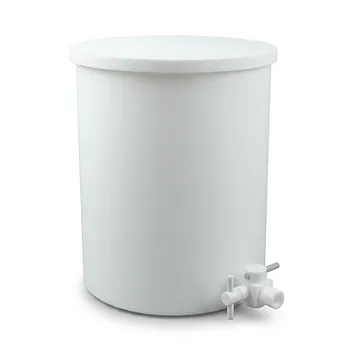
- Custom PTFE Flask Large Volume 18L Corrosion Resistant Low Background High Purity Chemical Vessel
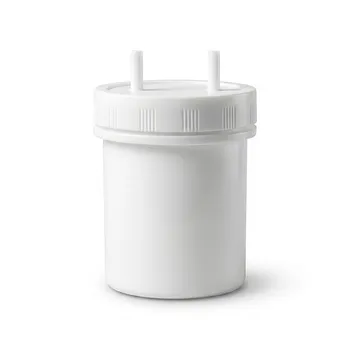
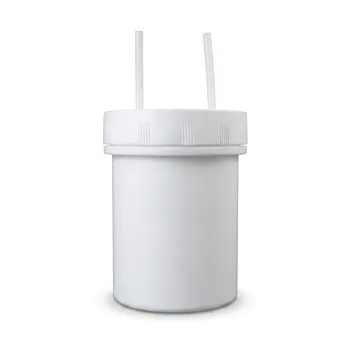
- High Purity Corrosion Resistant PTFE Fluoropolymer Raw Material Drum with Secure Screw Cap Seal for Low Background Chemical Storage and Feeding
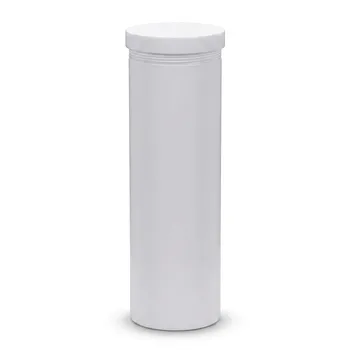
- Large Mouth PTFE Sample Storage Drum Custom Chemical Resistant Fluoropolymer Container Acid Base Proof Labware
- High Purity Corrosion Resistant PTFE Raw Material Barrel 4L Screw Seal Low Background Feed Tank
- Custom High Purity PTFE Storage Barrel with Corrosion Resistant Threaded Sealing Lid and Low Background Properties 15L
People Also Ask
- How do hydrogen-containing and halogenated solvents differ in their ability to cause swelling in PTFE laboratory vessels? Key Differences Explained
- Why do PTFE fluoropolymer laboratory vessels and containers exhibit superior chemical resistance against harsh solvents and corrosive acids compared to standard plastic labware? Discover the molecular secrets
- How do Polytetrafluoroethylene (PTFE) containers perform regarding gas permeation? Expert Insights on Solvent Absorption
- What are the key steps for structural integrity in molded PTFE lab reaction vessels? Master fine powder processing.
- Are PTFE Laboratory Containers and Fluid Fittings Resistant to All Chemical Solvents? Discover Key Exceptions and Safe Handling Tips