PTFE’s unique molecular properties are fundamental to high-precision battery manufacturing. By acting as a nearly frictionless interface, PTFE prevents powder adhesion to mold walls and minimizes energy loss during the compaction phase. This ensures that battery powders pack uniformly and can be ejected without damaging the delicate structural integrity of the final pellet.
PTFE ensures structural integrity in battery pellets by reducing wall friction during compaction and enabling damage-free ejection. This process is vital for maintaining the fragile interfaces of solid-state batteries and ensuring uniform particle density across the entire component.
The Mechanics of Frictionless Compaction
Optimizing Particle Rearrangement
With an incredibly low coefficient of friction (0.05–0.10), PTFE allows battery powders to slide and reorganize efficiently as pressure is applied. This lack of resistance ensures that particles fill the cavity evenly rather than "bridging" or creating voids.
Minimizing Energy and Friction Losses
During the compression phase, friction against the cavity walls normally absorbs a significant portion of the applied force. PTFE surfaces mitigate these losses, ensuring that the compaction pressure is distributed effectively throughout the material rather than being wasted on wall resistance.
Reducing Processing Heat
The supplementary data highlights that PTFE’s low friction prevents the generation of excessive heat during high-pressure processing. This thermal stability protects temperature-sensitive battery chemistries from degrading during the pellet formation stage.
Preserving Structural Integrity During Ejection
Protecting Brittle Solid Electrolytes
Solid-state battery materials are often brittle and prone to micro-cracking during the manufacturing process. PTFE allows pellets to be ejected with minimal force, which is essential for preserving the mechanical health of the electrolyte.
Maintaining Interface Quality
The non-stick behavior of PTFE ensures that the surfaces of the pellets remain perfectly smooth and intact. This is critical for layered cell stacks, where even minor surface adhesion could pull material away and ruin the interface between the anode, cathode, and electrolyte.
Self-Cleaning and Consistency
The carbon–fluorine bonds in PTFE create a surface that naturally repels contaminants and prevents "caking" of the powder. This self-cleaning property ensures that every pellet in a production run is formed with consistent dimensions and density.
Understanding the Trade-offs and Limitations
Mechanical Stability Under Extreme Load
While PTFE is excellent for friction reduction, it is a relatively soft material compared to hardened steels. Under extreme compaction pressures, pure PTFE may undergo "cold flow" or deformation, which can affect the dimensional tolerances of the battery mold over time.
Potential for Material Transfer
In some high-shear environments, trace amounts of PTFE can transfer onto the battery material. While this is rare in mold applications, engineers must ensure that any molecular transfer does not interfere with the electrochemical performance of the battery cell.
Strategic Implementation in Battery Production
To maximize the benefits of PTFE in your pellet formation process, consider the specific requirements of your battery chemistry and production scale.
- If your primary focus is solid-state battery integrity: Use PTFE-lined molds to prevent micro-cracking and ensure clean separation of brittle electrolyte layers.
- If your primary focus is high-volume consistency: Leverage the non-stick properties of PTFE to reduce downtime for mold cleaning and maintenance between cycles.
- If your primary focus is maximizing particle density: Utilize the low-friction surface to ensure that compaction forces are applied uniformly, eliminating density gradients within the pellet.
The integration of PTFE into the battery formation process is a critical factor in achieving the structural and electrochemical precision required for next-generation energy storage.
Summary Table:
| Impact Category | PTFE Property | Benefit to Battery Manufacturing |
|---|---|---|
| Compaction | Low Friction (0.05–0.10) | Ensures uniform particle density and prevents "bridging." |
| Energy Efficiency | Minimal Wall Resistance | Maximize compaction pressure distribution throughout the pellet. |
| Ejection | Non-stick Surface | Damage-free removal of brittle solid electrolytes and pellets. |
| Thermal Stability | Reduced Shear Heat | Protects temperature-sensitive chemistries from degradation. |
| Surface Quality | C–F Molecular Bonds | Maintains smooth interfaces for layered cell stacks. |
Elevate Your Battery Research with KINTEK’s High-Performance Fluoropolymers
Precision in battery pellet formation starts with the right materials. KINTEK specializes in manufacturing virtually all imaginable laboratory supplies crafted from high-performance PTFE and PFA.
Whether you require everyday basic labware (beakers, crucibles, reagent bottles) or advanced derivative apparatus like battery testing fixtures, electrochemical cells, and hydrothermal synthesis liners, our end-to-end custom CNC fabrication ensures your specific needs are met. We provide everything from high-purity trace analysis instruments and fluid transfer components (tubing, fittings, valves) to sample prep tools and complex non-standard machined parts.
Ready to optimize your lab's efficiency and pellet integrity? Contact KINTEK today to discuss your custom project or high-volume order.
Related Products
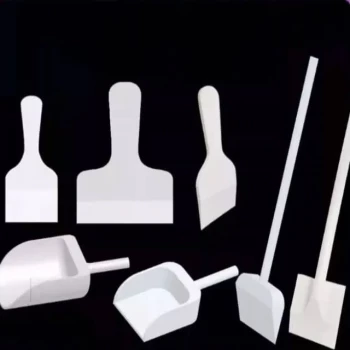
- Customizable PTFE Scrapers and Shovels for Demanding Applications
- High Purity PFA Laboratory Rectangular Tank Corrosion Resistant Acid Cleaning Bath for Silicon Wafer Processing and Trace Analysis
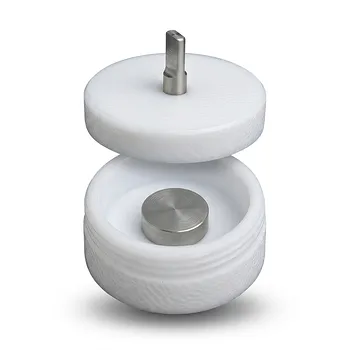
- Acid Resistant PTFE Button Cell Battery Test Fixture Customizable Machining High Purity Electrochemical Testing Clamp
- Square PTFE Electrochemical Cell for Silicon Wafer Processing and Hydrofluoric Acid Resistance in Semiconductor and New Energy Research
- Corrosion Resistant PTFE Electrochemical Cell for New Energy Research Inert Insulating Customizable Lab Reaction Vessel
People Also Ask
- What are the advantages of PTFE shovels in terms of chemical resistance? Unmatched Inertness for Handling Corrosives
- Why are PTFE shovels considered cost-effective? Maximize ROI with Superior Durability
- What are some specific applications of PTFE shovels in the laboratory? Ensure Sample Purity and Safety
- How does the non-stick surface of PTFE shovels benefit laboratory work? Enhance Accuracy & Efficiency
- What temperature range can PTFE shovels withstand? A Guide to Extreme Thermal Stability