Platinum (Pt) wire mesh is the standard choice for counter electrodes in Ni-Co-CHH analysis because of its exceptional chemical inertness and high electrical conductivity in alkaline environments. In the aggressive 1M KOH electrolytes typically used for these materials, platinum remains stable and does not participate in redox reactions. This ensures that every milliampere of current measured during testing is a direct result of the Nickel-Cobalt Carbonate Hydroxide's performance, rather than interference from the counter electrode itself.
Core Takeaway: Platinum wire mesh provides a chemically stable, highly conductive, and high-surface-area platform that ensures the electrochemical data collected is an accurate reflection of the working electrode's intrinsic properties without interference or polarization.
Chemical Stability in Aggressive Alkaline Media
Immunity to Corrosion in Potassium Hydroxide (KOH)
Nickel-Cobalt Carbonate Hydroxide (Ni-Co-CHH) is almost exclusively tested in strong alkaline electrolytes like 1M to 6M KOH. Platinum is a noble metal that exhibits superior resistance to chemical dissolution and corrosion in these harsh, high-pH environments.
Prevention of Electrolyte Contamination
Because platinum does not dissolve, it prevents metal ions from leaching into the electrolyte and migrating to the working electrode. This maintains the purity of the testing environment, ensuring that the observed capacitive or battery-like behavior is not skewed by foreign metal deposits.
Ensuring Faradaic Accuracy
In a three-electrode system, the counter electrode must complete the circuit without contributing its own redox peaks. Platinum’s electrochemical inertness ensures that the measured current signals originate solely from the faradaic processes of the Ni-Co-CHH active material.
Optimizing Reaction Kinetics via Mesh Geometry
Maximizing Effective Surface Area
The "mesh" structure is specifically chosen over a simple wire or foil to provide a significantly larger surface area. This ensures that the electrochemical reaction rate at the counter electrode is much higher than that at the Ni-Co-CHH working electrode.
Eliminating the Rate-Limiting Bottleneck
By providing ample surface area, the platinum mesh ensures the counter electrode never becomes the "bottleneck" of the system. This prevents current-limiting effects that would otherwise artificially deflate the measured performance of the Ni-Co-CHH material.
Promoting Uniform Current Distribution
The geometric design of a mesh allows for more uniform distribution of current density across the electrochemical cell. This uniformity is critical for obtaining consistent results during high-rate cyclic voltammetry (CV) and galvanostatic charge-discharge (GCD) tests.
Understanding the Trade-offs
The Cost of High Purity
The primary disadvantage of platinum is its significant capital cost. While it is the gold standard for accuracy, the high price of high-purity Pt mesh requires careful handling and maintenance to prevent loss or damage.
Potential for Gas Evolution Interference
While platinum is inert, it is a highly efficient catalyst for the Hydrogen Evolution Reaction (HER) and Oxygen Evolution Reaction (OER). If the applied potential is too high, gas bubbles can form on the mesh, temporarily reducing the active surface area and causing "noise" in the electrochemical data.
Maintenance and Surface Cleaning
Platinum mesh can become "poisoned" or contaminated by adsorbed species over time, which reduces its effective catalytic sites. Regular acid cleaning or flame annealing is often required to restore its surface properties, adding a layer of complexity to lab workflows.
How to Apply This to Your Research
Selecting the right counter electrode setup depends on your specific precision requirements and the nature of your active material.
- If your primary focus is high-precision kinetics: Always utilize high-purity platinum mesh to ensure the counter electrode reaction rate far exceeds your working electrode's demands.
- If your primary focus is long-term cycling stability: Monitor the platinum mesh for any signs of surface fouling and perform periodic electrochemical cleaning to maintain consistent current distribution.
- If your primary focus is cost-effective screening: You may consider a high-surface-area graphite rod as a temporary alternative, though you must verify that no carbon degradation occurs in the alkaline electrolyte.
By utilizing platinum wire mesh, researchers eliminate the variables of electrode degradation and polarization, leaving a clear window into the true electrochemical potential of Ni-Co-CHH materials.
Summary Table:
| Feature | Advantage for Ni-Co-CHH Analysis |
|---|---|
| Chemical Inertness | Prevents electrode corrosion and electrolyte contamination in 1M-6M KOH. |
| Mesh Geometry | Maximizes surface area to eliminate current-limiting bottlenecks. |
| High Conductivity | Ensures uniform current distribution for CV and GCD testing. |
| Noble Metal Status | Maintains faradaic accuracy by avoiding unwanted redox peaks. |
Elevate Your Electrochemical Research with KINTEK
Precision in Ni-Co-CHH analysis requires more than just high-purity platinum; it demands a comprehensive ecosystem of reliable laboratory equipment. At KINTEK, we specialize in high-performance materials designed to withstand the most aggressive alkaline environments.
Our extensive range spans from everyday basic labware (beakers, crucibles, reagent bottles) and sample prep tools to advanced electrochemical cells, hydrothermal synthesis liners, and custom-machined PFA/PTFE components. Whether you need standard Pt wire mesh electrodes or bespoke reaction apparatus, our end-to-end CNC fabrication ensures every piece meets your exact specifications.
Ready to optimize your lab's performance? Contact us today to discuss how our fluoropolymer expertise and high-quality lab supplies can bring absolute accuracy to your next breakthrough.
References
- Mohit Bhatt, A. K. Sinha. Superior charge storage performance of optimized nickel cobalt carbonate hydroxide hydrate nanostructures for supercapacitor application. DOI: 10.1038/s41598-025-85113-z
This article is also based on technical information from Kintek Knowledge Base .
Related Products
- Customizable PTFE Scrapers and Shovels for Demanding Applications
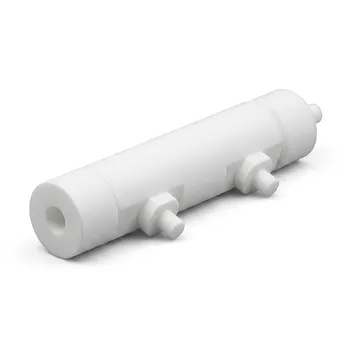
- Custom PTFE Electrolytic Cell Corrosion Resistant Low Background Reaction Vessel with Inlet Outlet Ports
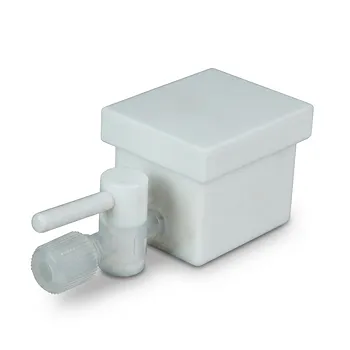
- Custom PTFE Corrosion Resistant Insulating Electrophoresis Reaction Cell with Septum and Valves for Low Background Trace Analysis
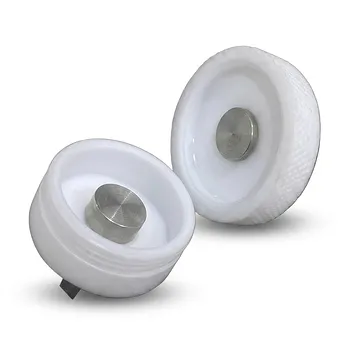
- White PTFE Electrolytic Cell with Movable Slider and Insulated Lid for Fluorine Corrosion Resistance
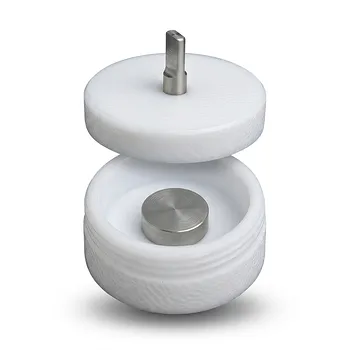
- Corrosion Resistant PTFE Coin Cell Battery Testing Clamps and Acid Proof Custom Fluoropolymer Battery Fixtures
People Also Ask
- Why are PTFE shovels considered cost-effective? Maximize ROI with Superior Durability
- What are the advantages of PTFE shovels in terms of chemical resistance? Unmatched Inertness for Handling Corrosives
- What are the key properties that make PTFE shovels ideal for laboratory use? Ensure Sample Integrity with Chemically Inert Tools
- How does the durability of PTFE shovels compare to plastic shovels? Discover the Superior Choice for Harsh Conditions
- What are some specific applications of PTFE shovels in the laboratory? Ensure Sample Purity and Safety