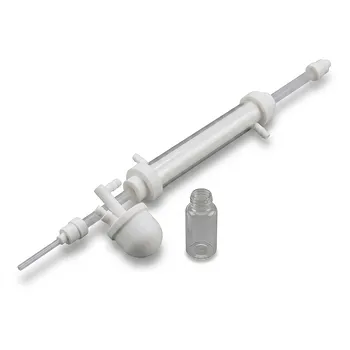
PTFE requires specialized powder processing because it does not become a freely flowing liquid when heated. Its exceptionally high molecular weight creates a melt creep viscosity of roughly 10¹¹ poise, or 10¹⁰ Pa·s, near 380°C. Above its melting point, PTFE forms a stiff, gel-like phase with virtually no flow, so standard melt extrusion and injection molding cannot reliably shape it.
PTFE is processed more like a powdered ceramic or metal than a conventional thermoplastic: resin is compacted, sintered, and often machined. The quality of compaction and sintering directly determines whether laboratory components are dense, chemically reliable, and mechanically durable.
Why Standard Melt Processing Fails
PTFE Has an Exceptionally High Molecular Weight
Tetrafluoroethylene polymerizes into long, linear PTFE chains with extremely high molecular weights. These entangled chains resist movement even when the polymer is heated above its melting point.
Typical thermoplastics become low-viscosity liquids during processing. PTFE instead retains such high resistance to flow that conventional screws, dies, and injection pressure cannot move it effectively through standard equipment.
Melting Does Not Produce Conventional Liquid Flow
PTFE melts at a temperature above approximately 327°C, although processing conditions commonly involve higher temperatures. The resulting phase is a stiff, clear gel rather than a freely flowing polymer melt.
This distinction is critical. Heating PTFE is necessary for sintering, but heating alone does not make it suitable for ordinary melt extrusion or injection molding.
PTFE Cannot Be Dissolved to Simplify Processing
PTFE is also insoluble in ordinary solvents and highly resistant to acids and bases. This removes solution processing as a practical alternative for forming most laboratory components.
Manufacturing therefore begins with PTFE powder or granular resin and relies on mechanical compaction, controlled heating, paste extrusion, and machining.
How Powder Processing Forms PTFE Components
Powder Is Compacted Into a Preform
Granular or fine PTFE resin is first compressed into a preform, billet, tube, or other near-net shape. This cold-compression stage brings the particles into close contact and establishes the initial geometry.
The compacted part is not yet equivalent to a fully dense solid. Particle boundaries and microscopic spaces remain until the subsequent sintering cycle consolidates the structure.
Sintering Fuses the Particles
The preform is heated through a carefully controlled sintering cycle. PTFE particles coalesce as the material passes through its crystalline transition and then cools into a consolidated solid.
Unlike melt molding, this process depends on gradual particle fusion and dimensional control. Temperature, heating rate, hold time, cooling rate, and part geometry all influence the final density and internal structure.
Machining Provides Final Geometry
After sintering, PTFE billets, rods, tubes, or blocks can be machined into laboratory components. CNC machining is commonly used for reaction vessels, valve bodies, fittings, liners, tubing interfaces, and other parts requiring tight tolerances.
This approach supports complex or custom geometry without requiring the material to flow through a mold. It also allows a manufacturer to start with a dense, pre-formed stock shape and remove material to achieve the final dimensions.
How Processing Affects Structural Integrity
Void Closure Determines Density
During sintering, microscopic voids between powder particles close slowly. If the cycle is poorly controlled, some of these voids can remain in the finished component.
Residual porosity can create pathways for chemical permeation and can reduce the effective cross-section available to carry mechanical loads. For laboratory fluid components, even small internal defects may become important when the part is exposed to aggressive chemicals, pressure, temperature cycling, or repeated flexing.
Dense Material Improves Chemical Reliability
A properly sintered component has a more continuous and uniform PTFE structure. This helps preserve the material's characteristic chemical resistance and reduces the likelihood that fluids will migrate through internal imperfections.
The practical issue is not simply whether the part is made from PTFE. It is whether the manufacturing process produces a sufficiently dense and consistently consolidated PTFE body for the intended service conditions.
Defects Can Reduce Flex Life
PTFE components may experience repeated bending, pressure fluctuations, thermal cycling, or installation stresses. Voids and poorly consolidated regions act as weak points where deformation can concentrate.
Over time, these areas can contribute to cracking, leakage, dimensional instability, or premature mechanical failure. Sintering quality is therefore directly connected to service life, especially in thin tubing, seals, diaphragms, and fluid-handling components.
Geometry and Machining Also Matter
Machining a component from sintered stock preserves the advantages of a consolidated material, but the final part still depends on correct tool selection, tolerances, wall thickness, and surface finish.
Thin sections and sharp internal features can be more sensitive to distortion or stress. Designs should account for PTFE's relatively soft structure and its tendency to deform under sustained load, even when the material is chemically appropriate.
Understanding the Trade-offs
Powder Processing Requires More Control
Compression molding and sintering involve longer, more specialized processing cycles than ordinary plastic extrusion. Manufacturers must control powder preparation, compaction pressure, thermal history, and cooling to achieve consistent density and dimensions.
This complexity is necessary because PTFE cannot compensate for poor consolidation through later remelting and flow-based reshaping.
Custom Machining Can Increase Material Waste
When a complex laboratory component is machined from a billet, material is removed rather than distributed through a mold. This can produce more scrap and increase manufacturing cost, particularly for large or intricate parts.
The benefit is greater flexibility for custom geometries and precise laboratory interfaces that would be difficult or impossible to create through standard melt processing.
Sintering Can Cause Dimensional Change
PTFE undergoes dimensional changes during heating, particle fusion, crystallization, and cooling. A component that is correctly sized before sintering may not have its final dimensions afterward.
Manufacturers must compensate for expected shrinkage and distortion. Failure to do so can cause poor fits, uneven sealing, incorrect tubing connections, or out-of-tolerance vessels.
Not All PTFE Processing Has the Same Result
Paste extrusion is another specialized route, particularly for tubing and thin profiles. It uses a lubricated fine-powder paste that is shaped mechanically, followed by removal of the processing aid and sintering.
Paste extrusion and compression molding can produce different orientations, densities, and dimensional behaviors. The selected process should match the component's geometry and its expected mechanical, chemical, and thermal demands.
Making the Right Choice for Your Goal
The processing route should be selected according to the component's geometry, loading conditions, and required resistance to permeation and failure.
- If your primary focus is chemical containment: Specify a well-controlled compression-molding or paste-extrusion process followed by complete sintering, with particular attention to minimizing residual voids.
- If your primary focus is dimensional precision: Use dense, pre-sintered PTFE stock and precision machining, while accounting for thermal expansion, shrinkage, and deformation.
- If your primary focus is repeated flexing or pressure cycling: Evaluate density, wall thickness, and potential internal defects because poor consolidation can substantially reduce flex life.
- If your primary focus is custom laboratory geometry: Use sintered billets or preforms followed by CNC machining rather than relying on conventional injection molding.
- If your primary focus is process efficiency: Recognize that specialized processing and machining may cost more and generate more waste, but they are required to obtain reliable PTFE components.
Understanding PTFE's non-flowing melt behavior makes clear that its structural integrity is created through controlled powder consolidation and machining, not conventional melt shaping.
Summary Table:
| Aspect | Impact on Structural Integrity |
|---|---|
| Melt behavior | No free flow; requires compaction and sintering instead of molding |
| Void closure | Determines density; residual voids reduce chemical resistance |
| Sintering quality | Affects density and flex life; poor control leads to defects |
| Dimensional control | Shrinkage and distortion must be compensated for precision |
| Machining | Enables custom geometries but may introduce stress and waste |
For reliable PTFE lab components, trust KINTEK's specialized powder processing and precision machining. Our PTFE/PFA products ensure chemical purity and durability. Contact us today to discuss your requirements.
Related Products
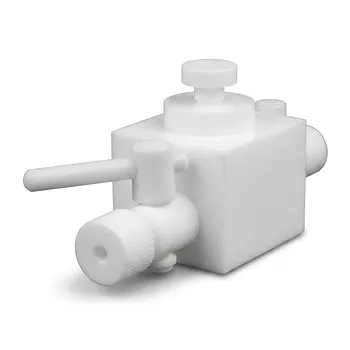
- Custom PTFE Filtration System Acid Resistant High Purity Semiconductor Grade Chemical Processing Filter
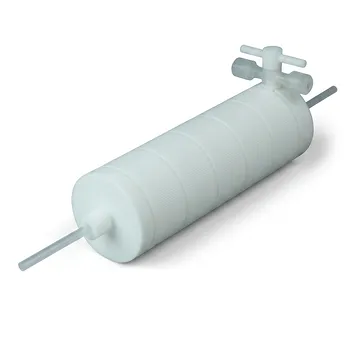
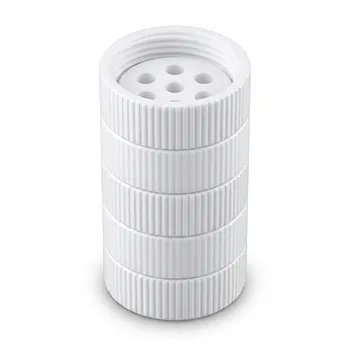
- High Purity PTFE Filter with PFA Valve Connections and Integrated Sieve Plate for Corrosive Fluid Processing
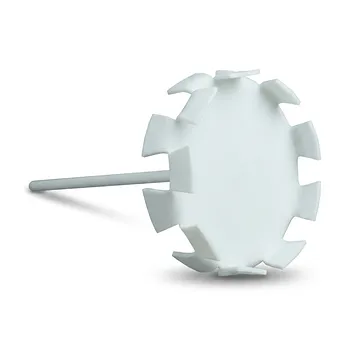
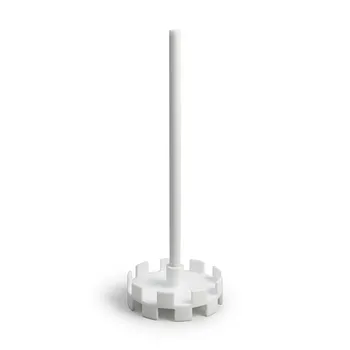
- High Purity PTFE Dispersion Disk for Food and Cosmetic Processing Non Stick Corrosion Resistant Large Stirring Paddle Customizable Fluoropolymer Impeller
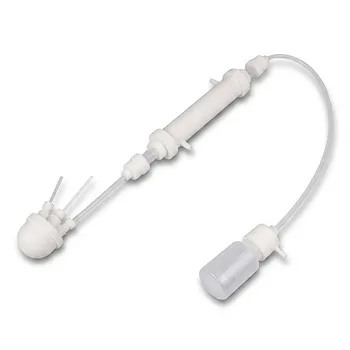
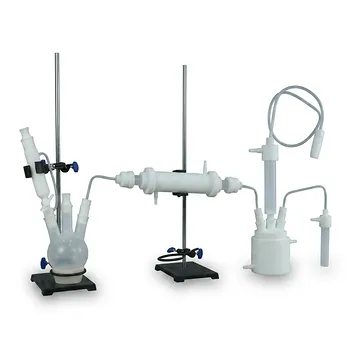
- Custom PTFE Condensation Reflux Apparatus with Serpentine Coil and Flask Collection System for Corrosive Chemical Processing
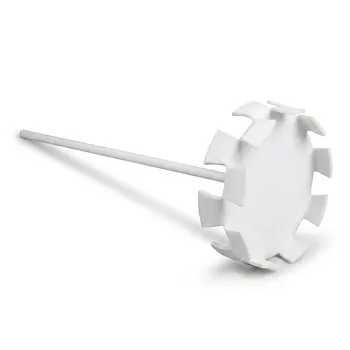
- Corrosion Resistant PTFE Dispersing Disc and High Temperature Propeller Stirring Paddle for Laboratory Chemical Mixing
People Also Ask
- What makes PTFE filtration systems advantageous for industrial and scientific use? Unmatched Chemical & Thermal Stability
- What sizes and pore options are available for PTFE filters? Choose the Right Filter for Your Application
- What steps are involved in selecting the proper PTFE filter? A 4-Step Guide to Optimal Filtration
- How does the hydrophobicity of PTFE filters benefit their use? Ensure Uninterrupted Gas Flow and Solvent Filtration
- What temperature resistance do PTFE filters offer? Unmatched Thermal Stability from -200°C to +260°C