Soluble PFOA salts are used because they dissolve in the aqueous reaction medium, while free PFOA is substantially water-insoluble. Salts such as ammonium perfluorooctanoate (APFO) provide a fluorinated surfactant that can stabilize dispersed PTFE particles, support efficient emulsion formation, and help control polymerization behavior. The free acid cannot perform these functions effectively at the required concentration because it does not remain sufficiently available in water.
The practical distinction is solubility: converting PFOA into a suitable salt makes its fluorinated, surface-active structure available throughout the water phase, where it can stabilize the polymerizing emulsion.
Why Aqueous Emulsion Polymerization Needs a Soluble Surfactant
The Reaction Takes Place in Water
In aqueous emulsion polymerization, fluoropolymer monomer is dispersed in water rather than dissolved completely in it. The process therefore needs an emulsifying agent to help maintain a controlled dispersion of monomer and growing polymer particles.
A surfactant works only when it is sufficiently present in the continuous water phase. Poor water solubility limits the free acid's ability to reach and stabilize these interfaces.
PTFE Particles Need Interfacial Stabilization
As polymerization proceeds, newly formed PTFE particles can aggregate if their surfaces are not stabilized. A suitable fluorinated surfactant adsorbs at particle-water interfaces and helps keep the particles separated.
This stabilization supports the formation of a more uniform polymer dispersion and helps prevent uncontrolled coagulation during the reaction.
The Salt Form Provides the Required Solubility
PFOA salts, including ammonium, sodium, and potassium perfluorooctanoate, are substantially more water-soluble than the free acid. In water, the salt dissociates into a perfluorooctanoate ion and a counterion.
The perfluorooctanoate ion retains the fluorinated hydrophobic segment and the charged carboxylate group. That combination gives it the amphiphilic behavior required of an aqueous surfactant.
How Soluble PFOA Salts Influence Polymerization
They Improve Emulsion Stability
The fluorinated surfactant helps stabilize the dispersed monomer and polymer particles throughout the reaction. This gives the polymerization system greater resistance to particle aggregation and phase separation.
Stable particle formation is important for producing a consistent fluoropolymer resin rather than material with uncontrolled coagulation or broad variation in particle structure.
They Support Polymerization Rate
A well-stabilized emulsion provides more effective reaction conditions for the continuing formation of polymer particles. Consequently, soluble fluorinated surfactant salts can increase the practical rate and efficiency of polymerization compared with a system in which the surfactant is poorly available.
The salt does not replace the polymerization initiator or determine the entire reaction mechanism. Its main role is to create and maintain a suitable dispersed environment.
They Help Control Resin Properties
Surfactant selection and concentration can affect particle formation, dispersion behavior, and processing characteristics. These factors influence the physical consistency of the resulting fluoropolymer resin.
The connection is indirect: the surfactant helps control the polymerization environment, which in turn contributes to the structure and processability of the finished resin.
Why the Free Acid Is Not the Practical Choice
Low Water Solubility Limits Its Function
Free PFOA is substantially insoluble in water. As a result, much of it would not be available in the aqueous phase where emulsification and particle stabilization are needed.
Adding an acid that remains poorly dispersed does not provide the same predictable interfacial coverage as adding a water-soluble salt.
Dissociation Makes the Surfactant Effective
The useful surfactant species in this process is associated with the perfluorooctanoate ion. A soluble salt delivers that species throughout the reaction medium in a controlled and practical way.
The counterion also matters operationally because it helps determine the compound's aqueous solubility and handling characteristics. Ammonium perfluorooctanoate was historically used for this purpose because it dissolves readily in water.
“PFOA” Can Refer to More Than One Material
In technical and commercial discussions, “PFOA” may be used loosely to refer both to the free acid and to related salts such as APFO. Chemically, however, these forms are not interchangeable in an aqueous polymerization process.
The distinction should be made explicitly when evaluating manufacturing history, residual contamination, or analytical results.
Understanding the Trade-offs
Historical Processing Benefits
PFOA salts offered an effective way to stabilize aqueous fluoropolymer polymerizations and produce consistent resin particles. This made them valuable processing aids for materials such as PTFE and related fluoropolymers.
Their use was tied to manufacturing performance, not to the desirable chemical resistance of the finished polymer itself.
Environmental and Analytical Concerns
Residual PFOA, APFO, or related derivatives can be environmentally persistent contaminants. Residual ionic species may also create unwanted background in trace laboratory analysis.
These concerns mean that the presence or absence of fluorinated processing aids should be considered when high chemical purity or low analytical background is required.
Modern Manufacturing Approaches
Modern fluoropolymer manufacturing may use surfactant-free suspension polymerization or compliant, non-persistent alternative polymerization aids. These approaches are intended to preserve the required polymer performance while reducing reliance on persistent processing chemicals.
A finished PTFE or PFA article should therefore be evaluated based on its actual manufacturing and purification history, not solely on the polymer name.
Finished-Product Performance Is a Separate Question
After polymerization and processing, PTFE and PFA exhibit strong hydrophobicity, oleophobicity, and chemical inertness. These properties make them useful for laboratory tubing, vessels, crucibles, and other equipment exposed to aggressive chemicals.
Those finished-material properties should not be confused with the properties of the PFOA salt used during resin production. The processing aid helps make the polymer; it is not what gives the final article its complete performance profile.
Applying This to Fluoropolymer Selection
The key decision is whether the material's processing history and purity requirements match the intended laboratory use.
- If your primary focus is polymerization efficiency: Use a water-soluble fluorinated surfactant system because it can stabilize the aqueous emulsion and support controlled particle formation.
- If your primary focus is chemical resistance: Evaluate the finished PTFE or PFA formulation and processing quality, since the polymer's final inertness is distinct from the historical surfactant used during manufacture.
- If your primary focus is trace analysis: Confirm whether persistent fluorinated processing aids were used and what controls were applied to minimize residual ionic or extractable contamination.
- If your primary focus is high-purity laboratory equipment: Prefer products supported by clear manufacturing, purification, and compliance information rather than relying only on a general PTFE or PFA material designation.
Understanding the difference between the free acid and its soluble salts clarifies both how fluoropolymer emulsions were made and how finished products should be evaluated.
Summary Table:
| Form | Water Solubility | Role in Polymerization | Practical Use |
|---|---|---|---|
| Free PFOA | Low | Insufficient for stabilization | Not effective in aqueous phase |
| PFOA Salts (e.g., APFO) | High | Stabilizes particles, supports emulsion | Essential for efficient polymerization |
Optimize your fluoropolymer production with KINTEK's high-performance PTFE/PFA labware and custom solutions. Our expertise ensures consistent results. Contact us today to discuss your needs!
Related Products
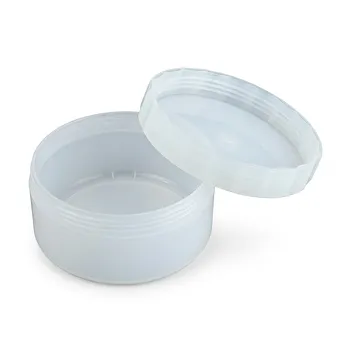
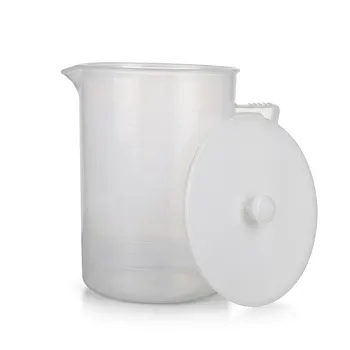
- Corrosion Resistant PFA Reaction Tank High Purity Laboratory Reaction Bottle Wide Mouth PTFE Jar Multiple Specifications
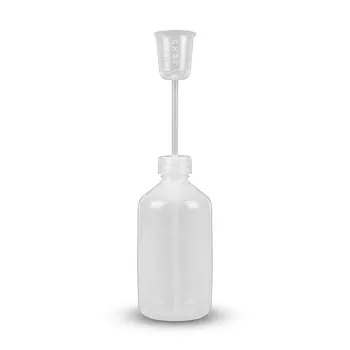
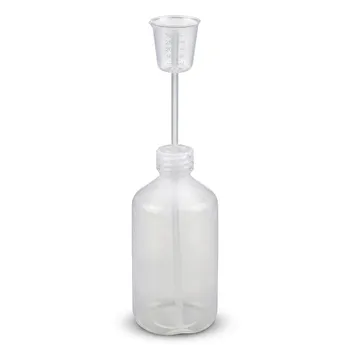
- Corrosion Resistant PFA Bottle Top Dispenser Translucent Squeeze Liquid Extraction System for Ultra Pure Chemical Handling
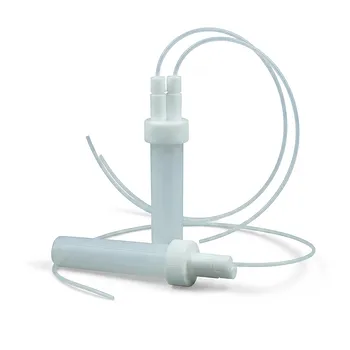
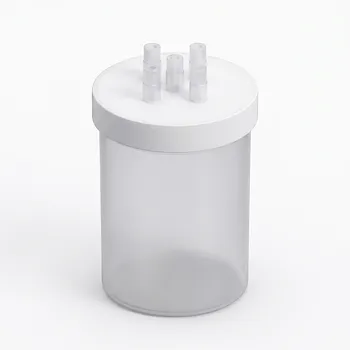
- High Purity PFA Reaction Bottle with Tubing Connection for Corrosive Chemical Synthesis and Trace Analysis
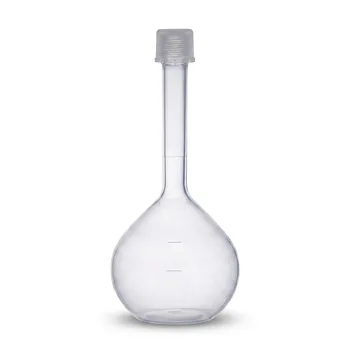
- High Purity PFA Volumetric Flask Acid Resistant Perfluoroalkoxy Trace Analysis Container Custom Mold Fabrication 1000ml 2000ml
- High Purity PFA Beaker with Handle and Large Capacity Washable Soak Basket Multi Spec Teflon Laboratory Labware
People Also Ask
- Why are high-purity PFA reaction bottles superior to glass for boride synthesis? Ensure Ultra-Pure Yield & No Leaching
- Why are PFA or PTFE laboratory containers recommended for synthesis with HI or HBr? Ensure Ultra-High Chemical Purity
- What are the main advantages of PTFE as a material for laboratory bottles? Superior Chemical & Thermal Resistance
- What are the features of PTFE laboratory bottles? Unmatched Chemical Resistance & Extreme Temperature Tolerance
- What are the advantages of using PTFE laboratory bottles? Unmatched Chemical Resistance for Critical Samples