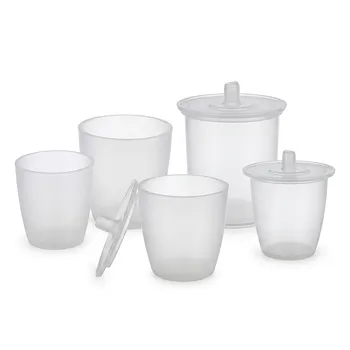
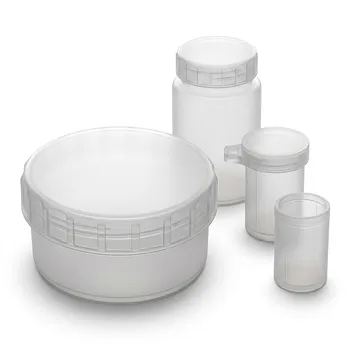
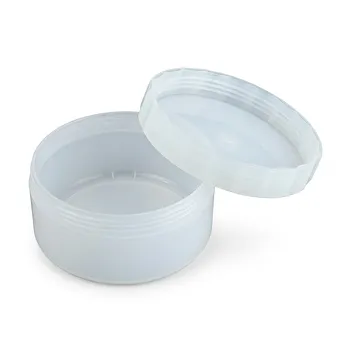
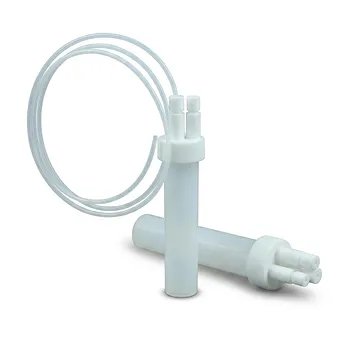
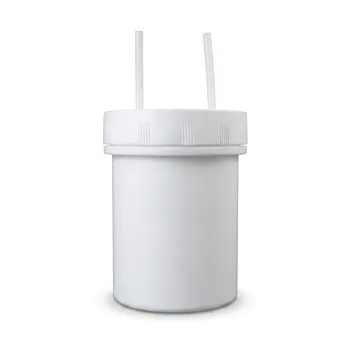
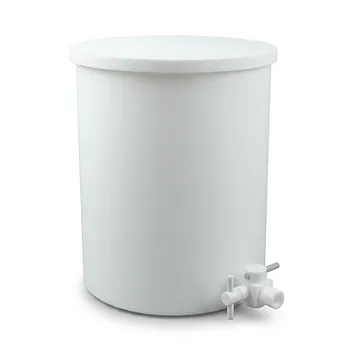
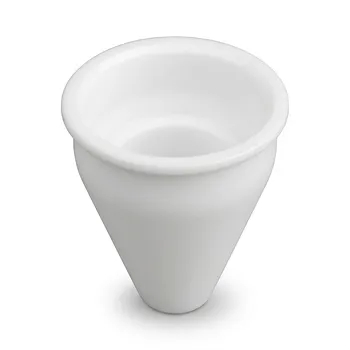
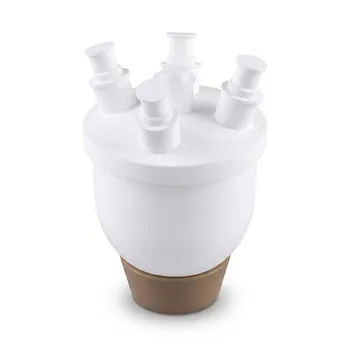
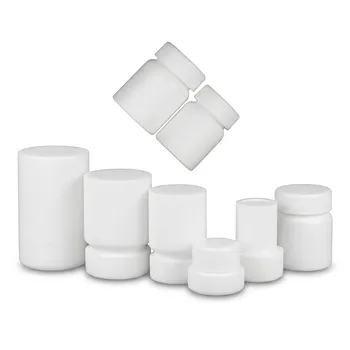
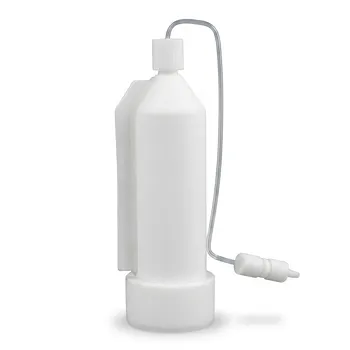
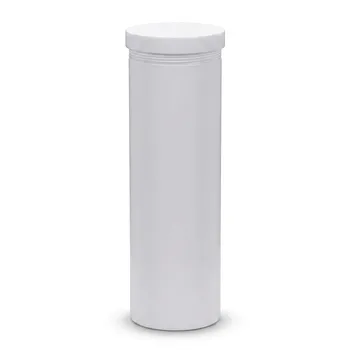
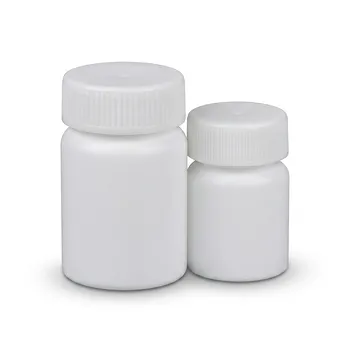
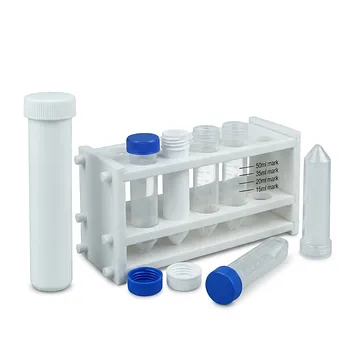
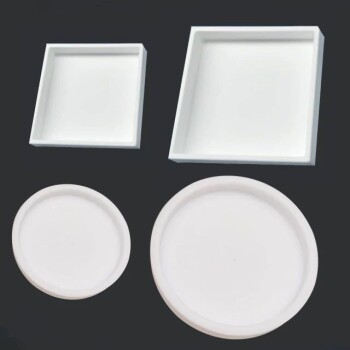
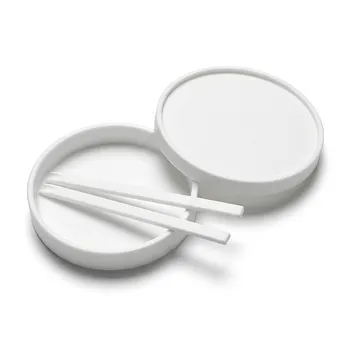
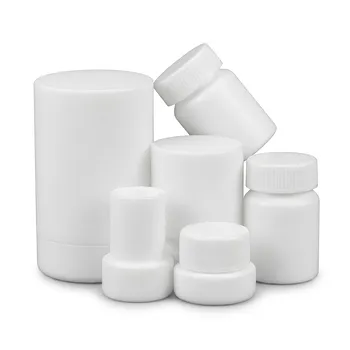
PFA and PTFE containers are the gold standard for hydrohalic acid synthesis because they provide near-total chemical inertness and virtually zero impurity leaching. In the presence of aggressive acids like HI or HBr, these fluoropolymers maintain their structural integrity while ensuring that no metallic or organic contaminants migrate from the container walls into the solution.
Core Takeaway: The use of PFA and PTFE is a critical requirement for high-purity synthesis because these materials prevent the corrosive degradation and trace-metal contamination that occur when using glass or standard plastic laboratory ware.
The Challenge of Hydrohalic Acid Corrosion
Resistance to Aggressive Chemical Attack
Hydrohalic acids such as hydroiodic acid (HI) and hydrobromic acid (HBr) are highly corrosive agents used frequently as both solvents and reactants. Unlike borosilicate glass, which can be etched or compromised by certain acidic environments (particularly those involving fluorides or concentrated halides), PFA (Perfluoroalkoxy) and PTFE (Polytetrafluoroethylene) are chemically "noble" and do not react with these substances.
Preventing Structural Degradation
Standard plastics can swell, soften, or lose mechanical strength when exposed to concentrated acids and organic co-solvents. Fluoropolymers possess a high-strength carbon-fluorine bond that resists this degradation, ensuring the container remains a stable environment for the duration of the synthesis.
Thermal Stability During Heating
Many solution-based syntheses, such as the growth of hybrid perovskite single crystals, require subsequent heating processes to facilitate crystallization. PFA and PTFE can withstand these elevated temperatures without warping or releasing volatile organic compounds into the reaction mix.
Maintaining Absolute Purity in Single Crystal Growth
Eliminating Impurity Leaching
The primary risk in high-performance material synthesis is the leaching of trace metal ions (such as sodium, calcium, or aluminum) from the container walls. PFA and PTFE exhibit extremely low impurity leaching rates, which is essential for producing optical-grade crystals that are free from background interference.
Preventing Surface Adsorption
In trace analysis and high-purity synthesis, the "loss" of target elements to the container walls can be as damaging as the introduction of impurities. These fluoropolymers have a non-stick surface that prevents the adsorption of ions, ensuring that the stoichiometry of the solution remains precise throughout the reaction.
Ensuring Chemical Purity of Catalysts
In electrochemical or radical-based synthesis, even trace amounts of leached metals can act as unintended catalysts or inhibitors. Using high-purity PTFE or PFA liners ensures that the observed catalytic activity or Faraday efficiency is a result of the intended chemicals, not container-borne contaminants.
Understanding the Trade-offs
Thermal and Pressure Limitations
While PTFE is stable up to approximately 260°C, it is a semi-crystalline material that can undergo "creep" or deformation under high pressure if not properly supported. Users must ensure that reaction temperatures do not exceed the specific rating of the vessel to avoid mechanical failure.
Visual Monitoring and Cost
One significant trade-off is transparency; PTFE is completely opaque, while PFA is only translucent, making it difficult to observe color changes or precipitate formation compared to glass. Additionally, the initial capital investment for fluoropolymer labware is significantly higher than for standard borosilicate alternatives.
Porosity and Cleaning
PTFE can be slightly porous, meaning that if it is not cleaned with rigorous, specialized protocols, it can carry over trace contaminants from previous experiments. PFA generally has a smoother, less porous surface, making it the preferred choice for the most demanding ultra-trace applications.
How to Apply This to Your Project
Making the Selection
- If your primary focus is optical-grade crystal growth: Use PFA containers to ensure the lowest possible leaching rates and to allow for some visual inspection of the crystal formation.
- If your primary focus is high-temperature acid digestion: Choose PTFE for its superior thermal stability and ability to withstand consistent heat without structural compromise.
- If your primary focus is trace mineral analysis: Prioritize PFA to minimize background interference and prevent the adsorption of target elements onto the container walls.
The transition to PFA or PTFE is not merely a preference but a technical necessity when the goal is to eliminate the variables of corrosion and contamination in sensitive chemical environments.
Summary Table:
| Feature | PTFE (Polytetrafluoroethylene) | PFA (Perfluoroalkoxy) |
|---|---|---|
| Chemical Resistance | Excellent (Inert to HI/HBr) | Excellent (Inert to HI/HBr) |
| Leaching Rate | Extremely Low | Lowest (Ideal for ultra-trace) |
| Max Temperature | ~260°C | ~260°C |
| Transparency | Opaque (White) | Translucent |
| Surface Texture | Slightly Porous | Ultra-Smooth (Non-porous) |
| Best Use Case | High-temp digestion & general labware | Single crystal growth & trace analysis |
Elevate Your Lab’s Purity with KINTEK’s Fluoropolymer Solutions
Don't let container-borne contaminants compromise your high-purity synthesis or sensitive electrochemical research. KINTEK specializes in high-performance fluoropolymer manufacturing, offering an exhaustive range of PTFE and PFA laboratory supplies designed for the most demanding environments.
From everyday essentials like beakers, reagent bottles, and centrifuge tubes to specialized trace analysis instruments and fluid transfer components (tubing, valves, and fittings), we provide the tools you need for absolute chemical inertness. Our expertise extends to advanced research apparatus, including custom electrochemical cells, battery testing fixtures, microwave digestion vessels, and microchannel reactors.
Whether you need standard consumables like stirring bars and O-rings or bespoke, CNC-machined parts tailored to your specific reaction setup, KINTEK delivers end-to-end precision.
Ready to eliminate corrosion and leaching variables? Contact our experts today to discuss your custom fabrication needs and secure the high-performance labware your research deserves.
References
- Y.J Kim, Kang Min Ok. Structure–property relationships in noncentrosymmetric solid‐state materials. DOI: 10.1002/bkcs.70058
This article is also based on technical information from Kintek Knowledge Base .
Related Products
- High Purity PFA Crucible and Corrosion Resistant PTFE Beaker for Trace Analysis and Custom Laboratory Applications
- PFA Reaction Jar Corrosion Resistant Wide Mouth PTFE Lab Bottle High Purity Chemical Vessel
- Corrosion Resistant PFA Reaction Tank High Purity Laboratory Reaction Bottle Wide Mouth PTFE Jar Multiple Specifications
- Custom PFA Reaction Bottles High Purity PTFE Reaction Vessels Corrosion Resistant Petrochemical Containers
- High Purity Corrosion Resistant PTFE Raw Material Barrel 4L Screw Seal Low Background Feed Tank
People Also Ask
- Why are high-purity vessels critical for BiFeO3 synthesis? Ensuring Phase Purity
- Why is the use of high-purity PFA or PTFE labware critical during TiO2 nanoparticle purification? Protect Sample Purity
- Why is high-purity PFA trace analysis labware used for MXene? Ensure Superior Material Integrity in Research
- Why is high-purity PFA labware necessary for Znx@LS-2 zeolite ICP-OES analysis? Ensure Trace-Level Precision
- Why is high-purity PFA trace analysis labware used for sample processing when preparing Mo2CTx@MoS2? Ensure Material Purity