For PTFE/PFA laboratory components, the key inorganic fillers are alumina and silicon carbide for abrasion resistance, graphite and carbon for conductivity and lubrication, and molybdenum disulfide for dry lubrication. Barium sulfate can be used as an inert functional filler, while glass fiber and bronze are additional options when reinforcement or thermal conductivity is important.
Hard ceramic fillers protect against wear, while carbon-based and solid-lubricant fillers provide electrical or tribological functionality. The correct choice depends on whether the component’s dominant requirement is abrasion resistance, antistatic performance, low friction, or dimensional stability.
Improving Abrasion and Wear Resistance
Aluminum Oxide
Aluminum oxide (Al₂O₃), or alumina, is a hard ceramic filler used to improve scratch, abrasion, and mechanical-contact resistance in PTFE and related fluoropolymers.
It is suitable for fittings, fluid-transfer components, machined labware, seals, and other parts exposed to abrasive particles or repeated contact.
Silicon Carbide
Silicon carbide (SiC) provides strong resistance to abrasive wear, galling, and surface damage. It is particularly useful where fluoropolymer components encounter abrasive dust, sliding contact, or mechanically demanding processing conditions.
Particle size and filler purity should be selected for the application. Higher-purity grades may be preferred for high-purity or food-contact environments.
Glass Fiber
Glass fiber is a commonly used reinforcing filler for PTFE. Its main benefits are increased mechanical strength, reduced creep, and improved wear resistance rather than electrical conductivity or dry lubrication.
Glass-fiber-filled PTFE can be useful for structural laboratory components and parts operating under sustained mechanical load.
Adding Electrical Conductivity
Graphite
Graphite can increase electrical conductivity while also reducing friction and supporting dry-sliding performance. It is therefore useful for antistatic fluid-handling parts, conductive components, and moving mechanical apparatus.
Graphite can change the electrical behavior of the finished component substantially, so conductivity should be verified on the final formulation rather than inferred only from the filler type.
Carbon and Carbon Black
Carbon-based fillers, including carbon black, can be incorporated when improved electrical conductivity and wear performance are required.
They may also improve creep and cold-flow resistance, but the resulting compound can differ from virgin PTFE in surface appearance, friction, mechanical behavior, and chemical compatibility.
Bronze
Bronze powder is another conductive filler used in PTFE compounds. It can improve thermal conductivity and mechanical performance, making it relevant to components that must dissipate heat as well as carry mechanical load.
Bronze is less chemically inert than ceramic or carbon fillers in some environments. Its use should therefore be evaluated carefully for highly corrosive laboratory fluids and high-purity applications.
Supporting Dry Lubrication
Molybdenum Disulfide
Molybdenum disulfide (MoS₂) is a solid lubricant that reduces friction in dry or boundary-lubricated contact.
It is useful in moving mechanisms, bearings, sliding components, and other laboratory apparatus where conventional liquid lubricants are undesirable or could contaminate the process.
Graphite as a Solid Lubricant
Graphite also provides dry-sliding lubrication in addition to electrical conductivity. It is a practical choice when a component needs both antistatic behavior and reduced friction.
The effectiveness of graphite depends on the contact conditions, filler loading, counterface, pressure, and temperature.
Using Inert Functional Fillers
Barium Sulfate
Barium sulfate (BaSO₄), or barytes, can serve as an inert functional filler in fluoropolymer compounds.
It is not the primary choice for conductivity or dry lubrication, but it may be selected where an inert mineral filler is needed to modify the compound without introducing a conductive or strongly lubricating phase.
Selecting the Filler by Function
The principal relationships are:
- Alumina and silicon carbide: abrasion, scratch, and mechanical-wear resistance.
- Graphite and carbon: electrical conductivity, wear improvement, and dry-sliding support.
- Molybdenum disulfide: solid lubrication and reduced friction.
- Glass fiber: reinforcement, creep resistance, and dimensional stability.
- Bronze: conductivity, thermal conductivity, reinforcement, and wear improvement.
- Barium sulfate: inert mineral modification.
Understanding the Trade-offs
Fillers Can Reduce Virgin Fluoropolymer Benefits
Filled PTFE or PFA may not retain all the surface characteristics of the unfilled resin. Depending on the additive and loading, fillers can reduce nonstick behavior, alter surface finish, and affect release performance.
This matters for laboratory components where cleanability and low contamination are as important as mechanical durability.
Chemical Compatibility Must Be Rechecked
The fluoropolymer matrix generally provides excellent chemical resistance, but the filler may be less chemically resistant than PTFE or PFA.
This is especially important with metallic fillers such as bronze. The full compound—not just the base fluoropolymer—must be checked against the process chemicals, temperature, and purity requirements.
Conductivity and Purity Can Conflict
Carbon, graphite, and metallic fillers can provide antistatic or conductive performance, but they may be unsuitable for applications requiring extremely low extractables, high optical cleanliness, or strict noncontamination control.
A conductive formulation should be selected only when its chemical cleanliness and particle-retention behavior are acceptable.
Processing Conditions May Change
Fillers alter heat transfer and processing behavior. Glass fiber, graphite, carbon, bronze, and other additives can increase thermal conductivity compared with unfilled PTFE, potentially allowing shorter sintering cycles.
However, heating rates, dwell times, cooling rates, and part geometry still require validation to achieve complete consolidation and avoid thermal cracking.
PFA Requires Formulation-Specific Validation
PFA is melt-processable, whereas PTFE is commonly processed through compression molding, paste extrusion, or related routes. A filler that performs well in a PTFE compound may not transfer directly to a PFA process without changes to dispersion, melt flow, molding conditions, and final-property testing.
Making the Right Choice for Your Goal
Select the filler according to the component’s dominant failure mode and operating environment.
- If your primary focus is abrasion resistance: Choose aluminum oxide or silicon carbide, with glass fiber as an additional option when reinforcement and creep resistance are also required.
- If your primary focus is electrical conductivity: Evaluate graphite, carbon, carbon black, or bronze, while confirming conductivity and chemical-purity requirements on the finished compound.
- If your primary focus is dry lubrication: Choose molybdenum disulfide or graphite for sliding and bearing applications where liquid lubricants are undesirable.
- If your primary focus is inert mineral modification: Consider barium sulfate, but do not treat it as a substitute for conductive or solid-lubricant fillers.
- If your primary focus is dimensional stability under load: Consider glass fiber, carbon, graphite, or bronze, then validate creep, wear, and chemical compatibility together.
The best filler is the one that solves the dominant wear, conductivity, or friction problem without compromising the chemical resistance and cleanliness required by the laboratory process.
Summary Table:
| Filler | Abrasion Resistance | Electrical Conductivity | Dry Lubrication | Other Benefits |
|---|---|---|---|---|
| Aluminum Oxide | Excellent | Poor | Poor | Scratch & wear resistance |
| Silicon Carbide | Excellent | Poor | Poor | Wear & galling resistance |
| Glass Fiber | Good | Poor | Poor | Reinforcement, creep resistance |
| Graphite | Good | Good | Good | Antistatic, low friction |
| Carbon Black | Good | Good | Fair | Wear, creep resistance |
| Bronze | Good | Good | Poor | Thermal conductivity, reinforcement |
| Molybdenum Disulfide | Fair | Poor | Excellent | Solid lubrication |
| Barium Sulfate | Fair | Poor | Poor | Inert filler, dimensional stability |
Need a custom fluoropolymer solution? At KINTEK, we specialize in high-performance PTFE/PFA labware and components. Our expert team can help you select the right filler for your specific application, ensuring optimal performance and durability. Whether you need abrasion-resistant fittings, conductive parts, or low-friction bearings, we deliver precision-engineered solutions backed by end-to-end CNC machining. For distributors, we offer OEM/ODM support, certifications, and reliable supply. Contact us today to discuss your requirements and get a quote!
Related Products
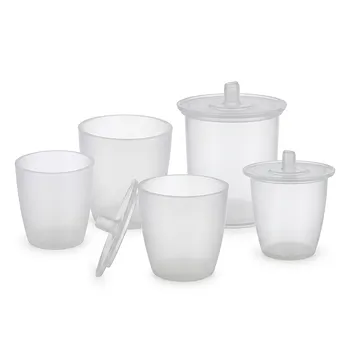
- High Purity PFA Crucible and Corrosion Resistant PTFE Beaker for Trace Analysis and Custom Laboratory Applications
- PTFE PFA Vacuum Filtration System Corrosion Resistant Customizable Shatterproof Laboratory Device
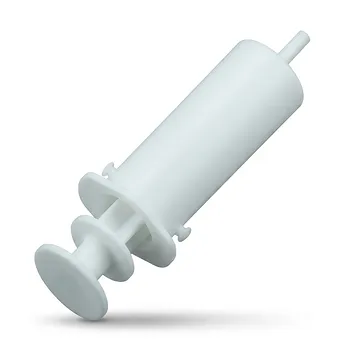
- High Purity Laboratory Grade PTFE Syringe Chemical Resistant Fluoropolymer Injector for Trace Analysis
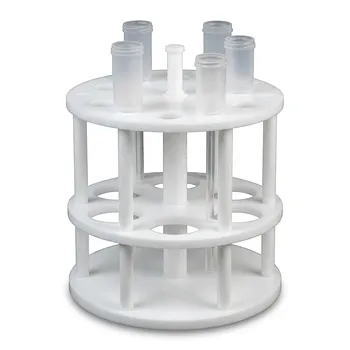
- Custom PFA Microcolumn Racks and PTFE Machined Low Background Corrosion Resistant Laboratory Fixtures
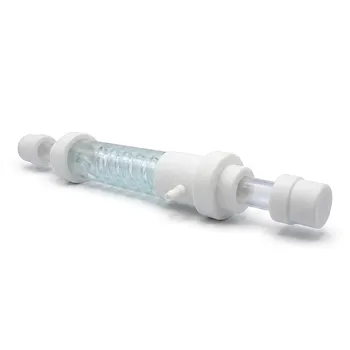
- Custom PTFE Condenser Tube 100ml Serpentine and Straight Fluoropolymer Laboratory Heat Exchanger with Flask Adapters
People Also Ask
- Why are high-purity vessels critical for BiFeO3 synthesis? Ensuring Phase Purity
- Why is the use of high-purity PFA or PTFE labware critical during TiO2 nanoparticle purification? Protect Sample Purity
- Why is high-purity PFA trace analysis labware used for MXene? Ensure Superior Material Integrity in Research
- Why is high-purity PFA labware necessary for Znx@LS-2 zeolite ICP-OES analysis? Ensure Trace-Level Precision
- Why is high-purity PFA trace analysis labware recommended for trace element detection? Achieve Gold Standard PPT Accuracy