Preventing static hazards requires controlling both charge generation and ignition sources. When blending PTFE fine powder with liquid hydrocarbon lubricants, use effective ventilation, antistatic flooring and clothing, explosion-proof lighting, and a verified grounding-and-bonding system for all conductive equipment. Add the lubricant slowly and without splashing, because static discharge can ignite accumulated solvent vapors.
The essential control is a complete static-safety system: dissipate charge through proper grounding and conductive surfaces, prevent vapor accumulation through ventilation, and eliminate potential ignition sources with appropriately rated equipment and procedures.
Control the Processing Environment
Provide effective ventilation
The blending room must have adequate ventilation to prevent hydrocarbon vapors from accumulating near the mixer, powder-loading area, and lubricant containers.
Ventilation should control vapors at their source rather than merely recirculating contaminated air. The exhaust arrangement and equipment selection should be appropriate for flammable-vapor service.
Use explosion-proof electrical equipment
Lighting and other electrical equipment in areas where hydrocarbon vapors may be present should be suitably rated for the hazardous environment.
Do not rely on ordinary lights, switches, motors, or portable electrical devices if they could provide an ignition source.
Install antistatic flooring
Use conductive or antistatic flooring designed to dissipate charge safely. The flooring must be maintained in good condition and connected to the facility’s grounding system where required.
Ordinary insulating floors can allow operators and equipment to accumulate charge during powder handling and movement.
Control ignition sources
Prohibit smoking, open flames, hot work, and other uncontrolled ignition sources in the blending area.
Maintain good housekeeping so that spilled lubricant, contaminated wipes, and powder deposits do not create additional fire hazards.
Ground and Bond All Relevant Equipment
Ground the mixing equipment
The mixer, containers, drums, hoppers, and other conductive components must be connected to a verified grounding system.
Grounding provides a controlled path for charge to dissipate instead of allowing it to discharge as a spark.
Bond transfer components together
Hoses, nozzles, lubricant containers, funnels, and conductive transfer equipment should be electrically bonded to one another and grounded before material transfer begins.
This is particularly important when liquid lubricant is added to a powder charge, because charge can develop at interfaces between the powder, container, hose, and nozzle.
Verify grounding continuity
Grounding connections should not be assumed to be effective merely because a wire is present. Inspect connections regularly and verify electrical continuity using a documented inspection or testing program.
Connections must remain secure, clean, and free from paint, corrosion, or other conditions that interrupt conductivity.
Use static-dissipative materials where appropriate
Select hoses, containers, clothing, and other accessories that are suitable for static-control service. Avoid substituting ordinary insulating plastics or nonconductive accessories without evaluating their effect on charge accumulation.
Reduce Static Generation During Addition and Blending
Add lubricant without splashing
Introduce the liquid hydrocarbon lubricant slowly and in a controlled manner. Avoid pouring from excessive height, spraying, free-falling streams, or other practices that create turbulence and atomization.
The addition method should minimize splashing and keep the liquid transfer path short and controlled.
Handle PTFE powder gently
Fine PTFE powder can generate static during pouring, transfer, and movement. Load it carefully and avoid unnecessary agitation, rapid dumping, or impacts against container walls.
Low-shear blending is also important for product quality because excessive shear can fibrillate fine-powder PTFE prematurely. Static control and gentle handling should therefore be designed into the same operating procedure.
Use clean, lint-free materials
Use lint-free fabrics for cleaning and handling. This reduces contamination of the PTFE compound and avoids introducing loose fibers or unsuitable materials into the process.
Cleaning materials should be compatible with the lubricant and managed so that contaminated wipes do not become an uncontrolled fire hazard.
Protect Operators
Use antistatic clothing and footwear
Operators should wear conductive or antistatic clothing and suitable footwear that work with the antistatic floor system.
Clothing should not be made from materials that readily accumulate static charge, particularly during dry powder handling.
Establish safe operating procedures
Before blending, operators should confirm that equipment grounding, bonding, ventilation, and hazardous-area controls are in service.
Procedures should also specify how to connect containers, add lubricant, respond to spills, and stop the process if ventilation or grounding is lost.
Prevent inhalation exposure
Fine PTFE powder can become airborne during handling. Use suitable dust-control ventilation and respiratory protection when the risk assessment indicates that airborne exposure cannot be adequately controlled by engineering measures.
Static controls do not replace controls for powder inhalation or chemical exposure.
Understanding the Trade-offs
Grounding alone is not sufficient
Grounding is essential, but it does not by itself eliminate the hazard. A grounded system can still be unsafe if hydrocarbon vapors accumulate or if nearby electrical equipment can ignite them.
Safe operation requires grounding, bonding, ventilation, ignition-source control, and disciplined material handling together.
Humidity is not a substitute for engineering controls
Moderate humidity may help dissipate static from some materials, but relying on humidity alone is not dependable. Environmental conditions can change, and PTFE powder and hydrocarbon lubricants may still accumulate charge.
Use humidity control only as a supporting measure, never as a replacement for grounding and hazardous-area controls.
Product-quality requirements must not compromise safety
Low-shear blending, controlled lubricant addition, and careful powder handling protect the PTFE compound from premature fibrillation and contamination.
However, production targets must never justify bypassing ventilation, grounding checks, antistatic PPE, or explosion-protected equipment.
How to Apply This to Your Process
Use a documented pre-start checklist and verify the controls before every blending campaign.
- If your primary focus is fire and explosion prevention: Prioritize source ventilation, explosion-proof electrical equipment, ignition-source control, and verified grounding and bonding of every conductive component.
- If your primary focus is static-charge reduction: Use antistatic flooring, clothing, and footwear, handle powder gently, and prevent splashing or free-fall during lubricant addition.
- If your primary focus is product quality: Use low-shear blending and lint-free materials while maintaining all grounding, ventilation, and vapor-control requirements.
- If your primary focus is operator protection: Combine dust-control ventilation and appropriate respiratory protection with antistatic PPE and clearly defined emergency procedures.
A safe PTFE blending operation treats static electricity, hydrocarbon vapors, powder exposure, and product quality as one integrated process-control problem.
Summary Table:
| Precautions Category | Key Measures |
|---|---|
| Environment Control | Ventilation, explosion-proof electricals, antistatic flooring, ignition source control |
| Grounding & Bonding | Ground all conductive equipment, bond transfer components, verify continuity, use static-dissipative materials |
| Handling Practices | Slow addition of lubricant without splashing, gentle powder handling, use lint-free materials |
| Operator Protection | Antistatic clothing/footwear, safe operating procedures, dust control and respiratory protection |
| Integrated Approach | Grounding alone insufficient, humidity not substitute for engineering controls, safety over production |
Ensure your lab's safety with KINTEK's high-performance PTFE and PFA products. Our solutions are designed with static control in mind, offering safe and reliable components for your blending processes. From antistatic labware to custom machined parts, we support your operations with quality and expertise. Contact us today to discuss your requirements and enhance your lab's safety and efficiency. Get in touch with us to learn more.
Related Products
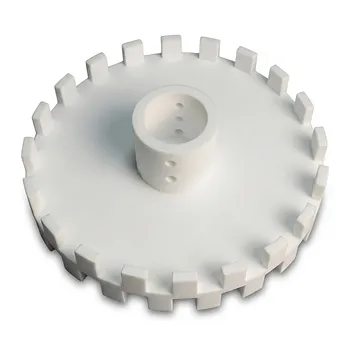
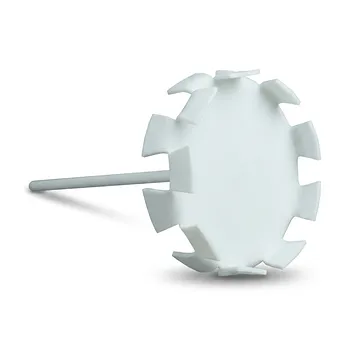
- Corrosion Resistant PTFE Stirring Disk Chemical Dispersion Plate 350mm Diameter Fluoropolymer Mixer Accessory
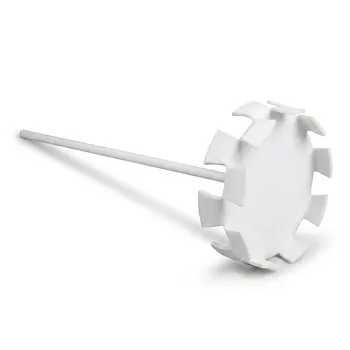
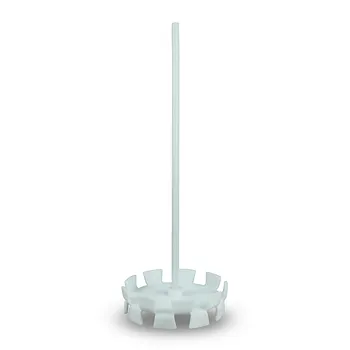
- PTFE Dispersion Disk Food Cosmetic Grade Non Stick Corrosion Resistant Large Stirring Paddle Customizable Impeller
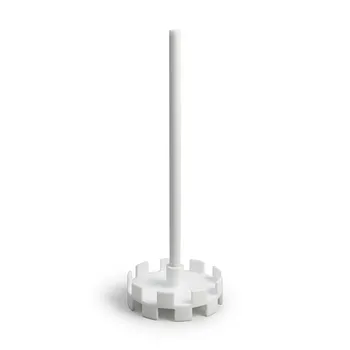
- Corrosion Resistant PTFE Stirring Impeller and Customizable Polytetrafluoroethylene Dispersion Disk
- High Purity Corrosion Resistant PTFE Dispersion Disk and Inert Stirring Paddle for Food Pharmaceutical and Cosmetic Mixing
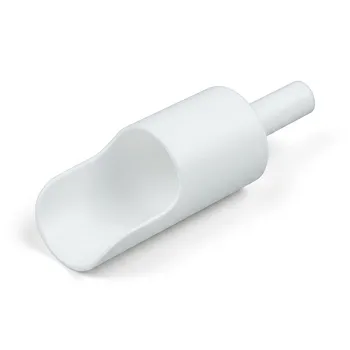
- Custom PTFE Pharmaceutical Sampling Scoop Low Leaching Cylindrical Chemical Powder Sampler Zero Contamination High Purity Laboratory Shovel
People Also Ask
- What are the tolerance specifications for the thickness of PTFE disks? Why ±20% is the Industry Standard
- What is the chemical formula and material of PTFE Disk? Unlock the Power of C₂F₄ Polymer
- How many variations of PTFE disks are available and what parameters do they differ in? Choose the Right Material for Your Application
- What is Dispersion PTFE used for? Creating Thin, High-Performance Coatings and Films
- Where are PTFE stirrers typically applied? Essential for Chemical, Pharma & Bioprocessing