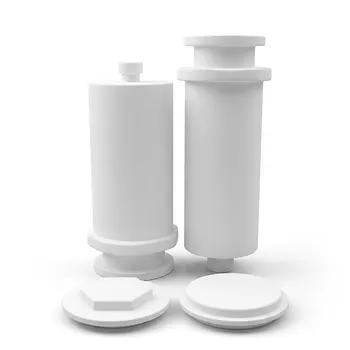
PTFE autoclave liners serve as the chemically inert, high-purity reaction chamber necessary for the precise deposition of $Bi_2S_3$ onto $CeO_2$ nanorods. During secondary hydrothermal synthesis at 160 °C, these liners prevent side reactions between solvents like ethylene glycol and precursor salts while protecting the reaction from metallic contamination. This stable environment ensures the formation of the tight interfacial contact required for a functional S-scheme heterojunction.
Core Takeaway: The PTFE liner is not merely a container but a critical facilitator of interfacial engineering, providing the chemical stability and pressurized environment needed to grow high-crystallinity $Bi_2S_3$ directly onto $CeO_2$ surfaces without introducing impurities.
Ensuring Chemical Purity and Reaction Stability
Prevention of Side Reactions
The primary role of the PTFE (Polytetrafluoroethylene) liner is to provide chemical inertness at elevated temperatures. In the synthesis of $CeO_2/Bi_2S_3$, solvents such as ethylene glycol and various precursor salts are subjected to extended heating. PTFE ensures these components do not react with the vessel walls, maintaining the intended stoichiometry of the heterojunction.
Elimination of Metallic Contamination
Hydrothermal environments are highly corrosive, especially when precursors reach subcritical states. The liner acts as a physical barrier that prevents the reaction solution from coming into contact with the stainless steel autoclave shell. This protection is vital to ensure no metallic impurities are leached into the sample, which would otherwise disrupt the electronic properties of the S-scheme.
Stability Under Thermal Stress
At the specific synthesis temperature of 160 °C, PTFE maintains its structural integrity and thermal stability. This allows the secondary hydrothermal process to proceed for the required duration without the liner degrading or releasing fluorinated byproducts into the $CeO_2/Bi_2S_3$ mixture.
Facilitating Precision Heterojunction Engineering
Driving Interfacial Growth
The sealed environment of the PTFE liner allows for the generation of high internal pressure. This pressure is the driving force behind the dissolution-recrystallization process, where $Bi_2S_3$ precipitates. This controlled environment allows $Bi_2S_3$ to deposit precisely onto the surface of the $CeO_2$ nanorods rather than forming isolated particles.
Optimizing S-Scheme Contact
For an S-scheme heterojunction to be effective, the contact between the two semiconductors must be intimate and uniform. The stable physical field inside the PTFE-lined autoclave promotes the uniform anchoring of $Bi_2S_3$. This results in the tight interfacial contact necessary for efficient charge carrier transfer between the materials.
Controlled Crystal Morphology
The combination of high pressure and chemical isolation facilitates the growth of specific crystalline morphologies. By maintaining a stable physicochemical environment, the PTFE liner helps ensure that the $Bi_2S_3$ grows with the high crystallinity required for optimal photocatalytic performance.
Understanding the Trade-offs and Limitations
Temperature and Pressure Constraints
While PTFE is highly versatile, it has a defined thermal ceiling, typically around 250 °C. Exceeding the recommended 160 °C–200 °C range for extended periods can lead to liner deformation or "creeping." This deformation can compromise the seal of the autoclave, leading to pressure loss and failed synthesis.
Thermal Expansion Mismatch
PTFE has a different coefficient of thermal expansion than the stainless steel outer jacket of the autoclave. Rapid heating or cooling can cause the liner to expand or contract at a different rate than the shell. This necessitates gradual heating and cooling cycles to prevent the liner from buckling or cracking.
Porosity and Memory Effects
PTFE is slightly porous at a microscopic level, meaning it can sometimes retain traces of precursors from previous reactions. This "memory effect" requires rigorous cleaning protocols, often involving acid leaching, to ensure that subsequent batches of $CeO_2/Bi_2S_3$ are not cross-contaminated by different chemical species.
How to Apply This to Your Project
Recommendations for Synthesis Success
- If your primary focus is maximizing interfacial contact: Ensure the PTFE liner is properly fitted to the autoclave shell to maintain maximum pressure, which drives the $Bi_2S_3$ to anchor firmly onto the $CeO_2$ surface.
- If your primary focus is purity for electronic testing: Use a dedicated PTFE liner solely for $Bi_2S_3$ reactions to prevent cross-contamination from other metal salts or dopants.
- If your primary focus is safety and equipment longevity: Never exceed a 70-80% fill volume within the PTFE liner to allow for liquid expansion and to prevent over-pressurization at 160 °C.
By strictly controlling the hydrothermal environment through the use of a PTFE liner, researchers can achieve the precise structural and chemical parameters necessary for high-performance $CeO_2/Bi_2S_3$ S-scheme heterojunctions.
Summary Table:
| Feature | Role in CeO2/Bi2S3 Synthesis | Benefit to Heterojunction |
|---|---|---|
| Chemical Inertness | Prevents reactions with ethylene glycol/salts | Maintains precise stoichiometry |
| Metallic Isolation | Blocks leaching from stainless steel shell | Ensures electronic purity of the S-scheme |
| High-Pressure Seal | Drives dissolution-recrystallization | Promotes tight interfacial anchoring |
| Thermal Stability | Maintains integrity at 160 °C | Consistent environment for crystal growth |
| Physical Barrier | Prevents contamination | Optimizes photocatalytic performance |
Elevate Your Synthesis with KINTEK’s High-Performance Fluoropolymers
Achieving the perfect S-scheme heterojunction requires more than just the right chemistry—it demands a contamination-free, stable environment. KINTEK specializes in manufacturing a comprehensive range of laboratory supplies crafted exclusively from high-performance PTFE and PFA to support your most sensitive research.
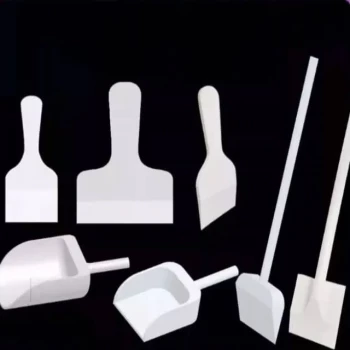
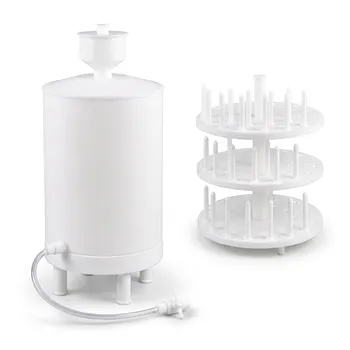
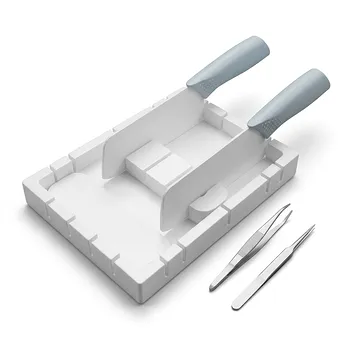
From the hydrothermal synthesis liners and microwave digestion vessels essential for nanomaterial growth to everyday labware (beakers, crucibles, reagent bottles) and complex fluid transfer components (tubing, valves, fittings), we provide the purity your lab requires. Whether you need standard consumables like stirring bars and O-rings or bespoke, custom CNC-machined parts and advanced reaction apparatus like electrochemical cells, KINTEK delivers end-to-end solutions tailored to your specifications.
Ready to optimize your lab’s efficiency and results? Contact our experts today to discuss your custom requirements and discover how our absolute focus on fluoropolymer excellence can benefit your project!
References
- Shou‐Jie He, Yinhui Li. Internal electric field boosting visible photocatalytic degradation of antibiotics by flower-like CeO<sub>2</sub>/Bi<sub>2</sub>S<sub>3</sub> S-scheme heterojunctions. DOI: 10.1039/d5ra02077h
This article is also based on technical information from Kintek Knowledge Base .
Related Products
- Custom TFM Reaction Vessel with Stainless Steel Jacket and PTFE Inner Cup for High Corrosion Resistance
- PTFE Lined High Pressure Digestion Vessel 50ml High Temperature Hydrothermal Synthesis Tank
- High Purity PTFE Microwave Digestion Vessel Replacement Liner for Acid Sample Preparation and Trace Analysis
- High Purity PTFE Microwave Digestion Vessel for Soil and Food Analysis Acid Resistant Fluoropolymer Sample Preparation Liners
- High Purity TFM Microwave Digestion Vessels PTFE Acid Evaporation Liners Domestic GT-400 Equivalent Laboratory Reaction Containers
People Also Ask
- Why are high-performance pressure-resistant reaction vessels required for oxygen-assisted hydrothermal conversion at 150 °C?
- How do magnetic stirring and reaction vessels impact MOF-derived carbon quality? Optimize Your Composite Performance
- Why are high-quality fluoropolymer-lined reaction vessels required for alk-Ti3C2Tx MXene? Ensure Purity & HF Resistance
- Why are PTFE-lined reaction vessels necessary for forced degradation studies? Ensure high-purity results and accuracy.
- Why is a high-purity PTFE lined reaction vessel required for the acidic etching of MXenes? Ensure Material Purity.