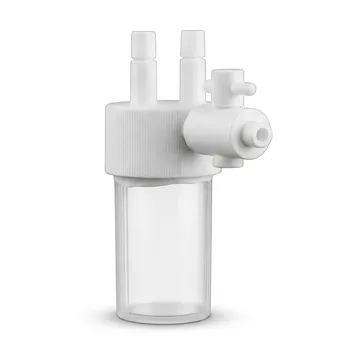
Sodium fluoroalkoxide synthesis can produce HF, terminal unsaturation, cross-linking, colored insoluble byproducts, and corrosive reaction mixtures. These hazards become more likely when fluoroalkoxides contain adjacent methylene units or when temperatures rise. Inert PTFE or PFA reaction vessels, tubing, and transfer valves can resist trace HF and strong bases, reduce contamination, and preserve controlled heat transfer, but they do not prevent the underlying side reactions or replace temperature, pressure, and ventilation controls.
The central risk is a combination of chemical instability and equipment incompatibility: HF elimination can damage product quality, while the resulting corrosive species can attack glass or metals. Chemically resistant PTFE/PFA apparatus helps contain the chemistry, provided the fluoropolymer remains within its temperature and mechanical limits.
What Happens During Fluoroalkoxide Synthesis
HF Elimination Creates Unsaturation
Fluoroalkoxides with adjacent methylene units can undergo HF elimination, particularly under elevated-temperature conditions. The resulting products contain terminal unsaturation rather than the intended fluoroalkoxide structure.
This changes the reactivity of the product and can introduce impurities that are difficult to remove or characterize.
Unsaturated Species Promote Cross-Linking
The unsaturated products formed after HF elimination can participate in further reactions. In polyphosphazene modification chemistry, this may produce unmanageable cross-linking rather than controlled substituent incorporation.
Cross-linking can increase viscosity, produce gels, and make the reaction mixture difficult to transfer or process.
Colored Insoluble Byproducts Signal Loss of Control
Side reactions may generate colored, insoluble material. This is both a product-quality problem and an operational warning that the reaction has moved away from the desired pathway.
Such material can foul valves, restrict transfer lines, contaminate subsequent batches, and complicate filtration or purification.
Why the Reaction Mixture Attacks Equipment
HF Is Highly Corrosive
HF generated directly or through related degradation pathways can attack conventional materials. Glass and many metals may be unsuitable when exposed to even trace HF, especially in the presence of heat, moisture, or strong bases.
HF also presents severe exposure hazards. Contact can cause delayed deep tissue injury, and inhalation can damage the respiratory tract and produce systemic toxicity.
Strong Bases Increase Materials Stress
Sodium fluoroalkoxides are typically handled in strongly basic environments. The combined presence of strong base, fluoride-containing species, heat, and moisture can make material compatibility more demanding than it would be for a single reagent considered in isolation.
A vessel that tolerates the solvent may still fail because of the fluoride or base component.
Equipment Degradation Can Become Contamination
Corrosion is not limited to a loss of vessel integrity. Dissolved or particulate material from glass or metal equipment can contaminate the batch and alter downstream polymer modification.
Surface damage can also create rough areas where insoluble byproducts accumulate, making cleaning and reproducibility more difficult.
How PTFE and PFA Apparatus Reduce Risk
Fluoropolymers Resist Trace HF and Strong Bases
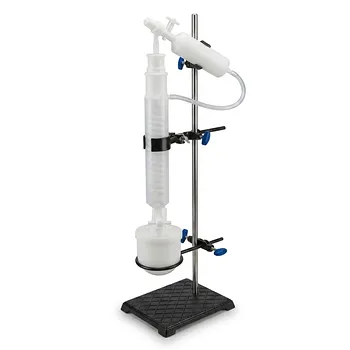
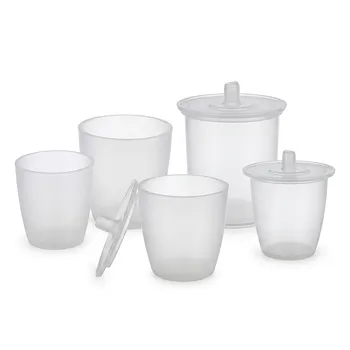
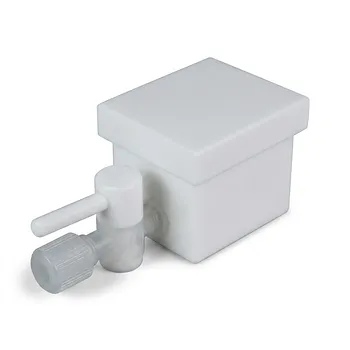
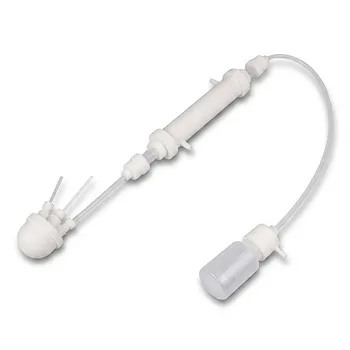
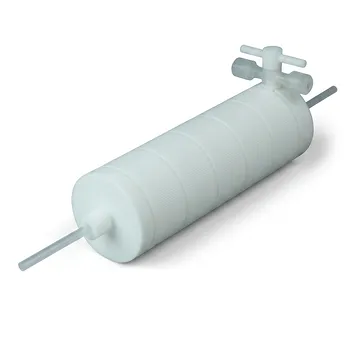
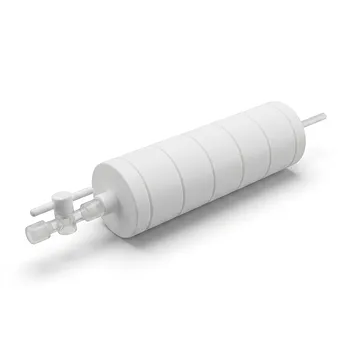
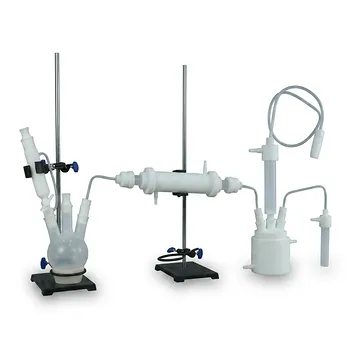
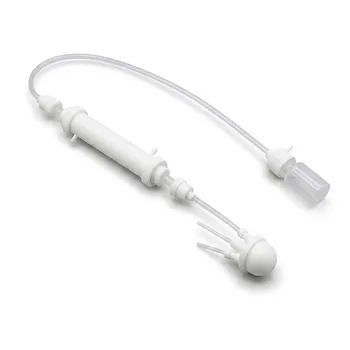
Custom CNC-machined PTFE or PFA apparatus provides a chemically resistant contact surface for reaction vessels, fittings, tubing, and transfer paths. High-purity transfer valves made from compatible fluoropolymer components reduce the likelihood that trace HF or strong base will attack the fluid-handling system.
This protects both the equipment and the reaction mixture from corrosion-derived contamination.
Inert Surfaces Preserve Batch Purity
PTFE and PFA are nonmetallic, chemically inert materials commonly selected where glass or metal surfaces present compatibility concerns. Using them throughout the wetted path reduces the number of reactive surfaces that can introduce impurities.
The benefit is greatest when the apparatus is designed as an integrated system rather than using a fluoropolymer vessel connected to incompatible metal fittings or valves.
Custom Machining Improves Containment and Transfer
CNC machining can provide reaction geometry, ports, seals, and transfer connections suited to the specific synthesis. Properly designed high-purity valves and tubing help minimize dead volume, retained solids, and exposure during transfers.
This does not eliminate cross-linking or HF elimination, but it can prevent a chemically aggressive batch from damaging the apparatus or contaminating later work.
Thermal Control Remains Essential
PTFE and PFA apparatus can support controlled processing, but the system still requires deliberate temperature management. Elevated temperature increases the likelihood of HF elimination and can also accelerate other unwanted reactions.
The apparatus should be designed to provide uniform heating and cooling, avoid localized overheating, and maintain the specified operating range.
Understanding the Trade-offs
PTFE and PFA Are Not Unlimited-Temperature Materials
Fluoropolymers have thermal limits. Exposure to excessive temperatures, particularly above approximately 300°C to 450°C, can cause decomposition and release hazardous products, depending on the material, atmosphere, and exact conditions.
Potential products include carbonyl fluoride, HF, low-molecular-weight fluorinated species, and particulates. Local exhaust ventilation and strict temperature control are therefore required.
Chemical Resistance Does Not Equal Pressure Resistance
A PTFE or PFA vessel may resist the chemicals while still having limitations in pressure capability, creep resistance, dimensional stability, or seal performance. These issues matter especially in heated systems or where gas evolution may occur.
The apparatus must be rated for the actual temperature, pressure, geometry, and duration of use.
Fluoropolymer Equipment Does Not Prevent TFE Hazards
The severe decomposition and polymerization hazards associated with tetrafluoroethylene, or TFE, are separate from the use of finished PTFE or PFA labware. TFE can undergo violent self-decomposition or polymerization under hazardous conditions.
Using finished PTFE/PFA apparatus avoids introducing TFE monomer handling into the fluoroalkoxide workflow, but any system that does handle TFE requires specialized containment, pressure relief, inerting, temperature control, and other dedicated safeguards.
Compatibility Must Include Seals and Ancillary Parts
A fluoropolymer vessel connected to unsuitable O-rings, metal valves, thermocouple sheaths, or fittings can still create a failure point. Material selection must cover every wetted and exposed component.
The relevant question is not whether the main vessel is PTFE or PFA; it is whether the complete reaction and transfer system is compatible.
Common Pitfalls to Avoid
Treating Temperature as a Minor Process Variable
Temperature can determine whether the desired fluoroalkoxide remains stable or undergoes HF elimination. Heating beyond the validated range can therefore create both chemical and equipment problems.
Use controlled ramps, uniform thermal distribution, and monitoring at the reaction mass rather than relying only on the heater setpoint.
Assuming an Inert Vessel Removes the Need for Ventilation
PTFE and PFA reduce corrosion but do not neutralize HF or fluoropolymer decomposition products. Any possibility of HF formation, solvent vapor, or overheating still requires suitable containment and local exhaust ventilation.
Emergency procedures should address both skin contact and inhalation exposure.
Mixing Incompatible Components
Metallic needles, glass sight windows, unqualified elastomers, and ordinary valve internals can undermine the corrosion resistance of a fluoropolymer setup. These components should be reviewed against the complete reagent, temperature, moisture, and pressure profile.
Ignoring Insoluble Material During Transfer
Cross-linked or colored solids can obstruct narrow channels and valves. Transfer paths should account for possible solids formation, with appropriate clearances, cleanability, and inspection access.
Making the Right Choice for Your Goal
Select the apparatus and controls according to the dominant risk in your process:
- If your primary focus is product selectivity: Control temperature closely and minimize conditions that promote HF elimination, especially for fluoroalkoxides containing adjacent methylene units.
- If your primary focus is corrosion control: Use a complete PTFE/PFA wetted path, including compatible valves, tubing, seals, and fittings, rather than protecting only the main vessel.
- If your primary focus is batch purity: Eliminate glass and metal contact where HF or strong bases may be present, and design the system to limit retained solids and corrosion-derived contamination.
- If your primary focus is operator safety: Combine inert apparatus with local exhaust ventilation, exposure controls, thermal monitoring, and pressure protection.
- If your primary focus is high-temperature processing: Confirm the fluoropolymer's temperature and pressure limits and prevent overheating that could generate carbonyl fluoride, HF, or hazardous particulates.
The reliable strategy is to control the reaction conditions first and use PTFE/PFA apparatus as a chemically resistant containment and transfer system that protects both the batch and the equipment.
Summary Table:
| Hazard | Description | Mitigation with PTFE/PFA |
|---|---|---|
| HF elimination | Forms terminal unsaturation and reactive species | PTFE/PFA resist HF, preventing equipment corrosion and contamination |
| Cross-linking | Unsaturated species lead to gels and viscosity increase | Inert surfaces minimize contamination that can exacerbate side reactions |
| Colored insoluble byproducts | Signal loss of control and can foul equipment | Chemically resistant surfaces and smooth CNC-machined paths reduce buildup |
| Corrosive mixture | HF and strong bases attack glass and metals | Full PTFE/PFA wetted path resists corrosion and maintains purity |
| Thermal decomposition | At >300°C, PTFE decomposes releasing hazardous gases | Controlled thermal design and temperature monitoring are essential |
Ensure safe and efficient fluoroalkoxide synthesis with our custom PTFE/PFA labware. From reaction vessels to transfer valves, our fluoropolymer components resist corrosion and preserve purity. Contact us today to design a system tailored to your process — get in touch with our experts!
Related Products
- PTFE PFA Vacuum Filtration System Corrosion Resistant Customizable Shatterproof Laboratory Device
- PTFE Condensation Reflux and Gas Collection Apparatus for Corrosive Biochemical Processing Customizable High Temperature System
- Custom PTFE Multilayer Reaction Apparatus High Temperature Corrosion Resistant Threaded Modular Sieve System
- High Purity PFA Crucible and Corrosion Resistant PTFE Beaker for Trace Analysis and Custom Laboratory Applications
- Custom PTFE Laboratory Apparatus Corrosion Resistant Low Background Reaction Cells Precision CNC Fabrication
People Also Ask
- What makes PTFE filtration systems advantageous for industrial and scientific use? Unmatched Chemical & Thermal Stability
- How does the hydrophobicity of PTFE filters benefit their use? Ensure Uninterrupted Gas Flow and Solvent Filtration
- What temperature resistance do PTFE filters offer? Unmatched Thermal Stability from -200°C to +260°C
- Which chemicals are fully compatible with PTFE filters? Discover Unmatched Chemical Resistance
- What sizes and pore options are available for PTFE filters? Choose the Right Filter for Your Application