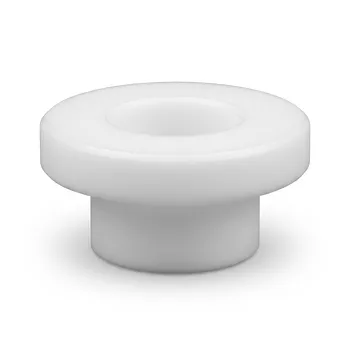
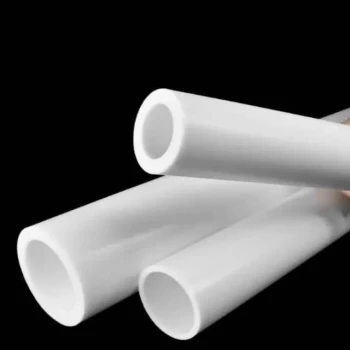
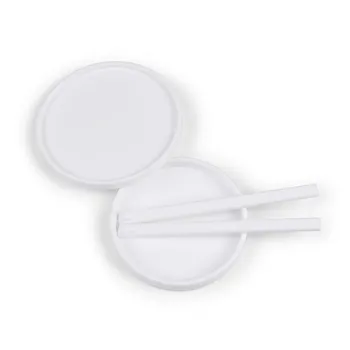
Selecting materials for 6 M KOH environments requires a "fluoropolymer-first" approach to prevent experimental failure. For a three-electrode testing system using this electrolyte, all containers, cell lids, fluid connections, and seals must be constructed from high-purity Perfluoroalkoxy (PFA) or Polytetrafluoroethylene (PTFE). These materials are essential to withstand the aggressive alkalinity while maintaining the chemical purity required for accurate electrochemical measurements.
Core Takeaway: To ensure the integrity of electrochemical data and laboratory safety, only PFA or PTFE should be used for wetted components in 6 M KOH systems. This prevents electrolyte leakage, structural degradation, and the leaching of impurity ions that would otherwise invalidate capacitance and stability results.
The Necessity of Chemical Inertness in Alkaline Environments
Resisting Corrosion and Structural Deformation
A 6 M KOH solution is a highly corrosive, strong alkaline environment that quickly degrades standard laboratory plastics. Using materials like PFA or PTFE ensures that containers and lids do not swell, warp, or leak during the mechanical stress of long-term cyclic testing.
Preventing Ion Leaching and Data Skewing
High-purity fluoroplastics are chemically "quiet," meaning they do not release impurity ions into the electrolyte. The presence of even trace impurities can lead to significant errors when evaluating the specific capacitance and cycling stability of your working electrode.
Protecting the Faraday Redox Kinetics
In systems like NiCo2S4, the 6 M KOH electrolyte provides the high concentration of hydroxyl ions (OH⁻) necessary for efficient charge exchange. Maintaining a pure environment is critical for ensuring these Faraday redox reactions proceed without interference from unexpected chemical contaminants.
Maintaining System Integrity and Safety
Ensuring Long-Term Seal Integrity
Standard seals and battery molds often fail in 6 M KOH, leading to electrolyte evaporation or hazardous leaks. PTFE and PFA maintain their seal integrity throughout thousands of electrochemical cycles, protecting both the sample and the researcher.
Preventing Air Contamination
In a three-electrode setup, the precision of the working electrode's characteristics depends on a controlled environment. High-performance fluoroplastics prevent air contamination from entering the cell, which is vital for maintaining the intrinsic electrochemical profile of the material being tested.
Eliminating Counter Electrode Interference
The three-electrode configuration is designed to isolate the performance of the working electrode by removing interference from the counter electrode. Using inert materials ensures that the fluid connections and the cell body do not introduce new variables that would undermine this isolation.
Understanding the Trade-offs and Limitations
The Cost of High-Purity Fluoroplastics
The primary trade-off when using PFA and PTFE is the higher material cost compared to standard plastics like polypropylene or polycarbonate. However, the cost of a failed experiment or contaminated data far outweighs the initial investment in high-performance hardware.
Mechanical Limitations and "Cold Flow"
While PTFE is exceptionally inert, it is susceptible to creep or "cold flow" under sustained mechanical pressure. Users must ensure that cell lids and fittings are designed with appropriate tolerances to prevent seals from loosening over time due to this material property.
How to Apply This to Your Project
Recommendations for Material Implementation
To ensure your experimental results are both accurate and reproducible, follow these material guidelines based on your specific focus:
- If your primary focus is long-term cycling stability: Prioritize PFA for all fluid connections and cell bodies, as its superior resistance to stress-cracking ensures the system remains leak-proof over thousands of hours.
- If your primary focus is high-precision capacitance measurements: Use high-purity PTFE for the cell lid and electrode holders to minimize the risk of ion leaching that could artificially inflate or deflate your readings.
- If your primary focus is high-current density kinetics: Ensure all seals are made of high-performance fluoroplastics to maintain the exact concentration of the 6 M KOH electrolyte, preventing evaporation that would change the ion availability.
Adhering to these strict material standards transforms the electrolyte from a potential source of error into a stable medium for discovering the true electrochemical potential of your materials.
Summary Table:
| Component Type | Recommended Material | Primary Function in 6 M KOH |
|---|---|---|
| Cell Bodies & Containers | PFA / PTFE | Resists structural deformation and prevents electrolyte leaks. |
| Cell Lids & Holders | High-Purity PTFE | Minimizes ion leaching to ensure accurate capacitance readings. |
| Seals & Gaskets | Fluoropolymers | Maintains airtight integrity during long-term cyclic testing. |
| Fluid Connections | PFA | Offers superior stress-crack resistance for stable fluid transfer. |
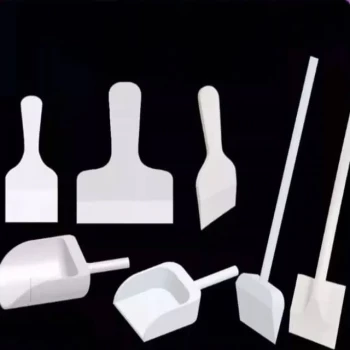
| Tools (Tweezers/Spatulas) | PTFE-Coated / Solid PTFE | Prevents metallic contamination during sample handling. |
Secure Your Electrochemical Precision with KINTEK
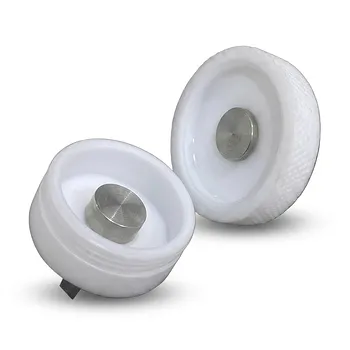
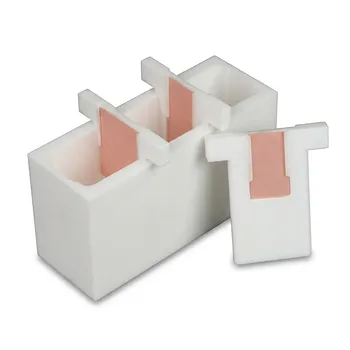
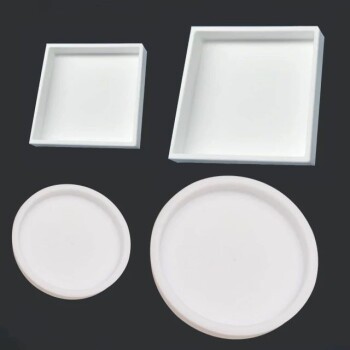
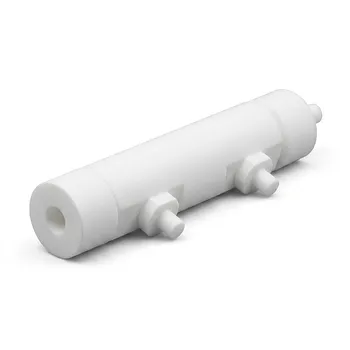
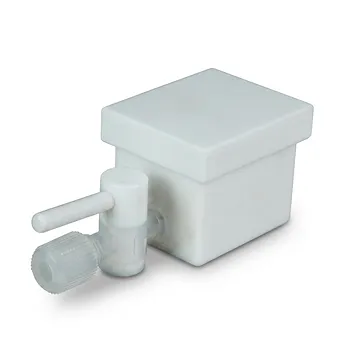
Don't let material degradation compromise your research data. KINTEK specializes in high-performance fluoropolymer solutions designed for the most demanding alkaline environments. From everyday basic labware like beakers, crucibles, and reagent bottles to specialized three-electrode electrochemical cells, battery testing fixtures, and hydrothermal synthesis liners, we provide the chemical inertness your 6 M KOH experiments require.
Whether you need standard consumables—such as tubing, fittings, stirring bars, and O-rings—or bespoke laboratory setups produced via our end-to-end custom CNC fabrication, KINTEK delivers absolute purity and durability.
Ready to upgrade your lab's reliability? Contact our experts today to discuss your custom fluoropolymer requirements and ensure your results remain undisputed.
References
- S. Shams, B. Bindhu. Enhancing the electrochemical performance of Boron Nitride@ Hematite/Graphene Oxide (BN@α-Fe2O3/GO) hybrid composites for next-generation supercapacitors. DOI: 10.15251/jor.2025.216.799
This article is also based on technical information from Kintek Knowledge Base .
Related Products
- High Purity PFA Crucible and Corrosion Resistant PTFE Beaker for Trace Analysis and Custom Laboratory Applications
- Custom PTFE Acid Resistant Support Rack Multi Hole PFA Hydrogen Absorption System Bracket
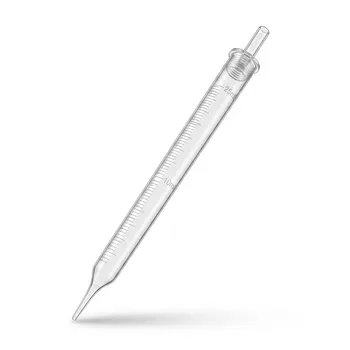
- High Purity PTFE PFA Burette Translucent Acid Base Resistant Reusable Laboratory Titration Equipment
- Customizable PTFE Three Neck Flasks for Advanced Chemical Applications
- Acid Resistant PTFE Button Cell Battery Test Fixture Customizable Machining High Purity Electrochemical Testing Clamp
People Also Ask
- Why are high-purity vessels critical for BiFeO3 synthesis? Ensuring Phase Purity
- Why is the use of high-purity PFA or PTFE labware critical during TiO2 nanoparticle purification? Protect Sample Purity
- Why is high-purity PFA trace analysis labware used for MXene? Ensure Superior Material Integrity in Research
- Why is high-purity PFA labware necessary for Znx@LS-2 zeolite ICP-OES analysis? Ensure Trace-Level Precision
- Why is high-purity PFA trace analysis labware recommended for trace element detection? Achieve Gold Standard PPT Accuracy