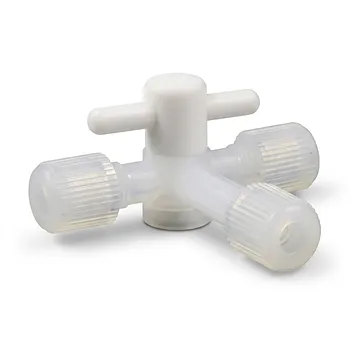
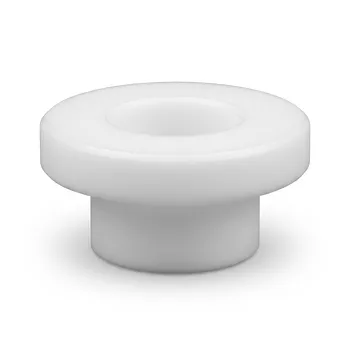
PTFE and PFA both withstand highly aggressive chemistry and continuous service temperatures around 260°C, but they are not interchangeable raw materials. PTFE has the higher melting point and generally offers the strongest non-stick, low-friction performance, yet its extreme melt viscosity prevents conventional melt molding. PFA melts at a lower temperature and can be injection molded, extruded, blow molded, or welded, making it better suited to translucent, complex, high-purity vessels and fluid-handling components.
The central choice is fabrication and purity versus mechanical and tribological performance: choose PTFE for robust machined parts and maximum non-stick behavior, and choose PFA when optical inspection, seamless molding, smooth surfaces, and low contamination risk are priorities.
What PTFE and PFA Have in Common
Broad Chemical Resistance
Both materials are perfluorinated fluoropolymers with exceptional resistance to acids, bases, solvents, and aggressive reagents. This makes either suitable for demanding laboratory containment and fluid-handling environments.
Chemical compatibility must still be checked against the specific reagent, temperature, pressure, exposure time, and mechanical load. “Chemically inert” does not mean immune to every combination of conditions.
High-Temperature Service
PTFE melts at approximately 327°C, while PFA melts at approximately 305-310°C. Their maximum continuous service temperature is generally specified at about 260°C, although the exact limit depends on grade, stress, geometry, and operating environment.
A melting point is not the same as a recommended operating temperature. Both materials should be kept well below their melting ranges during laboratory use, particularly when the vessel is mechanically loaded.
Electrical Insulation
Both materials have an exceptionally low dielectric constant of approximately 2.1 and very low dielectric losses. They are therefore useful as insulating materials in electrochemical cells, analytical instruments, and other laboratory assemblies where signal interference must be minimized.
PFA can provide higher short-term dielectric breakdown strength in some thin-film comparisons. One cited value is approximately 80 kV/mm for a 0.25 mm PFA film, compared with 47 kV/mm for PTFE, but breakdown strength depends strongly on thickness, processing, defects, temperature, and test method.
Why Processing Method Is the Primary Difference
PTFE Requires Specialized Forming
Standard PTFE has extremely high melt viscosity, reported in the range of roughly 1-10 GPa·s. Although it transitions through a melting region, it does not flow like a conventional thermoplastic.
Manufacturers typically use compression molding, sintering, skiving, or related techniques, followed by machining when tight dimensions or complex features are required. CNC machining is particularly useful for custom vessels, crucibles, seals, stir-bar components, and heavy-duty laboratory parts.
PFA Is Melt-Processible
PFA contains perfluoroalkoxy side groups that disrupt the polymer structure enough to permit melt flow. Its processability is commonly characterized using Melt Flow Rate, or MFR.
This allows PFA to be injection molded, extruded, blow molded, thermoformed, and welded. The result is greater design freedom for thin walls, integrated ports, molded fittings, valves, tubing, and leak-tight fluid paths.
Processability Affects More Than Manufacturing Cost
Melt processing can produce seamless or highly integrated geometries with fewer joints and less secondary machining. That can improve dimensional consistency and reduce locations where residues, particles, or leaks may develop.
PTFE remains highly capable, but a machined or assembled design may require more attention to surface finish, interfaces, tolerances, and cleaning validation.
How Structure Affects Trace Analysis
PFA Offers Better Optical Clarity
PTFE is typically highly crystalline and remains opaque white after processing. This limits direct visual inspection of liquid level, precipitate formation, sample color, and residue.
PFA generally has lower crystallinity, especially when rapidly cooled, and can be molded into translucent or relatively transparent laboratory vessels. Optical clarity is valuable when analysts need to inspect a sample without opening or disturbing the vessel.
PFA Supports Smooth, Low-Retention Surfaces
PFA’s melt-molding capability can produce smooth, non-porous internal surfaces and complex vessels with fewer machined features. Those characteristics can reduce sites where trace contaminants or sample residues might be retained.
This does not guarantee lower contamination by itself. Cleanroom handling, resin purity, additives, molding conditions, cleaning procedures, and blank testing remain essential for trace analysis.
Contamination Control Is Application-Specific
For ultra-trace work, the relevant question is not simply whether the polymer is chemically resistant. The selection should also consider extractables, ionic leachables, sample sorption, surface condition, cleaning recovery, and vessel history.
High-purity PFA is often favored for trace analysis vessels because it combines chemical resistance with translucency and melt-molded smoothness. PTFE can still be appropriate when a machined geometry or particular mechanical characteristic is more important than optical inspection.
Where PTFE Has the Advantage
Lower Friction and Stronger Non-Stick Behavior
PTFE generally provides the lowest coefficient of friction among the fluoropolymers. This makes it especially useful for stir bars, sliding seals, gaskets, plungers, and components that must resist adhesion.
PFA also has low friction and non-stick behavior, but PTFE is normally selected when minimizing friction and sticking is the dominant requirement.
Heavy-Duty Machined Components
PTFE is well suited to custom machined laboratory apparatus, crucibles, reaction vessels, and mechanically robust parts. Its processing route makes it practical to produce one-off or low-volume components without creating dedicated injection molds.
The design must account for PTFE’s dimensional behavior, including creep and deformation under sustained load at elevated temperature. Machining precision does not eliminate those material-level limitations.
Cryogenic Service
PTFE can retain structural integrity at temperatures approaching -267°C, making it useful for cryogenic containment and low-temperature laboratory assemblies. This is outside the central high-temperature comparison, but it can be decisive when one component must tolerate both thermal extremes.
Where PFA Has the Advantage
Complex Fluidic Components
PFA is particularly effective for molded fittings, valves, tubing, bottles, manifolds, and fluid-transfer components. Melt processing enables integrated features and repeatable production of geometries that would be difficult or expensive to machine from PTFE.
It can also be welded or joined in ways that support leak-tight assemblies and continuous fluid paths.
High-Purity Containers
For reagent bottles, digestion-related components, sample containers, and trace analysis vessels, PFA offers a useful combination of chemical resistance, optical clarity, smooth surfaces, and low contamination potential.
Its translucency also makes it easier to observe liquid levels and sample conditions during handling or heating.
Elevated-Temperature Sealing and Containment
PFA can maintain continuous service near the same approximately 260°C limit as PTFE while supporting molded seals, ports, and vessel features. The practical performance depends on wall thickness, pressure, thermal cycling, and the particular resin grade.
PFA should not be treated as a universal replacement for PTFE where sustained mechanical loading or maximum low-friction performance is required.
Understanding the Trade-offs
Do Not Select by Melting Point Alone
PTFE’s higher melting point does not mean it is automatically the better high-temperature material. The relevant operating limit is usually the continuous service temperature under the actual mechanical and chemical conditions.
PFA’s lower melting point still leaves it with a comparable commonly specified continuous-use limit of approximately 260°C.
Do Not Confuse Transparency With Purity
A translucent vessel is easier to inspect, but optical clarity is not proof of low extractables or low ionic background. The resin grade, manufacturing environment, post-processing, packaging, and cleaning protocol can have greater impact on analytical contamination.
Require supplier documentation and verify performance using method-specific blanks when trace-level results matter.
PFA Can Have Greater Extreme-Temperature Degradation
The supplementary data indicate that under thermal equilibrium between approximately 400°C and 425°C, PFA can lose mass more rapidly than PTFE, with a reported rate of about 1% per hour versus approximately 0.01% per hour for PTFE under the cited conditions.
These temperatures are above the normal continuous service range for both materials. They matter for abnormal exposure, thermal processing, or specialized high-temperature experiments, not as justification for operating ordinary labware near 400°C.
PTFE Machining Has Its Own Risks
Machined PTFE components can contain tool marks, dimensional variation, burrs, or interfaces that retain residues if manufacturing and cleaning are poorly controlled. PTFE’s non-melt processability also makes intricate thin-wall or integrated-port designs less economical.
For critical trace work, the finished part should be evaluated rather than selected solely from the polymer name.
Making the Right Choice for Your Goal
The correct material depends on the dominant failure risk in the application.
- If your primary focus is ultra-trace purity and visual monitoring: Prefer high-purity PFA with a documented low-extractables profile, smooth molded surfaces, and verified blank performance.
- If your primary focus is complex molded fluid handling: Choose melt-processible PFA for integrated fittings, valves, tubing, ports, and leak-tight assemblies.
- If your primary focus is maximum non-stick and low-friction performance: Choose PTFE for stir bars, sliding seals, gaskets, and mechanically simple contact surfaces.
- If your primary focus is custom heavy-duty apparatus: Choose PTFE when compression molding followed by CNC machining provides the required geometry and mechanical robustness.
- If your primary focus is exposure beyond normal continuous-service temperatures: Evaluate PTFE and PFA using the actual thermal profile, because melting point and continuous operating temperature do not describe the same risk.
Choose PTFE for machined robustness and tribological performance, and choose PFA for melt-molded complexity, optical inspection, and high-purity trace containment.
Summary Table:
| Property | PTFE | PFA |
|---|---|---|
| Melting Point | ~327°C | ~305-310°C |
| Continuous Service Temp | ~260°C | ~260°C |
| Optical Clarity | Opaque white | Translucent |
| Processing Method | Compression molding, sintering, machining | Injection molding, extrusion, blow molding, welding |
| Fabrication Complexity | Simple to moderate; custom machined parts | Complex, integrated designs possible |
| Surface Smoothness | Can be rough if machined; may have tool marks | Smooth, melt-molded surfaces |
| Friction & Non-stick | Lowest coefficient of friction | Low friction but slightly higher than PTFE |
| High-Temp Degradation (400-425°C) | Slower weight loss (~0.01%/hr) | Faster weight loss (~1%/hr) |
| Typical Applications | Stir bars, seals, gaskets, machined vessels | High-purity bottles, tubing, fittings, valves |
Upgrade your lab with precision PTFE and PFA components from KINTEK. Whether you need custom machined PTFE parts for robust performance or high-purity PFA vessels for trace analysis, our end-to-end manufacturing and CNC machining capabilities ensure the perfect solution. Contact us today to discuss your requirements and benefit from our expertise in fluoropolymer labware – get in touch now.
Related Products
- PTFE PFA Vacuum Filtration System Corrosion Resistant Customizable Shatterproof Laboratory Device
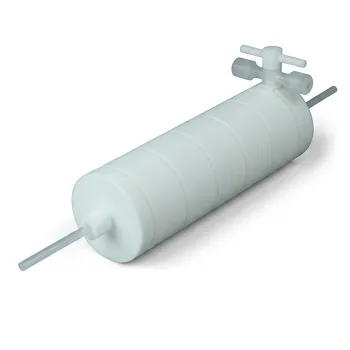
- High Purity PTFE Filter with PFA Valve Connections and Integrated Sieve Plate for Corrosive Fluid Processing
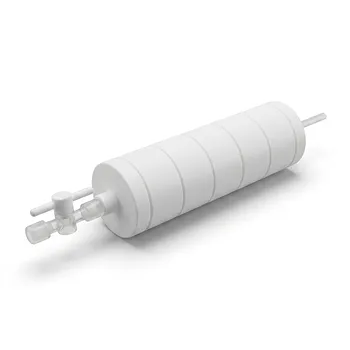
- PTFE Corrosion Resistant Filter with PFA Valve Connections and Integrated Sieve Plate
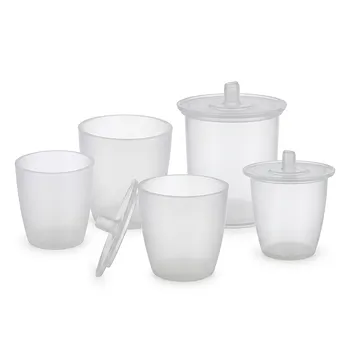
- High Purity PFA Crucible and Corrosion Resistant PTFE Beaker for Trace Analysis and Custom Laboratory Applications
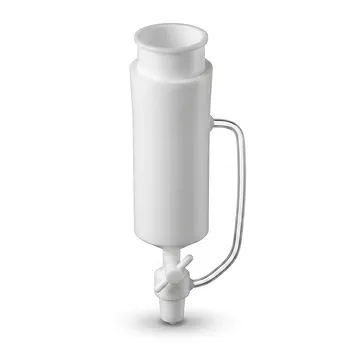
- Custom PTFE Constant Pressure Separatory Funnel Corrosion Resistant Low Background Labware for PFA Flasks
People Also Ask
- What makes PTFE filtration systems advantageous for industrial and scientific use? Unmatched Chemical & Thermal Stability
- How does the hydrophobicity of PTFE filters benefit their use? Ensure Uninterrupted Gas Flow and Solvent Filtration
- What temperature resistance do PTFE filters offer? Unmatched Thermal Stability from -200°C to +260°C
- Which chemicals are fully compatible with PTFE filters? Discover Unmatched Chemical Resistance
- What steps are involved in selecting the proper PTFE filter? A 4-Step Guide to Optimal Filtration