PTFE and PFA behave very differently when heated: PTFE reaches its melting transition near 327 °C, but its melt viscosity remains extraordinarily high at approximately 10^10 to 10^12 Pa·s. It forms a stiff, non-flowing gel rather than a conventional injection-molding melt. PFA, by comparison, has a melt viscosity of roughly 4 × 10^3 to 3 × 10^4 Pa·s, allowing it to flow through molds and dies while retaining chemical and thermal performance similar to PTFE.
The central difference is processability: PTFE provides exceptional chemical resistance and performance but cannot be shaped by ordinary melt processing, so it is commonly compressed, sintered, and then CNC machined. PFA flows sufficiently in the molten state for injection molding, extrusion, and the fabrication of complex, high-purity laboratory components.
Why PTFE Does Not Flow Like a Conventional Thermoplastic
Extremely High Molecular Weight
PTFE has an exceptionally high molecular weight, which creates intense resistance to molecular movement in the molten state. Even above its melting point, the polymer does not become a low-viscosity liquid suitable for ordinary injection molding.
Its melt behaves more like a stiff gel than a freely flowing thermoplastic. This distinction determines the entire manufacturing route for precision PTFE components.
Crystalline, Fluorinated Structure
PTFE’s carbon backbone is enclosed by fluorine atoms, creating a highly stable and tightly protected molecular structure. Its high crystallinity and strong intermolecular constraints contribute to its outstanding chemical resistance, low surface energy, and thermal stability.
The same structure that protects PTFE from aggressive chemicals also limits chain mobility during melting. As a result, heating alone does not make PTFE sufficiently fluid for standard molding equipment.
Limited Conventional Melt Rheology
A conventional thermoplastic must develop enough flow under heat and pressure to fill a mold, reproduce small features, and release trapped air. PTFE’s extremely high viscosity prevents that behavior under normal melt-processing conditions.
This is why PTFE is described as non-melt-processable, even though it undergoes a melting transition. It can change phase without becoming practically flowable for standard extrusion or injection molding.
Why PFA Is Easier to Process
Side Groups Reduce Crystallinity
PFA incorporates perfluoroalkoxy side groups into the fluorinated polymer structure. These larger side groups disrupt regular chain packing and reduce crystallinity compared with standard PTFE.
The less tightly packed structure allows the molecular chains to move more readily when heated. That produces a much lower melt viscosity and a more useful processing window.
Melt Viscosity Supports Mold Filling
PFA’s melt viscosity, approximately 4 × 10^3 to 3 × 10^4 Pa·s, is dramatically lower than PTFE’s. Under controlled temperature, pressure, and shear, PFA can flow through runners, dies, channels, and mold cavities.
This makes PFA suitable for injection molding, melt extrusion, tubing production, and other conventional thermoplastic processes. It can also be machined when a design requires features or tolerances better achieved through subtractive manufacturing.
Similar Performance in Service
PFA retains the key properties that make PTFE attractive for laboratory use. Both materials provide excellent chemical resistance, low surface energy, flame resistance, and continuous-use temperatures around 260 °C.
PFA therefore offers a processing advantage without abandoning the perfluorinated chemistry required for high-purity fluid handling and aggressive laboratory environments. The choice is usually driven by geometry, tolerance, purity requirements, and production volume.
Why PTFE Components Require Specialized Fabrication
Compression Molding and Sintering Form the Stock
Because PTFE cannot be conventionally injection molded, manufacturers generally begin with granular or fine PTFE powder. The powder is compacted into a desired shape and then heated through a controlled sintering cycle.
Sintering consolidates the compact into a dense billet, rod, tube, or other stock shape. This process is closer to powder consolidation than to ordinary thermoplastic melt molding.
CNC Machining Creates the Final Geometry
The sintered stock can then be turned, milled, drilled, bored, or otherwise machined to produce the finished component. Custom CNC machining is particularly important for non-standard laboratory parts that do not justify dedicated tooling.
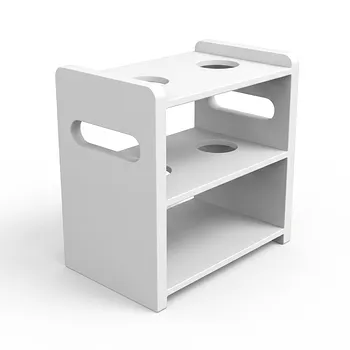
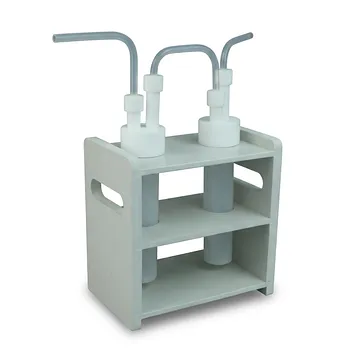
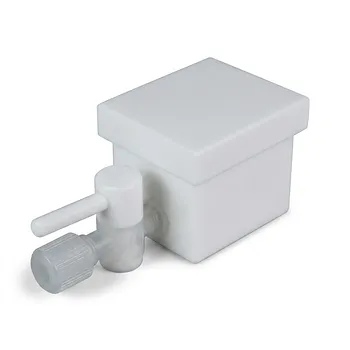
This approach supports components such as custom electrochemical cells, reaction vessels, valves, fittings, and specialized fixtures. It also allows the manufacturer to create unusual interfaces, stepped bores, precision holes, and custom sealing surfaces directly from a solid PTFE blank.
Machining Preserves Material Performance
Starting with dense, sintered stock helps the finished component retain PTFE’s chemical resistance, thermal endurance, and low-friction surface. The machining process determines the final dimensions without requiring the material to flow through a complex mold.
However, the machining strategy must account for PTFE’s softness, low friction, thermal expansion, and tendency to deform under stress. Tool selection, fixturing, cutting conditions, and dimensional compensation are therefore part of the engineering solution.
Why PFA Supports Specialized Molding
Complex Fluid Paths Can Be Molded
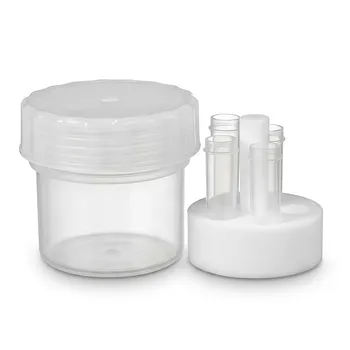
PFA’s lower melt viscosity allows molten material to fill intricate mold cavities and form internal channels. This is valuable for tubing, valves, fittings, reagent bottles, and fluid-transfer components where seamless or highly integrated geometries are important.
Molding can reduce the need for secondary joining operations. That matters in high-purity systems because fewer joints can mean fewer potential contamination sites or leakage paths.
High-Purity Labware Benefits from Melt Processing
PFA is commonly selected for trace-analysis labware and fluid-contact components because it combines high chemical resistance with the ability to form smooth, clean, low-contamination surfaces. Melt processing can also provide repeatable production of standardized geometries.
For complex parts, the ability to reproduce a design directly from a mold can be more efficient than machining every feature from a billet. PFA remains machinable when a molded design cannot achieve the required tolerance or customization.
Understanding the Trade-offs
PTFE Offers Maximum Material Robustness but Less Process Freedom
PTFE is often the stronger choice when the component must withstand severe chemical exposure, high temperatures, friction, or demanding service conditions. Its limitation is manufacturing complexity rather than in-use performance.
Compression molding, sintering, and CNC machining add process steps and may increase cost, especially for small batches or highly intricate geometries. PTFE’s dimensional behavior must also be considered during design and inspection.
PFA Offers Moldability but Requires Process Control
PFA is easier to mold, but it is not automatically the best choice for every part. Melt-processing parameters must be controlled carefully to manage filling, shrinkage, dimensional accuracy, thermal history, and cleanliness.
A molded PFA component may be more economical for repeat production, while a one-off custom component may still be better produced by machining. Material selection should reflect the complete manufacturing and service requirement.
Standard Molding Assumptions Can Cause Design Problems
Treating PTFE like a conventional injection-molding resin can lead to incomplete filling, poor feature definition, or unsuitable part designs. Treating PFA as though it has identical processing behavior can also produce incorrect tooling or thermal assumptions.
The design must be developed around the material’s rheology from the beginning. That includes wall thickness, tolerances, internal passages, draft, sealing features, thermal expansion, and the intended fabrication method.
Making the Right Choice for Your Goal
The material and manufacturing process should be selected together, because neither PTFE nor PFA can be evaluated by chemical resistance alone.
- If your primary focus is maximum chemical and thermal durability: Select PTFE when the component can be produced from sintered stock and finished through precision machining.
- If your primary focus is complex molded geometry: Select PFA when lower melt viscosity is needed to reproduce internal channels, tubing profiles, or intricate cavities.
- If your primary focus is a one-off or non-standard laboratory component: Use compression-molded or sintered PTFE stock followed by custom CNC machining.
- If your primary focus is repeatable high-purity production: Consider PFA melt processing for standardized labware, reagent containers, tubing, and fluid-transfer components.
Understanding the rheology first allows the material, geometry, tooling, and machining strategy to work as one coordinated design decision.
Summary Table:
| Property | PTFE | PFA |
|---|---|---|
| Melt viscosity (Pa·s) | 10^10 – 10^12 | 4×10^3 – 3×10^4 |
| Processability | Non-melt-processable; needs compression molding, sintering, CNC machining | Melt-processable; injection molding, extrusion |
| Best suited for | Maximum chemical/thermal resistance, custom one-off parts | Complex geometries, high-purity, repeatable production |
| Typical lab components | Custom cells, reaction vessels, valves, fittings | Tubing, bottles, fluid-transfer components |
Optimize your lab components by choosing the right fluoropolymer. At KINTEK, we specialize in high-performance PTFE and PFA labware, backed by custom CNC machining and molding capabilities. Whether you need intricate PFA molded parts or bespoke PTFE machined components, our end-to-end solutions ensure precision and purity. Contact our experts today to discuss your requirements and get a tailored quote – Contact us!
Related Products
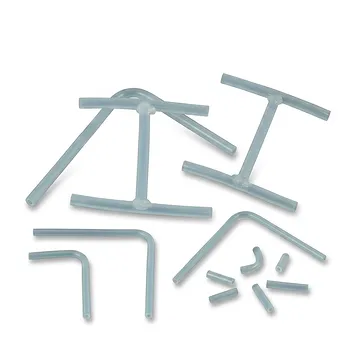
- High Performance PFA Coiled Spring Tubing and Custom PTFE Fabrication Services with Welded Fittings and Precision Bent Components
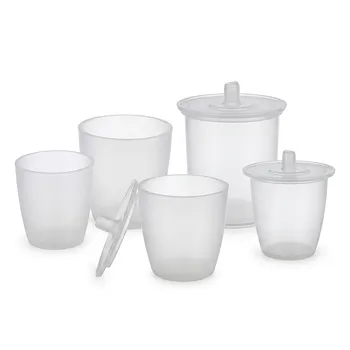
- High Purity PFA Crucible and Corrosion Resistant PTFE Beaker for Trace Analysis and Custom Laboratory Applications
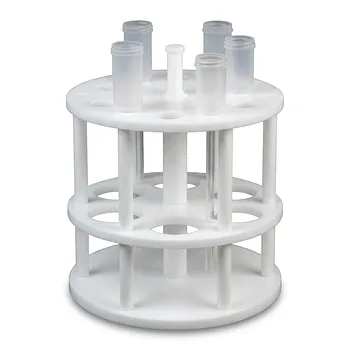
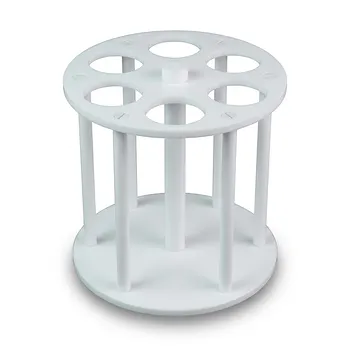
- Custom PFA Microcolumn Racks and PTFE Machined Low Background Corrosion Resistant Laboratory Fixtures
- PTFE PFA Vacuum Filtration System Corrosion Resistant Customizable Shatterproof Laboratory Device
- Custom PFA Separatory Funnel Rack PTFE Machined Laboratory Support Stand Corrosion Resistant Low Background Fluoropolymer Fixture
People Also Ask
- What are the technical advantages of high-precision PFA tubing in MXene production? Maximize Purity and Yield.
- What technical advantages do PFA tubing and fittings offer? Master Precision Fluid Transfer and Flow Chemistry
- What are the technical advantages of high-quality PFA tubing? Achieve Ultimate Purity and Precision in Fluid Handling
- What are the key benefits of PTFE in custom fabrication? Unlock Performance in Extreme Conditions
- What fabrication services are available for PTFE? Shearing, Stamping, Laser Cutting, Molding & Machining