Granular PTFE and dispersion PTFE differ primarily in polymerization conditions and the form of resin they produce. Granular PTFE is made by aqueous suspension polymerization with vigorous agitation and little or no surfactant, creating relatively coarse particles that can be compressed and sintered into solid stock for machining. Dispersion PTFE is made with mild agitation and polymerization aids such as fluorinated surfactants, producing a stable aqueous dispersion or fine powder suited to coatings, paste extrusion, membranes, and flexible tubing.
The practical distinction is processing geometry: choose granular PTFE when the apparatus must be rigid, thick-walled, and machinable; choose dispersion-derived PTFE when the product requires a thin, flexible, porous, or coated form.
How the Synthesis Produces Different Resin Forms
Granular PTFE Uses Suspension Polymerization
In suspension polymerization, tetrafluoroethylene polymerizes in an aqueous medium under vigorous agitation. The polymer precipitates as relatively coarse, fibrous or granular particles rather than remaining as a stable colloidal dispersion.
The process uses low surfactant levels or no surfactant. This allows the polymer particles to separate from the water and be recovered as molding powder.
Dispersion PTFE Uses Polymerization Aids
Dispersion polymerization uses milder agitation and surfactants or other stabilizing aids. These conditions keep very small PTFE particles suspended in water, producing a liquid dispersion.
The same general resin family can also be coagulated and processed as fine powder. Fine powder is commonly blended with a lubricant and formed by paste extrusion, while liquid dispersion is typically applied as a coating or used for impregnation.
Resin Form Determines Processability
Granular resin can be compressed, sintered, and converted into billets, sheets, rods, or thick-walled tubes. These stock shapes can then be machined into laboratory components.
Fine powder cannot generally be processed like conventional melt-flowing plastic. Its typical route is paste extrusion, followed by removal of the lubricant and sintering.
Aqueous dispersion is instead suited to coating and impregnation processes. It is not normally selected as the starting form for machining a solid vessel.
How Processing Affects Laboratory Apparatus
Granular PTFE Produces Rigid Structural Labware
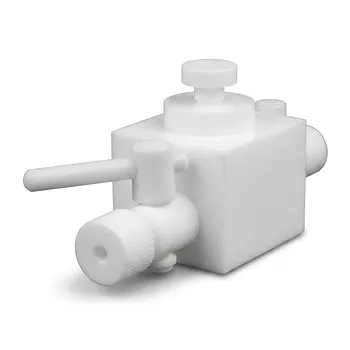
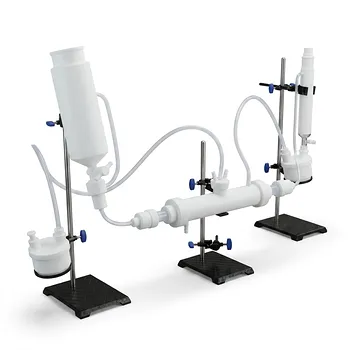
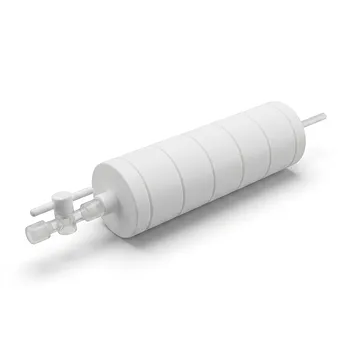
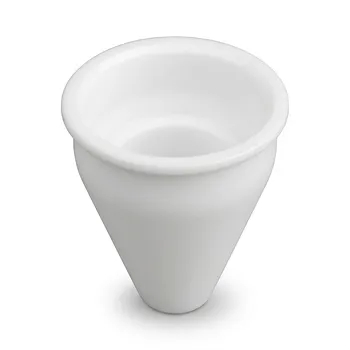
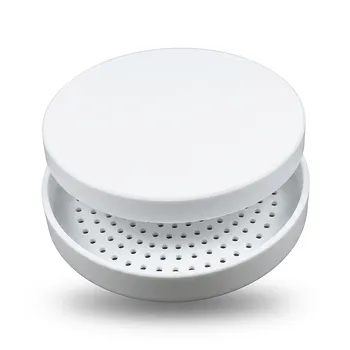
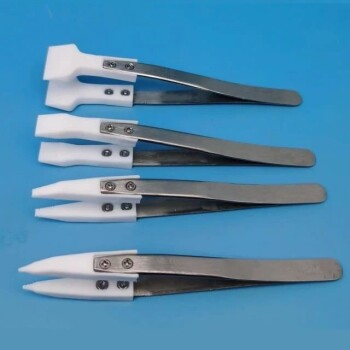
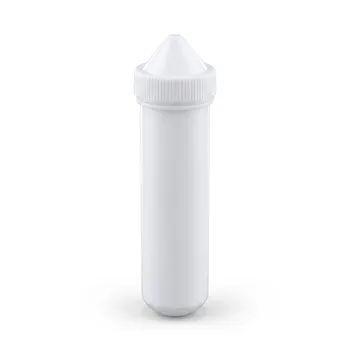
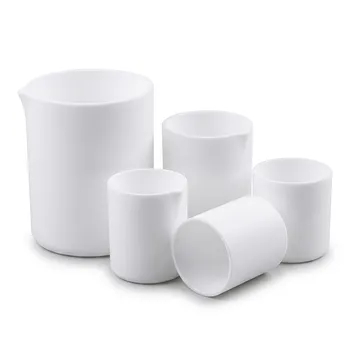
Granular PTFE is the appropriate starting material for compression-molded and CNC-machined apparatus. Typical examples include heavy-wall beakers, reagent bottles, crucibles, microwave digestion vessels, custom reaction cells, stopcocks, and electrochemical cell bodies.
The resulting material provides solid containment, dimensional stability, and the wall thickness needed for structural support. Machining also allows specialized ports, threads, channels, seats, and other features to be incorporated into one custom component.
Fine Powder Supports Flexible Components
Fine powder PTFE is suited to paste extrusion into flexible, thin-walled tubing, sealing tape, gaskets, and certain porous membranes. These forms are useful where the apparatus must bend, conform to fittings, or provide a low-friction fluid path.
This material route is generally unsuitable for producing a thick, rigid vessel that depends on extensive subtractive machining.
Aqueous Dispersion Supports Surface Functions
Aqueous PTFE dispersion is primarily selected for non-wetting, low-friction, and corrosion-resistant coatings. It can be applied to a substrate when the laboratory component needs a PTFE surface without being made entirely from bulk PTFE.
Coatings can be useful on metal, glass, or other substrates, but they do not provide the same bulk strength or containment capability as a solid machined PTFE part.
Selecting PTFE for Laboratory Use
Choose Granular PTFE for Machined Geometry
Granular PTFE is the stronger choice when the design requires:
- Thick walls or a solid block structure
- Precision-machined holes, threads, seats, or channels
- Custom vessel dimensions
- Rigid containment of aggressive chemicals
- Structural stability during handling or assembly
The selected granular grade still matters. Particle size, bulk density, flowability, shrinkage, and mechanical properties influence molding quality and final dimensional accuracy.
Choose Fine Powder for Fluid Transfer
Fine powder is preferable when the apparatus requires:
- Flexible tubing
- Thin-wall extrusion
- Wire or component insulation
- Sealing tape or flexible gasket forms
- Porous structures or filtration membranes
Paste extrusion is the key advantage of this resin form because it can create continuous, thin, and flexible geometries that are difficult or impractical to machine from a rigid billet.
Choose Dispersion for Coatings
Liquid dispersion is the logical choice when the requirement is a PTFE surface rather than a solid PTFE body. It can provide hydrophobicity, non-stick behavior, and chemical resistance on a supporting substrate.
The substrate must still provide the mechanical strength, temperature capability, and dimensional stability of the finished apparatus.
Understanding the Trade-offs
Rigid Machinability Versus Flexibility
Granular PTFE supports robust, customized structures, but producing those parts requires molding, sintering, and machining. That can increase material waste, production time, and cost for simple continuous geometries.
Fine powder and dispersion routes efficiently produce tubing, films, membranes, and coatings. They are less suitable when the final part must function as a self-supporting, heavily machined vessel.
Dimensional Stability Requires Process Control
PTFE undergoes shrinkage during sintering, and the amount depends on resin grade and processing conditions. Incorrect allowance can lead to dimensional errors in threaded closures, mating surfaces, and precision fluid channels.
Free-flow granular grades can support efficient compression molding with relatively low mold shrinkage, while other grades are selected for strength, extrusion behavior, or demanding deformation conditions. Resin selection should therefore be based on the final geometry, not only on PTFE's chemical resistance.
Chemical Resistance Does Not Eliminate Mechanical Limits
All of these forms retain PTFE's characteristic chemical inertness, but the finished product can behave differently because of its geometry and manufacturing route. A thin coating, flexible tube, and thick machined vessel do not have the same resistance to pressure, deformation, abrasion, or repeated mechanical loading.
Laboratory selection must evaluate wall thickness, temperature, pressure, chemical exposure, sealing loads, and dimensional tolerances together.
“Dispersion PTFE” and “Fine Powder PTFE” Are Not Identical
The terms are related but should not be treated as interchangeable. Dispersion PTFE generally refers to the aqueous product used for coatings and impregnation, whereas fine powder PTFE refers to coagulated resin processed mainly by paste extrusion.
Both arise from dispersion-type polymerization technology, but their handling and final applications differ.
Making the Right Choice for Your Goal
The resin should be selected from the required final form and manufacturing process, not from the PTFE designation alone.
- If your primary focus is rigid custom labware: Specify granular PTFE for compression molding, sintering, and CNC machining into thick-walled vessels, reaction cells, fittings, or structural components.
- If your primary focus is flexible fluid transfer: Specify fine powder PTFE designed for paste extrusion into tubing, thin films, or flexible seals.
- If your primary focus is a non-wetting or low-friction surface: Specify aqueous PTFE dispersion for coating or impregnation of a mechanically suitable substrate.
- If your primary focus is dimensional precision: Select a granular grade with appropriate particle size, flowability, shrinkage, and mechanical properties, then account for sintering-related dimensional change during design.
Understanding the relationship between polymerization, resin form, and processing method makes PTFE selection a predictable engineering decision rather than a choice based solely on chemical resistance.
Summary Table:
| Feature | Granular PTFE | Dispersion PTFE |
|---|---|---|
| Synthesis | Suspension polymerization | Dispersion polymerization |
| Agitation | Vigorous | Mild |
| Surfactants | Low/none | Yes (fluorinated) |
| Product Form | Coarse powder / granules | Aqueous dispersion / fine powder |
| Typical Processing | Compression molding, sintering, machining | Paste extrusion (fine powder), coating (dispersion) |
| Resulting Products | Rigid labware: beakers, vessels, custom parts | Flexible tubing, films, seals, coatings |
| Advantages | Machinable, rigid, thick-walled | Thin, flexible, porous, or coated surfaces |
| Limitations | Not flexible, more processing waste | Not suitable for thick, rigid structures |
Choose the right PTFE for your lab apparatus. At KINTEK, we specialize in high-performance fluoropolymers, offering PTFE and PFA labware from beakers and vessels to custom CNC-machined parts. For rigid, machined components, rely on our granular PTFE expertise; for flexible tubing and coatings, we provide dispersion-based solutions. Whether you need a single custom part or high-volume orders, our end-to-end capabilities ensure precision and reliability. Contact us today to discuss your requirements and get a quote.
Related Products
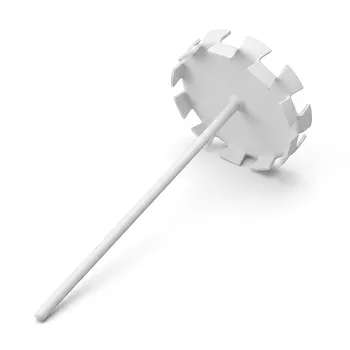
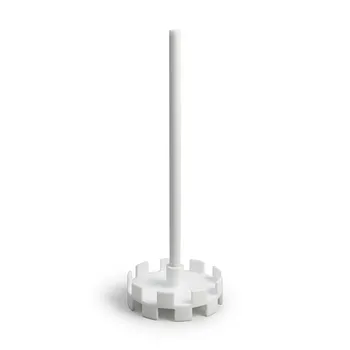
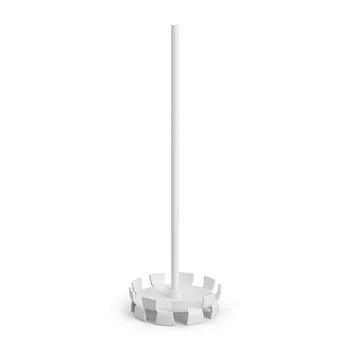
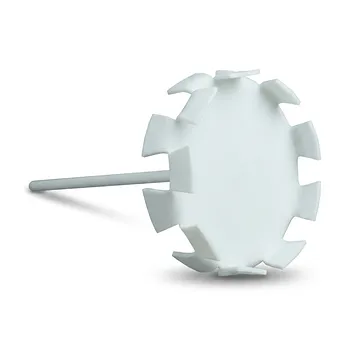
- High Purity Corrosion Resistant PTFE Dispersion Disk and Inert Stirring Paddle for Food Pharmaceutical and Cosmetic Mixing
- Corrosion Resistant PTFE Stirring Impeller and Customizable Polytetrafluoroethylene Dispersion Disk
- Custom PTFE Dispersing Disc and Stirring Rod for Chemical Processing and Laboratory Mixing
- High Purity PTFE Dispersion Disk for Food and Cosmetic Processing Non Stick Corrosion Resistant Large Stirring Paddle Customizable Fluoropolymer Impeller
- Corrosion Resistant PTFE Dispersing Disc and High Temperature Propeller Stirring Paddle for Laboratory Chemical Mixing
People Also Ask
- What is Dispersion PTFE used for? Creating Thin, High-Performance Coatings and Films
- How many variations of PTFE disks are available and what parameters do they differ in? Choose the Right Material for Your Application
- What key properties are measured under ASTM D4441 to classify and evaluate PTFE dispersions?
- What is PTFE dispersion, and how is it used? A Guide to Non-Stick Coatings & Chemical Resistance
- What is the dispersion method of producing PTFE and what are its products? Ideal for Thin Coatings and Films