Emulsion-polymerized PTFE resin is required for ePTFE because its fine-powder morphology and crystalline structure enable fibrillation during paste extrusion and stretching. This creates the interconnected node-and-fibril network responsible for ePTFE’s controlled porosity, strength, and uniform flow behavior. Granular, suspension-polymerized PTFE is designed for dense molded or machined parts and generally cannot form this porous structure effectively.
The key distinction is not simply particle size—it is resin morphology and deformation behavior. Fine-powder PTFE can be paste-extruded and expanded into a controlled node-and-fibril network; granular PTFE normally cannot.
Why ePTFE Requires a Specific PTFE Resin
Expansion depends on fibrillation
Expanded PTFE is produced by forcing a fine-powder resin through a paste-extrusion process and then applying high-rate stretching. During this deformation, PTFE particles develop fibrils that connect crystalline nodes.
The resulting network creates pores while retaining mechanical integrity. This is the defining structure of microporous ePTFE membranes, tubing, and filtration components.
Fine-powder PTFE has the necessary morphology
Emulsion-polymerized PTFE fine powder has an unbranched molecular structure and very high virgin crystallinity, typically cited at approximately 93% to 98%. These characteristics support the shear response and fibrillation required during expansion.
The resin is also formulated as a fine powder suitable for paste extrusion into a precursor film or tube before stretching.
High molecular weight supports structural integrity
PTFE used for ePTFE must have sufficiently high molecular weight to form durable fibrils rather than tearing or losing continuity during expansion. The polymer’s high molecular weight contributes to the strength of the final porous scaffold.
This is different from ordinary melt-processable polymers, because standard PTFE has extremely high melt viscosity and does not flow conventionally when heated.
Why Granular PTFE Is Not an Equivalent Substitute
Granular resin is optimized for dense products
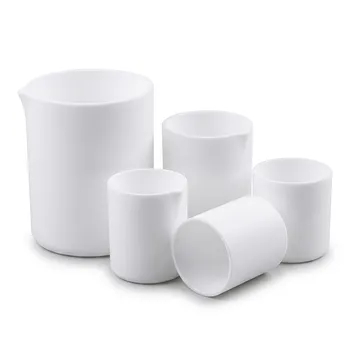
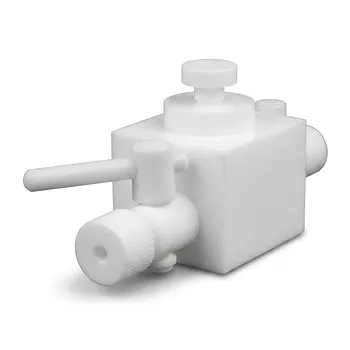
Suspension-polymerized granular PTFE is typically selected for compression molding, sintering, and CNC machining. It is well suited to solid laboratory components such as valves, vessels, beakers, crucibles, gaskets, and reactor liners.
Its strength lies in producing dense, nonporous parts—not in generating a controlled fibrillated network.
Its particle structure does not expand effectively
Granular PTFE lacks the specific crystalline morphology and processing behavior needed for efficient high-strain-rate fibrillation. When subjected to the expansion process used for ePTFE, it will not reliably form the interconnected nodes and fibrils required for uniform porosity.
Attempting to substitute granular resin can therefore produce poor expansion, irregular pores, weak areas, or no useful porous structure at all.
Conventional PTFE processing does not solve the problem
Heating granular PTFE does not make it behave like a conventional melt-processable resin. PTFE’s very high melt viscosity prevents ordinary melt extrusion from creating the desired porous architecture.
The ePTFE process is based on paste extrusion and controlled stretching, not conventional melting and flow.
How Resin Choice Affects Laboratory Products
Porosity and pore-size uniformity
For filtration media and porous transfer components, resin morphology directly affects the consistency of the node-and-fibril network. The correct fine-powder grade supports more predictable pore formation and flow characteristics.
This matters when a laboratory product must provide repeatable filtration, controlled gas or liquid transfer, or stable permeability.
Mechanical strength
A well-formed fibrillar network allows a thin porous component to withstand handling, pressure differences, and repeated use. Poor fibrillation can create weak points that compromise dimensional stability or service life.
The resin must therefore be selected together with the intended expansion ratio and product geometry.
Chemical purity and inertness
PTFE remains attractive for laboratory applications because of its exceptional chemical resistance and low reactivity. For trace analysis and high-purity fluid handling, manufacturers must also control residual processing aids and other potential leachables.
Modern compliant production should address historical concerns associated with fluorinated surfactants such as PFOA-related materials, rather than assuming that all emulsion-derived products have the same chemical profile.
Understanding the Trade-offs
Fine-powder PTFE is specialized
Fine-powder resin is not automatically the best choice for every PTFE component. It is selected for expansion and paste-extrusion processes, while granular resin is often preferable for robust, dense, machined laboratory hardware.
Using fine powder for a solid machined vessel may provide no advantage and may be less compatible with the intended forming process.
Resin grade alone does not guarantee performance
Expansion behavior also depends on processing conditions, including paste formulation, extrusion, stretching rate, temperature, and expansion ratio. A suitable resin can still produce inconsistent ePTFE if the manufacturing process is poorly controlled.
The resin specification and the conversion process must therefore be evaluated together.
Emulsion polymerization does not mean conventional melt processing
The term “emulsion-polymerized” identifies the polymerization route and resulting fine-powder morphology. It does not mean the material can be processed like a low-viscosity thermoplastic.
For ePTFE, the relevant route is generally fine-powder paste extrusion followed by expansion, not standard melt extrusion.
Product requirements should determine the resin
A porous membrane, fluid-transfer tube, and dense digestion vessel have fundamentally different structural requirements. Selecting resin solely by the PTFE label can lead to incorrect material substitution.
Procurement specifications should identify the intended process, porosity, purity requirements, and mechanical performance—not just the polymer family.
Choosing the Correct Material for the Application
The practical decision is to match the resin’s morphology to the product’s required structure and manufacturing method.
- If your primary focus is producing porous ePTFE membranes or tubing: Specify a high-molecular-weight, emulsion-polymerized fine-powder PTFE grade qualified for paste extrusion and expansion.
- If your primary focus is dense laboratory vessels or machined components: Use an appropriate granular suspension-polymerized PTFE grade designed for molding, sintering, or CNC machining.
- If your primary focus is trace analysis or high-purity fluid handling: Confirm modern regulatory compliance, low extractables, and control of residual polymerization aids in addition to selecting the correct resin morphology.
- If your primary focus is consistent filtration performance: Qualify the complete resin-and-process system against pore-size distribution, flow rate, strength, and dimensional stability.
Choosing the correct PTFE resin is the foundation for achieving the intended laboratory product structure, whether that structure is porous and fibrillated or dense and nonporous.
Summary Table:
| Property | Fine-Powder (Emulsion) PTFE | Granular (Suspension) PTFE |
|---|---|---|
| Polymerization Method | Emulsion polymerization | Suspension polymerization |
| Particle Morphology | Fine powder, high crystallinity (93-98%) | Granular, larger particles |
| Suitable Processes | Paste extrusion and stretching (for ePTFE) | Compression molding, sintering, CNC machining |
| Ability to Form Fibrils | High – forms node-and-fibril network during expansion | Low – does not expand effectively |
| Typical Products | ePTFE membranes, tubing, filtration components | Dense labware, vessels, machined parts |
| Porosity Control | Excellent – allows uniform pore formation | Poor – not designed for porous structures |
Enhance your laboratory with high-performance PTFE products. At KINTEK, we specialize in precision-engineered labware that meets the rigorous demands of your applications. Whether you need porous ePTFE membranes for filtration or dense machined components for chemical resistance, our expertise ensures optimal material selection and manufacturing. Contact us today to discuss your custom requirements and benefit from our end-to-end capabilities in PTFE and PFA solutions.
Related Products
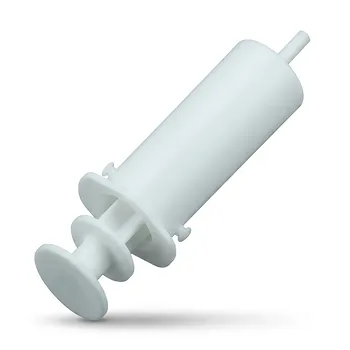
- High Purity Laboratory Grade PTFE Syringe Chemical Resistant Fluoropolymer Injector for Trace Analysis
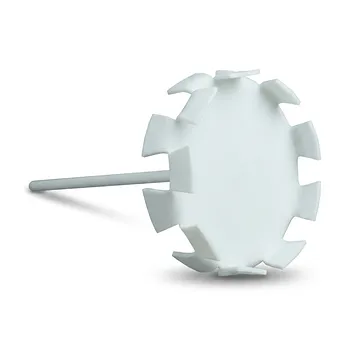
- High Purity PTFE Dispersion Disk for Food and Cosmetic Processing Non Stick Corrosion Resistant Large Stirring Paddle Customizable Fluoropolymer Impeller
- Custom PTFE Insulating Gaskets and Corrosion Resistant Fluoropolymer Seals for Industrial Electrical Applications
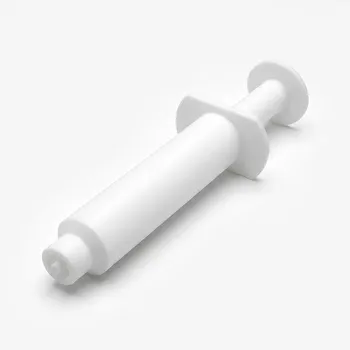
- High Purity Virgin PTFE Syringe 20ml Chemical Resistant Liquid Handling for Syringe Pumps and PFA Tubing Integration
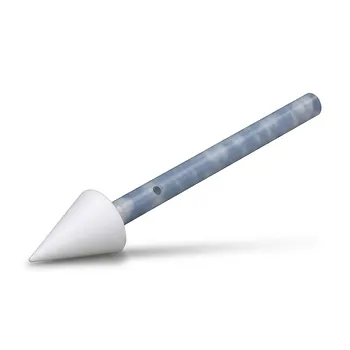
- High Temperature Resistant PTFE Solid Sampler Corrosion Resistant Non Leaching Reusable Biopharmaceutical White Powder Sampling Device
People Also Ask
- In what medical devices is PTFE commonly used? Essential Components for Safety and Reliability
- What are the benefits of PTFE's chemical resistance? Achieve Unmatched Reliability in Corrosive Environments
- What chemicals is PTFE resistant to? Discover Its Near-Universal Chemical Inertness
- How do surfactants like APFO impact TFE polymerization, and why are alternatives essential?
- What chemical endgroups and off-gases are produced during the molecular weight reduction of PTFE fluoropolymers, and what safety measures are required?