Platinum wire is selected as the counter electrode primarily because it provides an inert, highly conductive pathway that ensures the measured electrochemical signals originate solely from the $\text{NiCo}_2\text{O}_4$ working electrode. This material maintains exceptional stability in the strong alkaline electrolytes (such as $\text{KOH}$) typically used for nickel-cobalt oxides, preventing metal dissolution or unwanted side reactions from contaminating the results. By acting as a "passive" participant in the circuit, platinum allows researchers to isolate and accurately quantify the intrinsic pseudocapacitive performance of the active material.
The central takeaway is that platinum’s combination of high electrical conductivity and electrochemical "nobility" prevents the counter electrode from becoming a bottleneck or a source of error. It ensures that the current loop is completed without the electrode itself oxidizing, reducing, or polarizing in a way that would skew the data.
The Role of Chemical Inertness in Alkaline Media
Superior Stability in $\text{KOH}$ Electrolytes
$\text{NiCo}_2\text{O}_4$ is most frequently evaluated in strong alkaline environments like 1 M to 6 M potassium hydroxide ($\text{KOH}$). Platinum is one of the few materials that remains chemically inert and highly resistant to corrosion under these aggressive conditions.
Prevention of Faradaic Interference
In a three-electrode system, the counter electrode (CE) must balance the charge passing through the working electrode (WE). Platinum does not undergo self-oxidation or reduction within the typical voltage windows used for $\text{NiCo}_2\text{O}_4$, ensuring the measured current is not "inflated" by reactions at the CE.
Elimination of Ion Contamination
If a less stable metal were used, it could dissolve into the electrolyte as metal ions. These impurities might then electroplate onto the $\text{NiCo}_2\text{O}_4$ surface, fundamentally altering its chemistry and leading to false performance readings.
Ensuring Precise Kinetic Measurements
Facilitating a Stable Current Loop
The primary job of the counter electrode is to complete the electrical circuit so that current can flow. Platinum’s high electrical conductivity ensures that electrons move freely, maintaining a stable current path during demanding tests like high-rate galvanostatic charge-discharge (GCD).
Avoiding Kinetic Bottlenecks
Platinum possesses high catalytic activity for the hydrogen evolution reaction (HER) and oxygen evolution reaction (OER). This ensures that the counter-reaction occurs easily and does not become the rate-limiting step of the entire electrochemical cell.
Maintaining Surface Area Integrity
By using high-purity platinum wire or mesh, the system provides a sufficient reaction interface. This prevents the counter electrode from polarizing excessively, which could otherwise interfere with the potential control of the working electrode by the potentiostat.
Understanding the Trade-offs
The High Cost of Noble Metals
The most significant downside to platinum is its prohibitive cost. While it is technically superior, the expense of high-purity platinum wire often limits its use to laboratory-scale research rather than industrial-scale applications.
Potential for Hydrogen Adsorption
In certain specific voltage ranges, platinum can exhibit hydrogen adsorption/desorption peaks. While these are usually negligible compared to the high capacitance of $\text{NiCo}_2\text{O}_4$, a meticulous researcher must ensure these small signals do not overlap with the redox peaks of the material being studied.
Surface Area Mismatch
If the platinum wire is too thin or has a much smaller surface area than the working electrode, it can become polarized. This is why platinum mesh or "coiled" wire is often preferred over a simple straight wire to ensure the CE surface area is significantly larger than the WE.
How to Apply This to Your Project
Recommendations for Experimental Setup
- If your primary focus is maximum data accuracy: Always use a high-purity platinum wire or mesh to ensure that no stray redox signals or corrosion products interfere with your $\text{NiCo}_2\text{O}_4$ characterization.
- If your primary focus is high-current testing: Select a platinum mesh or plate rather than a thin wire to provide a larger surface area, preventing the counter electrode from limiting the reaction rate.
- If your primary focus is cost-efficiency in neutral media: You might consider carbon-based counter electrodes (like graphite rods), though these are generally less stable and less conductive than platinum in the strong alkaline media required for $\text{NiCo}_2\text{O}_4$.
Ultimately, platinum wire remains the gold standard because it allows the true electrochemical nature of $\text{NiCo}_2\text{O}_4$ to be measured without interference or degradation.
Summary Table:
| Feature | Benefit for NiCo2O4 Testing | Scientific Importance |
|---|---|---|
| Chemical Inertness | Resists corrosion in strong KOH (1M-6M) | Prevents electrolyte/sample contamination |
| High Conductivity | Facilitates stable high-rate GCD cycles | Ensures the CE is not a kinetic bottleneck |
| Electrochemical Nobility | Prevents unwanted Faradaic side reactions | Isolates the true pseudocapacitance of NiCo2O4 |
| Catalytic Activity | Lowers overpotential for HER/OER | Maintains potential control at the working electrode |
Elevate Your Lab Performance with KINTEK
Precision in electrochemical testing requires more than just the right electrode; it demands a high-purity, chemically resistant environment. KINTEK specializes in high-performance fluoropolymer solutions designed to withstand the most aggressive laboratory conditions.
From everyday basic labware like beakers, crucibles, and reagent bottles to advanced standard or custom electrochemical cells and battery testing fixtures, we provide the tools researchers need for flawless data. Our expertise extends to:
- High-Purity Trace Analysis: PTFE and PFA digestion tubes, cleaning tanks, and filtration tools.
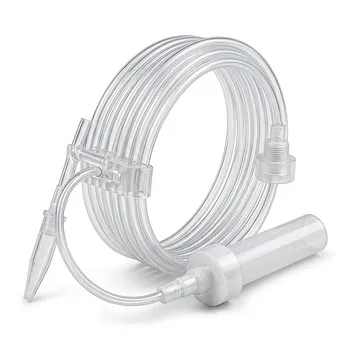
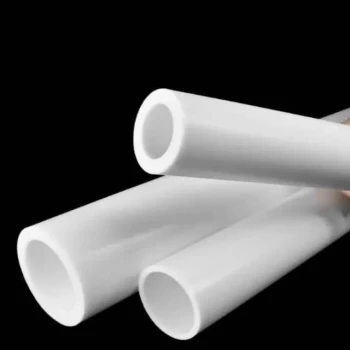
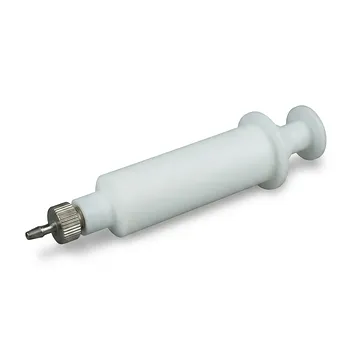
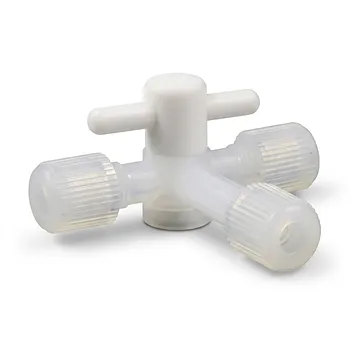
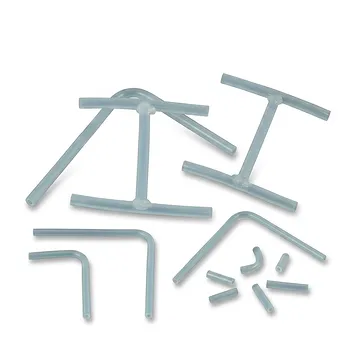
- Fluid Management: Comprehensive tubing, fittings, and valves for seamless sample transfer.
- Custom Engineering: End-to-end custom CNC fabrication for non-standard machined parts and bespoke reaction apparatus like hydrothermal synthesis liners and microwave digestion vessels.
Whether you need high-volume consumables or a one-of-a-kind experimental setup, KINTEK delivers absolute focus on high-performance materials to protect your research integrity.
Contact us today to discuss your custom laboratory needs!
References
- Ashutosh Patel, Nand Kumar Shante. Facile binder-free hydrothermal synthesis of NiCo2O4 using different reagents: a study as efficient supercapacitor electrode. DOI: 10.1038/s41598-025-21751-7
This article is also based on technical information from Kintek Knowledge Base .
Related Products
- Customizable PTFE Scrapers and Shovels for Demanding Applications
- Custom PFA Tubing 1/4 Inch High Purity Corrosion Resistant Fluoropolymer Tube with Welding and Machining Services
- High Purity PFA Coiled Tubing Custom PTFE Machining PFA Welding and Precision Bending Solutions
- Customizable PTFE Heat Insulation Plate High Temperature Corrosion Resistant Laboratory Support Layered Multi Tier Stand
- Corrosion Resistant Hot Plate with Modified PTFE Coating and Optional Heating Rack for Chemical Laboratory Custom Solutions
People Also Ask
- Why are PTFE shovels considered cost-effective? Maximize ROI with Superior Durability
- What are the advantages of PTFE shovels in terms of chemical resistance? Unmatched Inertness for Handling Corrosives
- What are the key properties that make PTFE shovels ideal for laboratory use? Ensure Sample Integrity with Chemically Inert Tools
- How does the durability of PTFE shovels compare to plastic shovels? Discover the Superior Choice for Harsh Conditions
- What are some specific applications of PTFE shovels in the laboratory? Ensure Sample Purity and Safety