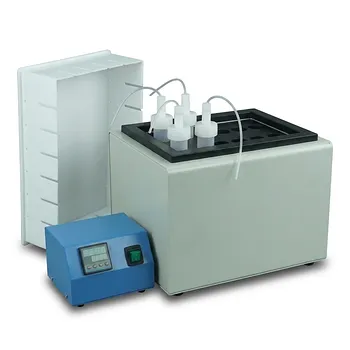
Closed-cup flash point testing is preferred because it measures ignition risk under conditions that better represent contained solvent handling. The sealed test vessel allows solvent vapors to accumulate above the liquid, producing a flash point that is typically 5°C to 10°C lower than the corresponding open-cup result. For volatile solvents used in fluoropolymer formulation processing, this more conservative value provides a stronger basis for storage, transport, equipment, and workplace fire-safety decisions.
Closed-cup testing is preferred because it limits vapor loss and better represents the vapor accumulation that can occur inside containers, tanks, reagent bottles, and process equipment. Open-cup results can make a solvent appear less hazardous because escaping vapors raise the measured flash point.
Why Open-Cup Results Can Understate the Hazard
Vapors Escape During the Test
In an open-cup test, the liquid is exposed directly to the atmosphere. Volatile solvent vapors disperse instead of accumulating above the sample, so the vapor concentration near the ignition source may be lower than it would be in a partially or fully enclosed process.
This can produce a higher measured flash point than the same solvent tested in a closed vessel.
Results Are More Sensitive to the Environment
Open-cup measurements can vary with flame height, air currents, ventilation, and ambient conditions. These factors influence how quickly vapors leave the test area and therefore affect when ignition is detected.
That variability is especially important when evaluating solvents whose flash points are close to storage, processing, or regulatory temperature limits.
Why Closed-Cup Testing Better Represents Processing Conditions
Vapor Accumulation Is Preserved
Closed-cup methods place a lid over the sample, limiting vapor escape and allowing a vapor concentration to build above the liquid. This more closely reflects conditions inside solvent containers, cleaning tanks, transfer systems, and other enclosed or partially enclosed equipment.
The test therefore evaluates whether the accumulated vapor space can ignite when exposed to an ignition source.
The Result Is More Safety-Conservative
Closed-cup flash points are generally lower than open-cup values, commonly by 5°C to 10°C (9°F to 18°F). A lower value identifies a potential ignition hazard earlier as temperature rises.
Flash point is not the same as the lower flammable limit, but the closed-cup result is a more conservative indicator of the temperature at which a flammable vapor-air mixture may form.
It Supports Real Engineering Decisions
Chemical engineers and laboratory managers use closed-cup values to inform:
- Safe storage and handling temperatures
- Transport and classification decisions
- Safety data sheet and MSDS information
- Ventilation and ignition-source controls
- Selection of compatible fluoropolymer reagent bottles and storage containers
- Design of solvent cleaning tanks and processing equipment
For high-purity fluoropolymer processing, the test result must support both fire safety and contamination-control decisions. A value that better represents vapor accumulation is more useful than one obtained under conditions where vapors freely dissipate.
Which Closed-Cup Method Is Appropriate?
Pensky-Martens Testing
The Pensky-Martens method, commonly identified as ASTM D93, is a non-equilibrium closed-cup procedure. It is widely used when a standardized flash point measurement is needed for solvent characterization, classification, or safety documentation.
The sample is heated while the closed vessel is periodically exposed to an ignition source to determine the temperature at which a flash occurs.
Small-Scale Setaflash Testing
The Small Scale Setaflash method, commonly identified as ASTM D3828, is an equilibrium closed-cup procedure. It can be useful when only a small sample is available or when rapid screening is important.
The specific method should match the solvent properties, applicable regulations, internal safety procedures, and the purpose of the measurement.
Understanding the Trade-offs
Closed-Cup Values Are Not Universal Process Limits
A closed-cup flash point is a controlled test result, not a complete description of every workplace hazard. Actual risk also depends on vapor pressure, concentration, temperature, ventilation, oxygen availability, ignition sources, and the geometry of the equipment.
The result should therefore be incorporated into a broader process hazard assessment.
Different Methods Can Produce Different Values
Pensky-Martens, Small Scale Setaflash, and other standardized methods may not produce identical results because they use different apparatus, heating rates, sample volumes, and measurement procedures.
Comparisons should be made between results obtained using the same standardized method whenever possible.
Conservative Does Not Mean Interchangeable
An open-cup result should not be substituted for a closed-cup result simply because both are reported as flash points. Using the higher open-cup value for a contained solvent process can lead to less conservative storage or handling controls.
The test method must be recorded alongside the measured temperature in specifications, safety documentation, and engineering calculations.
Making the Right Choice for Your Goal
Use the closed-cup result as the primary flash point value when the solvent will be stored, transferred, heated, mixed, or processed in an enclosed or partially enclosed environment.
- If your primary focus is fire and worker safety: Use a recognized closed-cup method and base temperature controls, ventilation, and ignition-source management on that result.
- If your primary focus is regulatory classification or transport: Confirm which standardized method and reporting convention the applicable regulation requires, then use a method-compliant value.
- If your primary focus is fluoropolymer process design: Evaluate the closed-cup flash point together with vapor pressure, equipment containment, ventilation, solvent compatibility, and contamination-control requirements.
- If your primary focus is comparing solvents: Compare measurements generated by the same closed-cup procedure and do not treat open-cup and closed-cup values as equivalent.
For volatile solvents in fluoropolymer formulation processing, closed-cup testing provides the more representative and defensible foundation for controlling ignition risk.
Summary Table:
| Aspect | Closed-Cup Testing | Open-Cup Testing |
|---|---|---|
| Vapor Containment | Sealed vessel, vapor accumulates | Open to atmosphere, vapor escapes |
| Typical Flash Point | Lower (5-10°C) more conservative | Higher, potentially understates hazard |
| Environmental Sensitivity | Less affected by drafts/air currents | Variable with ventilation and flame height |
| Representation | Better for enclosed processing conditions | Better for open surfaces like pools |
| Standard Methods | Pensky-Martens (ASTM D93), Setaflash (ASTM D3828) | Cleveland (ASTM D92) |
Ensure the safety of your fluoropolymer processing with reliable flash point testing. Discover our range of PTFE and PFA labware designed for safe solvent handling. Contact us today to discuss your needs and benefit from our expert guidance and high-quality products.
Related Products
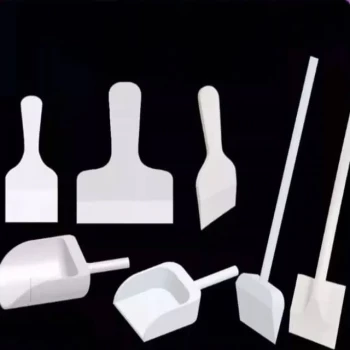
- Customizable PTFE Scrapers and Shovels for Demanding Applications
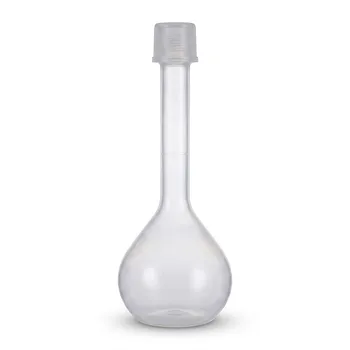
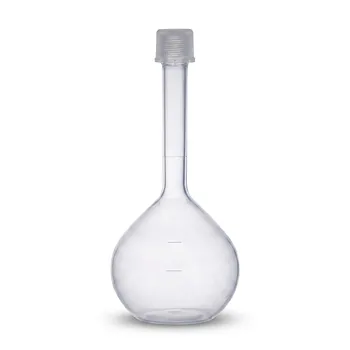
- High Purity PFA Volumetric Flask 1000ml 2000ml Constant Volume Bottle Acid Resistant Trace Analysis Custom Laboratory Labware
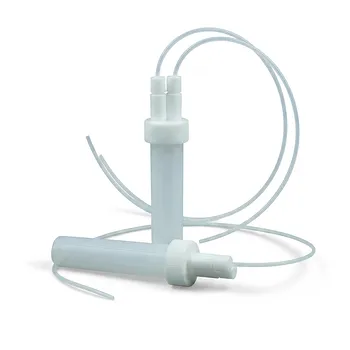
- High Purity PFA Reaction Bottle with Tubing Connection for Corrosive Chemical Synthesis and Trace Analysis
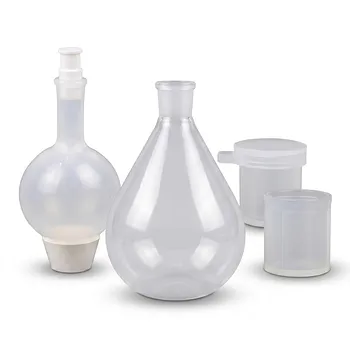
- PFA Eggplant Flask Custom Molded Pear Shaped Laboratory Flask Corrosion Resistant Glass Alternative
- PFA Distillation Flask for Water Quality Alkylmercury Determination and Laboratory Trace Analysis Heating Applications
People Also Ask
- Why are PTFE shovels considered cost-effective? Maximize ROI with Superior Durability
- How does the durability of PTFE shovels compare to plastic shovels? Discover the Superior Choice for Harsh Conditions
- What are the key properties that make PTFE shovels ideal for laboratory use? Ensure Sample Integrity with Chemically Inert Tools
- What are some specific applications of PTFE shovels in the laboratory? Ensure Sample Purity and Safety
- What are the advantages of PTFE shovels in terms of chemical resistance? Unmatched Inertness for Handling Corrosives