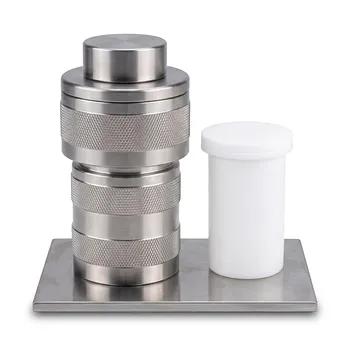
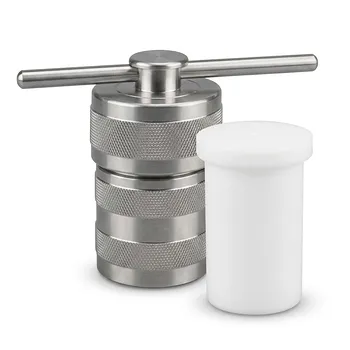
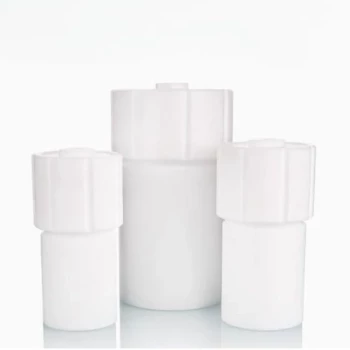
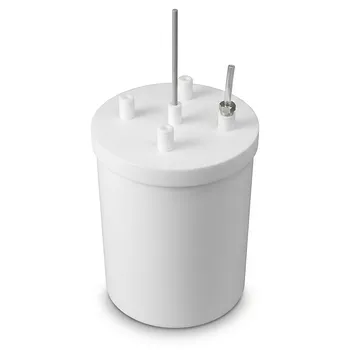
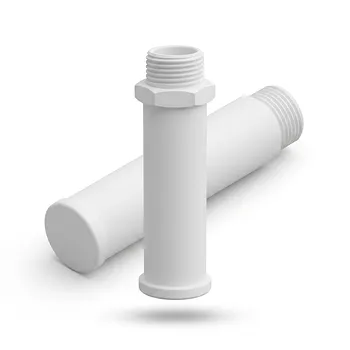
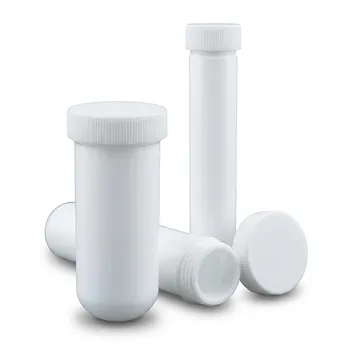
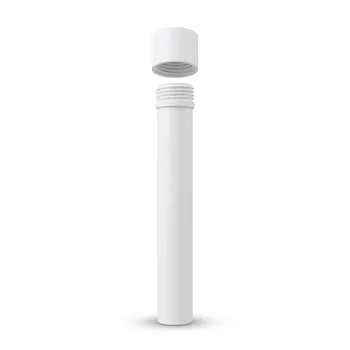
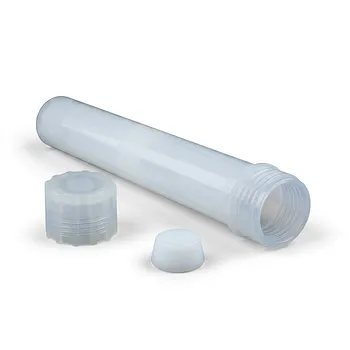
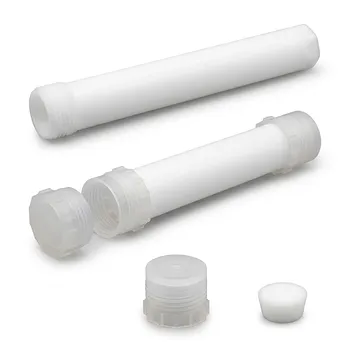
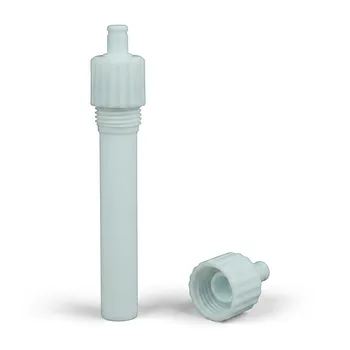
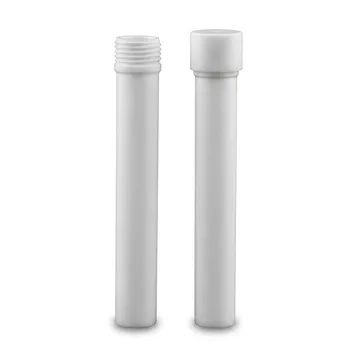
High-pressure digestion vessels offer a critical leap in performance over Carius tubes by enabling operating temperatures up to 280 °C and pressures reaching 125 bar. These extreme conditions allow for the total dissolution of highly resistant "refractory" minerals like spinels and chromites that frequently survive traditional digestion. By ensuring complete matrix breakdown, these vessels provide significantly more accurate data for Platinum Group Elements (PGE) and Rhenium (Re), which are otherwise underestimated.
High-pressure digestion vessels solve the "incomplete digestion" problem inherent in meteorite analysis by utilizing superior thermal and baric limits to dissolve resistant minerals. This ensures that the entire elemental budget of the sample is released into the solution for precise analytical measurement.
Surpassing the Physical Limits of Traditional Glass
Extreme Thermal and Baric Capabilities
Traditional Carius tubes are limited by the structural integrity of glass, whereas high-pressure vessels are designed to withstand up to 125 bar.
This pressure resistance allows the internal acid mixture to reach temperatures as high as 280 °C, far exceeding the atmospheric boiling points of the acids used.
Higher temperatures drastically increase the reaction kinetics, providing the energy necessary to break the robust chemical bonds found in meteorite matrices.
Sealed System Integrity
The sealed nature of these high-pressure environments prevents the loss of volatile metallic elements such as mercury or rhenium oxides.
In open or lower-pressure systems, these elements can escape as vapors, leading to a significant "negative bias" in the final data.
By maintaining a closed loop, the vessel ensures that 100% of the sample's mass remains contained within the liquid phase.
Ensuring Mineralogical Integrity
Dissolving Refractory Accessory Minerals
Meteorites often contain "accessory minerals" like spinels and chromite that are notoriously difficult to dissolve.
Traditional digestion methods often leave these minerals as a solid residue, effectively "locking away" the elements trapped inside them.
High-pressure vessels ensure these minerals are completely mineralized, releasing the Platinum Group Elements (PGE) into the ionic state required for analysis.
Elimination of Underestimation
When minerals do not fully dissolve, the resulting concentration data is fundamentally flawed and lower than the true value.
By achieving complete dissolution, high-pressure vessels remove the uncertainty associated with undigested residues.
This leads to a more reliable "elemental budget," which is essential for determining the age and origin of extra-terrestrial material.
Superior Material Science and Purity
Chemical Inertia of Fluoropolymers
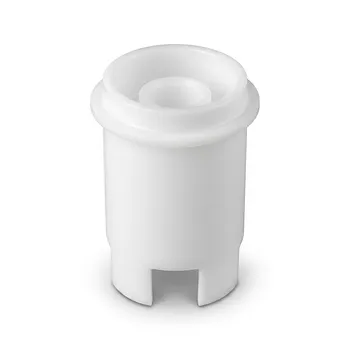
Many high-pressure vessels utilize PTFE (polytetrafluoroethylene) or PFA liners, which are exceptionally stable against aggressive acids like aqua regia.
These materials are non-stick, which minimizes sample loss during the transfer process from the vessel to the analytical instrument.
Furthermore, fluoropolymers have a much lower "trace element background" than glass, reducing the risk of contaminating the sample with lead or boron.
Microwave-Assisted Efficiency
When used in microwave systems, these vessels allow for rapid, uniform heating of the sample through direct energy absorption.
This reduces the total digestion time from several hours or days (common with Carius tubes) to mere minutes.
The combination of speed and high pressure makes the laboratory workflow more efficient while maintaining high analytical standards.
Understanding the Trade-offs
Equipment and Operational Costs
High-pressure digestion systems require a significant initial investment compared to the relatively low cost of glass Carius tubes.
The vessels require specialized heating blocks or microwave units, and the high-pressure seals must be regularly inspected or replaced to ensure safety.
Safety Risks and Complexity
Operating at 125 bar introduces mechanical risks; a failure in the vessel or seal can lead to explosive decompression.
Technicians require specific training to handle these systems safely and to ensure that the pressure is vented correctly post-digestion.
Applying This Technology to Your Research
Making the Right Choice for Your Goal
- If your primary focus is PGE or Rhenium quantification: You must use high-pressure vessels to ensure the complete dissolution of the refractory phases where these elements reside.
- If your primary focus is high-throughput screening of organic-rich samples: Microwave-assisted high-pressure vessels are ideal for rapidly mineralizing complex matrices like cattle manure or plant tissues.
- If your primary focus is minimizing laboratory blanks for trace lead or mercury: Utilize high-pressure PTFE vessels, as their chemical inertia and sealed environment prevent both contamination and volatile loss.
By utilizing high-pressure digestion vessels, geochemists can finally bridge the gap between "partial extraction" and "total recovery," ensuring that the secrets locked within meteorite samples are fully revealed.
Summary Table:
| Feature | High-Pressure Digestion Vessels | Traditional Carius Tubes |
|---|---|---|
| Max Pressure | Up to 125 bar | Low/Atmospheric limits |
| Max Temperature | Up to 280 °C | Limited by glass integrity |
| Mineral Dissolution | Complete (Spinels, Chromites) | Often incomplete (Residue remains) |
| Volatile Retention | Superior (Sealed system) | Risk of loss during heating |
| Material Purity | High (PTFE/PFA liners) | Potential Boron/Lead contamination |
| Processing Speed | Minutes (Microwave-assisted) | Hours to Days |
Precision Results Start with Superior Materials
Elevate your analytical accuracy with KINTEK’s elite range of laboratory supplies. Specializing exclusively in high-performance fluoropolymers, we provide the chemical inertia and thermal resilience required for the most demanding sample preparations.
Whether you require everyday basic labware (beakers, digestion tubes, reagent bottles) or advanced reaction apparatus like custom microwave digestion vessels, hydrothermal synthesis liners, and electrochemical cells, KINTEK is your ultimate partner. Our end-to-end custom CNC fabrication allows us to deliver everything from high-volume consumables (O-rings, gaskets, stirring bars) to complex, non-standard machined parts tailored to your specific research goals.
Don't let incomplete digestion or trace contamination compromise your data. Contact us today to see how our PTFE and PFA expertise can optimize your laboratory workflow!
References
- Yu‐Ling Zeng, Thomas Meisel. Comparison of Two Methods for Determination of Rhenium and Platinum‐Group Elements in Meteorites Using On‐Line and Off‐Line Matrix Separation Modes. DOI: 10.1111/ggr.70001
This article is also based on technical information from Kintek Knowledge Base .
Related Products
- PTFE Lined High Pressure Digestion Vessel 50ml High Temperature Hydrothermal Synthesis Tank
- 5ml High Pressure PTFE Digestion Vessel for Geological Mineral Analysis Corrosion Resistant Polytetrafluoroethylene TFM Digestion Inner Liner
- High Pressure PTFE Digestion Vessel Inner Cup Holder Custom Corrosion Resistant Low Background Teflon
- High Purity TFM Microwave Digestion Vessels for Trace Analysis and Custom Sample Preparation Systems
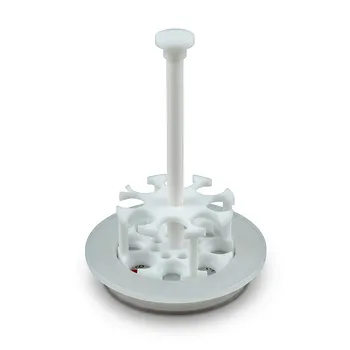
- High Performance TFM Microwave Digestion Vessel Rack 15 Position Customizable Sample Preparation Support
People Also Ask
- What are the benefits of using a PTFE-lined vessel for carbon-sulfur cathode treatment? Maximize Purity & Performance
- Why are PTFE-lined pressure digestion vessels required for the preparation of Ag/CeO2 catalysts? Purity & Performance
- What safety features are typically incorporated into high-pressure PTFE digestion vessel designs? Ensure Lab Safety
- What is the function of PTFE lined high-pressure vessels in g-C3N4 synthesis? Achieve High-Purity Material Growth
- Role of High-Pressure Digestion Tanks in Perovskite Synthesis: Achieve Superior Stability and Latent Heat