Fluoropolymer components and labware are non-stick because their molecular structure creates an exceptionally low-energy surface. In materials such as PTFE and PFA, fluorine atoms form a dense outer sheath around the carbon backbone, while rigid fluorinated chains reduce intermolecular attraction and resist deformation. Fluorinated segments also preferentially migrate toward the polymer–air or polymer–liquid interface, producing a fluorine-rich surface that liquids, residues, and particles have difficulty wetting or adhering to.
The key mechanism is interfacial: fluorine-rich chains create a chemically shielded, low-surface-energy boundary. Because that boundary interacts weakly with most substances, droplets spread less readily, residues detach more easily, and fluid-transfer surfaces retain less sample.
Why the Molecular Structure Produces Low Surface Energy
The carbon–fluorine outer sheath
Fluoropolymers replace many or all hydrogen atoms along the carbon chain with fluorine. Fluorine’s high electronegativity and low polarizability produce strongly bound C–F bonds and a dense electron-rich exterior around the backbone.
This outer sheath shields the carbon chain from direct interaction with neighboring molecules. The result is a surface with relatively weak attractive forces, which lowers its surface free energy.
Low polarizability limits molecular attraction
A material’s surface energy depends partly on how strongly its molecules can interact with surrounding molecules. Fluorine atoms hold their electrons tightly, so their electron clouds are difficult to distort.
That low polarizability reduces dispersion and induced-dipole interactions at the surface. Water, oils, dissolved compounds, and biological residues therefore have less energetic incentive to remain attached.
Chain conformation reinforces the shielding effect
In PTFE, the relatively large fluorine atoms create steric constraints around the carbon backbone. Rather than adopting a simple planar zigzag, the chain forms a helical conformation that maintains a fluorine-dominated exterior.
This geometry helps preserve the protective fluorine shell along the surface. It also contributes to PTFE’s low friction because contacting surfaces encounter a chemically uniform, weakly interacting fluorinated layer.
How Fluorinated Segments Organize at Interfaces
Thermodynamic segregation drives surface enrichment
When fluorinated and non-fluorinated segments coexist in a polymer, they do not interact equally favorably with their surroundings. The system lowers its overall free energy when fluorinated segments occupy interfaces where their low-energy character is advantageous.
Consequently, fluorine-rich groups tend to orient or segregate toward the polymer–air and polymer–liquid boundaries. The surface becomes more fluorine-dense than the bulk material.
The interface becomes chemically shielded
This organized outer layer acts as a barrier between the handled fluid and the more chemically active polymer backbone. It is not a separate coating in the usual sense; it is a surface structure produced by the polymer’s molecular composition and thermodynamics.
The same interfacial enrichment contributes to fluoropolymers’ chemical resistance. The exposed surface is difficult to wet, chemically attack, or penetrate under normal handling conditions.
Surface energy governs wetting and adhesion
A liquid wets a solid when the energetic benefit of contact is sufficient to overcome the cost of creating a new interface. Fluoropolymer surfaces offer little favorable interaction with most liquids, so contact is often less energetically favorable.
The practical result is a higher contact angle, weaker droplet attachment, and easier removal of residues. Very high apparent contact angles, including superhydrophobic behavior, generally require appropriate surface texture in addition to the fluoropolymer chemistry itself.
Why Fluid Transfer Components Retain Less Sample
Lower droplet adhesion reduces hold-up
Inside PTFE or PFA tubing, fittings, valves, and bottles, weak surface interactions reduce the tendency of droplets to remain on the wall. Less liquid becomes trapped as a residual film or isolated droplet after draining or dispensing.
This supports more complete volumetric transfer and improves recovery when the handled material is scarce or highly valuable.
Low friction reduces mechanical drag
PTFE has an exceptionally low coefficient of friction, commonly reported at approximately 0.04 under specified test conditions, compared with higher values for materials such as polyethylene. The exact value depends on load, speed, counterface, temperature, and test method.
In fluid-handling assemblies, low friction primarily benefits moving interfaces such as valve components, seals, and sliding parts. It can also support smoother handling and reduce the tendency of deposits to remain attached, although fluid pressure drop still depends mainly on geometry, viscosity, flow rate, and surface condition.
Weak adhesion limits cross-contamination
Residual sample is a major source of carryover between analytical runs. A low-energy fluoropolymer interface gives dissolved compounds, particulates, and biological material fewer opportunities to adhere strongly to the transfer path.
This does not eliminate contamination risk. Cleaning validation, compatible solvents, dead-volume control, material selection, and proper operating procedures remain essential.
Why the Same Mechanisms Matter in Analytical Labware
Trace analysis benefits from reduced retention
Trace-analysis beakers, digestion vessels, reaction containers, dishes, and tubing must preserve as much of the sample as possible. A low-adhesion fluoropolymer surface reduces losses to the vessel wall.
This is especially important when analyte concentrations are low, because a small retained fraction can materially affect recovery or introduce bias.
Chemical resistance protects sample integrity
The strong C–F framework and fluorine-rich interface resist many forms of chemical attack. PTFE and PFA are therefore widely used where aggressive reagents, corrosive mixtures, or demanding cleaning conditions would challenge other polymers.
Resistance is application-dependent, however. Temperature, mechanical stress, radiation, additives, and specific chemicals can alter performance.
Cleaning becomes more effective
A residue that does not strongly wet or bond to the surface is generally easier to rinse or remove. The combination of low adhesion and chemical resistance allows fluoropolymer labware to tolerate repeated cleaning without readily absorbing or reacting with many handled substances.
“Easy to clean” does not mean “self-cleaning.” Viscous, particulate, strongly adsorbing, or mechanically trapped residues may still require validated cleaning procedures.
Understanding the Trade-offs
Low wetting can hinder priming
The same non-wetting behavior that reduces retention can make a fluid path harder to prime completely. Air bubbles may persist, and aqueous liquids may not readily coat the interior of a highly hydrophobic surface.
System design may therefore require appropriate flushing, pressure control, geometry, or surface treatment.
Low surface energy is not universal chemical non-stick behavior
Fluoropolymers resist many interactions, but some substances can still adhere through mechanical entrapment, strong specific interactions, crystallization, or contamination of the surface. Surface roughness and scratches can also create sites where material becomes physically retained.
Performance should be evaluated with the actual analyte, solvent system, temperature, and cleaning process.
Friction values depend on test conditions
A quoted coefficient of friction is not an intrinsic constant for every application. Counterface material, pressure, speed, wear, temperature, and lubrication can substantially change the measured value.
The practical benefit is best understood as inherent lubricity and weak interfacial interaction, not as a guarantee of a particular friction coefficient in service.
Texturing can change apparent repellency
Fluoropolymer chemistry establishes low surface energy, but microscopic texture can amplify or reduce the observed contact angle. A textured surface may exhibit very high water repellency while still retaining contaminants in surface features.
For analytical labware, smoothness, cleanability, and controlled geometry may matter more than maximizing the contact angle.
Low adhesion does not replace contamination control
Fluoropolymer components can reduce carryover, but dead legs, valve cavities, seals, fittings, and poorly flushed sections may still retain sample. Material compatibility and system architecture are as important as the polymer’s surface chemistry.
How to Apply This to Your Project
The correct choice depends on whether the main requirement is sample recovery, fluid-path reliability, chemical resistance, or a balance of all three.
- If your primary focus is maximum sample recovery: Choose smooth, low-surface-energy PTFE or PFA contact surfaces and validate recovery with the actual analyte and solvent.
- If your primary focus is low carryover: Minimize dead volume and trapped geometries, then combine fluoropolymer components with a validated flushing and cleaning procedure.
- If your primary focus is reliable fluid transfer: Account for priming, bubble removal, pressure drop, valve friction, temperature, and the complete internal geometry rather than relying only on non-stick performance.
- If your primary focus is aggressive chemical handling: Evaluate the specific reagent, concentration, temperature, exposure time, mechanical stress, and permeation requirements before selecting a fluoropolymer grade.
- If your primary focus is electrical insulation: Perfluoropolymer chemistry also provides low polarizability and a low dielectric constant, but electrical performance must be checked under the intended frequency, temperature, and environmental conditions.
Fluoropolymers achieve non-stick, low-wetting performance by presenting a rigid, fluorine-rich, weakly interacting interface that minimizes both liquid adhesion and sample retention.
Summary Table:
| Mechanism | Key Feature | Practical Benefit |
|---|---|---|
| Carbon–fluorine outer sheath | Dense electron-rich exterior shields backbone | Low surface free energy, reduced adhesion |
| Low polarizability | Tightly held electrons reduce dispersion forces | Weak interaction with liquids/residues |
| Helical chain conformation | Fluorine atoms dominate surface geometry | Uniform low-friction, chemically inert surface |
| Interfacial segregation | Fluorinated segments migrate to surface | Fluorine-rich boundary, chemically shielded |
| Low surface energy | Weak wetting and adhesion | High contact angle, easy residue removal |
| Low coefficient of friction | ~0.04 for PTFE | Reduced drag in moving parts, less deposit retention |
Optimize your fluid handling with KINTEK's precision PTFE/PFA components. Our fluoropolymer labware and transfer systems are engineered to minimize sample retention and cross-contamination. From custom CNC-machined parts to comprehensive tubing, valves, and analytical vessels, we deliver solutions that enhance recovery and reliability. Contact us today to discuss your requirements and experience the KINTEK difference. Get in touch for a consultation or quote.
Related Products
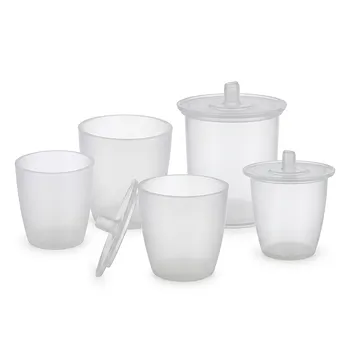
- High Purity PFA Crucible and Corrosion Resistant PTFE Beaker for Trace Analysis and Custom Laboratory Applications
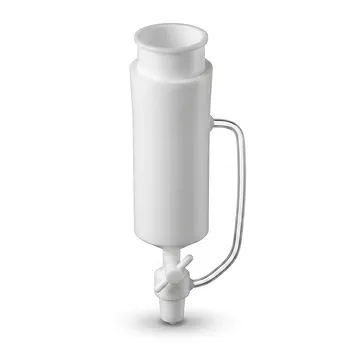
- Custom PTFE Constant Pressure Separatory Funnel Corrosion Resistant Low Background Labware for PFA Flasks
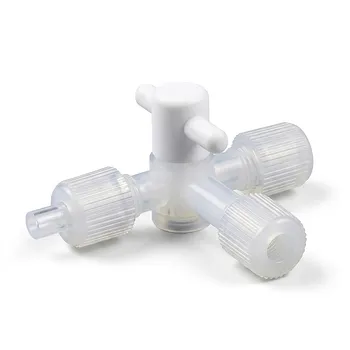
- Corrosion Resistant High Purity PFA Valve and Weldable Transparent Tubing for Semiconductor Fluid Transfer
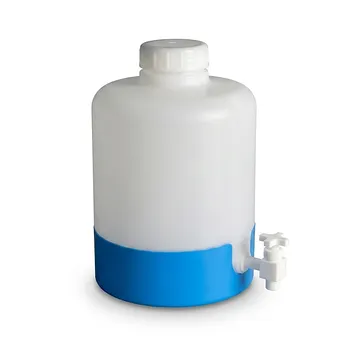
- High Corrosion Resistant PTFE Faucet Polytetrafluoroethylene Valve for Chemical Storage Drums and Fluid Transfer Systems Customizable Industrial Grade
- High Purity PFA Valves and Weldable Corrosion Resistant Transparent Tubing for Semiconductor Sensor Manufacturing Fluid Transfer
People Also Ask
- Why are high-purity vessels critical for BiFeO3 synthesis? Ensuring Phase Purity
- Why is the use of high-purity PFA or PTFE labware critical during TiO2 nanoparticle purification? Protect Sample Purity
- Why is high-purity PFA labware necessary for Znx@LS-2 zeolite ICP-OES analysis? Ensure Trace-Level Precision
- Why is high-purity PFA trace analysis labware used for MXene? Ensure Superior Material Integrity in Research
- Why is high-purity PFA trace analysis labware recommended for trace element detection? Achieve Gold Standard PPT Accuracy