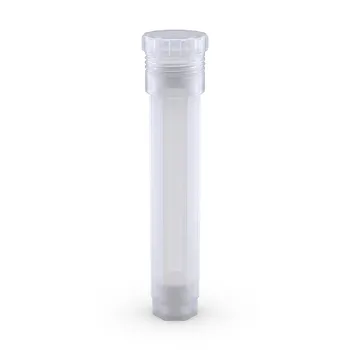
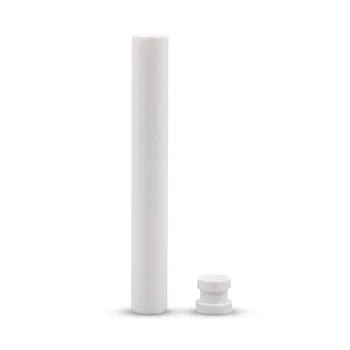
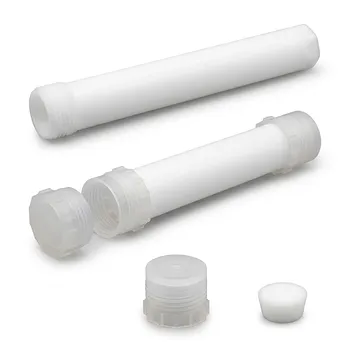
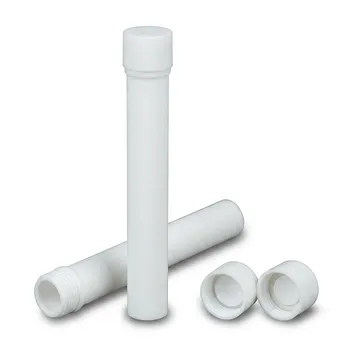
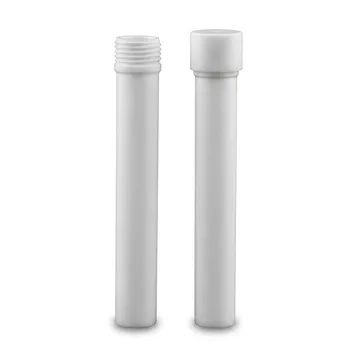
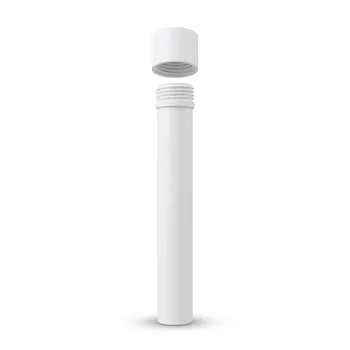
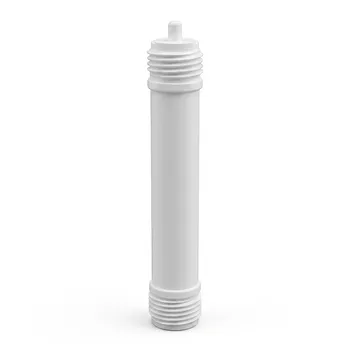
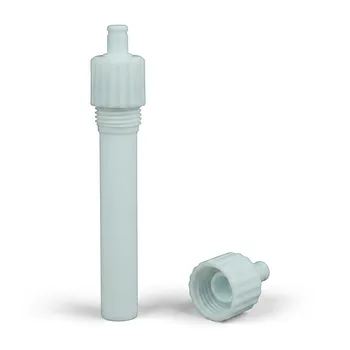
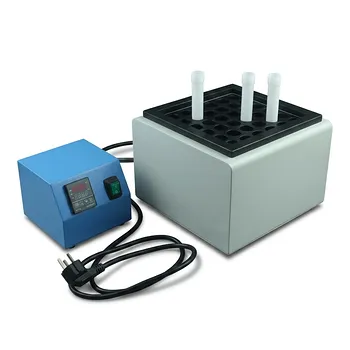
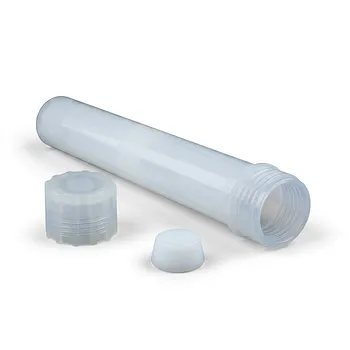
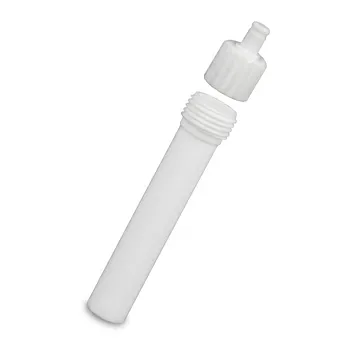
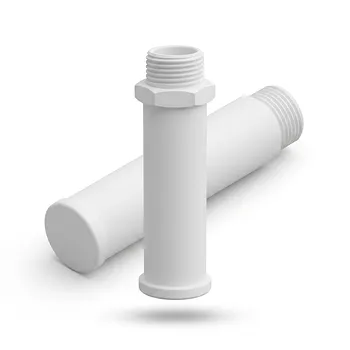
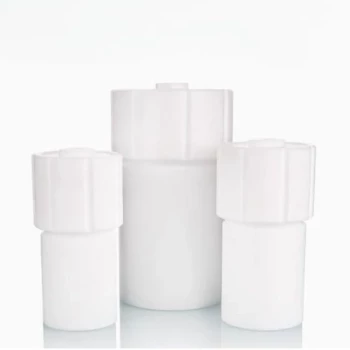
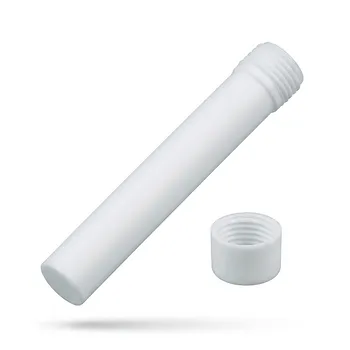
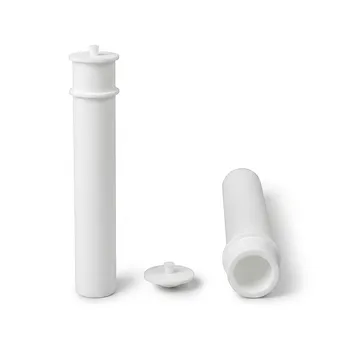
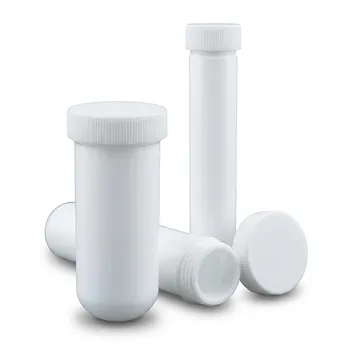
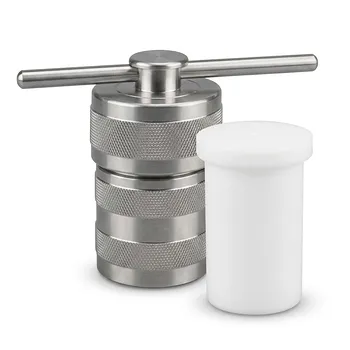
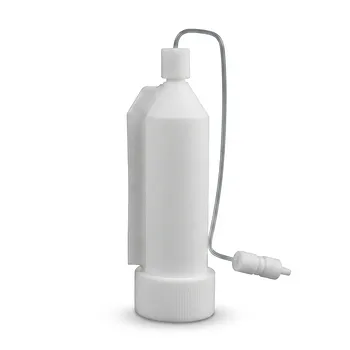
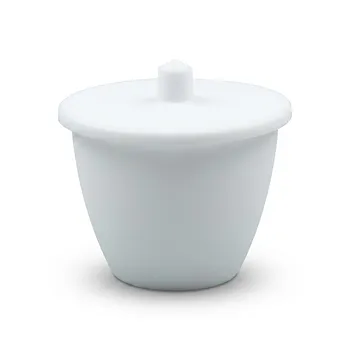
PTFE and PFA perform well in microwave digestion vessels because their fully fluorinated molecular structures combine exceptional chemical inertness with high thermal stability. The strong carbon–fluorine bonds resist attack from concentrated acids, strong bases, and organic solvents, while typical continuous-use capability up to approximately 260°C allows the materials to tolerate heated digestion conditions. Their low surface energy and very low trace-metal background also help prevent contamination and analyte loss.
The key advantage is the combination of chemical resistance, thermal stability, low contamination potential, and non-wetting behavior. Together, these properties allow PTFE and PFA vessels to protect both the sample and the vessel during aggressive, high-temperature digestion.
Why Fluoropolymers Resist Chemical Attack
Strong carbon–fluorine bonds
PTFE and PFA contain highly fluorinated carbon backbones. The strong carbon–fluorine bonds and the electronegativity of fluorine make these polymers difficult for aggressive reagents to degrade, dissolve, or swell.
This resistance is fundamentally different from that of ordinary hydrocarbon polymers, whose carbon–hydrogen structures are more vulnerable to oxidation and chemical attack.
Broad chemical inertness
PTFE and PFA are resistant to many of the reagents used in sample preparation, including concentrated nitric acid, hydrofluoric acid, other strong acids, strong bases, and organic solvents.
This chemical stability helps prevent corrosion, vessel degradation, and the release of polymer-derived contaminants into the sample.
Resistance to leaching and swelling
Under appropriate operating conditions, fluoropolymers resist dissolution and significant swelling when exposed to aggressive digestion reagents. That stability helps preserve the vessel’s geometry and sealing surfaces during repeated use.
The result is a chemically stable barrier between the sample and the surrounding equipment.
How Thermal Properties Support Microwave Digestion
High-temperature stability
PTFE and PFA maintain useful structural and chemical performance at elevated temperatures, with continuous service capability commonly cited up to approximately 260°C.
Microwave digestion can generate intense thermal stress, so this stability is essential for maintaining the vessel’s integrity during heated acid treatment.
Low reactivity during heating
Thermal resistance is not only about avoiding melting. The material must also avoid reacting with the digestion chemicals or producing contaminants when heated.
PTFE and PFA’s stable fluorinated structures help them remain chemically inert while exposed to heated acids and other reagents.
Pressure resistance depends on the vessel design
The fluoropolymer liner provides chemical and thermal resistance, but the complete microwave vessel’s pressure capability depends on its geometry, wall thickness, closure, support system, and operating specification.
Therefore, a material’s temperature rating should not be treated as permission to exceed the manufacturer’s pressure, temperature, reagent, or cycle limits.
How These Properties Protect Analytical Accuracy
Low trace-element background
High-purity PTFE and PFA can have extremely low background levels of metal impurities. This is particularly important when measuring trace concentrations of heavy metals or radioactive elements.
A vessel that contributes little or no measurable metal background reduces the risk of false elevation in analytical results.
Low surface energy and non-wetting behavior
The extremely low surface energy of these fluoropolymers minimizes wetting and adsorption on the vessel walls. This can reduce the retention of trace metals, including analytes such as cadmium, that might otherwise adhere to container surfaces.
Less adsorption improves analyte recovery and helps maintain consistency between samples.
Reduced cross-contamination
Non-wetting surfaces are easier to rinse and clean between digestion cycles. Combined with chemical inertness, this reduces the likelihood that residues from one sample will contaminate the next.
Better retention of volatile species
A properly engineered and sealed vessel can help limit the loss of volatile analytes during digestion. However, retention depends on the complete sealing system and process conditions, not solely on whether the liner is made from PTFE or PFA.
PTFE and PFA: Similar Strengths, Different Advantages
PTFE
PTFE is well known for its broad chemical resistance, low friction, non-wetting surface, and high-temperature performance. It is often used where maximum chemical inertness and reliable performance under harsh reagent exposure are the primary requirements.
PFA
PFA provides comparable chemical and thermal resistance while also being melt-processable. This makes it suitable for high-purity molded components and vessels with controlled, uniform geometries.
The appropriate choice depends on the vessel design, purity requirements, mechanical demands, and intended digestion conditions.
Understanding the Trade-offs
Temperature ratings are not universal
A stated operating temperature, such as approximately 260°C, is not a guarantee of suitability for every combination of reagent, pressure, duration, and heating cycle.
Users must follow the manufacturer’s limits for the specific vessel and application.
Fluoropolymer liners are not the entire pressure vessel
PTFE and PFA provide the chemically resistant interior surface, but external protection or reinforcement may be required to manage pressure safely.
The assembled vessel—not the polymer alone—must be evaluated for microwave operation.
Chemical resistance has operating limits
Fluoropolymers are highly resistant, but no material is universally inert under every condition. Strong oxidizing environments, unusual reagent combinations, prolonged exposure, mechanical damage, or temperatures beyond specification can change performance.
Routine inspection for deformation, cracking, surface damage, and seal wear remains necessary.
Making the Right Choice for Your Goal
The best material decision matches the polymer and vessel design to the analytical and operating requirements.
- If your primary focus is chemical compatibility: Select a high-purity PTFE or PFA vessel rated for the specific acids, bases, solvents, and digestion conditions involved.
- If your primary focus is trace-metal accuracy: Prioritize materials with very low elemental background and low surface adsorption to reduce contamination and analyte loss.
- If your primary focus is high-temperature operation: Confirm the complete vessel assembly’s temperature and pressure ratings rather than relying only on the polymer’s nominal service temperature.
- If your primary focus is repeatability and service life: Use a properly sealed, chemically compatible design and inspect the liner, closure, and sealing components regularly.
PTFE and PFA enable reliable microwave digestion by combining strong chemical resistance, high-temperature stability, and exceptionally low contamination potential within a properly engineered vessel system.
Summary Table:
| Property | PTFE | PFA | Benefit in Microwave Digestion |
|---|---|---|---|
| Chemical Resistance | Excellent | Excellent | Withstands concentrated acids, bases, and solvents |
| Thermal Stability | Up to 260°C | Up to 260°C | Maintains integrity during high-temperature digestion |
| Trace Metal Background | Very low (high-purity grades) | Very low (high-purity grades) | Minimizes contamination for trace analysis |
| Surface Energy | Very low (non-wetting) | Very low (non-wetting) | Reduces analyte adsorption and eases cleaning |
| Processability | Not melt-processable (compression molded) | Melt-processable (injection molded) | Allows complex, uniform vessel designs |
Looking for high-purity PTFE and PFA microwave digestion vessels that deliver reliable, contamination-free results? At KINTEK, we specialize in advanced fluoropolymer labware, from standard vessels to custom components. Our end-to-end CNC machining capabilities ensure precise, high-performance solutions for your most demanding applications. Contact our experts today to find the perfect vessel for your lab — Get in touch!
Related Products
- High Purity PTFE PFA Microwave Digestion Vessels Custom Acid Digestion Tanks for Laboratory Sample Preparation
- 15 Position Customizable Microwave Digestion Vessel Rack High Purity PTFE PFA Non Stick Laboratory Sample Preparation System
- High Purity Laboratory Microwave Digestion Vessel Customizable PFA PTFE Digestion Tank for Analytical Sample Preparation Trace Metal Analysis
- High Purity PTFE Microwave Digestion Vessels for 44 Position Systems Trace Analysis Acid Digestion and Evaporation
- Custom High Purity PTFE Microwave Digestion Vessels and Graphite Block Compatible Acid Evaporation Tanks for Trace Metal Analysis
People Also Ask
- What safety features are commonly integrated into microwave digestion vessels? Ensuring High-Pressure Laboratory Safety
- What are the advantages of using microwave digestion vessels for environmental analysis? Boost speed and sample accuracy.
- What are the advantages of using microwave digestion vessels? Optimize EG@MO synthesis with superior thermal control.
- Why are high-strength PFA microwave digestion vessels ideal for complex samples? Ensure Pure & Precise Trace Analysis
- How do microwave digestion vessels support pharmaceutical elemental impurity testing? Achieve Precise USP Compliance