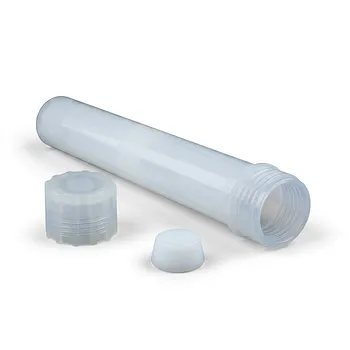
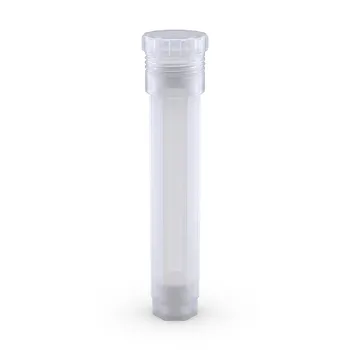
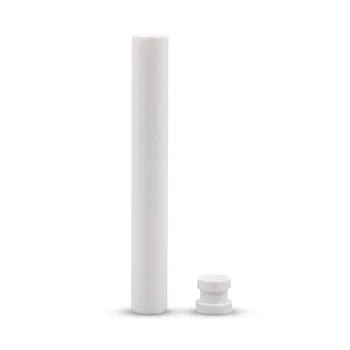
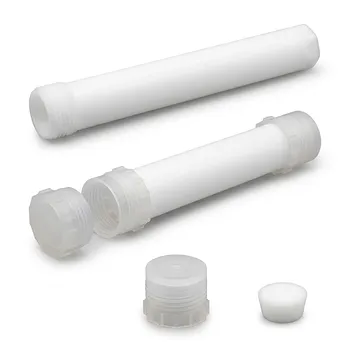
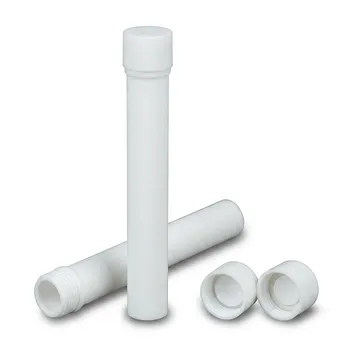
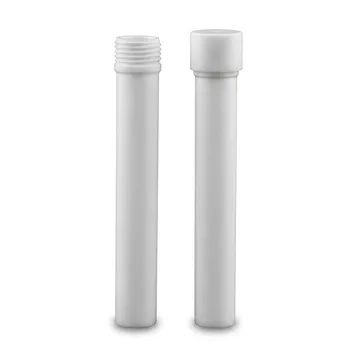
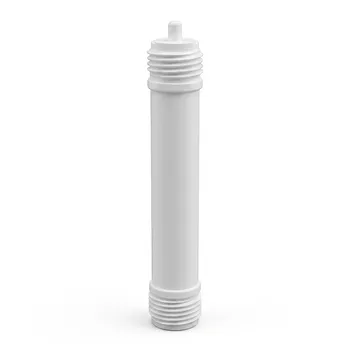
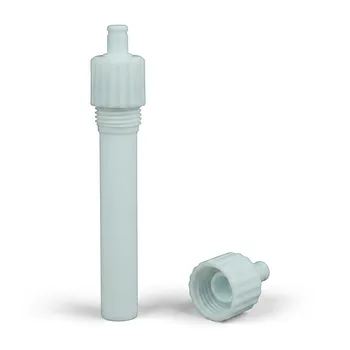
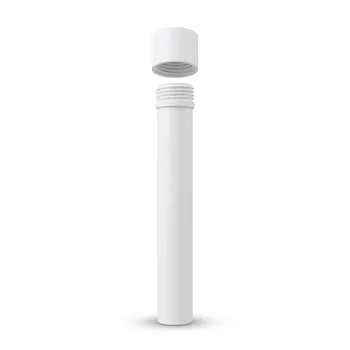
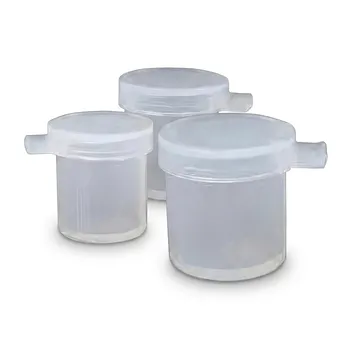
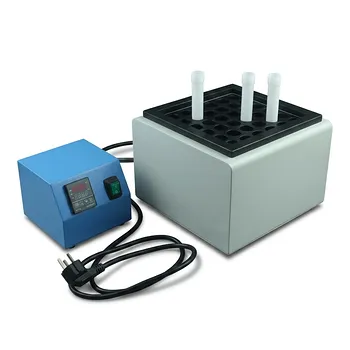
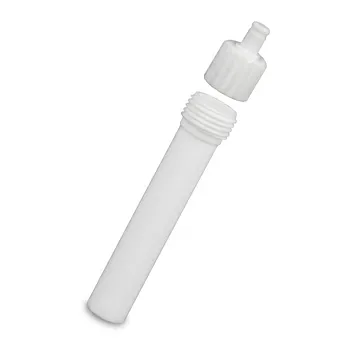
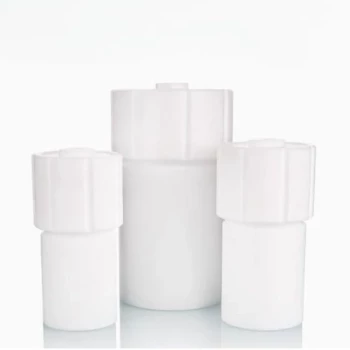
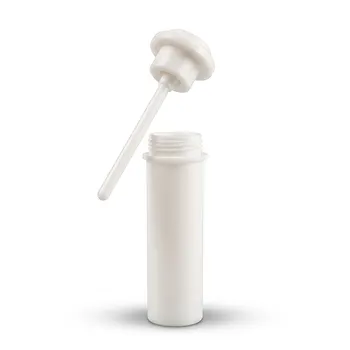
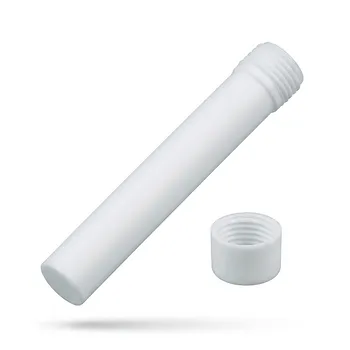
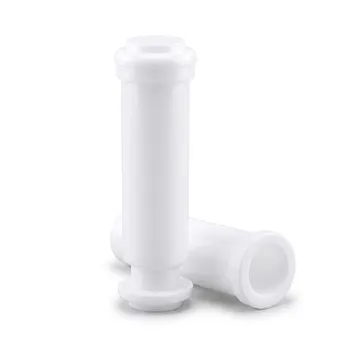
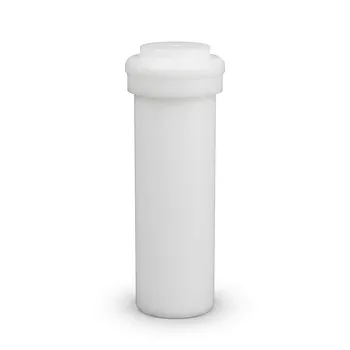
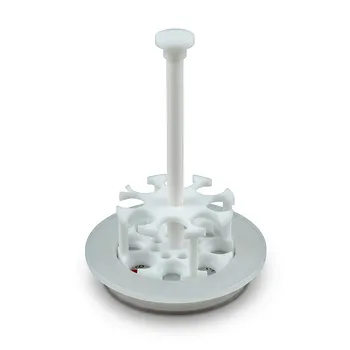
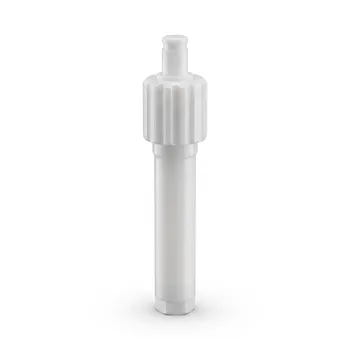
High-strength PFA microwave digestion vessels are the industry standard for complex sample pretreatment because they provide a chemically inert, high-purity environment capable of withstanding extreme thermal and barometric stress. These vessels are microwave-transparent, allowing energy to reach the sample directly while maintaining structural integrity under high pressure and corrosive acid conditions. This ensures complete sample decomposition without introducing background contamination or losing trace analytes to the vessel walls.
The Core Takeaway: High-strength PFA vessels ensure the accuracy of precision analysis by combining extreme chemical resistance with ultra-low impurity leaching. Their ability to facilitate high-temperature reactions while minimizing analyte adsorption makes them indispensable for decomposing complex matrices in trace element detection.
The Structural Advantages of PFA in Microwave Systems
Superior Microwave Transparency
PFA (Perfluoroalkoxy) is naturally microwave-transparent, meaning the material does not absorb the energy intended for the sample. This allows for direct, efficient heating of the acid and sample matrix, resulting in faster and more uniform digestion.
Resistance to Extreme Temperature and Pressure
Complex samples often require high-power environments (up to 1600W) and high internal pressures (up to 800 psi) to break down. High-strength PFA is engineered to maintain its physical structural integrity in these high-temperature, strong-acid environments without deforming or failing.
Safeguarding Analytical Integrity
Ultra-Low Background Contamination
For precision analysis like ICP-MS, even microscopic impurities can ruin a dataset. High-purity PFA has an exceptionally low background value for metallic elements, ensuring that no external contaminants are leached from the vessel into the sample solution.
Minimizing Analyte Adsorption and Loss
PFA features an exceptionally smooth inner surface and extremely low surface energy. This prevents target analytes, such as trace metals like cadmium, from adsorbing onto the container walls, which significantly improves recovery rates and prevents cross-contamination.
Efficiency in Decomposing Complex Matrices
Facilitating Super-Boiling Point Reactions
The high-pressure seal of these vessels allows acids to reach temperatures significantly higher than their atmospheric boiling points. This increased thermal energy accelerates the reaction, allowing strong acids like nitric or hydrochloric acid to decompose even the most stubborn matrices.
Complete Mineralization of Organic Matter
Complex organic matrices, such as fats, proteins, or soil, require intense conditions for complete mineralization. PFA vessels allow for the total decomposition of these substances into clear, particle-free solutions ready for instrumental analysis.
Understanding the Trade-offs
Material Limitations and Maintenance
While PFA is highly durable, it is softer than some alternative materials and can be prone to scratching if cleaned with abrasive tools. Scratches on the inner surface can increase the surface area for potential adsorption, necessitating careful handling and specialized cleaning protocols.
Cost vs. Performance
PFA vessels are typically more expensive than standard PTFE alternatives due to their superior purity and manufacturing process. However, for labs performing trace-level analysis, the reduction in sample re-runs and the assurance of data quality usually outweigh the initial capital investment.
How to Apply This to Your Project
When selecting a digestion vessel, your choice should be dictated by the sensitivity of your analysis and the nature of your samples.
- If your primary focus is trace-level heavy metal analysis: Prioritize PFA vessels for their ultra-low background leaching and smooth surfaces to ensure the lowest possible detection limits.
- If your primary focus is the decomposition of complex organic matrices: Ensure you select high-strength vessels rated for high-pressure operation (800 psi+) to facilitate complete mineralization of fats and proteins.
- If your primary focus is preventing cross-contamination in high-throughput labs: Utilize the non-stick properties of PFA to ensure easier cleaning and minimal carry-over between different sample types.
By matching the unique material properties of PFA to your specific analytical requirements, you can achieve the highest levels of precision and reliability in your laboratory results.
Summary Table:
| Feature | Technical Advantage | Analytical Benefit |
|---|---|---|
| Microwave Transparency | Minimal energy absorption by material | Rapid, uniform sample heating |
| High Purity PFA | Ultra-low metallic background leaching | Reliable trace element detection (ICP-MS) |
| Pressure Resistance | Structural integrity up to 800 psi | Complete mineralization of complex matrices |
| Low Surface Energy | Exceptionally smooth, non-stick surface | High analyte recovery; zero cross-contamination |
| Chemical Inertness | Resistant to concentrated strong acids | Safe handling of aggressive digestion reagents |
Elevate Your Analytical Precision with KINTEK
Maximize the accuracy of your trace analysis with high-performance fluoropolymer solutions from KINTEK. We specialize in manufacturing a comprehensive range of laboratory supplies crafted exclusively from high-purity PTFE and PFA, designed to withstand the most demanding chemical environments.
From essential labware (beakers, crucibles, reagent bottles, and centrifuge tubes) and sample prep tools (separatory funnels, filters, and pipettes) to advanced reaction apparatus like our high-strength microwave digestion vessels, hydrothermal synthesis liners, and custom electrochemical cells, KINTEK covers every stage of your workflow.
Why partner with us?
- End-to-End Customization: Our expert CNC fabrication team can deliver bespoke laboratory setups and complex non-standard machined parts tailored to your unique specifications.
- Unrivaled Purity: Our focus on high-performance fluoropolymers ensures minimal background contamination and maximum durability.
- Comprehensive Support: We provide everything from high-volume consumables like stirring bars and O-rings to sophisticated fluid transfer components.
Ready to optimize your sample pretreatment and protect your analytical integrity? Contact our technical experts today to discuss your project requirements or request a custom quote!
References
- Xinyi Li, Dandan Ma. Rational Fabrication of One‐Dimensional TiO <sub>2</sub> Nanowires for Enhanced Supercapacitor and Rechargeable Lithium Ion Battery. DOI: 10.1002/slct.202500115
This article is also based on technical information from Kintek Knowledge Base .
Related Products
- High Purity Corrosion Resistant PFA Microwave Digestion Vessels 55ml Replacement Tubes for Trace Analysis
- High Purity PTFE PFA Microwave Digestion Vessels Custom Acid Digestion Tanks for Laboratory Sample Preparation
- 15 Position Customizable Microwave Digestion Vessel Rack High Purity PTFE PFA Non Stick Laboratory Sample Preparation System
- High Purity Laboratory Microwave Digestion Vessel Customizable PFA PTFE Digestion Tank for Analytical Sample Preparation Trace Metal Analysis
- High Purity PTFE Microwave Digestion Vessels for 44 Position Systems Trace Analysis Acid Digestion and Evaporation
People Also Ask
- What safety features are commonly integrated into microwave digestion vessels? Ensuring High-Pressure Laboratory Safety
- What are the advantages of using microwave digestion vessels for environmental analysis? Boost speed and sample accuracy.
- What are the advantages of using microwave digestion vessels? Optimize EG@MO synthesis with superior thermal control.
- How do microwave digestion vessels support pharmaceutical elemental impurity testing? Achieve Precise USP Compliance
- Why do fluoropolymer labware and microwave digestion vessels exhibit exceptional thermal stability and chemical inertness compared to standard non-fluorinated laboratory plastics?