Fluoropolymer labware remains stable because its molecular backbone is unusually difficult to break or attack. Fluorine forms very strong carbon–fluorine bonds, and the closely packed fluorine atoms create an electron-rich protective layer around the carbon chain. This combination helps PTFE, PFA, and related fluoropolymers resist thermal decomposition, concentrated acids, bases, solvents, and contamination more effectively than common plastics such as polyethylene or polypropylene.
The key difference is molecular protection: strong C–F bonds resist bond-breaking reactions, while fluorine atoms shield the carbon backbone from chemical attack. This gives fluoropolymer labware exceptional chemical inertness and strong thermal performance, although each material still has defined temperature, pressure, and chemical limits.
Why the Molecular Structure Matters
Strong Carbon–Fluorine Bonds Resist Degradation
The carbon–fluorine bond has a bond dissociation energy of approximately 116 kcal/mol, or about 485 kJ/mol. This is substantially stronger than many carbon–hydrogen and carbon–chlorine bonds found in conventional polymer structures.
Thermal degradation and chemical decomposition often begin when heat or reactive chemicals break polymer bonds. Because C–F bonds require substantial energy to break, fluorinated chains are less vulnerable to chain scission and oxidation.
Fluorine Creates a Protective Molecular Sheath
Fluorine is highly electronegative, with a Pauling electronegativity of approximately 4.0. Its electron-rich atoms surround much of the carbon backbone, making it more difficult for reagents to reach and react with the underlying carbon chain.
The fluorine atoms also have a larger effective size than hydrogen atoms. This physical coverage contributes to steric shielding, while the low polarizability of the C–F bond reduces the polymer's tendency to participate in many chemical interactions.
Progressive Fluorination Increases Resistance
As hydrogen atoms are replaced with fluorine, the polymer generally becomes less susceptible to oxidation, solvent attack, and other chemical reactions. Perfluorinated polymers, including PTFE and PFA, take this effect further by placing fluorine throughout the carbon backbone structure.
This is why fully fluorinated materials generally provide stronger resistance than partially fluorinated plastics, although the exact performance depends on the polymer architecture, processing, crystallinity, and application conditions.
How This Produces Thermal Stability
The Backbone Resists Chemical Breakdown
High temperature accelerates chemical reactions, including oxidation and polymer-chain decomposition. Fluoropolymer chains resist these reactions because their primary bonds are strong and their carbon framework is shielded.
As a result, PTFE and PFA can maintain useful structural and chemical performance during elevated-temperature laboratory operations where many standard plastics soften, deform, oxidize, or release degradation products.
Thermal Stability Is More Than a High Melting Point
Fluoropolymer performance should not be described only as “high heat resistance.” A material may remain chemically stable while still softening, creeping, or losing mechanical strength as temperature rises.
PTFE, for example, has a high melting transition but can deform under load at elevated temperature. PFA is often selected when melt-processability, improved fabrication, or clearer visual inspection is important. The correct operating temperature therefore depends on both chemical exposure and mechanical loading.
Microwave Digestion Benefits From This Stability
Microwave digestion combines aggressive reagents with rapid heating and pressure. Vessel materials must tolerate the chemical medium, the temperature profile, and the mechanical stresses associated with a closed or pressurized system.
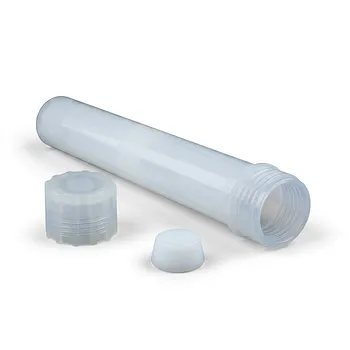
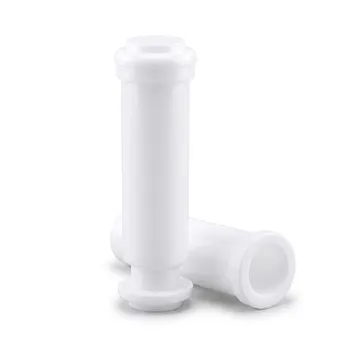
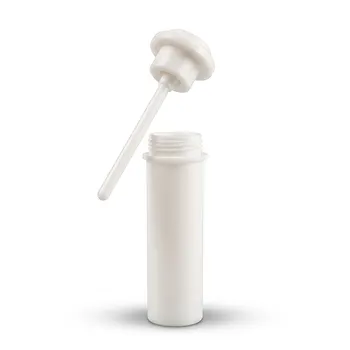
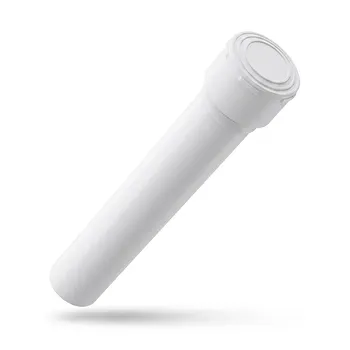
Fluoropolymer vessels and liners are valuable because they provide a chemically inert reaction surface while retaining useful integrity under the specified digestion conditions. The polymer helps prevent the vessel from contributing trace contaminants to the sample.
Why Chemical Inertness Is Especially Valuable in Laboratory Work
Resistance to Acids, Bases, and Solvents
Fluoropolymers are resistant to many concentrated acids, aggressive bases, and organic solvents that attack standard non-fluorinated plastics. Their low chemical reactivity reduces swelling, embrittlement, dissolution, and surface degradation.
This makes them suitable for digestion vessels, crucibles, beakers, fluid fittings, sample containers, and reaction components used with corrosive reagents.
Low Contamination and Leaching
In trace analysis, the container is part of the measurement system. Extractable substances, corrosion products, or degraded polymer fragments can alter results even when the visible equipment appears intact.
Fluoropolymer labware generally minimizes these risks because it is difficult to dissolve or chemically attack. Its low reactivity and low tendency to leach help preserve sample purity, particularly during concentrated-acid digestion and long chemical storage.
Nonstick and Low-Friction Surfaces Help Handling
The same fluorinated surface chemistry that reduces chemical interaction also produces low surface energy and a low coefficient of friction. Samples and residues are less likely to adhere strongly to the vessel wall.
This can simplify cleaning and reduce carryover, although cleaning protocols remain necessary for analytical work.
How Fluoropolymers Compare With Standard Plastics
Polyolefins Have More Accessible C–H Bonds
Materials such as polyethylene and polypropylene contain predominantly carbon–hydrogen backbones. These materials are useful, economical, and chemically resistant in many ordinary applications, but their C–H bonds and carbon framework are generally more vulnerable to oxidation, heat, and certain aggressive chemicals than a fully fluorinated backbone.
They may soften, swell, embrittle, or degrade sooner under the combined effects of high temperature and corrosive reagents.
Fluorine Changes Surface and Bulk Behavior
Fluorination does not merely add one stronger bond to an otherwise unchanged plastic. It changes the polymer's electronic environment, surface energy, polarity, permeability, and interaction with surrounding chemicals.
The result is a material whose backbone is both more difficult to attack and less likely to interact strongly with many reagents.
Material Selection Still Depends on the Specific Polymer
“Fluoropolymer” covers several materials with different properties. PTFE, PFA, FEP, ETFE, and other fluoropolymers do not have identical temperature ratings, permeability, mechanical behavior, or compatibility profiles.
For microwave digestion, the vessel design, liner thickness, pressure rating, reagent mixture, temperature, and exposure time must be evaluated together with the polymer choice.
Understanding the Trade-offs
Chemical Inertness Does Not Mean Universal Compatibility
Fluoropolymers resist a very broad range of chemicals, but no material is immune to every condition. Certain highly reactive fluorinating agents, molten alkali metals, and specialized high-temperature chemistries can attack fluoropolymers.
Compatibility charts and the equipment manufacturer's operating limits should govern selection.
Mechanical Strength Can Limit Temperature Use
High-temperature chemical stability does not guarantee dimensional stability under pressure. PTFE can creep under sustained mechanical load, and rapid temperature changes can contribute to distortion or stress.
Pressurized microwave vessels therefore rely on the complete vessel system, including the fluoropolymer liner, support structure, seals, and pressure-control design.
Permeation and Contamination Require Attention
Although fluoropolymers resist dissolution and leaching, some chemicals can permeate them over time. Porosity, processing residues, surface damage, and repeated use can also affect cleanliness.
For sensitive analyses, vessels should be inspected, cleaned, conditioned, and replaced according to the laboratory's validation requirements.
Bond Energy Does Not Fully Predict Service Life
The strength of the C–F bond explains much of the material's resistance, but real-world performance also depends on polymer morphology, defects, additives, stress, pressure, heating rate, and chemical concentration.
A laboratory should use published compatibility and temperature data rather than infer a safe operating limit from bond energy alone.
Making the Right Choice for Your Goal
Select the material and vessel design according to the complete chemical, thermal, mechanical, and analytical requirements.
- If your primary focus is trace-element accuracy: Choose clean, validated fluoropolymer labware to reduce leaching, extractables, and sample contamination.
- If your primary focus is microwave acid digestion: Use a fluoropolymer liner or vessel specifically rated for the digestion chemistry, temperature, pressure, and cycle duration.
- If your primary focus is maximum chemical resistance: Prefer a highly fluorinated material such as PTFE or PFA, while checking compatibility with the exact reagents.
- If your primary focus is dimensional stability under load: Evaluate creep, pressure rating, vessel supports, and temperature limits rather than relying on chemical resistance alone.
- If your primary focus is routine laboratory economy: Use standard plastics where their temperature and chemical limits are adequate, reserving fluoropolymers for demanding conditions.
Fluoropolymer labware performs exceptionally because strong C–F bonds and fluorine shielding protect the polymer from both chemical attack and thermal degradation, provided the material is used within its validated limits.
Summary Table:
| Feature | Fluoropolymer Labware | Standard Plastics (e.g., Polyethylene, Polypropylene) |
|---|---|---|
| Bond Strength | Strong C-F bonds (approx. 116 kcal/mol) resist degradation | Weaker C-H bonds more vulnerable to heat and chemicals |
| Chemical Resistance | Resists concentrated acids, bases, solvents | Limited resistance to aggressive reagents |
| Thermal Stability | High melting point but caution under mechanical load | Soften, deform, or degrade at high temperatures |
| Contamination Risk | Minimal leaching and extractables | Higher risk of contamination and leaching |
| Surface Properties | Non-stick and low friction | Higher surface energy and adhesion |
| Applications | Ideal for trace analysis and microwave digestion | Suitable for routine lab tasks with less harsh conditions |
Enhance your lab's performance with our premium PTFE and PFA labware, engineered for exceptional thermal and chemical resistance. Whether you need beakers, digestion vessels, or custom CNC-machined parts, our products ensure purity and durability. Contact us today at our contact form to discuss your specific needs and discover how KINTEK can support your demanding applications.
Related Products
- High Purity Corrosion Resistant PFA Microwave Digestion Vessels 55ml Replacement Tubes for Trace Analysis
- Custom High Purity TFM Microwave Digestion Vessel 100ml for Analytical Laboratory Sample Preparation
- Custom TFM Microwave Digestion Vessels for ICP-OES Analysis High Purity Fluoropolymer Sample Preparation Labware
- High Temperature TFM Microwave Digestion Vessel Lid Compatible with Acid Evaporation Systems and Laboratory Pretreatment Equipment
- Custom High Purity TFM Microwave Digestion Vessel 100ml Capacity Compatible Replacement Liner for Professional Analytical Instruments
People Also Ask
- Why are high-strength PFA microwave digestion vessels ideal for complex samples? Ensure Pure & Precise Trace Analysis
- What safety features are commonly integrated into microwave digestion vessels? Ensuring High-Pressure Laboratory Safety
- What are the advantages of using microwave digestion vessels for environmental analysis? Boost speed and sample accuracy.
- What are the advantages of using microwave digestion vessels? Optimize EG@MO synthesis with superior thermal control.
- How do microwave digestion vessels support pharmaceutical elemental impurity testing? Achieve Precise USP Compliance