Controlled lower stretch rates of approximately 100% per second can make PTFE extrudate expansion more stable, durable, and economical. Compared with ultra-fast stretching, this rate reduces startup breakage, lowers mechanical demands on the expansion line, and can still support high stretch ratios with uniform dimensions and smooth surfaces. The main advantage is better process control without necessarily sacrificing expansion performance.
A controlled stretch rate gives the process more operating margin: the extrudate is less likely to break, the equipment can be simpler and less heavily loaded, and high expansion ratios remain achievable when the resin and temperature are properly matched.
Why Lower Stretch Rates Improve PTFE Expansion
They Reduce Extrudate Breakage
Ultra-fast stretching can make PTFE extrudates vulnerable to failure, particularly during line startup. The risk is greater when the material encounters the initial slow-speed zones or other transitions in the processing line.
A rate near 100% per second, such as approximately 5.33 cm/s under the relevant process geometry, moderates the deformation and reduces sudden mechanical loading. This improves continuity while the line reaches its normal operating conditions.
They Increase Process Stability
Expansion is not governed only by the final stretch ratio. The extrudate must pass through changing speeds, temperatures, and tension conditions without losing structural integrity.
A controlled lower rate provides a wider practical operating margin. This makes it easier to maintain a stable process across startup, steady-state production, and speed transitions.
They Reduce Demands on the Stretching Equipment
Lower stretch rates generally place less instantaneous mechanical strain on the stretching apparatus. The equipment does not need to deliver the same rapid acceleration, peak force, or dynamic response required by ultra-fast expansion.
This can reduce equipment complexity and support a more practical design for continuous sheet or tubing production. It may also lower operational and maintenance costs over the life of the line.
High Stretch Ratios Remain Possible
Controlled Rates Do Not Necessarily Limit Expansion
A lower stretch rate should not be interpreted as a low-performance processing condition. With suitable high-grade PTFE fine powders and appropriate thermal conditions, controlled rates near 300°C can produce ultimate stretch ratios exceeding 30:1 to 50:1.
The relevant consideration is whether the selected resin and process conditions support the desired expansion ratio at the chosen rate.
Uniformity Is Preserved
Controlled stretching can support excellent dimensional uniformity across the expanded product. This matters for ePTFE sheets and tubes because uneven expansion can affect thickness, porosity, strength, and downstream fit.
A lower rate also helps avoid localized deformation that can produce variations in geometry or surface quality.
Surface Appearance Can Improve
The reference process conditions are associated with a smooth surface appearance at high stretch ratios. This indicates that controlled expansion can deliver not only high elongation but also a more consistent finished surface.
Surface smoothness is especially valuable where the ePTFE product must meet appearance, sealing, handling, or dimensional requirements.
What This Means for Continuous Production
Startup Becomes More Manageable
Startup is often one of the most failure-prone phases of an expansion process. The line may contain speed mismatches before all zones reach their intended settings.
Using a controlled lower stretch rate reduces the likelihood that these transient conditions will immediately break the extrudate. That can reduce scrap and shorten the time needed to reach stable production.
The Process Is More Forgiving
A lower rate can make the line less sensitive to small variations in tension, alignment, temperature, or material behavior. It does not eliminate the need for precise control, but it reduces the severity of some disturbances.
This is particularly important for continuous production, where an extrudate break can interrupt the entire line rather than affect only one isolated part.
Operating Costs Can Be Lower
Fewer breaks mean less wasted material, fewer restarts, and less operator intervention. Reduced mechanical demands can also simplify the expansion system and limit the need for highly specialized high-speed hardware.
The economic benefit therefore comes from the combined effect of higher uptime, lower scrap, and less demanding equipment.
Understanding the Trade-offs
Not Every PTFE Resin Has the Same Rate Capability
Some PTFE resins can be expanded at high stretch rates, while others may require a more controlled rate to maintain integrity. The approximately 100% per second value is therefore a useful processing condition, not a universal rule for every formulation.
The resin grade, extrudate geometry, temperature, stretch ratio, and line configuration must be evaluated together.
Lower Rate Can Affect Throughput
A controlled rate may reduce the maximum line speed or expansion throughput compared with an aggressively optimized high-rate process. The practical comparison should include total output after accounting for breaks, scrap, and restarts.
A nominally faster process is not necessarily more productive if it has poor stability.
Temperature Control Remains Critical
The reported high stretch ratios are associated with processing near 300°C. Stretch rate alone cannot guarantee uniform expansion or a smooth surface.
Temperature must remain within the appropriate window for the selected PTFE material, because insufficient or excessive thermal conditioning can undermine the benefits of rate control.
Cutting Speed Is a Separate Processing Issue
The supplementary reference concerns machining PTFE, where a lower cutting speed reduces heat generation and helps prevent softening and deformation. That principle should not be directly treated as evidence for ePTFE expansion, because cutting and stretching involve different deformation mechanisms.
The expansion advantage of a lower rate is primarily related to extrudate integrity, tension control, equipment loading, and process stability.
Making the Right Choice for Your Goal
The best stretch rate balances expansion performance with reliability across the full production cycle.
- If your primary focus is startup reliability: Use a controlled lower stretch rate near 100% per second to reduce extrudate breakage during speed transitions and initial line operation.
- If your primary focus is equipment simplicity: Favor the lower rate because it reduces instantaneous mechanical demands and can support less complex stretching hardware.
- If your primary focus is maximum expansion ratio: Verify the resin and thermal conditions first, since controlled rates near 300°C can still achieve ratios above 30:1 to 50:1.
- If your primary focus is product uniformity: Use controlled stretching with close temperature and tension control to preserve dimensional consistency and a smooth surface.
- If your primary focus is total production economics: Compare completed output, scrap, downtime, and maintenance rather than judging the process by stretch rate alone.
A controlled lower stretch rate gives PTFE expansion a practical combination of stability, high expansion capability, and economic viability.
Summary Table:
| Advantage | Description |
|---|---|
| Reduced Breakage | Lower stretch rates minimize extrudate breakage during startup and transitions. |
| Increased Stability | Provides a wider operating margin for consistent processing. |
| Lower Equipment Demands | Reduces mechanical strain, simplifying equipment and maintenance. |
| High Expansion Ratios | Achieves ratios >30:1 at ~300°C with suitable resin. |
| Uniformity & Surface Quality | Maintains dimensional consistency and smooth surfaces. |
| Economic Benefits | Higher uptime, lower scrap, and reduced operational costs. |
Ready to optimize your PTFE expansion process with controlled stretch rates? Our high-performance PTFE/PFA labware and custom machining solutions support your precision needs. Contact KINTEK today to enhance your production efficiency and product quality. Get in touch with our experts.
Related Products
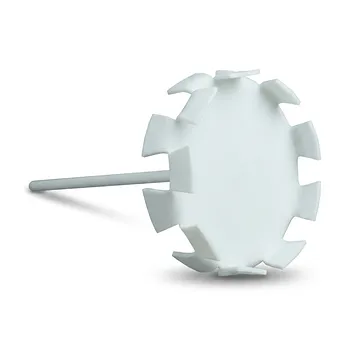
- High Purity PTFE Dispersion Disk for Food and Cosmetic Processing Non Stick Corrosion Resistant Large Stirring Paddle Customizable Fluoropolymer Impeller
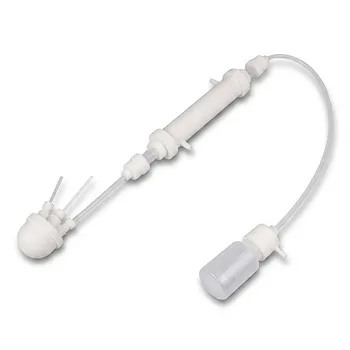
- Custom PTFE Condensation Reflux Apparatus with Serpentine Coil and Flask Collection System for Corrosive Chemical Processing
- Custom PTFE Wafer Handling Rack Corrosion Resistant High Temperature Semiconductor Polysilicon Processing Stand
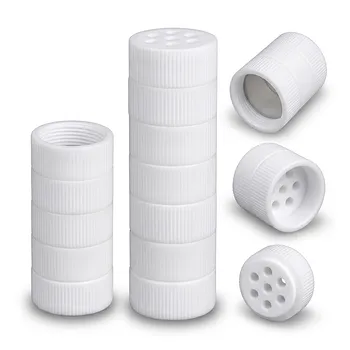
- Corrosion Resistant PTFE Multi Layer Sieve with Threaded Connections for Bio Chemical Laboratory Extraction and Customizable Mesh Size
- Corrosion Resistant PTFE Dispersing Disc and High Temperature Propeller Stirring Paddle for Laboratory Chemical Mixing
People Also Ask
- How many variations of PTFE disks are available and what parameters do they differ in? Choose the Right Material for Your Application
- What is the chemical formula and material of PTFE Disk? Unlock the Power of C₂F₄ Polymer
- What are the tolerance specifications for the thickness of PTFE disks? Why ±20% is the Industry Standard
- What is Dispersion PTFE used for? Creating Thin, High-Performance Coatings and Films
- What key properties are measured under ASTM D4441 to classify and evaluate PTFE dispersions?